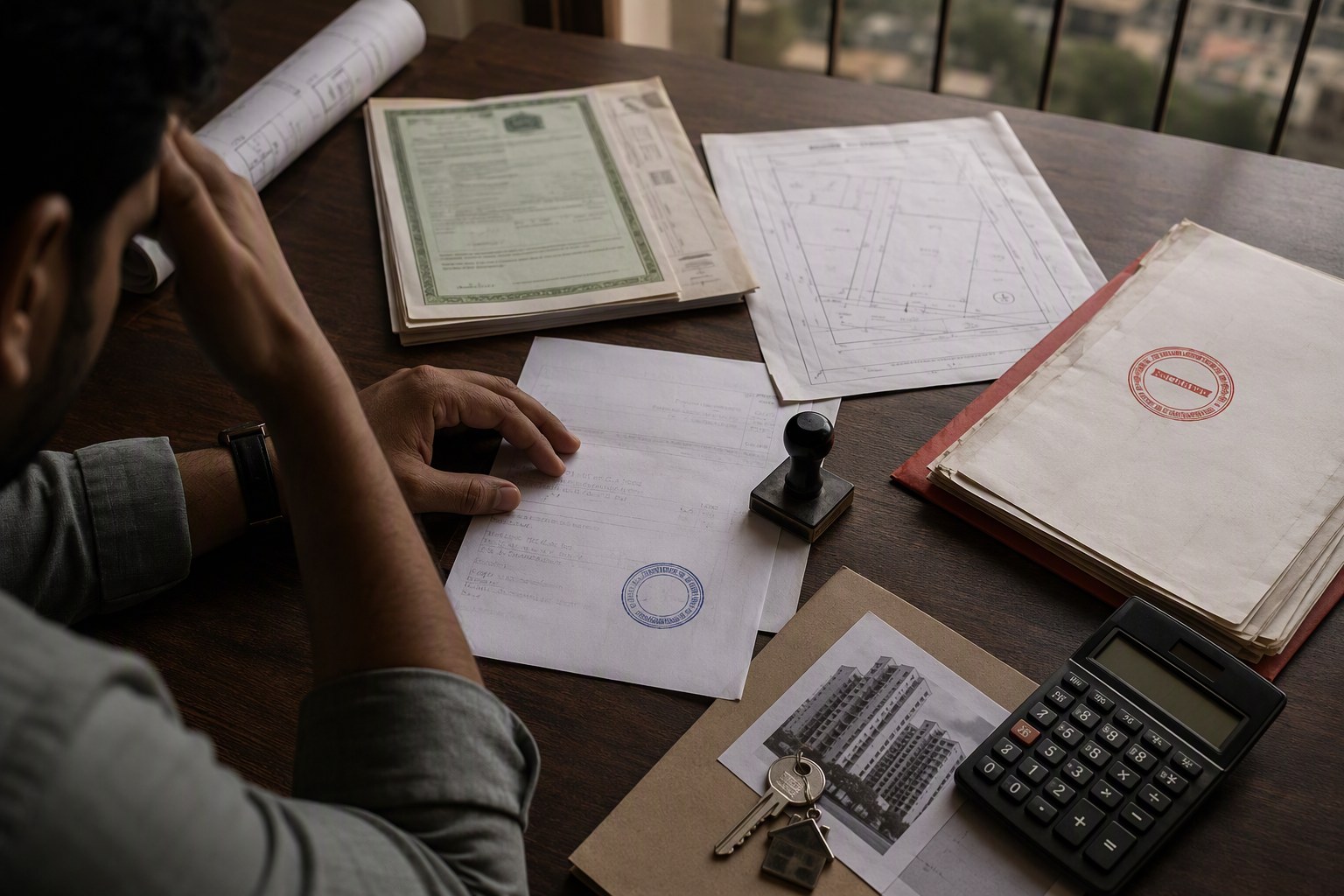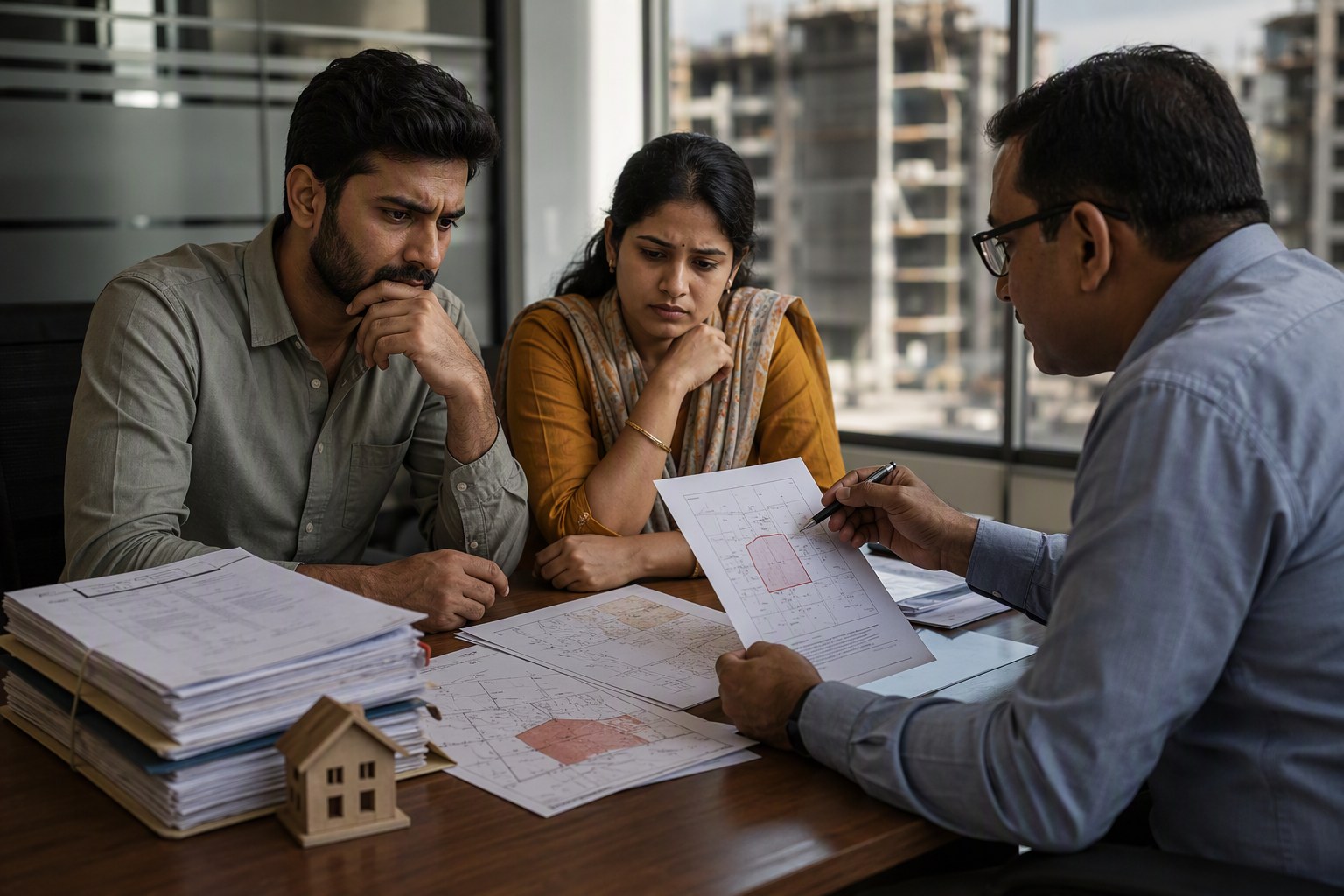
Collateral Check Before Telangana Home Loan Approval: Why Banks First Test the Property
Collateral Check Before Telangana Home Loan Approval is not a small back-office formality. Telangana has 30,76,153 prohibited property records under Section 22-A as per latest IGRS data. That single number explains why banks, housing finance companies and legal teams do not treat your salary-based loan eligibility as usable until the property itself passes scrutiny.
In simple words, you may be eligible for a home loan on paper, but the bank may still refuse to fund that particular flat, plot or house if the collateral has a legal, registration, charge, land-use or title problem. We have seen buyers in Hyderabad get excited after receiving a pre-approved loan message, only to get stuck when the legal verification report raises an objection on the property.
A home loan approval has two sides: the borrower and the collateral. Telangana buyers often focus only on income eligibility, but lenders focus heavily on whether the property can be safely mortgaged, registered and recovered if needed.
Collateral Check Before Telangana Home Loan Approval Starts With Section 22-A
The first red flag for any lender is whether the property falls under the prohibited property list. In Telangana, Section 22-A properties are restricted from registration due to government, assigned, endowment, waqf, ceiling, court or other statutory issues. Since the database contains 30,76,153 prohibited property records, banks cannot afford to assume that a property is clean only because the seller has a sale deed.
This is especially relevant in the outskirts of Hyderabad where agricultural land, gram panchayat layouts, old plotted developments and converted lands sit close to each other. We regularly see buyers checking villas in Shankarpally, Mokila, Kollur, Tellapur, Adibatla, Maheshwaram, Kandukur, Ghatkesar, Medchal, Shamirpet and Yadagirigutta belt without first checking the survey number status. That is risky.
Before paying token advance, use the Section 22-A Prohibited Property Check. If the land survey number is flagged, do not depend only on verbal assurances like “sir, it will be cleared soon” or “registration happened for neighbouring plot”. Banks will ask for documentary clarity, and many will not proceed until the prohibition status is removed or legally resolved.
Why banks do not rely only on your CIBIL and income
A salaried employee in Gachibowli or a business owner in Secunderabad may have strong income, good repayment track record and sufficient margin money. Still, the lender has to create a valid mortgage over the property. If the property cannot be registered, transferred or enforced, the bank’s security becomes weak. No serious lender wants that exposure.
This is why a loan process has two parallel tracks. One team checks the borrower: income, bank statements, repayment capacity, existing EMIs and credit behaviour. Another team checks the property: title chain, EC, approved plan, land status, marketability, valuation and mortgageability.
Collateral Check Before Telangana Home Loan Approval: What Lenders Actually Verify
In our experience, the bank’s legal and technical verification is much stricter than what many buyers expect. A seller may say “everything is clear”, a broker may say “loan is available”, but the lender will still ask its empanelled advocate and valuer to check documents. Here is what typically gets tested in Telangana.
1. Ownership title and link documents
The bank checks whether the seller has clear ownership and whether previous transfers were proper. For a flat in Madhapur, Kondapur, Nallagandla, Miyapur or Kukatpally, this means checking the builder’s land title, development agreement, GPA if any, project approvals and sale deed chain. For an independent house in Alwal, Uppal, LB Nagar, Sainikpuri or Attapur, the chain may include old sale deeds, gift deeds, partition deeds, mutation records and municipal documents.
For open plots and land parcels, lenders ask deeper questions. Which mandal? Which village? Which survey number? Is it patta land, assigned land, government land, shikam land, endowment land or part of an old layout? Is the pahani consistent with the claimed ownership? Is the land shown correctly in Dharani or revenue records? These are not academic questions. They directly decide whether the property can be taken as loan security.
If the buyer does not know the survey number, start with the Survey Number Finder. Once the survey number is known, it becomes easier to check Section 22-A status, SRO jurisdiction and revenue references.
2. Encumbrance Certificate and transaction history
The Encumbrance Certificate, commonly called EC, is one of the first documents banks ask for. It shows registered transactions affecting the property, such as sale deeds, mortgages, releases, gift deeds and other registered instruments. A clean-looking sale deed is not enough if the EC shows an old mortgage that was never released.
For Telangana buyers, checking EC before loan processing is sensible. Use the Encumbrance Certificate Search to get an initial view, and if there are many entries or confusing transactions, run them through the EC Analyzer. A bank’s advocate will still do an independent legal report, but the buyer should not walk blind into the transaction.
One common issue we see is mismatch between the schedule in the sale deed and EC entries. Boundaries may differ, flat numbers may be described differently, or old survey numbers may have been subdivided. These mismatches need explanation before the bank treats the property as acceptable collateral.
3. Section 22-A and prohibited property status
Given the 30,76,153 prohibited property records in Telangana, banks are alert to Section 22-A risk. The issue is not limited to remote villages. It can affect lands around urban expansion zones, old government-assigned parcels, endowment-related lands, ceiling surplus lands and properties with unresolved revenue entries.
For example, a buyer looking at a plot near Maheshwaram mandal may see rapid development and assume bank funding will be easy. But if the survey number is listed as prohibited, the lender will not ignore it just because the area has growth potential. The bank will ask: Can this land be registered? Is there a government objection? Can a mortgage be enforced? If the answer is doubtful, loan approval can be held back or declined.
4. SRO jurisdiction and registration trail
Every property falls under a particular Sub-Registrar Office. Banks verify whether earlier deeds were registered at the correct SRO and whether the current registration can be processed without objection. This is very relevant when villages move into new municipal limits or where buyers are not clear whether the property falls under Hyderabad, Rangareddy, Medchal-Malkajgiri, Sangareddy or Yadadri-Bhuvanagiri district.
If you are unsure, check the Find Your SRO Office or use the SRO Village Directory. This helps avoid last-minute confusion at the time of document preparation and loan disbursement.
5. Guideline value, valuation and loan-to-value comfort
After legal review, banks also conduct technical valuation. The valuer checks location, access road, building condition, construction stage, approvals, marketability and guideline value. In Telangana, buyers often call this ready reckoner or government market value. The bank will compare the declared transaction value, government value and independent valuation before deciding how much it can safely lend.
You can do a preliminary check with the Market Value / Guideline Value Search. This does not replace a bank valuation, but it gives buyers a better sense of how the property is positioned in official records. For stamp duty planning, the Stamp Duty Calculator is also useful before finalising the agreement value and registration budget.
6. CERSAI charge and existing mortgages
Even if the EC looks okay, banks may check whether any charge is registered with CERSAI. A property may have been offered as security for an earlier loan. If that loan is closed, the release documents must be proper. If it is still active, the seller cannot simply take a new buyer’s money and promise to clear it later without a controlled process.
Before giving large advance, buyers should consider a CERSAI Charge Check. It is particularly useful in resale flats in areas like Manikonda, Hafeezpet, Bachupally, Nizampet, Pragathi Nagar, Kompally and financial district-adjacent micro-markets, where resale activity is strong and many units have loan histories.
Why Pre-Approval Is Not Final Approval
This is one area where Hyderabad buyers get misled by marketing language. A bank may give a pre-approved loan based on your profile. That means the lender is broadly comfortable with your repayment capacity. It does not mean the lender has approved every property you may choose.
Final sanction and disbursement depend on property documents. If the legal report says title is defective, if the EC has an unresolved mortgage, if the property is hit by Section 22-A, if the plan approval is weak, or if the valuation is not acceptable, the bank can reduce the eligible loan or reject that property as collateral.
For under-construction apartments, lenders also check whether the project itself is approved by the bank or whether the builder can submit satisfactory land and approval documents. Buyers checking projects in Tellapur, Kokapet, Puppalaguda, Narsingi, Kollur, Patancheru and Bachupally should verify RERA details through the RERA Project Lookup. RERA registration is not a substitute for title verification, but it is a basic check that no buyer should skip.
Collateral Check Before Telangana Home Loan Approval For Flats, Plots And Houses
Different property types trigger different lender concerns. A ready-to-move flat in a large gated community is checked differently from an open plot in a gram panchayat layout or an old independent house in a dense colony. The bank’s core question remains the same: can this asset be safely accepted as mortgage?
| Property type | What lenders focus on | Buyer’s practical check |
|---|---|---|
| Apartment flat | Builder title, approved plan, occupancy status, undivided share, EC, prior mortgage | Check EC, RERA, sale deed draft, association documents if resale |
| Open plot | Survey number, layout approval, Section 22-A, land use, access road, SRO jurisdiction | Check prohibited property status, survey number, SRO, land-use zone |
| Independent house | Land title, building permission, tax records, old link documents, road access | Check EC, old deeds, municipal records and building condition |
| Agricultural land | Pahani, Dharani entries, classification, restrictions, ownership trail, conversion issues | Check revenue records, survey number and registration eligibility |
For open plots, land-use is a major point. A buyer may think all land near ORR or Regional Ring Road influence zones will automatically become residential. Lenders do not think like that. They ask what the current land use permits and whether approvals support the proposed use. The Land Use Zone Finder can help buyers ask better questions before loan processing.
For apartments and houses, construction value and composite value can also matter during valuation. The Composite Value Calculator and Building Value Calculator can give a buyer a structured way to think about land plus building value, though the lender’s valuer will make the final call.
Common Telangana Collateral Problems That Delay Home Loans
From our Hyderabad market experience, most loan delays are not due to one dramatic fraud. They are usually caused by small document gaps that were ignored at negotiation stage. Here are the common ones.
- Survey number mismatch: The sale deed mentions one survey number, the layout plan shows another, and revenue records use a subdivision reference.
- Old mortgage not released: Seller closed a loan but did not register proper release or closure evidence.
- Missing link deed: One old sale deed in the title chain is missing, illegible or not traceable.
- Section 22-A flag: The land or part of survey number appears in prohibited property records.
- Wrong SRO assumption: Parties prepare documents for one registration office but the property falls under another SRO jurisdiction.
- Unapproved layout: Plot is marketed as residential, but approval status is unclear or not acceptable to the lender.
- Boundary inconsistency: Neighbouring plot numbers, road side or extent differ across documents.
- Builder document delay: For under-construction flats, builder does not provide land title and approval documents quickly.
These issues are not always fatal. Some can be corrected with affidavits, rectification deeds, release deeds, updated ECs or additional documents. But the correction must happen before disbursement. Banks rarely accept “we will fix it later” when collateral quality is under doubt.
How Buyers Should Prepare Before Applying For A Telangana Home Loan
My advice is simple: do your own first-level collateral check before you submit the property file to the bank. This saves time, reduces emotional pressure and gives you negotiating strength with the seller.
Step 1: Ask for the full document set before token advance
For resale property, ask for sale deed, link documents, latest EC, tax receipts, approved plan if applicable, loan closure papers if there was a mortgage, and seller identity documents. For builder property, ask for land documents, development agreement, approved plan, RERA details, draft agreement, payment schedule and construction stage documents.
Step 2: Check Section 22-A early
For plots and land-backed homes, this is non-negotiable. Use the Section 22-A Prohibited Property Check before paying serious money. The presence of 30,76,153 prohibited property records in Telangana is a clear signal that buyers must not skip this step.
Step 3: Read the EC like a timeline, not like a certificate
Do not just see whether the EC is “available”. Read the entries. Who sold to whom? Was there a mortgage? Was there a release? Are flat number, plot number and boundaries consistent? If entries are hard to understand, use the EC Analyzer and then take legal advice.
Step 4: Verify SRO and market value
Check the correct registration office using the Find Your SRO Office. Then look up government market value through the Market Value / Guideline Value Search. This helps you plan registration and avoid surprises in the bank’s valuation discussion.
Step 5: Do not confuse broker confidence with bank acceptance
A broker may have seen registrations happen in the same venture. A seller may have earlier taken a loan on the property. That does not guarantee your lender will accept it now. Bank policies differ, legal scrutiny changes, and one document gap can change the outcome.
Collateral Check Before Telangana Home Loan Approval Protects The Buyer Too
Many buyers feel irritated when banks ask too many property documents. I understand that feeling. When the seller is pushing for advance and the family is emotionally attached to the house, document requests feel like delays. But a strict collateral check often protects the buyer from a bad purchase.
If a bank refuses to fund a property because of title or prohibited property concerns, treat it as a serious warning. Do not immediately shift to another lender or private finance without understanding the objection. Ask for the legal query in writing where possible. Speak to an independent property lawyer. Verify records through official channels. Sometimes the bank’s caution saves the buyer from years of litigation.
Hyderabad’s property market is strong, but it is not uniform. A flat in a well-documented gated project in Nanakramguda is not the same as an old plot in an unclear layout near the city edge. A registered sale deed is valuable, but it is only one part of the collateral story. The complete story includes revenue records, SRO history, EC, approvals, land use, charges, valuation and enforceability.
Before treating your loan eligibility as final, treat the property as if you are the lender. Would you accept it as security if your own money was at risk? That mindset will make you a much sharper buyer in Telangana.
Frequently Asked Questions
What is collateral check before Telangana home loan approval?
It is the bank’s legal and technical verification of the property offered as security. The lender checks title, EC, Section 22-A status, SRO records, valuation, approvals and existing charges before disbursing the loan.
Can my home loan be rejected even if my income eligibility is good?
Yes. Your income may qualify, but the bank can still reject or hold the loan if the property has title defects, prohibited property issues, unresolved mortgage entries, weak approvals or valuation concerns.
Why is Section 22-A important for Telangana property loans?
Section 22-A covers properties restricted from registration. Telangana has 30,76,153 prohibited property records as per latest IGRS data, so lenders carefully check whether the property can be legally registered and mortgaged.
Should I check EC before giving advance to the seller?
Yes. The EC can show past sales, mortgages, releases and other registered transactions. It helps you identify document gaps before paying a large advance or submitting the file to the bank.
Does RERA registration mean the bank will surely approve my loan?
No. RERA registration is a useful project-level check, but banks still verify land title, approvals, EC, valuation and mortgageability before sanction and disbursement.