Telangana Sellers: Why Buyers Ask for Your Family Tree Before Token
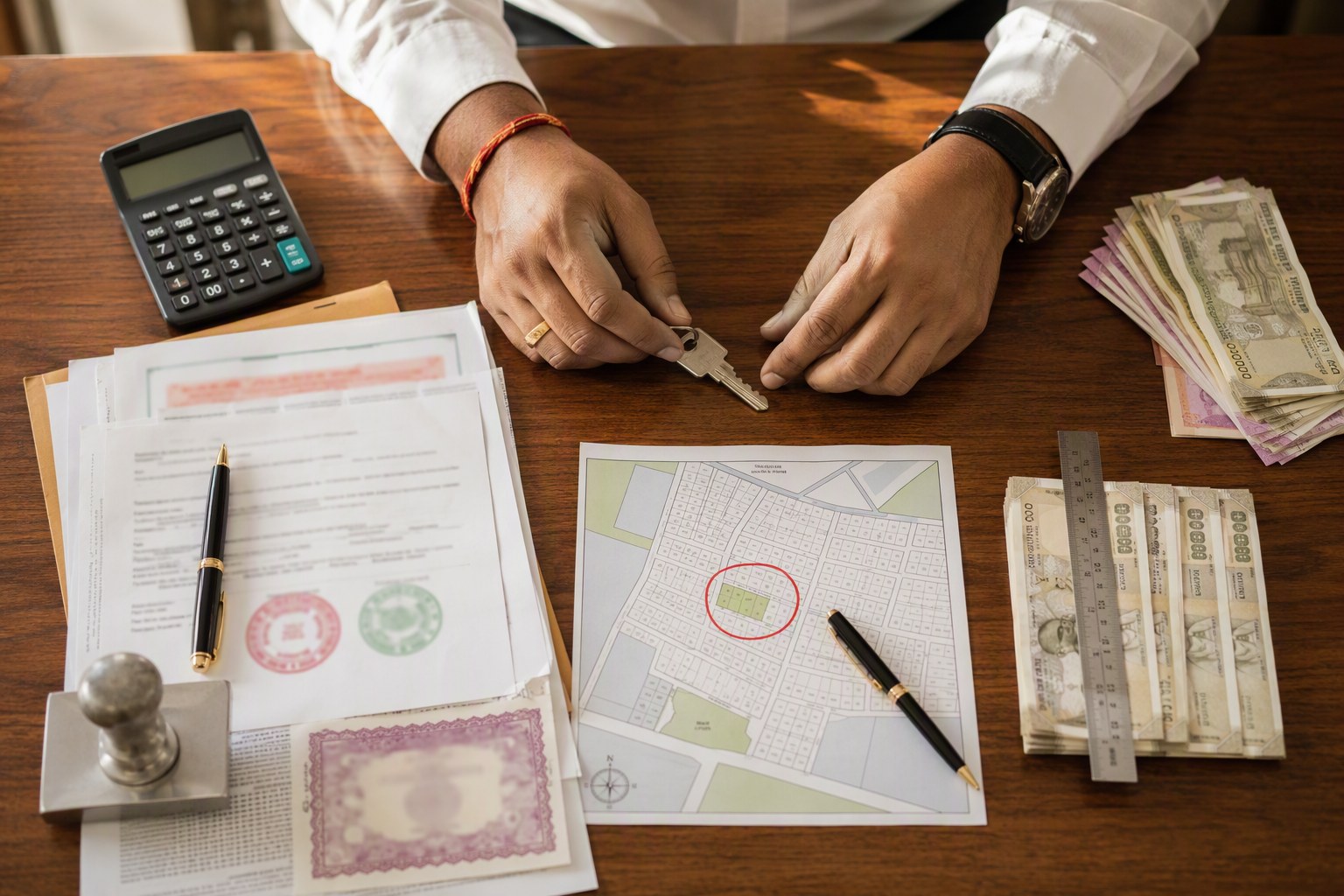
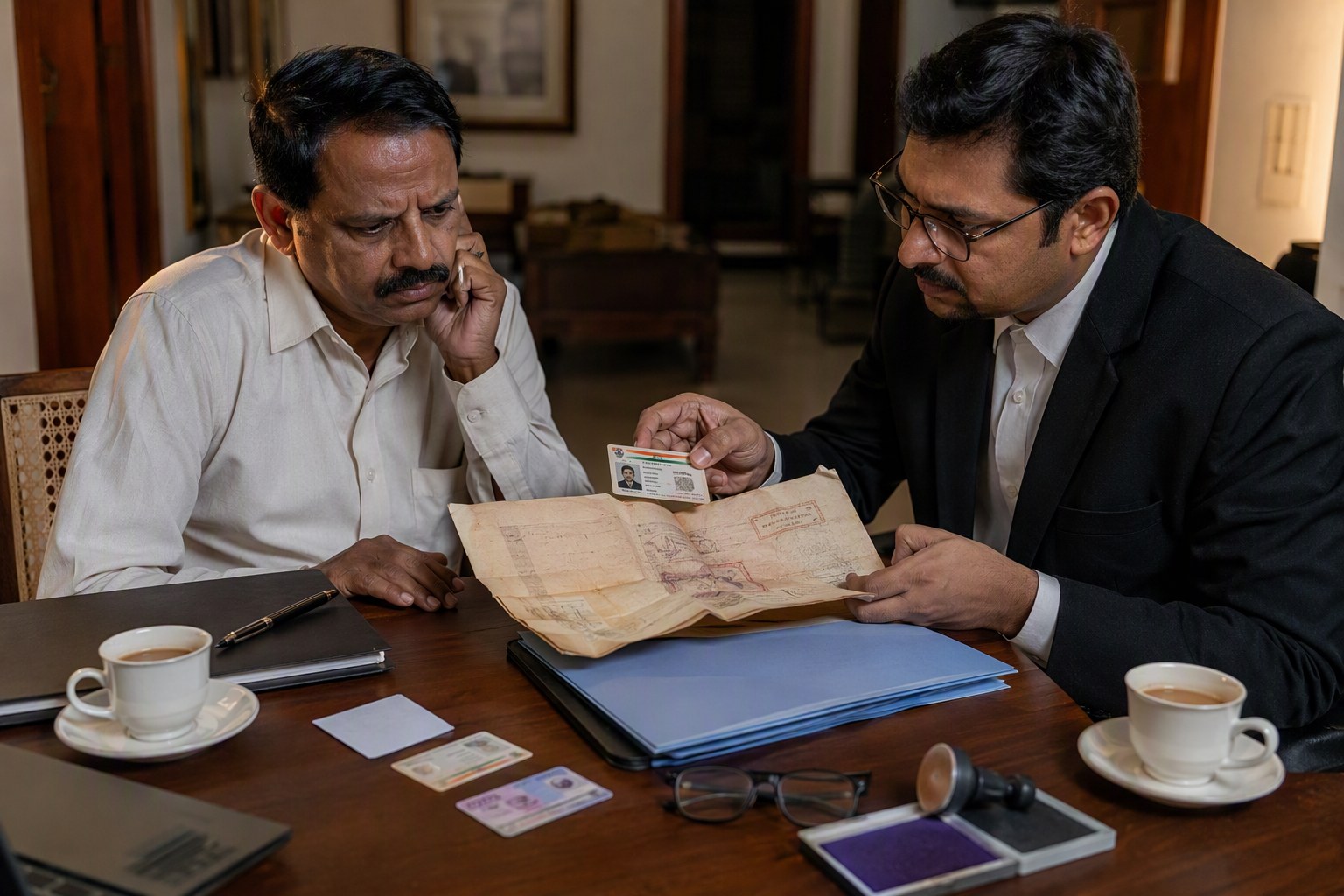
Telangana sellers: why buyers ask for your family tree has become a very practical question in Hyderabad property deals. Last month, a seller in Nallagandla called us after a buyer refused to pay even a small token for his 3BHK flat. The flat was good, the price was fair, the bank loan was closed. Still, the buyer’s advocate asked for the seller’s father’s death certificate, legal heir details, signatures from two sisters, and a release deed copy from 2009. The seller was shocked. His line was simple: I am the owner, my name is on the sale deed, what else do they want?
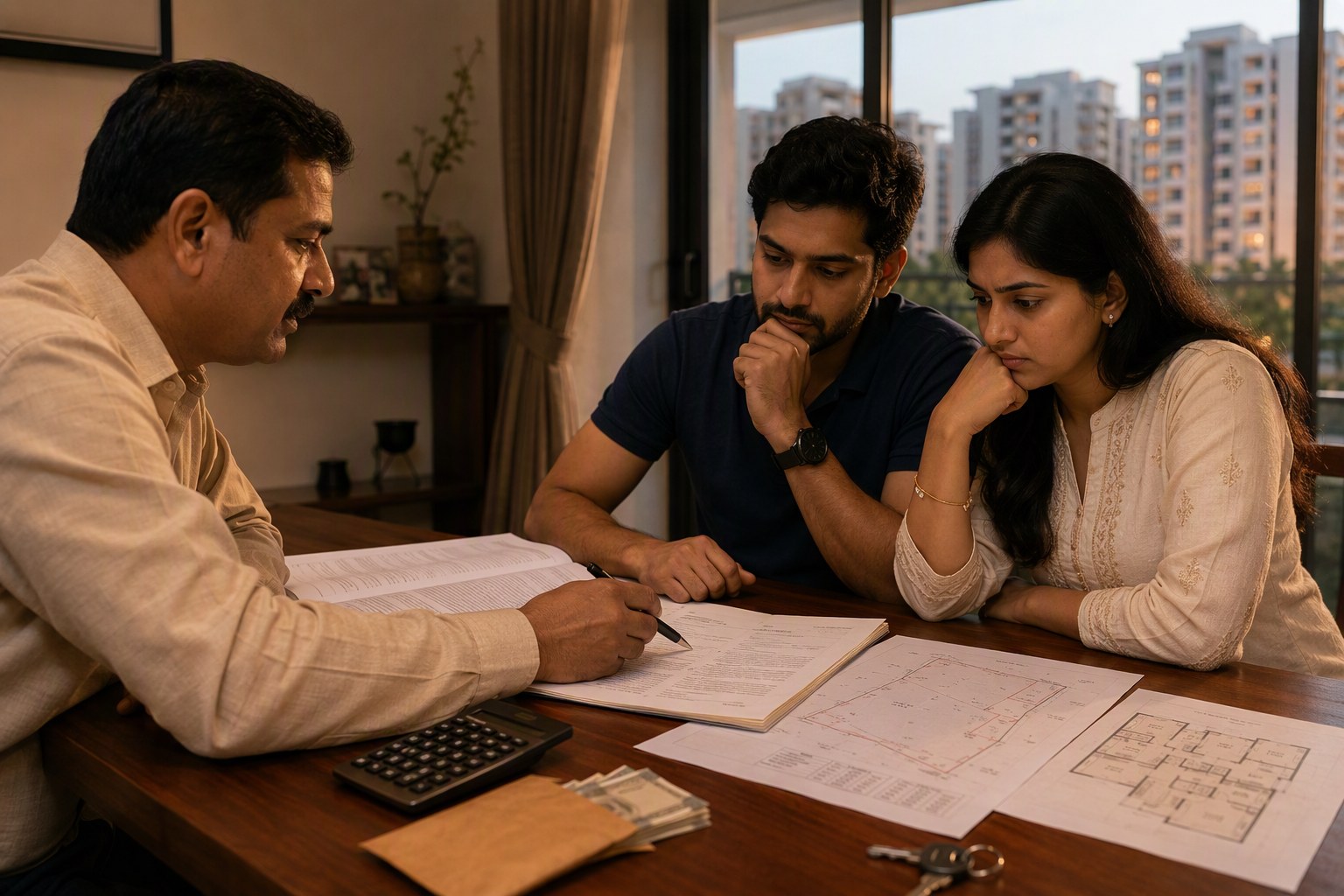
This is now common in Telangana, especially in family-owned houses, inherited plots, old agricultural land, and flats bought with family funds. Serious buyers are not only checking the sale deed. They are checking whether any brother, sister, mother, wife, son, daughter, or legal heir can come tomorrow and say, I also have a share.
In our experience, sellers who prepare family-title papers early get faster tokens, cleaner negotiations, and fewer last-minute dramas at the SRO. Sellers who wait till the buyer asks usually lose time, confidence, and sometimes the buyer itself.
A Hyderabad buyer is not asking for your family tree out of curiosity. He is checking whether the title will stand even after registration.
Telangana Sellers: Why Buyers Ask for Your Family Tree in Family Properties
In Telangana, property title is not always a straight line. It can pass through a father’s self-acquired purchase, grandfather’s ancestral land, a mother’s gift deed, a partition between brothers, a release deed by sisters, or a family settlement that was never registered. Buyers know this. Their lawyers know this even better.
The moment the seller says any of these lines, the buyer’s legal team becomes alert:
This was my father’s property.
We are three brothers but I am selling my portion.
My sisters are married, they have no claim.
The land came from my grandfather’s side.
The pahani is in my name now, so no issue.
My mother signed once long back, but I do not have that paper now.
From a seller’s angle, these may sound like small family matters. From a buyer’s angle, they are title-risk triggers. In Hyderabad, where a 200 sq yd plot in Manikonda or Narsingi can run into crores, buyers do not want emotional assurances. They want documents.
Take a simple example. A family owns a 300 sq yd house in Kukatpally mandal. Father bought it in 1998. Father passed away in 2018 without a will. One son is staying in the house and wants to sell. The sale deed is in father’s name, not the son’s name. Even if the son has electricity bills and property tax receipts, the buyer will still ask: who are all the Class I legal heirs? Did the mother sign? Are all children consenting? Is there a registered release deed if one heir is giving up rights?
That is why your family tree matters.
Telangana Sellers: Why Buyers Ask for Your Family Tree Even When Dharani Shows Your Name
Many land sellers in Rangareddy, Medchal-Malkajgiri, Sangareddy, Yadadri-Bhuvanagiri and Vikarabad districts feel that once their name appears on Dharani, title doubts are over. Dharani mutation is useful, no doubt. But buyers still ask for family papers because mutation and ownership proof are not the same thing in every dispute.
A Dharani passbook can show the current pattadar. A pahani can show possession and cultivation details. But if the property originally came through inheritance, a buyer will ask how the name came into the record. Was it through succession? Was there a registered partition? Did all legal heirs agree? Was any heir left out?
We have seen this often in Shankarpally mandal, Moinabad mandal, Maheshwaram mandal, Shamshabad mandal, Kandukur mandal and Medchal mandal. Land rates have moved sharply around ORR, Pharma City side, Kokapet-Neopolis influence zone, and the western corridor. So buyers are spending more on legal checks before token.
Indicative 2025 market conversations in Hyderabad look like this: Kokapet and Neopolis-side apartments often quote around Rs 10,000 to Rs 16,000 per sq ft depending on tower, view and stage; Gachibowli and Financial District flats are commonly discussed around Rs 9,000 to Rs 14,000 per sq ft; Nallagandla and Tellapur gated flats often move around Rs 7,500 to Rs 11,500 per sq ft; Miyapur and Hafeezpet are seen around Rs 6,000 to Rs 9,500 per sq ft; Kompally and Suchitra belt often see Rs 5,000 to Rs 8,000 per sq ft. For plots, clean-title HMDA layouts near Shankarpally, Mokila and Kollur can vary widely by road width, approval, exact survey number and access.
When money is at this level, no buyer wants to hear after registration that one married daughter in another city did not sign.
The Nallagandla Seller Who Lost Ten Days Over One Missing Release Deed
The Nallagandla case is a useful lesson. The seller had a flat purchased in 2012. His father had paid part of the initial amount, and the sale deed was in the seller’s name. No issue there. But before the flat, the family had sold an ancestral house in Warangal, and some funds from that sale were used for the Hyderabad flat. The buyer’s advocate saw those references in old bank entries and asked whether any siblings could claim that family money was used.
Now, technically, this may not always defeat title if the sale deed is in the seller’s name. But in a high-value transaction, buyer confidence matters. The seller then disclosed that both sisters had signed a family release deed earlier for other assets. The problem? He had only a photocopy. The registered document number was not easily available. It took ten days to trace it from family files and SRO records.
The buyer did not walk away, but he reduced the urgency. He also renegotiated a small amount saying legal clarity came late. This is where sellers must be practical. A missing document may not always make your property defective, but it weakens your negotiating position.
What Buyers Mean by Family Tree in Telangana Property Sale
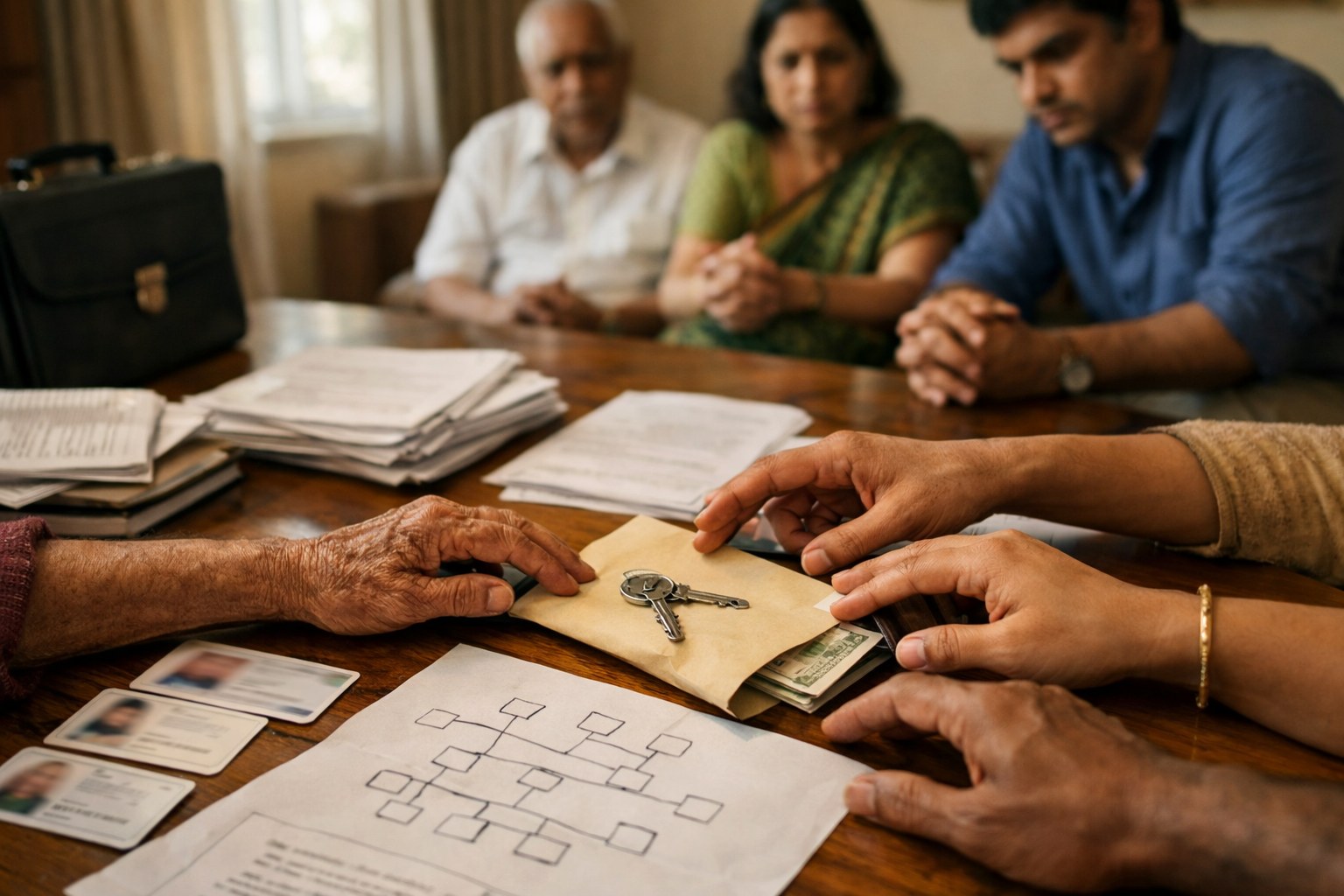
When buyers ask for a family tree, they are usually asking for a legal heir picture, not a decorative chart. They want to know the chain of family ownership and consent. The exact papers depend on whether the property is self-acquired, inherited, ancestral, gifted, partitioned, or purchased jointly.
Common family-title documents buyers ask for
| Document | Why buyer asks | Typical Telangana context |
|---|---|---|
| Death certificate | To prove when the original owner passed away | Father or mother’s property being sold by children |
| Legal heir certificate or family member certificate | To identify all heirs | Inherited house, plot or agricultural land |
| Registered release deed | To show one heir gave up share in favour of another | Sisters or brothers releasing rights |
| Registered partition deed | To show property division between family members | Brothers splitting land in gram panchayat or municipality limits |
| Gift deed | To show voluntary transfer during lifetime | Parent gifting to son, daughter, spouse |
| Will and probate where applicable | To support succession claim | Disputed or high-value inherited assets |
| Family settlement deed | To record agreed division | Often used, but registration status matters |
| Mutation proceedings | To link revenue or municipal record change | Dharani mutation, GHMC mutation, gram panchayat record |
One point I tell sellers bluntly: a notarised family understanding is not equal to a registered release deed when immovable property rights are being transferred. Buyers and banks prefer registered documents because they are traceable at the SRO and harder to deny later.
Before You Quote a Price, Check These Seller Documents
Most sellers start with price. They check what the neighbour sold for, what the broker is saying, and what Magicbricks or 99acres listings show. Price is necessary, but paperwork decides whether that price is achievable.
Before you put your property on the market, keep these ready:
Original sale deed, gift deed, partition deed or allotment deed
Link documents for at least 30 years where available
Latest encumbrance certificate
Property tax receipts or vacant land tax receipts
Building permission, occupancy certificate or layout approval where applicable
Dharani passbook, pahanis and mutation proceedings for agricultural land
Legal heir certificate or family member certificate if original owner is no more
Registered release deeds from non-selling heirs if needed
Loan closure letter and original document release letter if the property had a bank loan
Aadhaar, PAN and address proof of all required signatories
For title checks, sellers can first run a basic scan through our Property Verification Tool. For land parcels, use the Survey Number Finder so that the buyer’s advocate does not discover survey mismatch after token. If you are not sure which registration office handles your document, check Find Your SRO Office.
Family Signatures: Who Should Sign the Sale Deed?
This is the question where many Telangana sellers get wrong advice. The answer depends on title history.
If the property is self-acquired and the owner is alive
If you bought the property with your own funds and the sale deed stands only in your name, generally you can sell. Your spouse and children may not need to sign just because they are family members. But some buyers still ask the spouse to sign as confirming witness, especially for houses where the family is residing. This is not always legally necessary, but it gives comfort.
If the owner died without a will
All legal heirs must be identified. If one heir is selling on behalf of all, he needs proper authority or release deeds. If the property belonged to a Hindu male who died intestate, Class I heirs usually include widow, sons, daughters and mother if alive at the time of death. Married daughters also have rights. This is where many sellers still carry old thinking. Buyers will not accept she is married, so no share.
If the property is ancestral
Ancestral property can be more sensitive. Children may get rights by birth depending on facts, religion, family law and nature of property. Buyer’s lawyer will ask for partition records, family settlement, revenue entries and sometimes older link documents.
If one heir has already taken money
Payment by itself is not enough. Get a registered release deed or settlement deed. A WhatsApp message or plain paper receipt is weak protection for the buyer and weak defence for the seller.
Encumbrance, Guideline Value and SRO Checks Buyers Run Before Token
In Hyderabad, serious buyers now do pre-token checks. Earlier, token came first and legal verification came later. That order is changing, mainly because property values are high and disputes are costly.
A buyer may run an Encumbrance Certificate Search to check mortgages, sale deeds, gift deeds, release deeds and other registered transactions. He may compare your asking rate with the government value using Market Value / Guideline Value Search. At registration stage, both sides estimate costs through the Stamp Duty Calculator.
For sale deeds in Telangana, buyers generally budget around 6% towards stamp duty, transfer duty and registration charges combined for many standard sale transactions. Exact duty can vary by document type and government updates, so parties should confirm before execution. Still, this 6% ballpark is what most Hyderabad resale buyers discuss at negotiation tables.
One more check is becoming very serious: Section 22-A prohibited properties. Telangana has 147,934 prohibited properties under Section 22-A as per the database fact we track. If your survey number falls in a prohibited list, registration can be blocked or delayed. Sellers should run a check through the Section 22-A Prohibited Property Check before accepting token, especially for land in developing mandals around Hyderabad.
Telangana Sellers: Why Buyers Ask for Your Family Tree in Old Layouts and Gram Panchayat Areas
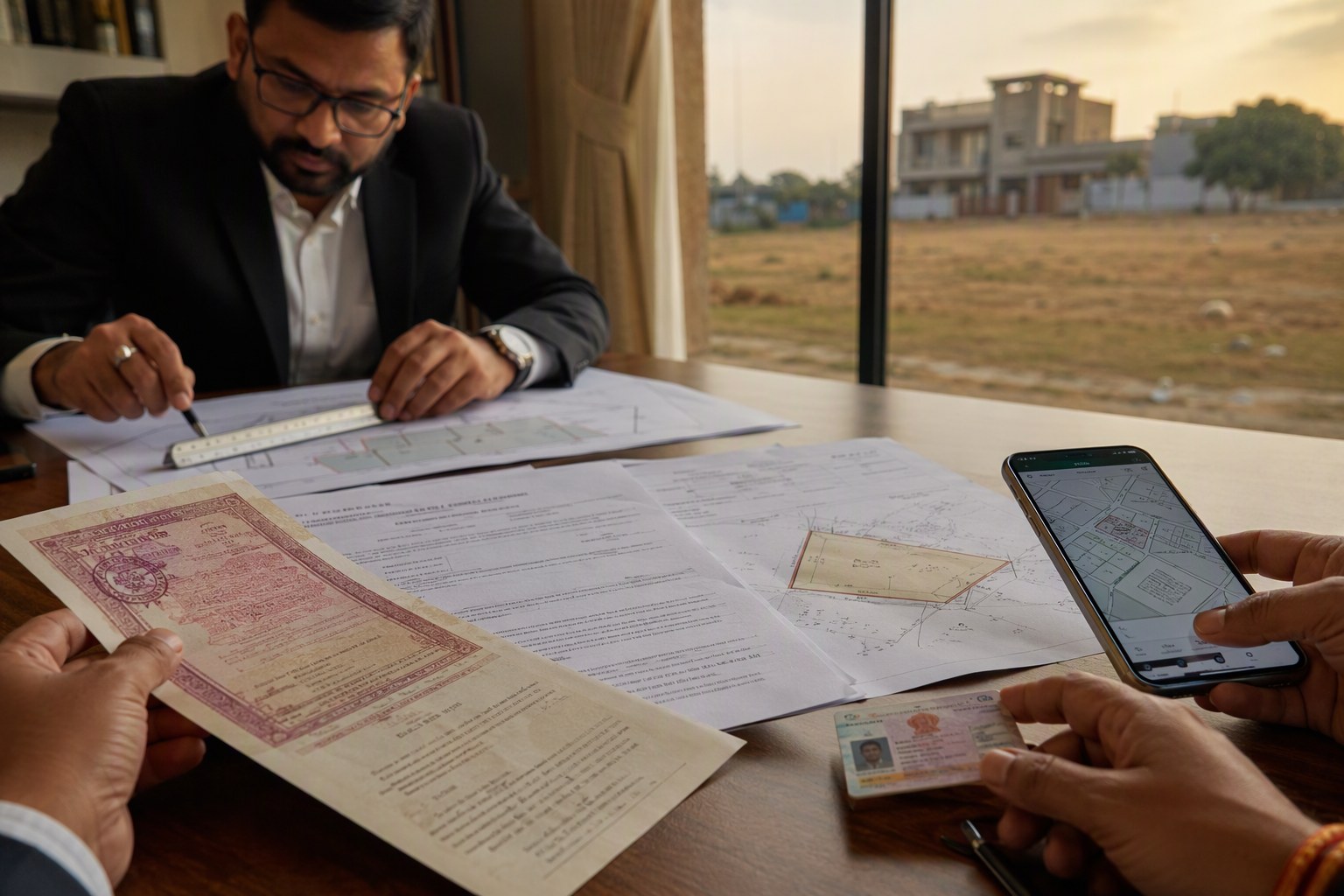
Old gram panchayat layouts around Bachupally, Pragathi Nagar, Beeramguda, Ameenpur, Boduppal, Peerzadiguda, Turkayamjal and Adibatla often have layered documentation. You may have a sale deed, but the buyer may still ask for the landowner’s family chain if the original layout came from agricultural land converted informally or sold through GPA years ago.
Here are common buyer questions in such cases:
Was the original landowner alive when GPA was executed?
Was GPA coupled with sale agreement or only authority?
Did any legal heir challenge the layout sale?
Were all pattadars included in the sale?
Is the survey number matching the physical plot?
Is the road shown in layout actually available on ground?
If the plot is in an older unapproved layout, buyers may also check road width, land use and regularisation status. Sellers can use Road Width Check and Land Use Zone Finder to understand what questions may come from the buyer side. For apartments or new projects, the buyer may check the builder through RERA Project Lookup, but for resale family properties the seller’s own chain remains the main issue.
How Sellers Can Prepare a Family-Title File Before Listing
I suggest every seller maintain one digital folder and one physical file. Name it clearly, not property papers final final. Keep scanned PDFs with document numbers and dates. If there are multiple heirs, share the same folder with them early. Family coordination takes more time than SRO work.
Step 1: Make a one-page ownership timeline
Write the story of the property in dates. Example:
1996: Father purchased 400 sq yd plot in Serilingampally mandal
2004: GHMC building permission obtained
2016: Father passed away
2017: Legal heir certificate obtained
2018: Two daughters executed registered release deed
2024: Property tax updated in son’s name
This simple timeline helps the buyer’s lawyer. It also helps you identify missing links.
Step 2: List all family members connected to title
Do not hide family members. If there are three sisters, mention three. If one brother is abroad, say so early. If mother passed away after father, her share may have devolved further. These details matter. Hiding them creates bigger suspicion than disclosing them.
Step 3: Get release deeds before buyer pressure starts
If siblings already agreed that you can sell, convert that agreement into a registered document before listing. Do not wait till token. NRIs need embassy attestation, power of attorney, courier time and sometimes local adjudication. This can easily take weeks.
Step 4: Check EC and prohibited status yourself
Do not wait for the buyer to find an old mortgage entry or a prohibited survey tag. Check the EC, SRO jurisdiction, Dharani details and Section 22-A status. If an old loan appears but was closed, keep the bank closure proof ready.
Step 5: Keep tax and capital gains planning ready
Sellers often focus only on sale price and forget tax. If you are selling a long-held house in Banjara Hills, Himayatnagar, Secunderabad, Kondapur or LB Nagar, capital gains can be material. Estimate your position through the Capital Gains Tax Calculator. Buyers may deduct TDS where applicable, so do not treat the gross sale price as fully available cash.
What If a Family Member Refuses to Sign?
This happens more often than people admit. Sometimes the dispute is genuine. Sometimes it is pressure for extra money. Sometimes it is old family bitterness resurfacing when a property sale is near.
As a seller, avoid three mistakes. First, do not promise the buyer that signature will come next week unless you are sure. Second, do not accept a large non-refundable token if family consent is not settled. Third, do not create backdated or informal papers. They can damage the transaction and your credibility.
Speak to a property lawyer and decide the clean route: registered partition, release deed, settlement deed, court declaration, succession documentation, or sale by all co-owners. Each family situation is different. In Telangana resale deals, clean paperwork usually earns better value than clever shortcuts.
Buyer Asking Too Much? Where Sellers Should Draw the Line
Some buyers overdo legal queries. They ask for unnecessary personal papers or keep changing their lawyer’s checklist. Sellers should cooperate, but not surrender common sense.
Reasonable buyer requests include title deeds, link documents, EC, tax receipts, approvals, legal heir proof and release deeds. Unreasonable requests may include unrelated bank statements, private family financial details with no title connection, or repeated demands after the same document is already supplied.
My opinion: if the buyer is serious, he will put comments in writing through his advocate. Ask for a written legal query list. Reply document-wise. This avoids broker-level confusion and family WhatsApp panic.
Practical Seller Checklist Before Accepting Token
Confirm whether title is self-acquired, inherited, ancestral, gifted or partitioned.
Check if all title holders are alive and available to sign.
If original owner died, collect death certificate and legal heir proof.
For heirs not joining sale, arrange registered release deeds or proper consent documents.
Run EC search and keep mortgage closure proofs ready.
Verify SRO, survey number, market value and Section 22-A status.
Share only scanned copies at first; hand over originals only at proper stage.
Take token through a written agreement with clear refund conditions.
Mention who will bear registration charges, pending taxes and society transfer charges.
Keep all family signatories informed about registration date and ID requirements.
A seller who prepares these papers before listing looks organised. Buyers sense it. Brokers also push such properties with more confidence because the deal is less likely to collapse.
Final Word for Telangana Sellers
When a buyer asks for your family tree, do not take it as an insult. Treat it as part of modern Telangana property due diligence. Hyderabad buyers are paying large amounts in Kokapet, Gachibowli, Narsingi, Tellapur, Miyapur, Kompally and many other corridors. Land buyers in Shankarpally, Moinabad, Maheshwaram and Shamshabad are equally cautious because survey-level issues can block registration.
The seller who says trust me may still find a buyer, but the seller who says here are the title papers, heir details, EC, release deeds and SRO records will command more trust. In property selling, trust is not built by talk. It is built by documents.
Frequently Asked Questions
Why do buyers ask for family tree before paying token in Telangana?
Buyers ask to confirm all legal heirs and family members who may have a claim on the property. It protects them from future disputes after registration.
Do married daughters need to sign when selling father’s property?
If the father died without a will and the daughter is a legal heir, her rights cannot be ignored only because she is married. Buyers usually ask for her signature or a registered release deed.
Is Dharani passbook enough to sell inherited agricultural land?
No. Dharani record is useful, but buyers may still ask for succession proof, pahanis, mutation proceedings, link documents and consent from other heirs.
What is better: consent letter or registered release deed?
For immovable property rights, a registered release deed is much stronger than a plain consent letter or notarised paper. Buyers and banks prefer registered documents.
Should sellers check Section 22-A before accepting token?
Yes. Telangana has 147,934 prohibited properties under Section 22-A in the tracked database. A seller should check this early to avoid registration surprises.