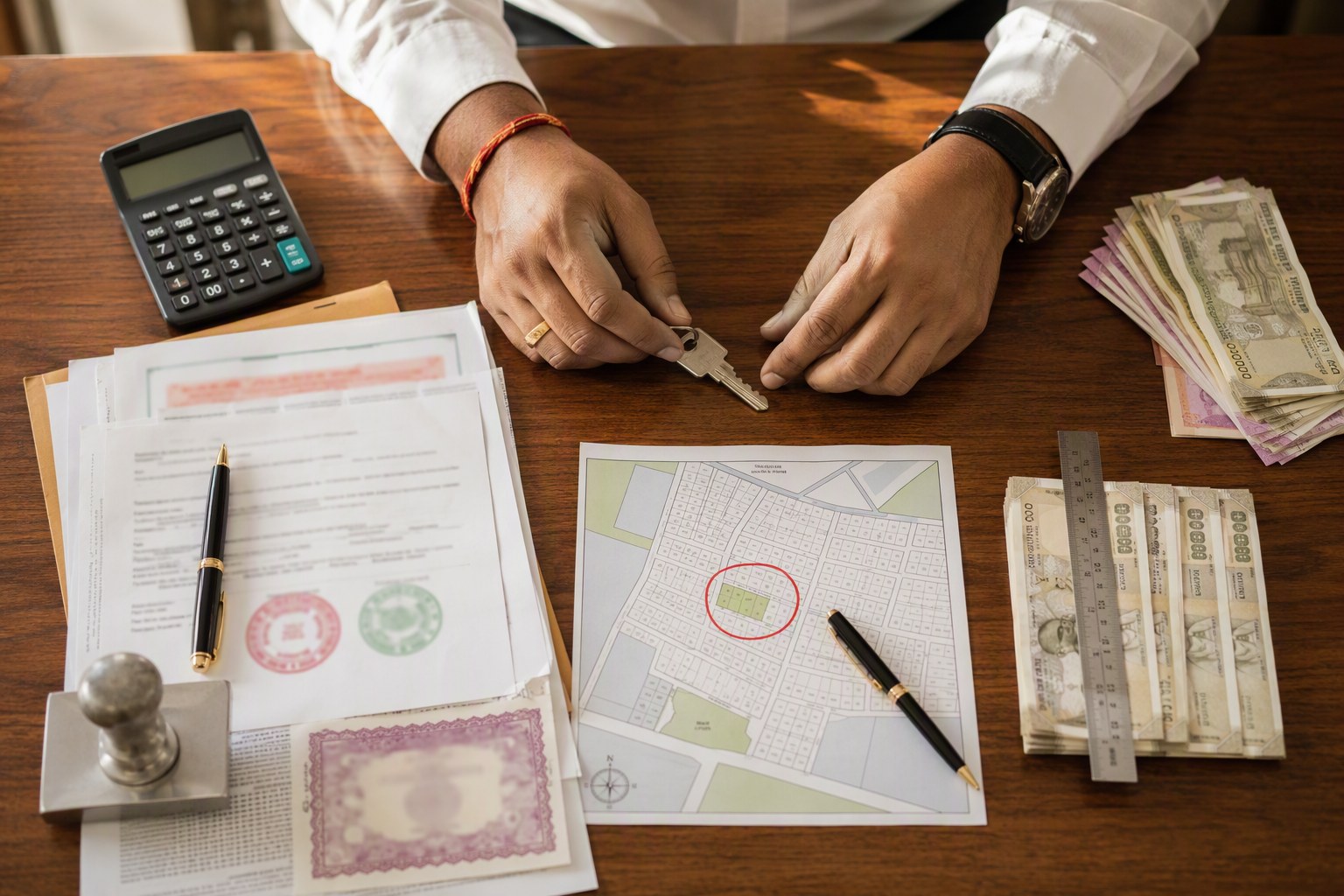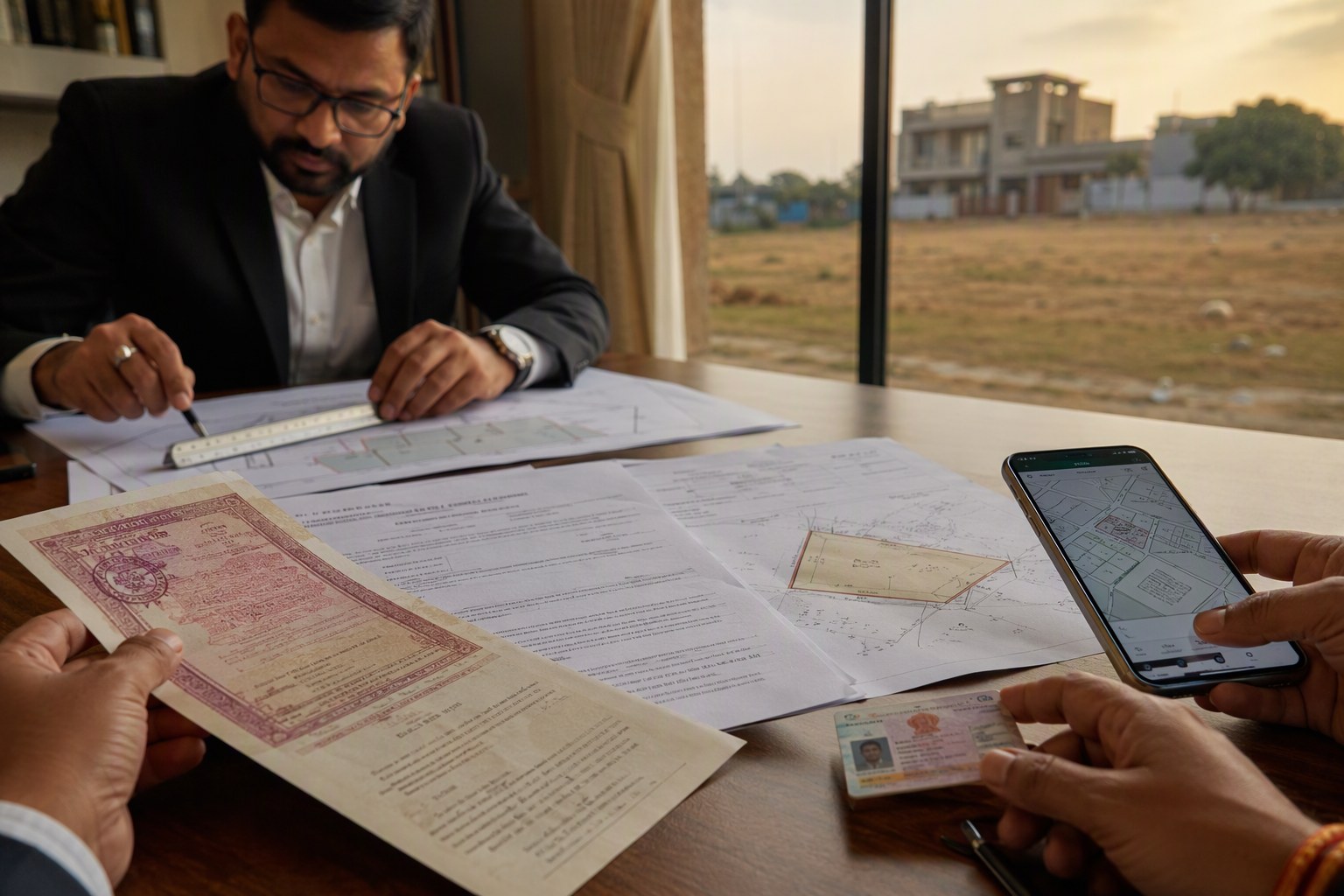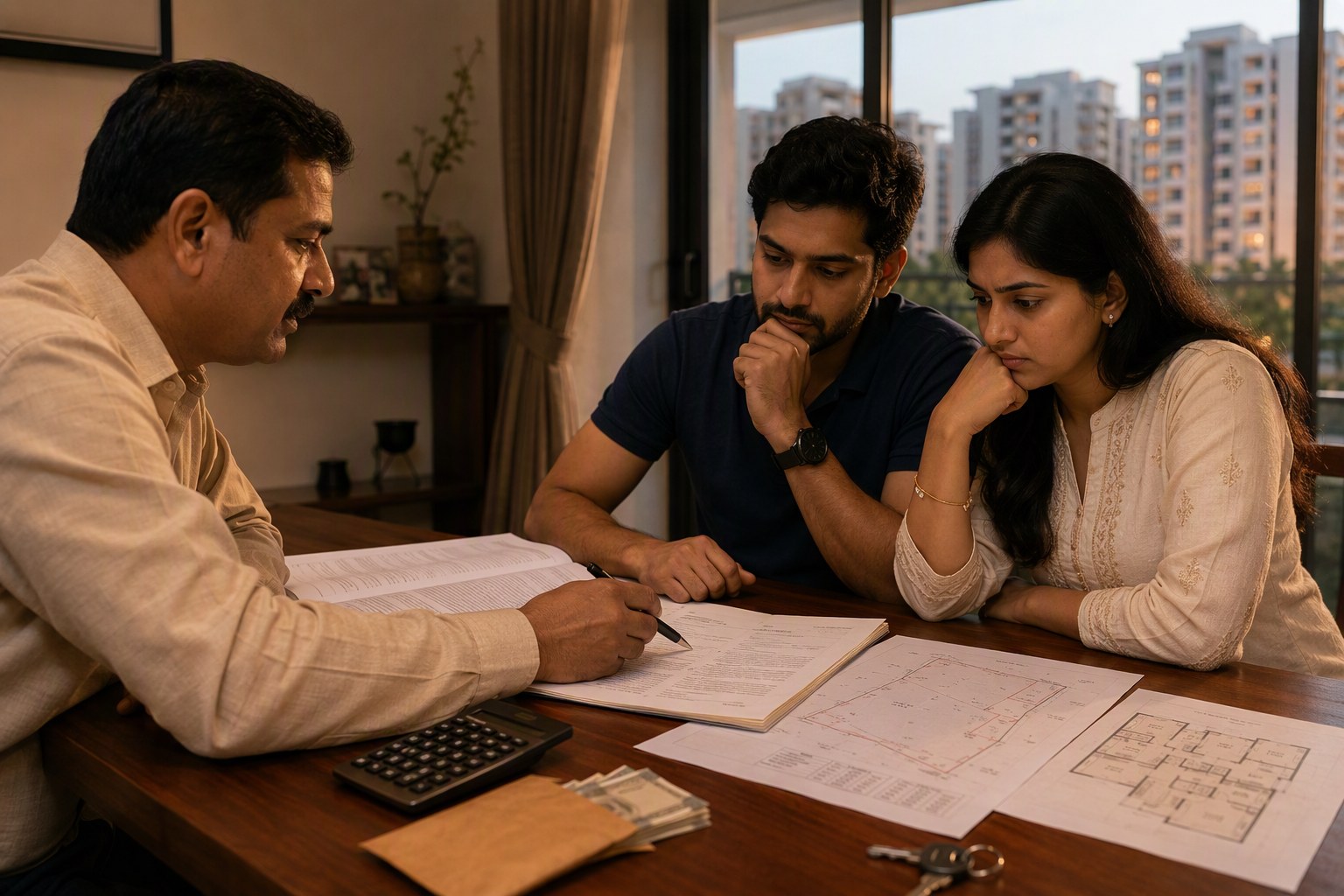
Will your Telangana sale deed draft pass buyer loan checks? My straight answer is: it will pass only if the sale deed draft and seller papers are prepared before the buyer’s bank legal team asks for them. In Telangana, buyers often get loan approval in principle, pay token advance, and then get stuck because the bank advocate raises objections on EC entries, survey number mismatch, Section 22-A status, old link documents, or unclear seller title.
This is not a small risk. As per latest IGRS data available in our database, Telangana has 3,076,153 prohibited property records under Section 22-A. That number alone tells sellers why “we will check during registration” is a bad plan. If your property is in Kokapet, Gachibowli, Kondapur, Miyapur, Uppal, LB Nagar, Shamshabad, Maheshwaram, Ghatkesar, Medchal, or any fast-moving belt, the buyer’s bank will usually scrutinise the title before it releases the loan.
Seller-side preparation is not about drafting fancy legal language. It is about removing reasons for a bank lawyer to say “keep file pending”.
Telangana Sale Deed Draft: Why Banks Object Late
In our experience, many Telangana resale deals fail not because the buyer cannot pay, but because the seller assumes the sale deed is a registration-day document. That thinking is costly. The sale deed draft is the final legal story of the property. If that story does not match the link documents, encumbrance certificate, pahani or Dharani records, municipal permissions, and loan closure papers, the bank will pause.
For example, a flat in Kondapur may have a clean-looking sale agreement, but the bank may ask for the previous sale deed, mother deed, approved building plan, occupancy certificate if applicable, latest property tax receipt, and association NOC. A plot in Maheshwaram mandal may need extra attention on survey number, extent, boundaries, conversion, layout approval, and whether the land falls under any prohibited category. A house in Uppal or LB Nagar may have old municipal door number changes, which must be explained properly in the draft and supporting papers.
The buyer’s loan team generally checks three things: whether the seller has title, whether the property can be mortgaged safely, and whether the proposed sale deed gives the bank enough comfort to create a valid security. If the draft is vague, inconsistent, or silent on past issues, the bank will not take your word for it.
Telangana Sale Deed Draft Checklist Before Buyer Loan Processing
A good Telangana sale deed draft should be prepared with documents on the table, not from memory. Seller name, father’s or spouse’s name, age, address, PAN details, property description, schedule, link document references, payment structure, possession clause, and indemnity clauses must line up with records.
Before you share the draft with the buyer, run these basic checks:
- Seller identity: Name in Aadhaar, PAN, old sale deed, pattadar passbook, and latest records should not create confusion.
- Property description: Flat number, floor, undivided share of land, survey number, plot number, village, mandal, municipality or corporation limits must be consistent.
- Link documents: Mention the correct document numbers, year, SRO, and chain of title.
- EC status: The encumbrance certificate should not show uncleared mortgages, agreements, attachments, or unexpected transactions.
- Section 22-A check: Verify whether the property appears in prohibited property records.
- Government market value: Check the current ready reckoner value before deciding stamp duty calculations.
- Loan closure: If there is an existing loan, keep foreclosure letter, loan closure process details, and original document release plan ready.
You can start with our Encumbrance Certificate Search, Section 22-A Prohibited Property Check, and Market Value / Guideline Value Search. These three checks often catch deal-stage problems before the buyer’s bank advocate catches them.
Why Section 22-A Is A Serious Seller-Side Risk
Section 22-A prohibited property checking has become a regular part of title verification in Telangana. Banks are cautious because a prohibited property cannot be treated like a normal saleable property. The issue can come from government land classification, assigned land, endowment land, wakf-related entries, court or departmental restrictions, or other notified categories. Not every entry means the seller has done something wrong, but every entry needs explanation and resolution before a loan-backed sale.
With 3,076,153 prohibited property records in the database context available to us, no seller should assume “our locality is safe”. We have seen buyers in premium corridors also ask for this check. Kokapet and Narsingi buyers ask because ticket sizes are high. Gachibowli and Financial District buyers ask because bank legal teams are strict. Shamshabad, Tukkuguda, Maheshwaram, Ghatkesar and Shankarpally side buyers ask because land conversion and survey history matter a lot.
If the property is agricultural land or converted land, the sale deed draft should not casually describe it as a residential plot unless the supporting approvals back it. For land, use village, mandal, survey number, subdivision number, extent, classification, and boundaries carefully. If pahani, Dharani, old title deed, and layout papers are not saying the same thing, settle the mismatch first.
What Buyer Banks Usually Read In A Sale Deed Draft
A bank legal officer does not read your sale deed draft like a buyer’s family member. They read it like a risk file. They look for missing links, vague schedules, title breaks, and clauses that may affect mortgage creation. Their job is to protect the bank, not to save your deal.
| Bank check area | What they may object to | Seller-side preparation |
|---|---|---|
| Title chain | Missing mother deed, incorrect SRO details, gap in ownership | Keep all link documents in order with document numbers and registration years |
| EC | Mortgage, attachment, old agreement, unexplained entry | Use EC and explain or close entries before draft circulation |
| Property schedule | Wrong flat number, survey number, plot extent, boundaries | Match draft with sale deed, sanctioned plan, pahani, Dharani, and tax records |
| Prohibited property | Section 22-A hit or classification doubt | Check early and collect official clarification if required |
| Existing seller loan | Original documents with bank, no closure plan | Get outstanding letter and decide tripartite or direct closure route |
| Approvals | Layout, building permission, occupancy certificate doubt | Share approval copies with buyer bank along with draft |
For apartment sales, the bank will also look at UDS, sanctioned plan, project approvals, association documents, maintenance dues, and whether the builder or society has any pending documentation issue. For RERA-registered projects, buyers may ask for a project status check through our RERA Project Lookup.
Telangana Sale Deed Draft Clauses That Need Extra Care
The wording of the sale deed matters, but it must match facts. Sellers sometimes copy an old deed from a neighbour or broker. That is risky because each property has its own title history. A plotted layout in Adibatla is not the same as an old independent house in Secunderabad. A villa in Kollur is not the same as agricultural land in Shankarpally mandal.
1. Recital of title
The recital should clearly say how the seller got the property. If you purchased it, mention the registered sale deed details. If you inherited it, the draft must refer to succession documents, death certificate, legal heir proof, partition deed, release deed, or court order as applicable. If the property came through gift, settlement, GPA, development agreement, or allotment, do not hide that route. Bank lawyers dislike surprises.
2. Schedule of property
The schedule is where many Telangana sale deeds go wrong. For flats, mention flat number, floor, built-up or super built-up description as per documents, UDS, parking if documented, block or tower, project name, land survey numbers, village and mandal. For plots, mention plot number, extent, survey numbers, layout name, village, mandal, and boundaries. For land, match extent with pahani and Dharani records.
If you are unsure about the exact survey number, use our Survey Number Finder. For SRO jurisdiction, our Find Your SRO Office is useful before you finalise the registration plan.
3. Consideration and payment clause
If the buyer is taking a housing loan, the payment clause should reflect bank disbursement correctly. Token advance, own contribution, loan amount, cheque or transfer details, and final payment at registration must be clear. Avoid loose language like “full amount received” if part payment is coming directly from the buyer’s bank on registration day.
4. Possession clause
Possession should match reality. If the seller will hand over vacant possession on registration, say so. If tenants are there, the buyer bank may ask for rental agreement, tenant vacating letter, or possession plan. Do not promise vacant possession while a tenant is refusing to move. That becomes a dispute point.
5. Indemnity and no-encumbrance clause
Most bank-approved drafts insist that the seller declares clear title and no hidden encumbrance. If there is an existing loan, the clause must say how it will be closed and how original documents will be released. A clean CERSAI check also helps. Use our CERSAI Charge Check if a mortgage history is possible.
Seller Documents To Keep Ready Before Sharing The Draft
Here is the practical seller file I prefer before a buyer loan file goes to legal verification:
- Current title deed and all available link documents
- Latest EC for the relevant period as demanded by the buyer bank
- Property tax receipts, mutation records, and municipal door number proof where applicable
- Pahani, Dharani details, pattadar passbook, and land conversion records for land parcels
- Layout approval, building permission, occupancy certificate, and sanctioned plan where applicable
- Society or association NOC for flats, if required
- Existing loan sanction letter, outstanding letter, foreclosure process, and original document list if the property is mortgaged
- PAN, Aadhaar, photographs, marital status proof where required, and address proof of all sellers
- Death certificate, legal heir certificate, family member certificate, release deed, partition deed, or court order in inheritance cases
- Power of attorney document and life certificate of principal, if sale is through GPA
For document drafting support, our Legal Document Generator can help you structure a first draft. But for high-value or disputed-title properties, take local legal review before signing anything.
How Ready Reckoner Value Affects Buyer Loan Checks
In Telangana, stamp duty and registration are linked to government market value, often called ready reckoner value in everyday discussion. The sale deed cannot ignore this. If your agreed sale value and government market value have a mismatch, the SRO and the buyer’s bank will both look closely.
Use the Stamp Duty Calculator and Market Value / Guideline Value Search before finalising the draft. This helps the buyer understand registration cost early. It also avoids arguments on whether the deed value, loan value, and SRO value are aligned.
For constructed properties where land and building components matter, especially independent houses in places like Alwal, Sainikpuri, Manikonda, Meerpet, Nagole, and Boduppal, check whether the value split is sensible. Our Composite Value Calculator and Building Value Calculator can help create a more realistic discussion before the deed is printed.
Flat, Plot, And Land: Different Sale Deed Risks In Telangana
A single draft format does not suit every property. Sellers should understand the risk type.
Apartment resale in Hyderabad
For flats in Gachibowli, Kondapur, Madhapur, Kukatpally, Nallagandla, Miyapur, or Narsingi, bank lawyers focus on builder title, UDS, project approvals, occupancy certificate, prior mortgage, and association dues. If the project is under RERA, buyers may ask for RERA details. If the seller bought from builder under sale agreement and sale deed, both must be available.
Open plot resale
For plots in Tukkuguda, Adibatla, Shadnagar, Ghatkesar, Medchal, Bachupally, and Shankarpally belt, the key risk is land history. Was the land converted? Is the layout approved? Are the survey numbers matching? Is the plot part of a prohibited property entry? Is the road width shown correctly? Buyers may also check zoning. Use Land Use Zone Finder and Road Width Check where location details are available.
Agricultural land and converted land
For land in mandals like Maheshwaram, Moinabad, Shankarpally, Chevella, Keesara, and Yacharam, banks are more cautious. Pahani, Dharani ownership, passbook, mutation, classification, extent, and access road all matter. If your draft says one extent and Dharani shows another, expect objections. If the land has family inheritance history, get the legal heir and release documents sorted before buyer loan processing.
When Should A Seller Prepare The Sale Deed Draft?
Prepare it before signing the final sale agreement, or at least before the buyer submits the full loan legal file. Many sellers wait until the buyer says “bank has approved my loan”. That is only financial eligibility. Legal approval is separate. The bank can still reject the property or ask for corrections.
My preferred order is simple:
- First, verify property through EC, Section 22-A, market value, and SRO jurisdiction.
- Next, compile link documents and approval papers.
- Then, prepare a draft sale deed and sale agreement with matching property schedule.
- After that, share the file with the buyer for bank legal review.
- Only then fix registration date and final payment flow.
This order saves time. It also gives the seller more control. If an issue comes up, you can address it calmly instead of negotiating under registration-day pressure.
Common Seller Mistakes That Trigger Bank Objections
- Using broker draft without title review: Broker formats may be okay for basic structure, but they cannot cure title gaps.
- Ignoring old mortgage entries: Even if a loan was closed years ago, the EC or CERSAI trail may still need explanation.
- Not checking Section 22-A: This is one of the fastest ways to lose buyer confidence.
- Wrong mandal or village name: Hyderabad expansion has created confusion in many peripheral areas. Old village names and new municipal limits must be handled carefully.
- Family consent not documented: In inherited property, all legal heirs and release deeds must be clear.
- Mismatch in extent: Sq. yards, acres, guntas, and square metres are often mixed badly. Use our Area Unit Converter before drafting.
- Not planning loan closure: If your original documents are with a bank, tell the buyer early and structure payment properly.
My Practical View For Telangana Sellers
If you are selling a property in Telangana, treat the sale deed draft as a due diligence document, not as a mere registration formality. The buyer’s bank is not your enemy. It is asking the same questions a careful buyer should ask. If your file is clean, early preparation helps you command trust. If there is a problem, early preparation gives you time to fix it or disclose it honestly.
Use the Property Verification Tool for a wider first-level check, especially for plots and land. If your buyer is serious and loan-backed, share a proper document set instead of sending random WhatsApp photos one by one. A well-arranged PDF file with sale deed draft, EC, link documents, approvals, tax receipts, and identity proofs creates confidence.
We've seen many sellers in Hyderabad lose good buyers because of avoidable paper delays. The buyer liked the property. The price was agreed. Token was paid. Then the bank asked for one missing release deed, one unclear EC entry, or one mismatch in survey number. The deal went cold. That is painful because it is preventable.
So, will your Telangana sale deed draft pass buyer loan checks? It can, if you prepare it like a bank lawyer will read it. Be accurate, be early, and do not hide title history. That is the safest seller strategy in Telangana’s document-heavy property market.
Frequently Asked Questions
Can a buyer bank reject my Telangana sale deed draft?
Yes. The bank may object if the draft has title gaps, wrong property schedule, unclear payment clause, pending mortgage, Section 22-A concern, or mismatch with EC, Dharani, pahani, or approval documents.
Should I check Section 22-A before taking token advance?
Yes, that is the safer route. Telangana has 3,076,153 prohibited property records in the database context available to us, so sellers should check early and avoid buyer loan surprises later.
What documents should a seller share with the buyer bank?
Share the draft sale deed, current title deed, link documents, EC, tax receipts, approval papers, identity proofs, loan closure papers if any, and land records such as pahani or Dharani details where applicable.
Does ready reckoner value matter in the sale deed?
Yes. The deed value, buyer loan amount, stamp duty calculation, and SRO market value should be checked before registration. A mismatch can cause questions from the SRO or buyer bank.
Can I use one standard sale deed format for flat, plot, and land?
No. Flats need UDS, project and approval details. Plots need layout, survey number, boundaries, and road details. Land needs pahani, Dharani, classification, extent, and title history. The draft should match the property type.