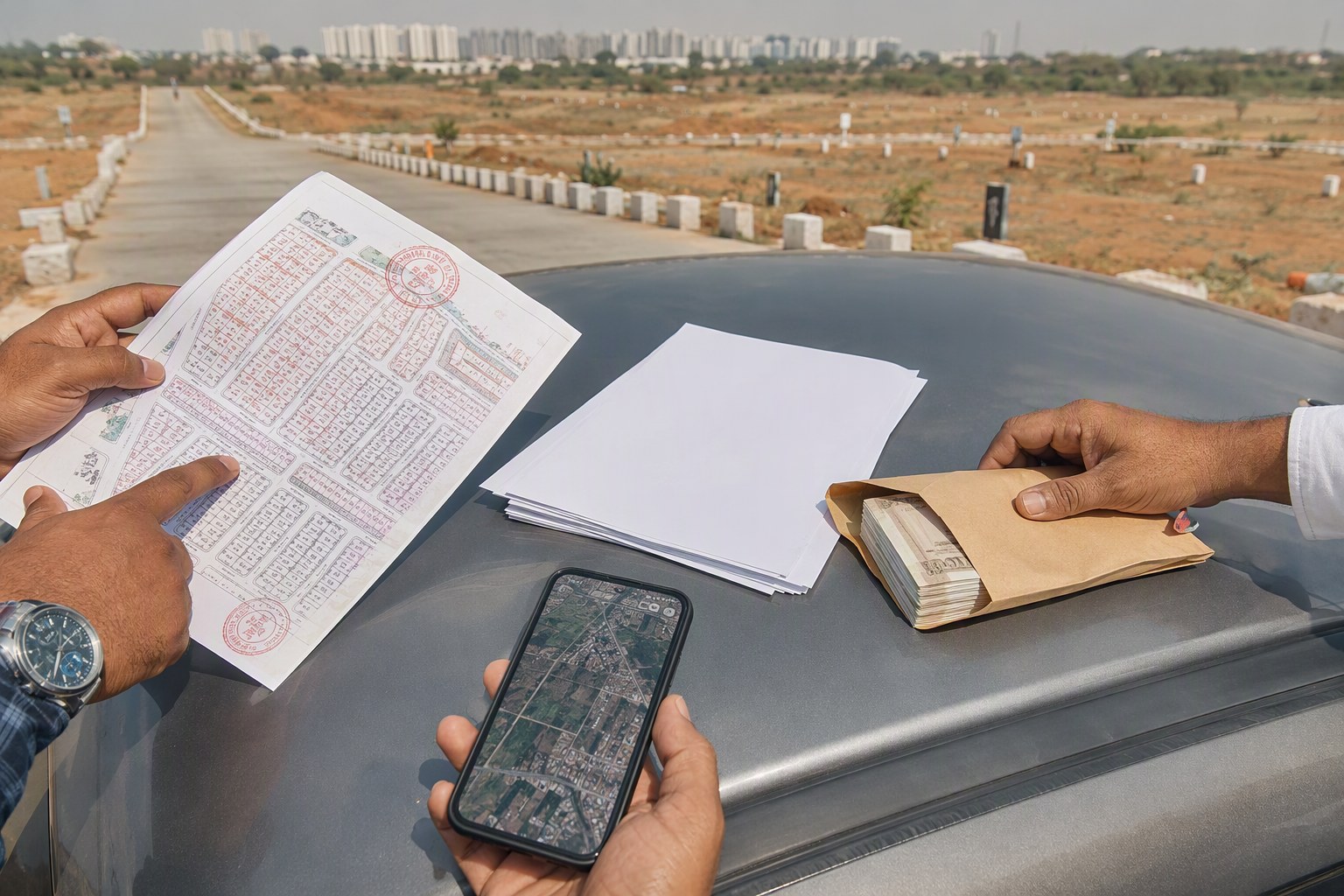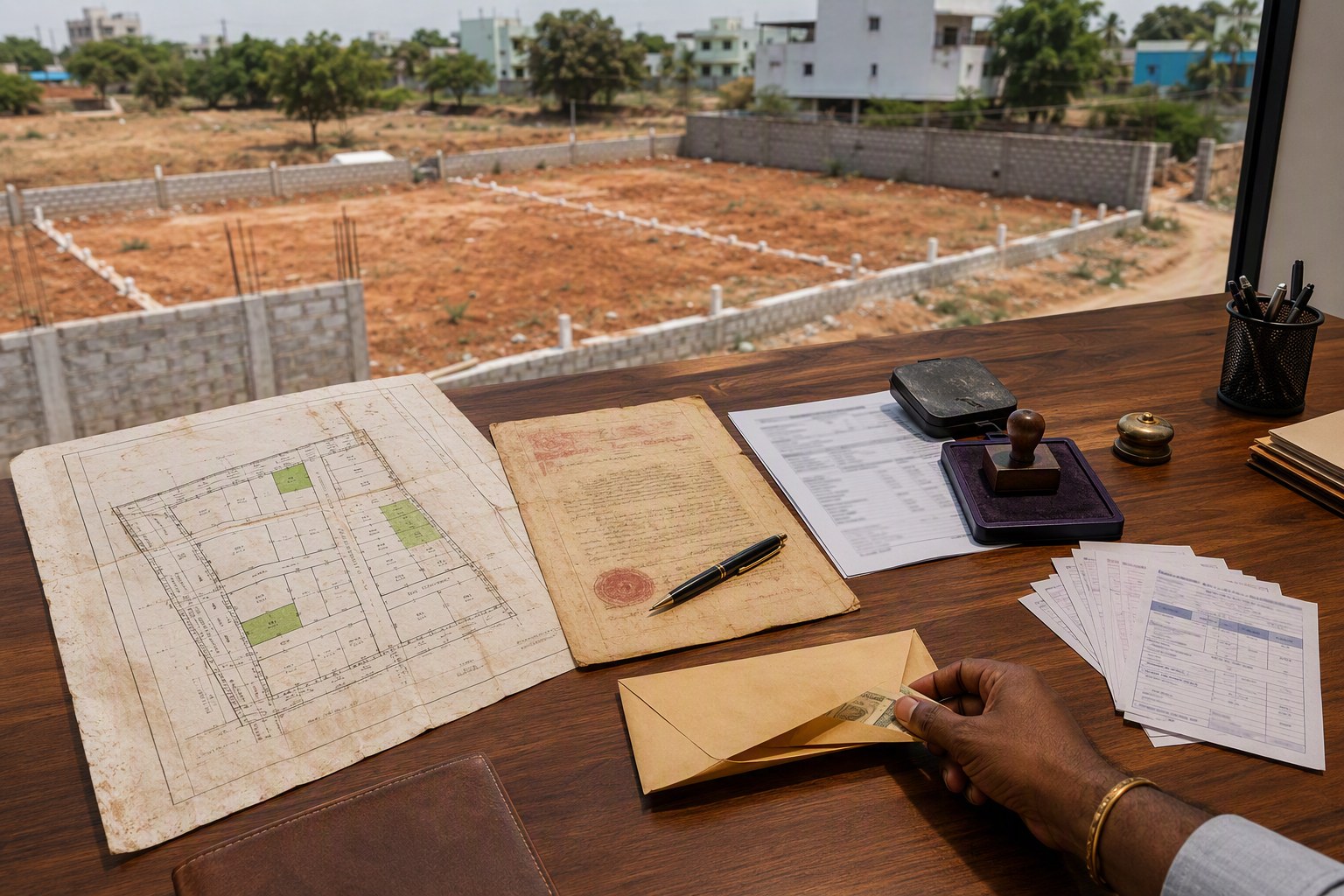



The Resale Test Every Property Investor Should Do Before Token
A Hyderabad investor I know recently liked a compact flat near Narsingi. Rental demand looked strong. ORR access was good. The tenant profile was decent. The seller wanted a quick token advance and kept saying, “Sir, this will go in one day.”
He almost paid. Then he asked one plain question: “If I need to sell this after a few years, will the next buyer and his bank accept it without drama?”
That question changed the deal. The resale test every property investor should do before token is not about fear. It is about exit quality. In Hyderabad and surrounding Telangana markets, a property may look attractive for rent but still become difficult to resell because of EC issues, weak access, unclear title chain, SRO mismatch, stamp duty shock, or registration risk.
In our experience, rental yield brings investors to the table. Resale readiness decides whether they should actually sign the cheque.
The Resale Test Every Property Investor Should Do Before Token: The Simple Rule
Before token, ask this: “Can a normal buyer, using a normal bank loan, buy this property from me later without special explanations?”
If the answer is not clear, pause. A good investment property should pass three resale conditions:
- Legal transferability: Title, EC, pahani or municipal record, SRO details and registration history should make sense.
- Physical acceptability: Road access, approach, building condition, parking, water source and neighbourhood quality should not create buyer hesitation.
- Financial practicality: Stamp duty, guideline value, tax impact and bank valuation should not make the resale unattractive.
This matters across localities. A flat in Gachibowli, Kokapet, Tellapur, Manikonda, Bachupally, Kompally, LB Nagar or Uppal may have demand, but each micro-market has its own resale filters. A buyer in Tellapur may ask about RERA and approach roads. A buyer near Bachupally may focus on school access and water. A buyer in older parts of Secunderabad may examine title chain and UDS more carefully. For open plots around Shankarpally, Moinabad, Maheshwaram, Kandukur or Hayathnagar mandals, survey number, land use and Dharani record become non-negotiable.
Why The Resale Test Every Property Investor Should Do Before Token Matters In Telangana
Telangana property buyers have become sharper. Banks are stricter. Sub-registrar offices are more digital than before. Dharani, IGRS, RERA and CERSAI checks have changed how people verify property. A seller cannot simply say, “All papers are clear.” The buyer will ask for proof.
One real number explains the risk environment. Our prohibited property database shows 3,076,153 entries under Section 22-A records. That does not mean every attractive property is risky. It means registration risk is not a small corner issue in Telangana. A smart investor should check whether the property has any prohibited-property angle before paying token, even if the main investment reason is rent.
Use the Section 22-A Prohibited Property Check as one part of the test. Do not make it the only test. A property can be outside 22-A and still have poor resale quality because of access, missing permissions, loanability or confusing title history.
Start With The Exit Buyer, Not The Current Seller
The seller will talk about positives. “Near Financial District.” “Close to metro proposal.” “Good rent.” “Immediate registration.” All useful, but the resale test asks a different question: what will your future buyer object to?
Think of three likely resale buyers:
- End-user family: They will ask about school commute, road width, parking, association, water and safety.
- Bank-funded buyer: They will need clean EC, approved plan, proper link documents and loanable title.
- Another investor: They will compare rent, vacancy risk, maintenance, capital appreciation and exit time.
If all three buyer types may hesitate, your rental story is not enough.
My practical view: a property that needs a long explanation at purchase will need an even longer explanation at resale.
EC Check: The First Resale Filter
An Encumbrance Certificate is not just a formality for registration. It is a resale document. Your future buyer will check the EC before trusting your property. So you should check it before token.
Use the Encumbrance Certificate Search and read it like a future buyer would. Look for:
- Whether the seller’s acquisition is visible.
- Whether the property description matches the sale deed.
- Whether there are mortgages, releases, court attachments or unusual transactions.
- Whether the survey number, flat number, extent and boundaries are consistent.
- Whether the registration happened in the correct SRO jurisdiction.
For flats in areas like Kondapur, Hafeezpet, Kukatpally, Nallagandla or Miyapur, EC issues often come from old mortgages, development agreements, GPA transactions or mismatch in flat description. For plots in gram panchayat or HMDA layout zones, EC must be compared with link documents, layout approval and survey details.
If the EC is long and confusing, do not panic. Use the EC Analyzer to break down the entries. Then get a property lawyer to examine the chain. Token should wait until the chain is understandable.
Title Chain: Can A Bank Lawyer Sleep Peacefully?
For resale, bank loan eligibility is gold. A cash buyer may accept more risk if the price is attractive. A bank-funded buyer will not. If your asset cannot pass a bank legal check later, your resale buyer pool becomes smaller.
For an apartment, check:
- Builder’s land title and development agreement.
- RERA registration, where applicable.
- Approved building plan and occupancy-related documents.
- Sale deed, UDS share and flat schedule.
- Association records and maintenance dues.
For open land or plotted investment, check:
- Mother deed and link documents.
- Pahani or revenue record history, where relevant.
- Dharani details and pattadar information.
- Survey number and village/mandal mapping.
- Layout approval, land use and road access.
The Property Verification Tool is useful here, especially for plots and land parcels. If you do not know the survey number, start with the Survey Number Finder. In Telangana, one wrong survey number can take you into a completely different legal story.
Access And Road Width: The Silent Resale Killer
Investors often underestimate access. They see a tenant already staying there and assume resale will be easy. But resale buyers look at daily life and future approvals.
In Hyderabad’s growth belts, especially Mokila, Kollur, Velimela, Adibatla, Tukkuguda, Shankarpally and parts of Maheshwaram mandal, approach road quality can change the resale value perception. A property may be legally clear but still weak if the access is narrow, disputed, seasonal or dependent on another private parcel.
Before token, physically inspect the approach in the morning and evening. Ask:
- Is the road public or private?
- Is the width acceptable for normal vehicle movement?
- Does the road exist on layout records?
- Is there any nala, buffer, lake or obstruction nearby?
- Will a future buyer’s family feel comfortable visiting the site?
Run a Road Width Check where available. For land and redevelopment cases, road width is not only about comfort. It can affect building potential, loan perception and buyer confidence.
Stamp Duty Impact: Will The Next Buyer Feel The Price Shock?
Some deals look attractive because the investor only looks at purchase price and rent. But resale involves registration cost, stamp duty, market value, capital gains and bank valuation. Your buyer will calculate all of it.
Before token, use the Stamp Duty Calculator and the Market Value / Guideline Value Search. Compare the seller’s asking price with the government guideline value. We are not saying buy only near guideline value; Hyderabad market prices can move differently locality by locality. But if the gap creates registration, loan or tax discomfort, your resale buyer will ask questions.
For example, premium apartment pockets like Gachibowli, Kokapet, Financial District, Jubilee Hills and Banjara Hills often have different buyer expectations compared to plot-heavy belts like Yacharam, Kandukur, Shadnagar side or Moinabad. The resale buyer in each area judges price differently. The ready reckoner value, actual market sentiment and bank valuation must not pull in three opposite directions.
If you plan to sell after a holding period, also run the Capital Gains Tax Calculator. A profitable exit on paper can become less exciting after tax and transaction costs.
SRO And Registration Risk: Check Before Token, Not At The Counter
Every property belongs to a registration jurisdiction. Investors sometimes ignore SRO mapping until the sale deed is being prepared. That is risky. If village, ward, survey number or SRO details are wrongly understood, the deal can get delayed or questioned.
Use the Find Your SRO Office or SRO Village Directory to confirm the correct registration office. This is very relevant in fringe areas where people casually say “near Shamshabad” or “near Patancheru” but the actual village, mandal and SRO may be different.
Also check the prohibited-property angle early using the Section 22-A Prohibited Property Check. As mentioned earlier, Telangana records contain 3,076,153 prohibited-property entries in our database. Even if your property is clean, you want that comfort before token, not after paying advance.
RERA And Builder Resale: Do Not Buy Only The Rent Story
For under-construction or recently completed apartments, RERA status matters. A project with proper registration, approvals and disclosures gives future buyers more comfort. This is especially relevant in investment-heavy corridors like Kokapet, Puppalaguda, Narsingi, Tellapur, Kollur, Bachupally and Kompally.
Use the RERA Project Lookup before token. Check whether the project details, promoter name and project status match what the seller or broker is saying. In resale flats, also confirm whether the builder has issued all dues clearance, parking allotment, possession-related papers and association handover documents where applicable.
We’ve seen investors buy a flat because the rent looked attractive, then struggle during resale because the parking was not clearly mentioned, corpus dues were pending, or the flat number in records did not match the builder’s internal numbering. These are small issues only until a buyer’s lawyer opens the file.
Land Use, FSI And Future Buyer Comfort
If you are buying land or an old house for future redevelopment, resale readiness goes beyond title. The next buyer may be a builder, a doctor wanting a clinic, a family wanting a villa, or another investor. Each one will ask: what can legally be built here?
Use the Land Use Zone Finder and FSI/FAR Calculator. For larger plots, also check OSR requirements using the OSR Calculator. These checks are practical in areas like Manikonda, Peerancheru, Bandlaguda Jagir, Gandipet, Shamirpet, Medchal, Tukkuguda and Adibatla, where land use and road access can decide buyer interest.
A plot that is fine for holding may not be fine for construction. A buyer who cannot build what he wants will either negotiate hard or walk away.
A Practical Pre-Token Resale Scorecard
Before paying token, give the property a simple score. No need for complicated theory. Use this table during site visits and document review.
| Resale Check | What To Verify | Why It Matters Later |
|---|---|---|
| EC clarity | Ownership, mortgages, releases, property description | Future buyer and bank legal teams rely on it |
| Title chain | Link documents, seller right, approvals | Weak chain reduces loanable buyer pool |
| SRO match | Correct village, mandal, registration office | Wrong assumptions delay registration |
| Access | Road width, public access, layout road | Bad access hurts end-user demand |
| Registration risk | 22-A, court issues, government land angle | Can block or delay resale |
| Stamp duty and guideline value | Government value, transaction cost | Future buyer calculates total acquisition cost |
| RERA or layout approval | Project or layout legality | Improves buyer trust |
| Exit buyer profile | End-user, investor, bank-funded buyer | Defines how liquid the asset can be |
If the property fails one or two items, you may still proceed after legal advice and price correction. If it fails several items, do not let rental excitement push you into a stuck asset.
Locality Examples: Same Rent, Different Resale Quality
Two properties can give similar rent but very different resale comfort.
A flat in a well-known gated community in Nallagandla may attract salaried IT families, bank-funded buyers and NRIs. The buyer will still check EC, UDS, parking and association dues, but the resale audience is usually wider.
A standalone building portion in a narrow lane of Manikonda may get rent quickly, but resale depends heavily on road width, permissions, parking and title clarity. The rent may be fine, but the exit buyer may be limited.
A plot near Mokila or Shankarpally may look attractive for long-term holding. But if the survey number, land use, approach road or Dharani record is unclear, resale can become slow. A buyer will not pay confidently just because the area is popular.
An old independent house in Himayatnagar, West Marredpally or Ameerpet may have excellent location strength. Still, old title documents, family partition history, building age and redevelopment potential must be checked. Location cannot cure a defective title.
What To Put In The Token Agreement
If the property passes your first-level checks and you decide to pay token, protect yourself in writing. A casual WhatsApp confirmation is not enough for serious investment.
Your token agreement should mention:
- Full property description as per documents.
- Seller name and ID details.
- Token amount and payment mode.
- Total sale consideration.
- Time given for legal verification.
- Condition for refund if title, EC, registration or approval issues are found.
- List of documents seller must provide.
- Responsibility for pending dues, loans or charges.
You can use the Legal Document Generator as a starting point, but for high-value transactions, take legal review. Token is small compared to property value, but it creates pressure. The agreement should give you enough room to exit if the resale test fails.
My Final View On Resale Readiness
Hyderabad property investment is still attractive when bought correctly. Rental demand exists in many employment and education corridors. But a rental asset without resale clarity is only half an investment.
Before token, do not ask only, “What rent will I get?” Ask, “Who will buy this from me later, and what will their lawyer, banker and family object to?”
That one question can save you from bad paper, weak access, stamp duty surprises and registration headaches. In Telangana, the best investors are not the ones who rush fastest. They are the ones who know how to exit before they enter.
Frequently Asked Questions
What is the resale test before paying token for a property?
It is a pre-token check to see whether a future buyer and bank can comfortably accept the property. It covers EC, title chain, SRO, access, stamp duty, approvals and registration risk.
Is rental income enough reason to buy an investment property in Hyderabad?
No. Rental demand is useful, but resale readiness is equally important. A property with good rent but poor title, bad access or weak approvals may become difficult to sell later.
Which documents should I check before giving token advance?
Check the sale deed, link documents, EC, approved plan or layout approval, RERA details where applicable, property tax records, loan release papers, SRO details and prohibited-property status.
Why is Section 22-A check needed if the property has good location?
Good location does not remove registration risk. Telangana records contain 3,076,153 prohibited-property entries in our database, so a 22-A check should be done before token.
Should I pay token before legal verification?
If you must pay token, keep it conditional. The agreement should clearly allow refund if title, EC, approval, SRO or registration issues are found during verification.