


Telangana Property Portfolio: Can One Bad Title Hurt Returns?
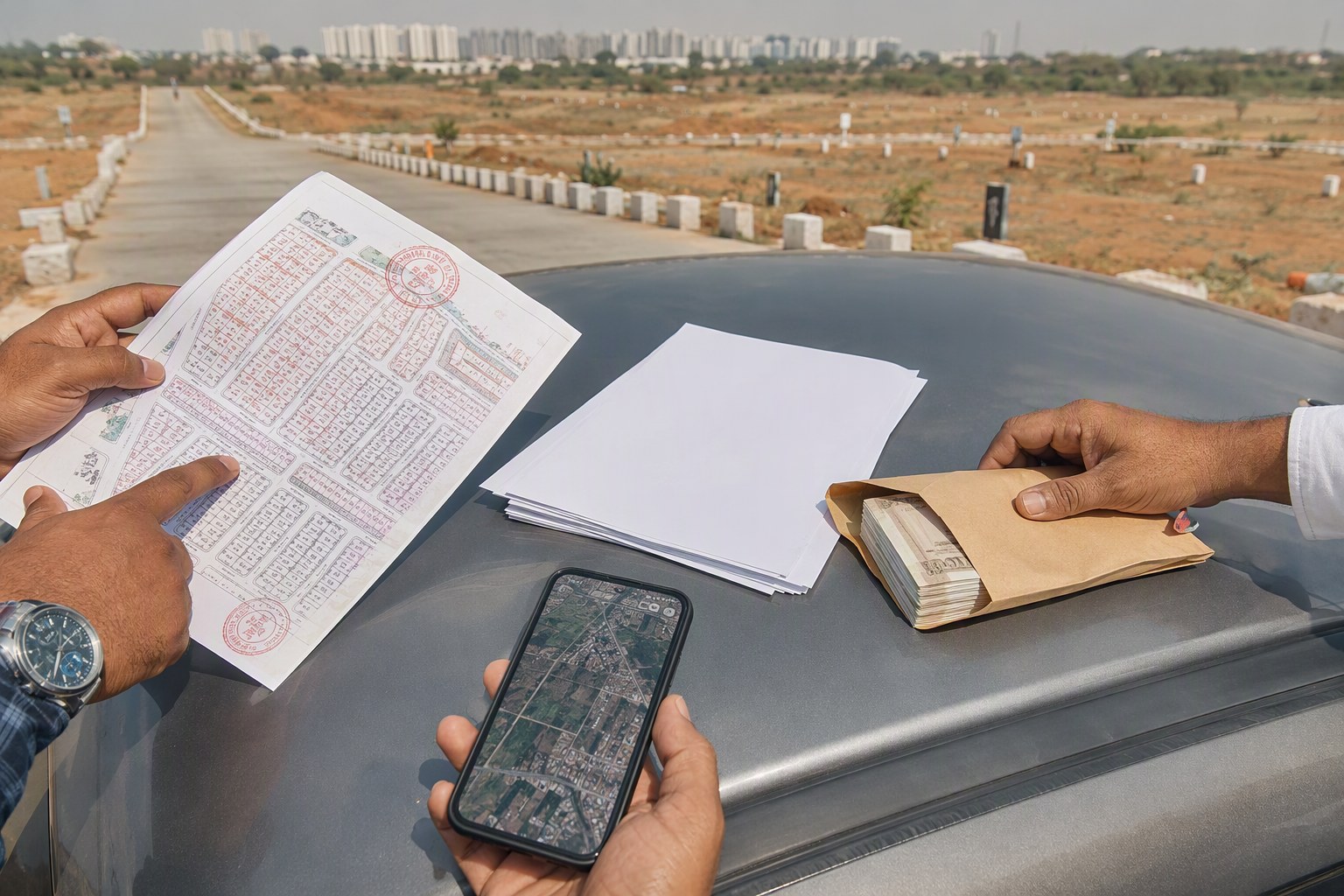
Ravi, a mid-level IT professional from Kondapur, built his Telangana Property Portfolio the way many Hyderabad investors do. First, a 2BHK in Nallagandla. Then a small open plot near Shankarpally. Later, one pre-launch apartment in Kollur and a 300 sq yd land parcel near Kandukur mandal, sold to him as the next big growth belt because of Pharma City talk. On paper, he looked smart. Four assets across four micro-markets. But when he tried to sell the Kandukur land to fund another buy in Tellapur, the buyer's advocate raised one line that changed the mood: the title chain was not clean.
One weak title may look like a small corner of your portfolio. In real life, it can freeze cash, scare banks, delay resale and reduce the confidence of every serious buyer who looks at your papers.
That is the uncomfortable truth in Telangana property investing. Returns are not decided only by location, road width and launch price. They are decided by saleability. If one asset cannot be registered smoothly, mortgaged confidently, or explained clearly to the next buyer, your portfolio return is already under pressure.
Telangana Property Portfolio: the answer first
Yes, one bad title can hurt the return of an otherwise good Telangana Property Portfolio. Not because the land or flat has no value, but because unclear title reduces liquidity. In Hyderabad and surrounding districts, liquidity is everything. A Kokapet flat may get enquiries within days if priced right. A disputed plot in a growth corridor may sit unsold for months, even years, because the next buyer's lawyer, banker or family elder does not approve the papers.
In our experience, investors underestimate three things:
- Bankability: If a bank refuses loan funding on the asset, your resale buyer pool becomes smaller.
- Negotiation loss: Buyers use title doubts to ask for a heavy discount.
- Opportunity cost: Capital stuck in one unclear asset cannot move into a better property at the right time.
Telangana has a very active registration ecosystem, but the risk is not imaginary. State records show 147,934 prohibited properties under Section 22-A. That number alone should make every investor pause before buying land based only on a broker's WhatsApp location pin.
Before paying token, check the asset through the Section 22-A Prohibited Property Check, verify current and past transactions through Encumbrance Certificate Search, and match government value through the Market Value / Guideline Value Search. These are not fancy steps. They are basic portfolio hygiene.
Why a Telangana Property Portfolio is only as liquid as its weakest title
Hyderabad investors often speak of returns in percentages. Bought at ₹5,500 per sq ft, now quoting ₹8,500. Bought plot at ₹22,000 per sq yd, neighbour sold at ₹42,000. This is useful, but incomplete. A portfolio return is not the rate you hear in a tea stall discussion near the venture gate. It is the money you can actually realise after legal checks, taxes, stamp duty, brokerage, bank approval and buyer confidence.
Let us take a simple portfolio like Ravi's:
| Asset | Location and mandal | Entry cost | Current market talk | Liquidity position |
|---|---|---|---|---|
| 2BHK apartment | Nallagandla, Serilingampally mandal | ₹78 lakh | ₹9,000 to ₹11,500 per sq ft in many resale conversations | Good, if OC, association and EC are clean |
| Open plot | Mokila-Shankarpally belt, Shankarpally mandal | ₹32,000 per sq yd | ₹45,000 to ₹70,000 per sq yd depending on road and permissions | Moderate to good, if layout approval and title are clean |
| Apartment booking | Kollur, Ramachandrapuram/Patancheru side growth belt | ₹6,200 per sq ft | ₹6,800 to ₹8,500 per sq ft in many projects depending on stage | Depends heavily on RERA, construction and builder reputation |
| Land parcel | Kandukur mandal, Rangareddy district | ₹18 lakh | Broker claims ₹35 lakh to ₹40 lakh | Weak, because title chain and classification are unclear |
On a spreadsheet, Ravi's Kandukur parcel looks like it doubled. In the market, no serious buyer is willing to pay full rate because the old pahani entry, seller family tree and survey number mapping do not align neatly. One buyer asks for a ₹7 lakh discount. Another asks the seller to first clear the Dharani issue. A third buyer walks away after the SRO document writer says registration may get stuck.
This is how a bad title hurts return. Not loudly. Quietly. Month after month.
The Hyderabad investor mistake: treating title risk as a small legal formality
We have seen investors negotiate ₹50,000 aggressively on price, then sign an agreement without reading the mother deed. That is upside-down thinking. In Telangana, especially for land, the title is the product. The soil, road and future metro rumours come later.
Common danger zones include:
- Assigned land: Land assigned to weaker sections may have transfer restrictions. Many such parcels fall into Section 22-A issues.
- Government land or endowment land: Buyers get attracted by low price, then discover registration problems.
- Old GPA sales: General Power of Attorney chains can create serious doubt, especially if principal is dead or heirs dispute the transaction.
- Unclear inheritance: In villages around Moinabad, Chevella, Shamirpet and Keesara, land may pass through multiple heirs without clean release deeds.
- Survey mismatch: The land shown on ground may not match the survey number in the document.
- Layout approval gap: A plotted venture may be marketed as DTCP or HMDA approved, but the approval may cover only part of the land or may have conditions.
For flats, the risk is different. In Kokapet, Narsingi, Financial District, Tellapur, Miyapur, Uppal and Kompally, buyers must check land ownership, building permission, RERA registration, mortgage release, occupancy certificate and undivided share. Use the RERA Project Lookup before trusting a brochure. If a project is not registered when it should be, ask why.
How one unclear asset pulls down overall ROI
Let us put numbers to the pain. Suppose your portfolio is worth ₹2.2 crore on paper:
- Nallagandla flat: ₹1.05 crore market value
- Mokila plot: ₹62 lakh market value
- Kollur apartment booking: ₹75 lakh market value
- Kandukur land: broker quote of ₹38 lakh
Total headline value: ₹2.8 crore. Looks good. But if the Kandukur land has unclear title and actual buyer bids come only at ₹26 lakh, your portfolio value immediately drops by ₹12 lakh. If it takes 18 months to sell, the loss is bigger. During that time, you may miss a resale opportunity in Tellapur at ₹7,200 per sq ft or a good plot in Ghatkesar at ₹24,000 per sq yd.
There is also the capital gains angle. If you finally sell under pressure, tax planning becomes messy. For any exit, calculate the after-tax position using the Capital Gains Tax Calculator. Many investors talk only about sale price, not net cash after tax, brokerage and legal expense.
A bad title can affect ROI in five ways:
| Impact area | What happens | Investor loss |
|---|---|---|
| Resale | Buyers delay or withdraw after legal opinion | Longer holding period |
| Price | Buyer demands discount for risk | Lower realised value |
| Loan | Bank may refuse to fund buyer | Cash buyers only, smaller market |
| Collateral | You cannot comfortably mortgage the asset | Reduced borrowing flexibility |
| Mental bandwidth | Repeated visits to SRO, mandal office, lawyers | Time and stress cost |
Many investors ignore that last row. But anyone who has spent three afternoons between a document writer, mandal revenue office and SRO counter knows the cost is real.
Telangana Property Portfolio checks before you buy the second or third asset
The first property purchase is emotional. The second should be disciplined. By the time you are building a Telangana Property Portfolio, every asset must pass a checklist. Do not treat due diligence as something only big investors do. A ₹20 lakh plot with a defect can hurt more than a ₹1 crore flat with clean papers.
1. Start with survey number and land identity
For land, the survey number is the foundation. Ask for survey number, village, mandal and district. Then cross-check location, extent and boundaries. Use the Survey Number Finder and compare with village maps, Dharani records and actual ground demarcation. In areas like Yacharam, Ibrahimpatnam, Maheshwaram, Kandukur, Shamirpet and Medchal, survey number confusion is common because large parcels get sold in smaller bits.
2. Check Section 22-A before paying advance
With 147,934 prohibited properties appearing in state records, this step cannot be skipped. Section 22-A prohibition may relate to government land, assigned land, endowment land, wakf land or court-related restrictions. If the property appears in the prohibited list, do not accept verbal assurances like saar, we will manage at registration. Use the Section 22-A Prohibited Property Check and ask a local advocate for written opinion.
3. Pull Encumbrance Certificate from the right SRO
An EC shows registered transactions and charges. It does not prove everything, but it is a critical document. Check at least 30 years where possible for land. For flats, check the parent land, builder mortgage and your specific unit documents. If you are not sure which office covers the property, use Find Your SRO Office.
4. Compare guideline value and market value
Guideline value is not the same as actual market price. But it helps you understand stamp duty, registration cost and whether the deal looks unusually low. If a seller offers land at far below prevailing market value in a hot belt like Kokapet, Narsingi, Neopolis, Tellapur, Tukkuguda or Shankarpally, there must be a reason. Check the government value through the Market Value / Guideline Value Search and estimate registration outgo using the Stamp Duty Calculator.
5. For apartments, verify RERA and approvals
Hyderabad's apartment market is strong, but not every tower deserves your cheque. In Kollur, Tellapur, Osman Nagar, Puppalaguda, Bachupally and Miyapur, project stage, RERA status, land mortgage and builder delivery record matter. Use RERA Project Lookup. Ask for sanctioned plan, building permit, mortgage NOC if relevant, draft sale agreement and payment schedule.
Why local context matters in Telangana title checks
Title risk changes by asset type and location. A flat in Serilingampally mandal has different issues from agricultural land in Chevella. A plot in a gram panchayat layout near Shadnagar is not the same as an HMDA layout near Mokila. A villa plot in Tukkuguda under Maheshwaram mandal must be checked differently from a resale flat in Ameerpet or Himayatnagar.
Some local examples we keep seeing:
- Kokapet and Neopolis: Premium pricing, high-rise density, strong buyer demand. But investors must check project permissions, UDS, amenities handover and builder mortgage closure.
- Narsingi and Puppalaguda: Good rental and resale interest. Title checks must include parent land history and HMDA approvals.
- Tellapur and Osman Nagar: Rapid apartment supply. Compare RERA timelines and actual construction progress.
- Mokila and Shankarpally: Popular plot belt. Check layout approval, road access, survey boundaries and whether any land falls under restricted categories.
- Adibatla, Tukkuguda and Maheshwaram: Growth story is strong, but agricultural land conversions, assigned land risk and road alignment need close checking.
- Ghatkesar, Keesara and Bibinagar side: Plot rates can look attractive. Confirm village records, EC and actual approach road.
In Indian families, property decisions are often mixed with trust. A known broker, a relative's friend, a builder's sales team, a village sarpanch reference. Trust is fine for introduction. Documents must carry the deal.
The right way to review an existing Telangana Property Portfolio
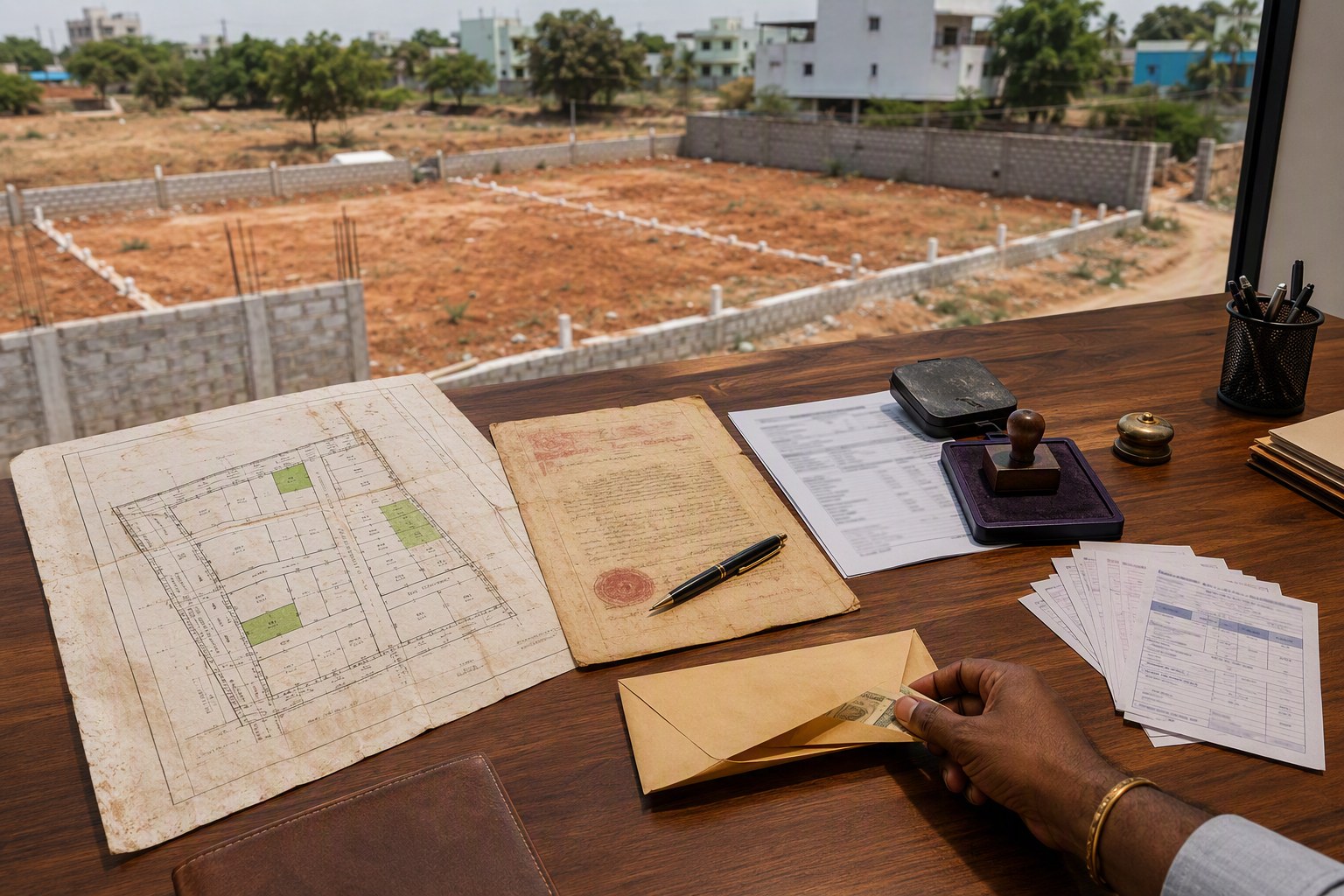
If you already own multiple assets, do not wait until sale time to discover defects. Do a portfolio audit once a year. Keep a folder for each asset, both physical and digital. For each property, keep sale deed, link documents, EC, tax receipts, mutation details, building approvals, RERA details, loan closure letters, society NOC and latest market estimate.
For land, add pahani, Dharani extract, survey sketch, conversion order if any, layout approval and passbook details where applicable. For apartments, add occupancy certificate, sanctioned plan and maintenance dues certificate. If the asset is rented, keep rental agreement and tenant KYC.
Use the Property Change Tracker to monitor changes around your asset. Use the Property Verification Tool before selling, mortgaging or adding the property as collateral. If redevelopment or construction potential is part of your thesis, check permissible built-up area with the FSI/FAR Calculator. If road access is the selling point, check it using the Road Width Check.
Portfolio review should answer four direct questions:
- Can I sell this asset within 60 to 90 days at a fair market price?
- Will a bank fund a buyer for this property?
- Can my legal documents survive a strict advocate's review?
- If I need emergency liquidity, which asset should I sell first?
If one property fails all four, treat it as a problem asset, not as long-term wealth.
Should you sell a property with weak title or fix it?
There is no single answer. Some defects can be corrected. Some cannot. A missing link document may be solved through certified copies and affidavits. A family release deed may clean up inheritance doubts. A mortgage entry may need a proper release deed. Mutation mismatch may need revenue follow-up.
But if the land falls under prohibited property, government claim, assigned land restriction, lake buffer, court stay or serious boundary dispute, do not assume time will solve it. Time may only make the paperwork older and the buyer more suspicious.
My opinion is simple: if the defect is curable within a clear legal path and cost, fix it before sale. If the defect is structural, take a realistic haircut and exit when a suitable buyer is available. Do not keep showing inflated value in your personal net worth statement. That false comfort leads to bad borrowing and overconfidence.
What serious buyers ask before trusting your property
When you sell, the buyer's advocate will not care about your portfolio story. They will ask for documents. A serious buyer in Hyderabad typically asks:
- Original sale deed and link documents
- Latest EC
- Property tax or land revenue records
- Mutation or Dharani details
- Approved layout or building plan
- RERA registration for eligible projects
- Loan closure and mortgage release if property was financed
- Possession proof and boundary clarity
- Society NOC for apartments
If you cannot provide these quickly, the buyer assumes risk. Once risk enters the conversation, discount follows.
Final view: title clarity is a return strategy
A good Telangana property investor is not the person who only buys in the next hot corridor. The better investor buys assets that can be sold, financed, inherited and defended on paper. Hyderabad will keep expanding through Kokapet, Tellapur, Kollur, Tukkuguda, Shankarpally, Shamirpet and other growth belts. Rates will move in cycles. But title quality will always decide who exits cleanly.
Ravi eventually spent nearly six months cleaning up part of his Kandukur land documentation. He recovered most of his capital, but missed a better apartment resale in Tellapur during that period. His lesson was expensive, but useful: diversification across locations is not enough. You need diversification across clean, bankable, legally saleable assets.
That is the real meaning of a strong Telangana Property Portfolio. Not four properties on paper. Four assets that a buyer, banker and lawyer can all respect.
Frequently Asked Questions
Can one bad title really reduce my Telangana property portfolio returns?
Yes. A bad title can reduce resale price, delay exit, block bank loans for buyers and keep your capital stuck. Even if other assets perform well, one unclear property can pull down net portfolio ROI.
What is the first check before buying land in Telangana?
Start with the survey number, village, mandal and Section 22-A status. Then check EC, Dharani records, pahani, link documents, layout approval and ground boundaries before paying any major advance.
Is an Encumbrance Certificate enough to prove clear title?
No. EC shows registered transactions and charges, but it does not confirm every legal risk. You still need link document review, revenue record check, prohibited property check and local legal opinion.
Which Hyderabad areas need extra title due diligence for plots?
Plot belts like Mokila, Shankarpally, Chevella, Shadnagar, Maheshwaram, Kandukur, Ghatkesar and Keesara need careful survey, layout, access road and land classification checks.
Should I fix title issues before selling a property?
If the defect is curable, fix it before sale because clean documents improve price and buyer confidence. If the issue is structural, such as prohibited land or serious dispute, take legal advice and price the risk honestly.