Hyderabad Heat-Ready Homes are no longer a niche preference for eco-conscious buyers. They are becoming a basic purchase filter, especially in west Hyderabad, north Hyderabad and the fast-growing villa belts where summer heat, water stress and high-density construction are now part of the property decision. Buyers are asking sharper questions: Is the terrace treated? Does the flat get cross-ventilation? Is there shade over the driveway? Is STP water reused? Is the land clean in dharani, pahani and SRO records?
The shift is visible in site visits across Gachibowli, Kondapur, Kokapet, Nallagandla, Tellapur, Bachupally, Kompally, Uppal, LB Nagar and Shamshabad. Five years back, many buyers would ask first about clubhouse size, elevation and handover date. Now, especially after repeated heatwave alerts and hotter April-May site visits, they are checking roof heat, west-facing walls, balcony usability, borewell dependence and power backup load. In our experience, the serious buyer is no longer satisfied with a brochure saying green building. They want to see practical cooling, lower maintenance and proper title records.
Our view is simple: a green home in Hyderabad must do two jobs. It should stay liveable in May without punishing electricity bills, and it should pass basic property verification without surprises at the SRO or dharani stage.
Hyderabad Heat-Ready Homes: The buyer checklist has changed
The new green buyer in Hyderabad is not only looking at solar panels or a few plants near the gate. The checklist has become more practical. Roof treatment, wall exposure, window placement, open space, rainwater harvesting, STP reuse and legal clarity are now being discussed in the same conversation as carpet area and price per sft.
Rates make this even more relevant. In the Gachibowli-Kondapur belt, many good gated community flats are being quoted roughly in the ₹9,500 to ₹13,500 per sft range, depending on project age, builder, floor, view and amenities. Kokapet and the Neopolis side often see premium quotes from around ₹10,500 to ₹16,000 per sft in branded projects. Nallagandla and Tellapur generally sit in the ₹7,000 to ₹10,500 per sft band for many apartment enquiries, while Miyapur and Bachupally have active buyer interest around ₹6,000 to ₹8,500 per sft. In east Hyderabad, Uppal, Nagole and LB Nagar deals are commonly discussed around ₹5,500 to ₹8,800 per sft, again depending on micro-location and project grade.
When prices are at these levels, spending a little time checking heat performance is sensible. A west-facing 3BHK in a high-rise at Kokapet can feel very different from a similar-size unit in the same tower stack with better shade and air movement. A top-floor flat in Miyapur may need better terrace insulation. A villa in Mokila or Shankarpally may look premium, but without tree cover and roof protection, the first summer can be uncomfortable.
Hyderabad Heat-Ready Homes need cool roofs, not only fancy elevation
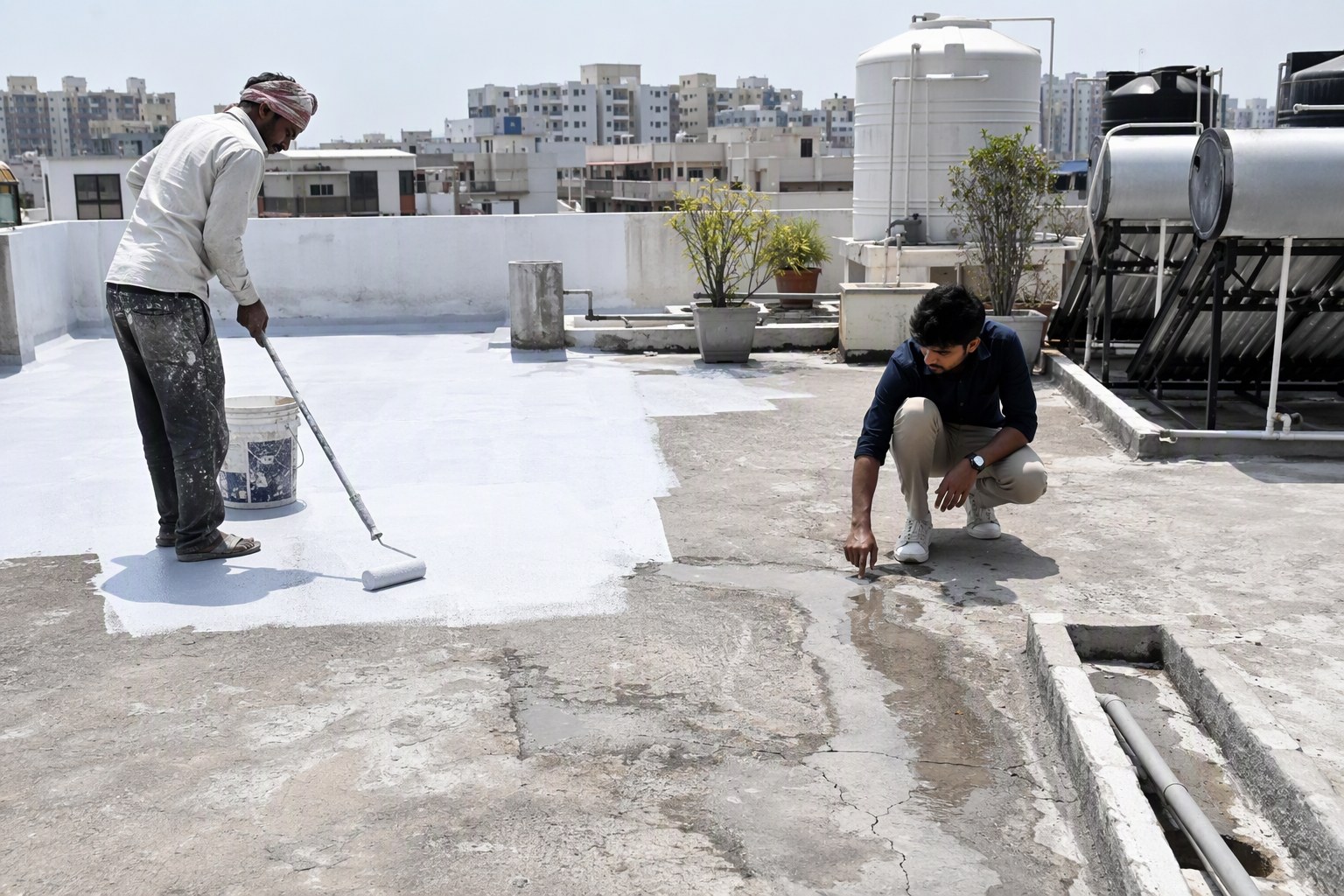
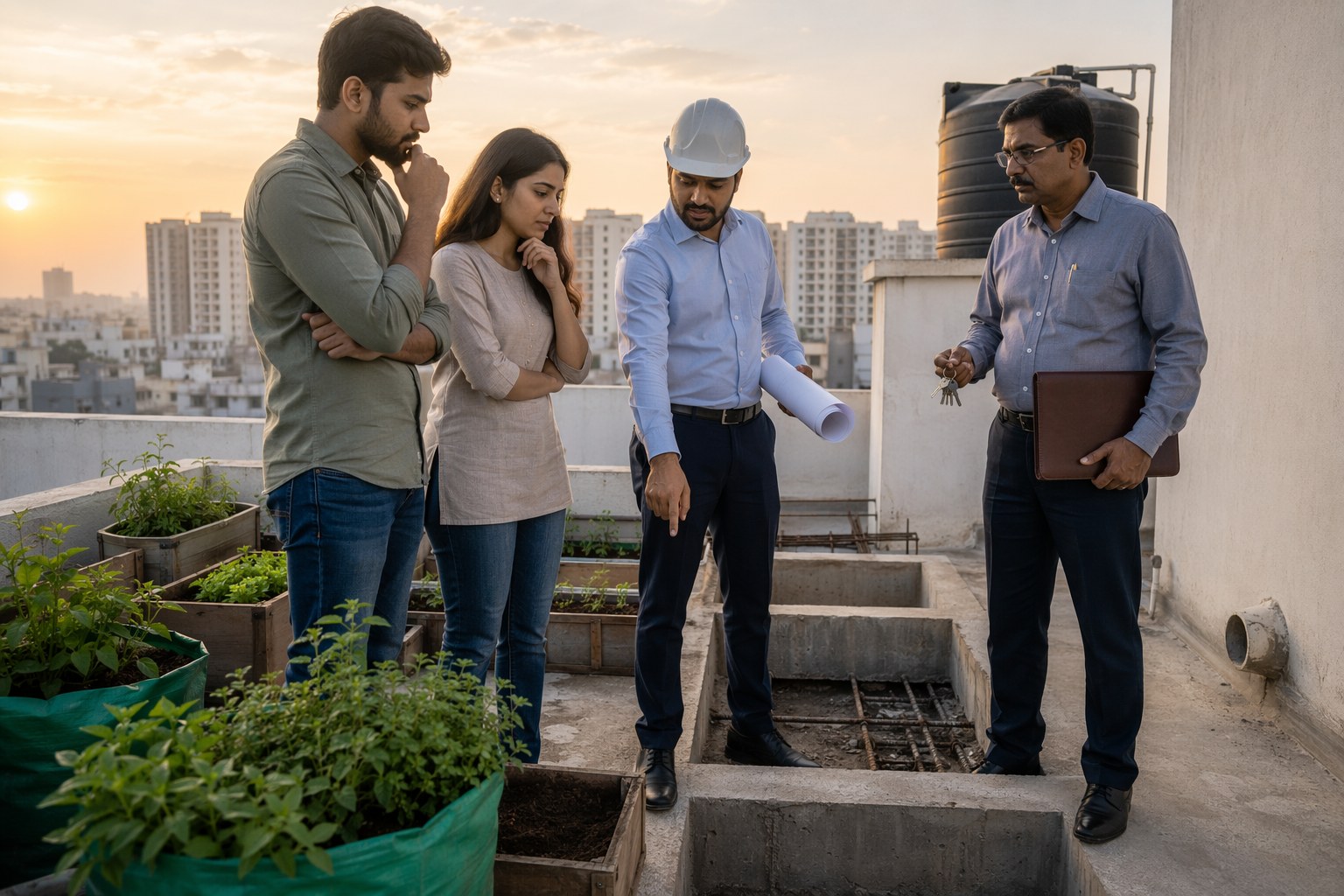
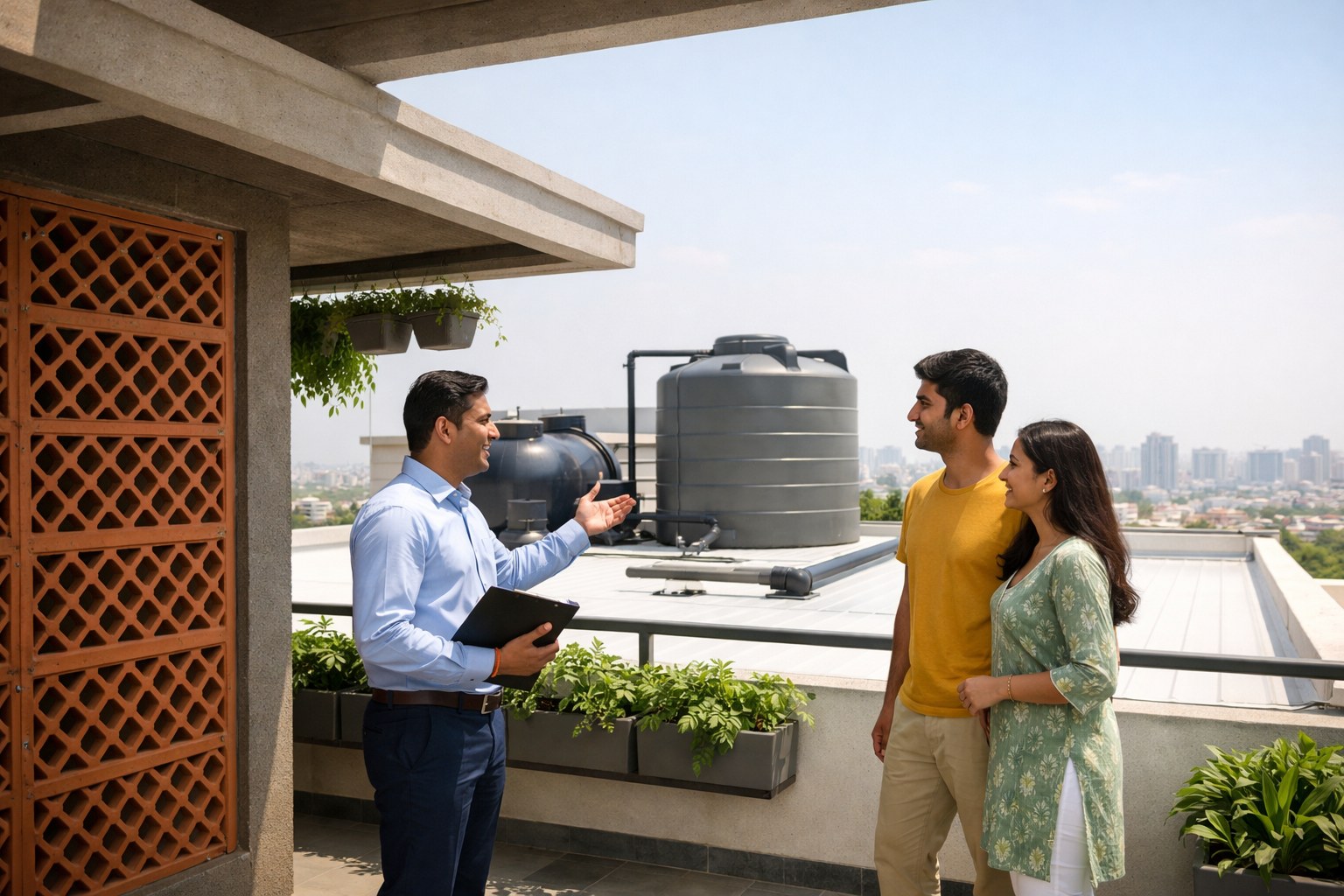
The terrace is the first place buyers should inspect. Hyderabad heat hits the roof hard, especially in low-rise apartments, independent houses and villas in areas like Bandlaguda Jagir, Manikonda, Narsingi, Kompally, Bachupally, Tukkuguda and Adibatla. A white reflective coating, China mosaic, cool roof tiles or proper insulation can reduce indoor heat build-up. It also reduces air-conditioner load during peak summer afternoons.
For flats, ask the builder or association these questions:
- Is the terrace treated with reflective coating or heat-resistant tiles?
- When was the coating last renewed?
- Is the overhead tank exposed to direct sun?
- Are lift rooms and service areas insulated or ventilated?
- Does the top-floor flat have false ceiling provision or roof insulation above?
In resale apartments at Kondapur, Madhapur and Kukatpally, we have seen buyers negotiate better when top-floor heat is clearly visible during afternoon visits. In villas around Kollur, Velimela and Mokila, roof insulation should be checked before interiors begin. Retrofitting is possible, but the cost and disruption are higher after false ceiling, wardrobes and AC lines are completed.
Hyderabad Heat-Ready Homes depend heavily on ventilation and orientation
Ventilation is the most underrated green feature in Hyderabad homes. A flat can have premium flooring, Italian kitchen finish and a large clubhouse, but if air does not move, the home becomes AC-dependent for eight months. Cross-ventilation matters in 2BHK and 3BHK flats, especially in compact high-rise layouts.
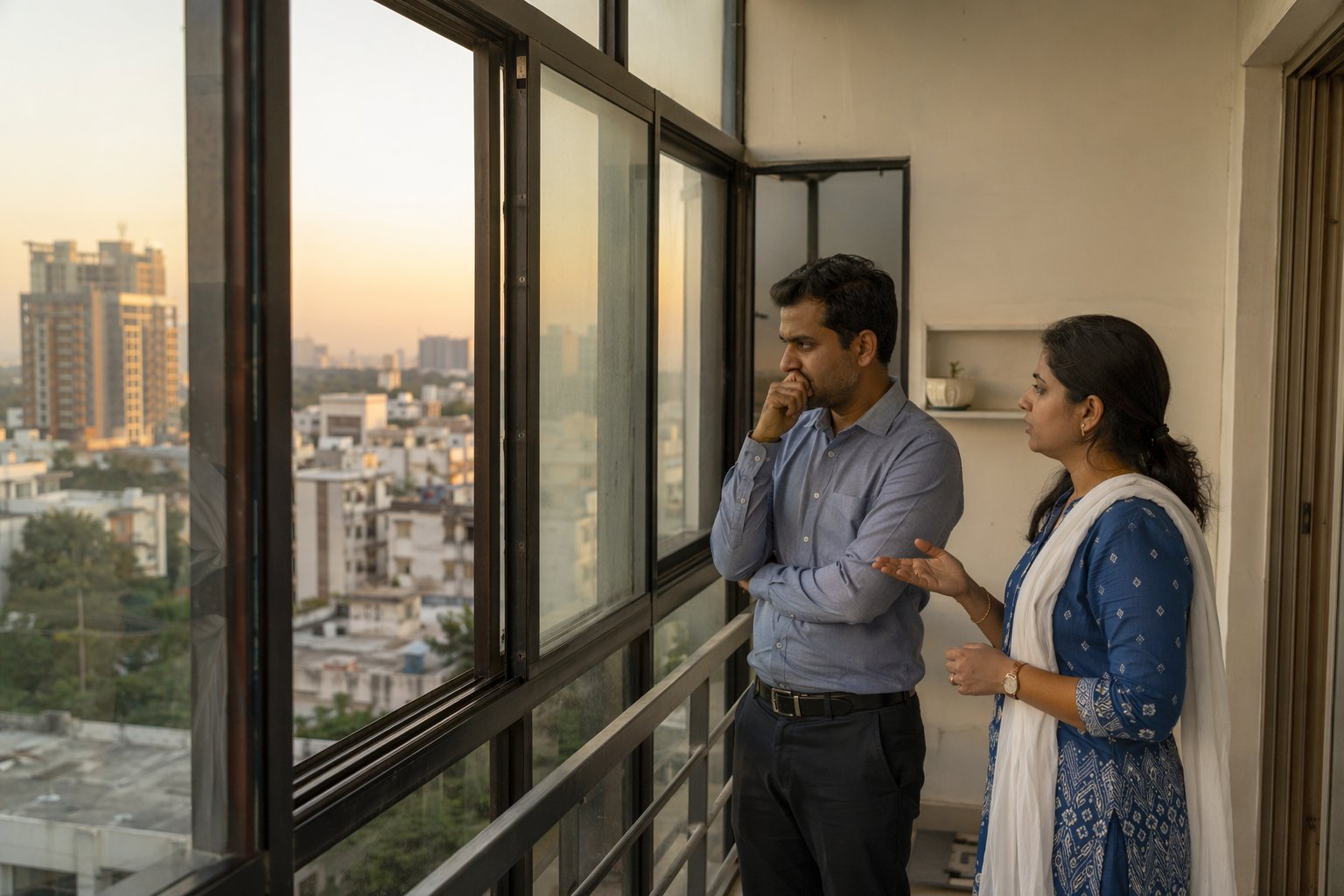
During a site visit, stand inside the living room and bedrooms with windows open. Check whether air actually moves. In many west Hyderabad projects, buyers get attracted by a view towards the Financial District or ORR, but the flat may face harsh evening sun. West-facing does not mean bad automatically, but it needs shading, balcony depth, good glass specification and usable curtains or external fins.
Here is a practical orientation reading for Hyderabad buyers:
| Home feature | What to check | Why it matters in Hyderabad |
|---|---|---|
| West-facing wall | Depth of balcony, shading fins, neighbouring tower shade | Evening heat gain is high from March to June |
| Top floor | Terrace treatment, insulation, water tank placement | Roof heat directly affects room temperature |
| Corner flat | Window direction and exposed wall area | Can be airy, but may heat faster if badly oriented |
| Low floor | Tree shade, podium heat, privacy, mosquito risk | May stay cooler if landscaped well |
| Villa | Roof, setbacks, tree space, driveway shade | Open plots heat quickly without landscape planning |
In Serilingampally mandal areas like Gachibowli, Nanakramguda and Nallagandla, tower spacing can make a big difference. In Gandipet mandal locations like Kokapet, Narsingi and Manikonda, open surroundings may give better wind today, but future construction on neighbouring parcels can change shade and airflow. That is why buyers should also check land use and road width before assuming the current view will remain.
Useful checks include the Land Use Zone Finder and Road Width Check, especially when buying in developing corridors.
Water reuse is now a core green home test in Hyderabad
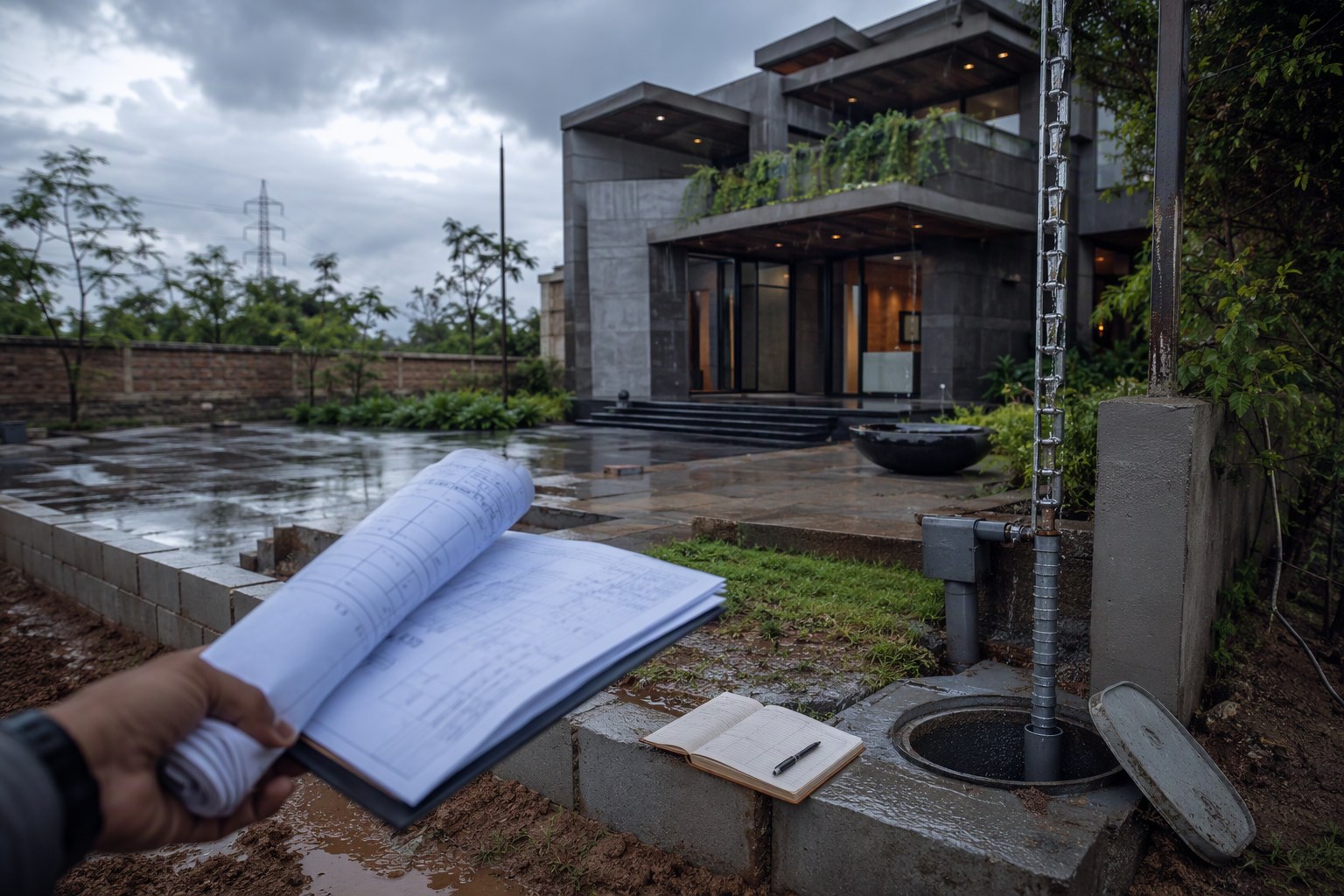
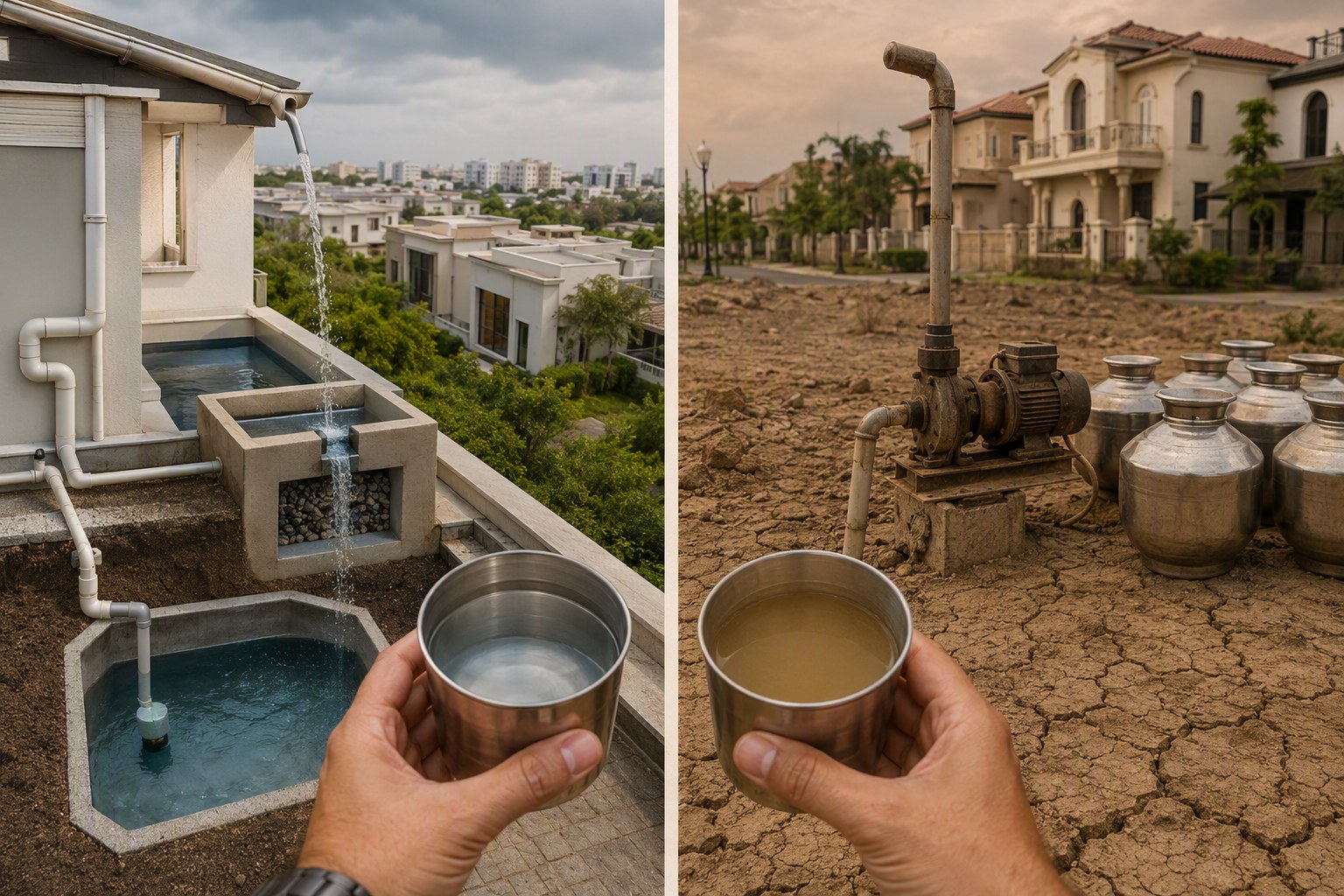
Heat and water are connected. A hotter apartment community uses more water for landscaping, cooling towers, cleaning and daily domestic needs. In Hyderabad gated communities, especially large projects in Tellapur, Kollur, Bachupally, Kompally and Tukkuguda, buyers should ask how water is sourced and reused.
At minimum, check these items:
- Is there a functioning sewage treatment plant, not just a promised STP?
- Is treated water used for gardening and flushing?
- Are water meters installed for each flat or villa?
- Is rainwater harvesting visible and maintained?
- What is the summer tanker cost history for the community?
- Are borewells legal and recorded by the association?
In resale communities, ask for the last 12 months of maintenance bills. Tanker dependence shows up clearly there. If summer water expenses jump sharply every year, your green home may only be green on paper. A good association in Nallagandla or Kompally will usually have records of STP maintenance, water tanker bills and borewell status. If the seller avoids sharing these, treat it as a warning sign.
Shade, trees and open space are becoming price factors
Earlier, landscaping was treated as an amenity photo. Now buyers are checking whether it actually cools the property. Tree-lined internal roads, shaded walking tracks, pergolas over seating areas and basement ramps with cover are practical features. In villa layouts at Shankarpally, Mokila, Chevella road, Maheshwaram and Tukkuguda, shade can decide whether outdoor space is usable or only decorative.
For apartment projects, open space should be checked against project approvals. A large central courtyard is useful only if it is not fully paved. Too much stone, concrete and dark tile around towers increases reflected heat. Native trees, soil beds and shaded play areas work better in our climate than imported ornamental landscaping that needs heavy watering.
Buyers should also understand OSR, setbacks and built-up density. If a project is very tightly packed, the heat island effect inside the community can be noticeable. The OSR Calculator and FSI/FAR Calculator can help buyers ask better questions before booking.
Hyderabad Heat-Ready Homes still need clean title verification
Green features are valuable only when the property itself is legally safe. Telangana has 147934 prohibited properties recorded under Section 22-A. That number alone should make every buyer pause before paying a token advance, especially for open plots, villas and gram panchayat-to-municipality transition areas.
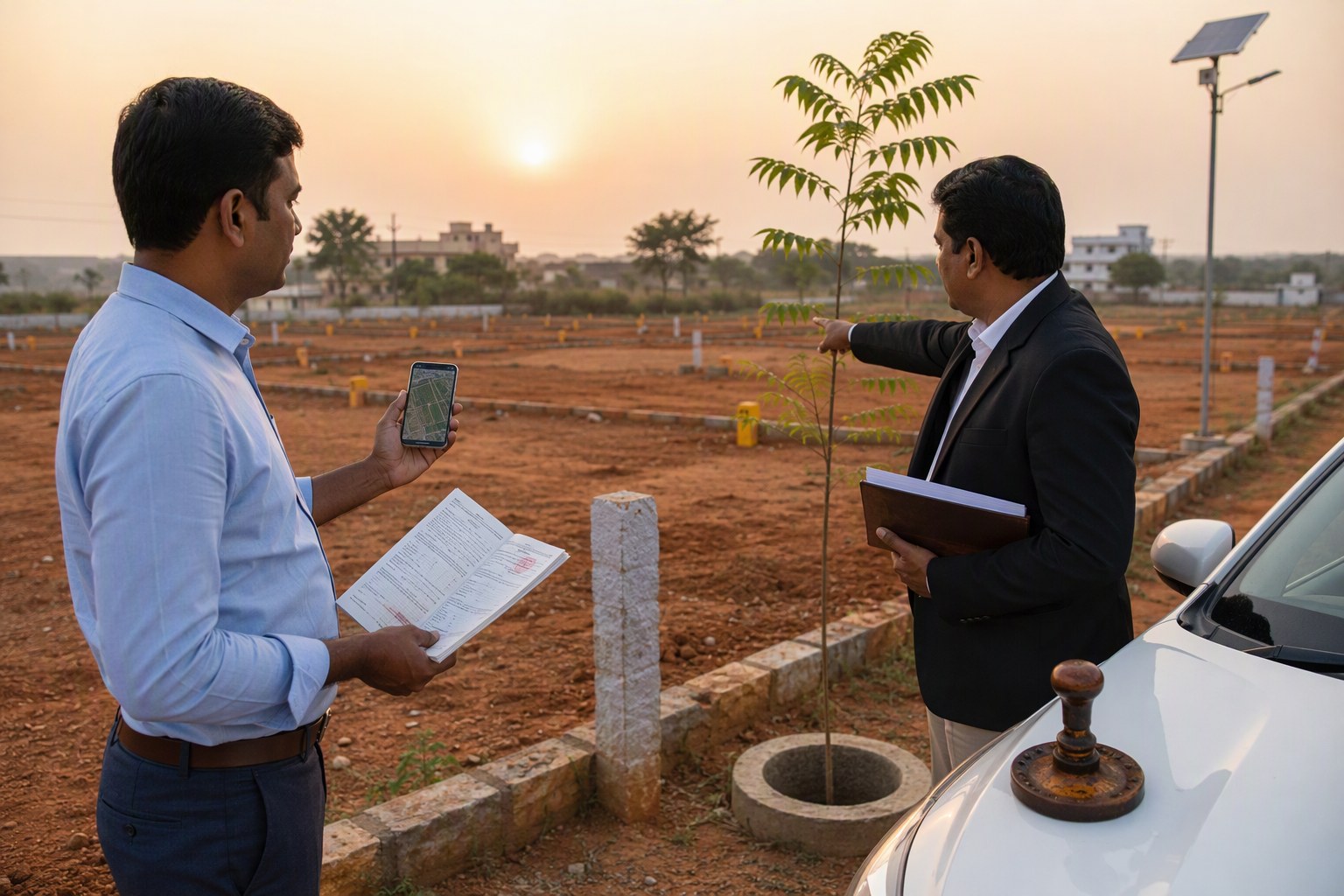
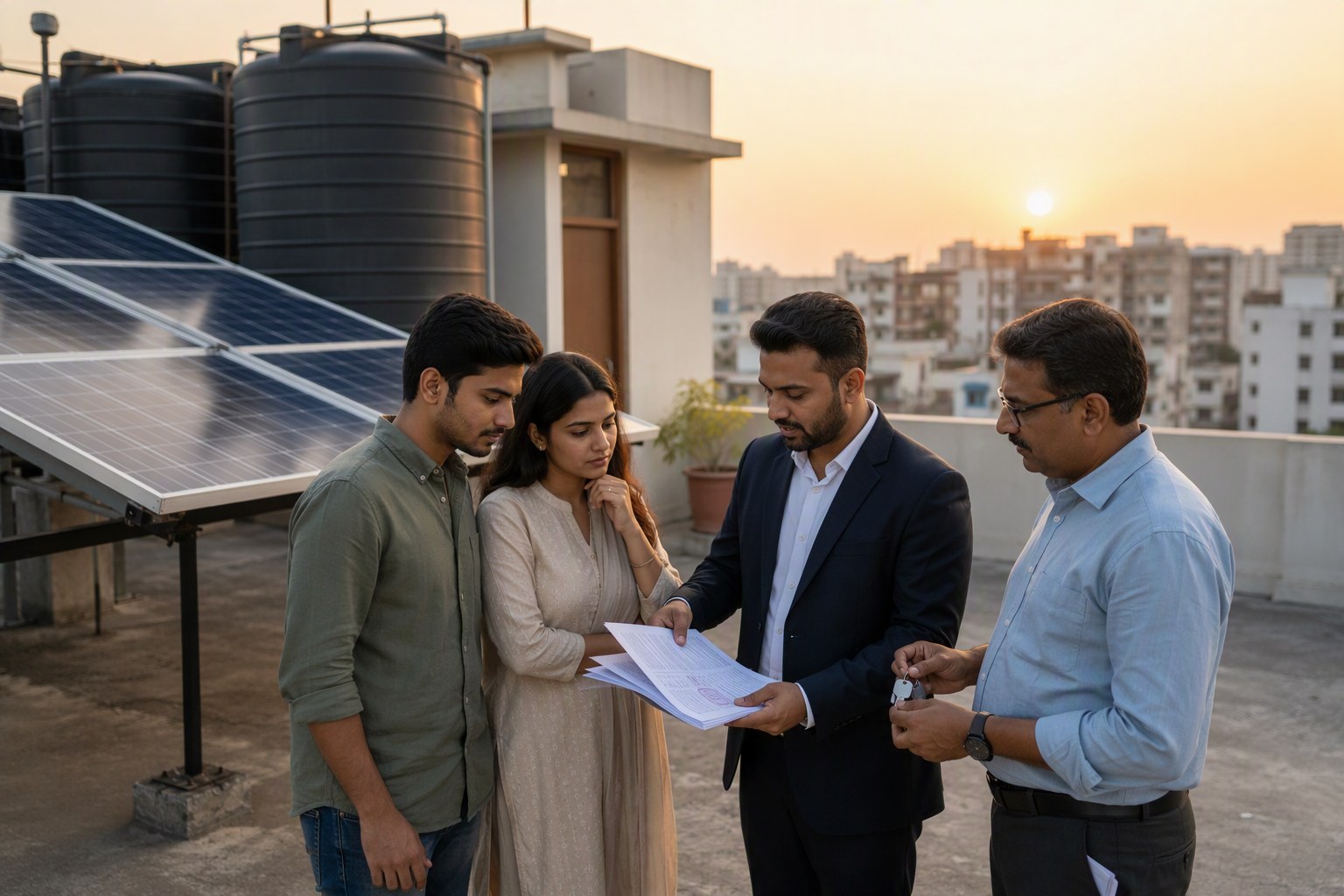
For land and villas, check the survey number, pahani, dharani status, link documents, mutation, layout approval and SRO records. For apartments, check RERA registration, building permission, land ownership documents, EC, UDS share and whether the project land has any restriction. In many Hyderabad transactions, the buyer gets excited by the project name and misses the boring paperwork. That is where trouble starts.
Use these tools before signing an agreement:
- Section 22-A Prohibited Property Check to screen for prohibited land entries.
- Encumbrance Certificate Search to review transaction history and charges.
- RERA Project Lookup for registered project details and status.
- Survey Number Finder when the land parcel needs basic identification.
- Property Verification Tool for a broader title check workflow.
For flats, also find the correct registration office using Find Your SRO Office. Many buyers assume the nearest SRO is the right one, but jurisdiction depends on location. Wrong assumptions can delay document checks.
Rates, ready reckoner values and green premiums
Hyderabad buyers are slowly accepting that heat-ready features can justify a premium, but not blindly. A project in Kokapet quoting ₹14,000 per sft should show better construction quality, ventilation, water systems and documentation than a basic standalone apartment. A Tellapur project at ₹8,500 per sft with good shade, STP reuse and sensible floor plans may offer better daily comfort than a more expensive but glass-heavy flat.
Ready reckoner or government market value is a separate number from actual market price. Before registration, buyers should compare the declared value, agreement value and area calculation. For this, use the Market Value / Guideline Value Search and Stamp Duty Calculator. If you are comparing apartments with different undivided land share, parking allocation and amenities, the Composite Value Calculator gives a clearer view.
| Locality belt | Common buyer focus now | Indicative discussion range |
|---|---|---|
| Gachibowli, Kondapur, Madhapur | Ventilation, west sun, traffic heat, resale association quality | ₹9,500-₹13,500 per sft |
| Kokapet, Narsingi, Financial District | Glass facade heat, tower spacing, future construction, premium maintenance | ₹10,500-₹16,000 per sft |
| Nallagandla, Tellapur, Kollur | Water sourcing, STP reuse, ORR access, school commute | ₹7,000-₹10,500 per sft |
| Miyapur, Bachupally, Kukatpally | Top-floor heat, density, metro access, tanker history | ₹6,000-₹8,500 per sft |
| Uppal, Nagole, LB Nagar | Road width, ventilation, metro access, older building quality | ₹5,500-₹8,800 per sft |
| Mokila, Shankarpally, Tukkuguda villas | Roof insulation, tree cover, borewell dependence, layout title | Villa tickets often ₹2.5 crore-₹6 crore+ |
These are market discussion ranges, not official values. Final pricing changes with exact project, floor, facing, approvals, handover stage and seller urgency. We have seen buyers pay more for a cooler, well-ventilated flat with lower maintenance risk. We have also seen overhyped green claims collapse when the association bills reveal tanker dependence and poor STP operation.
What to inspect during a summer site visit
If possible, visit the property between 2 pm and 5 pm once. Morning visits are pleasant, but they hide heat issues. Carry a simple checklist and spend 30 minutes inside the actual unit, not only in the sales office.
- Touch the internal wall on the west side. If it is radiating heat, ask about insulation or shading.
- Check whether the balcony can be used in summer or is fully exposed.
- Open windows in two rooms and see if cross-breeze exists.
- Ask for the STP location. If smell is strong near lower floors, investigate.
- Check basement ventilation and ramp water stagnation.
- Look at terrace treatment in low-rise buildings.
- Ask residents, not only sales staff, about summer electricity and water bills.
- Review EC, RERA, dharani or SRO documents before paying a non-refundable amount.
For villas and plots, walk the full boundary. Confirm survey stones, road width, approach road status and neighbouring land use. In peri-urban mandals, a beautiful layout can still have access, conversion or prohibited land issues. Heat-ready and legally-ready must go together.
Builder claims buyers should question
Some marketing terms need careful reading. Green-rated does not always mean your specific flat will stay cool. Solar power for common areas does not reduce your indoor heat. A central landscape image does not prove water reuse. A smart home package does not replace good orientation.
Ask for proof in simple language:
- Show the roof specification in writing.
- Show STP capacity and treated water reuse plan.
- Show rainwater harvesting pits on site drawings.
- Show RERA registration and approved plans.
- Show UDS calculation and land title chain.
- Show maintenance estimate for water, power backup and common area cooling.
Good builders usually answer these questions confidently. If the response is only brochure talk, slow down. In Hyderabad, a property purchase is too expensive to be decided by elevation renders and launch offers.
The bottom line on Hyderabad Heat-Ready Homes
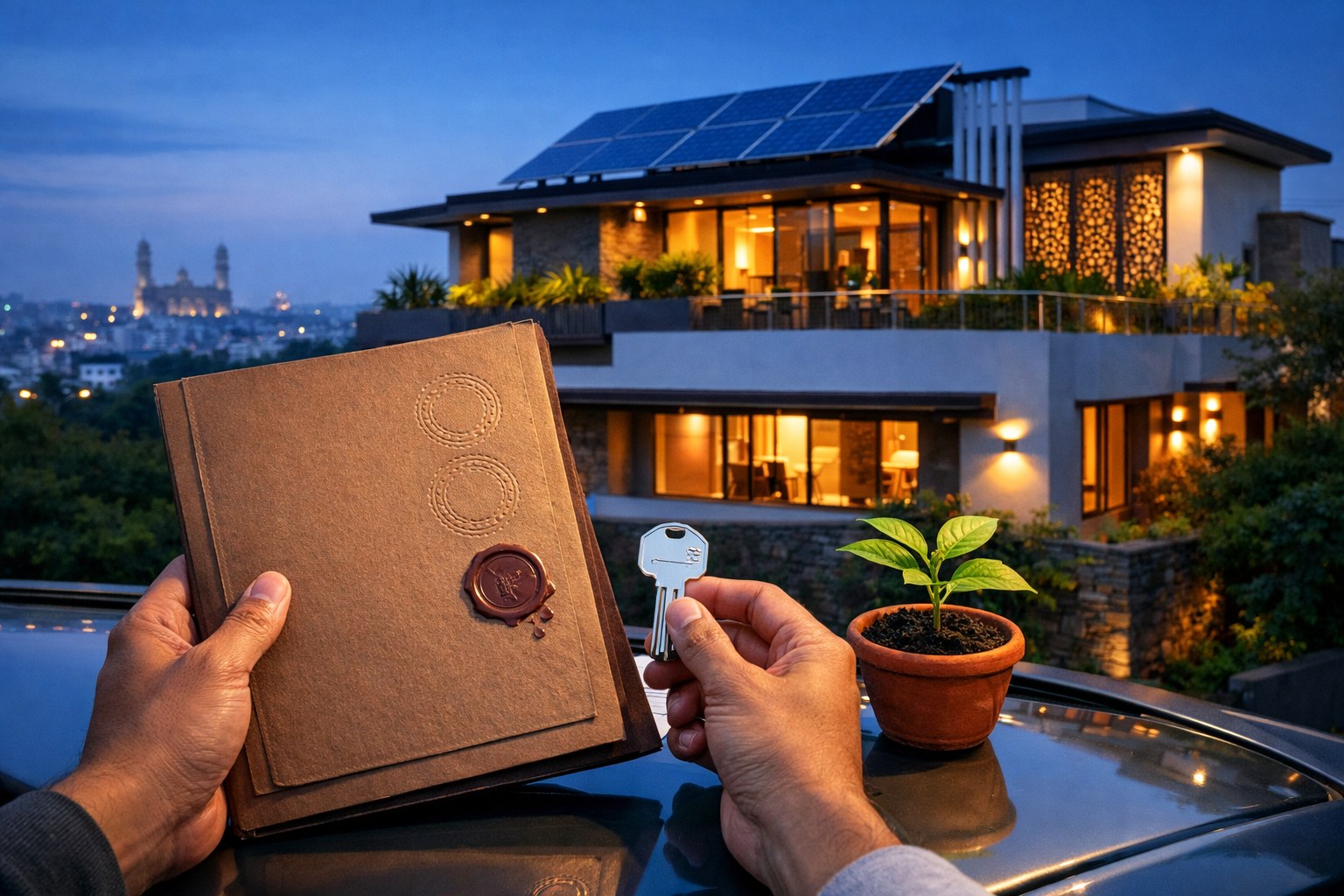
Hyderabad Heat-Ready Homes are becoming the practical middle path between comfort, sustainability and asset safety. The best homes will not be the ones with the longest amenity list. They will be the ones that stay cooler, use water sensibly, provide shade, reduce avoidable electricity load and pass title checks without drama.
Our advice to buyers is direct: shortlist by location and budget, but finalise only after a heat, water and document check. In a city where premium apartment prices can cross ₹12,000 per sft and villa tickets can run into several crores, a few extra hours of inspection can protect both comfort and capital.
Frequently Asked Questions
What are Hyderabad Heat-Ready Homes?
Hyderabad Heat-Ready Homes are properties designed or upgraded to handle high summer temperatures through cool roofs, ventilation, shade, water reuse, efficient materials and sensible orientation. They should also have clean approvals and title records.
Is a west-facing flat bad in Hyderabad?
Not always. A west-facing flat can work if it has deep balconies, shading fins, good glass, cross-ventilation and limited exposed wall area. Without these, evening heat can make the home uncomfortable and increase AC usage.
What documents should I verify before buying a green home?
Check RERA registration, EC, SRO records, land title chain, approved building plan, UDS share, survey number details and Section 22-A prohibited property status. For land or villas, also review pahani and dharani records.
Do cool roofs really help in Hyderabad?
Yes. Cool roof coatings, reflective tiles or roof insulation can reduce heat absorption, especially for top-floor flats, independent houses and villas. The benefit is more visible during April, May and early June.
Should I pay extra for a green-rated project?
Pay extra only after checking actual features: ventilation, roof treatment, STP reuse, shade, water bills, maintenance costs and approvals. A certificate is useful, but daily comfort depends on execution and upkeep.