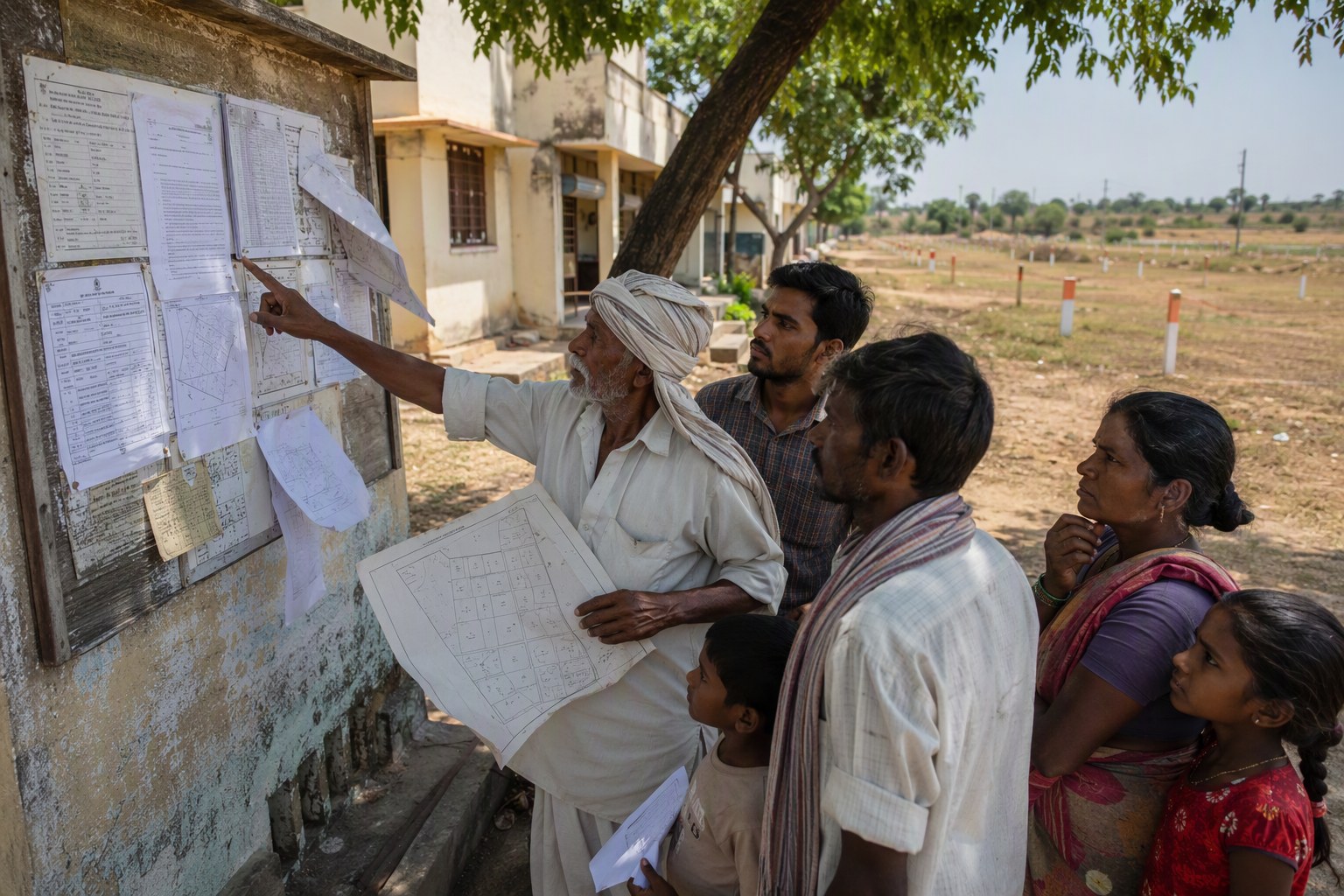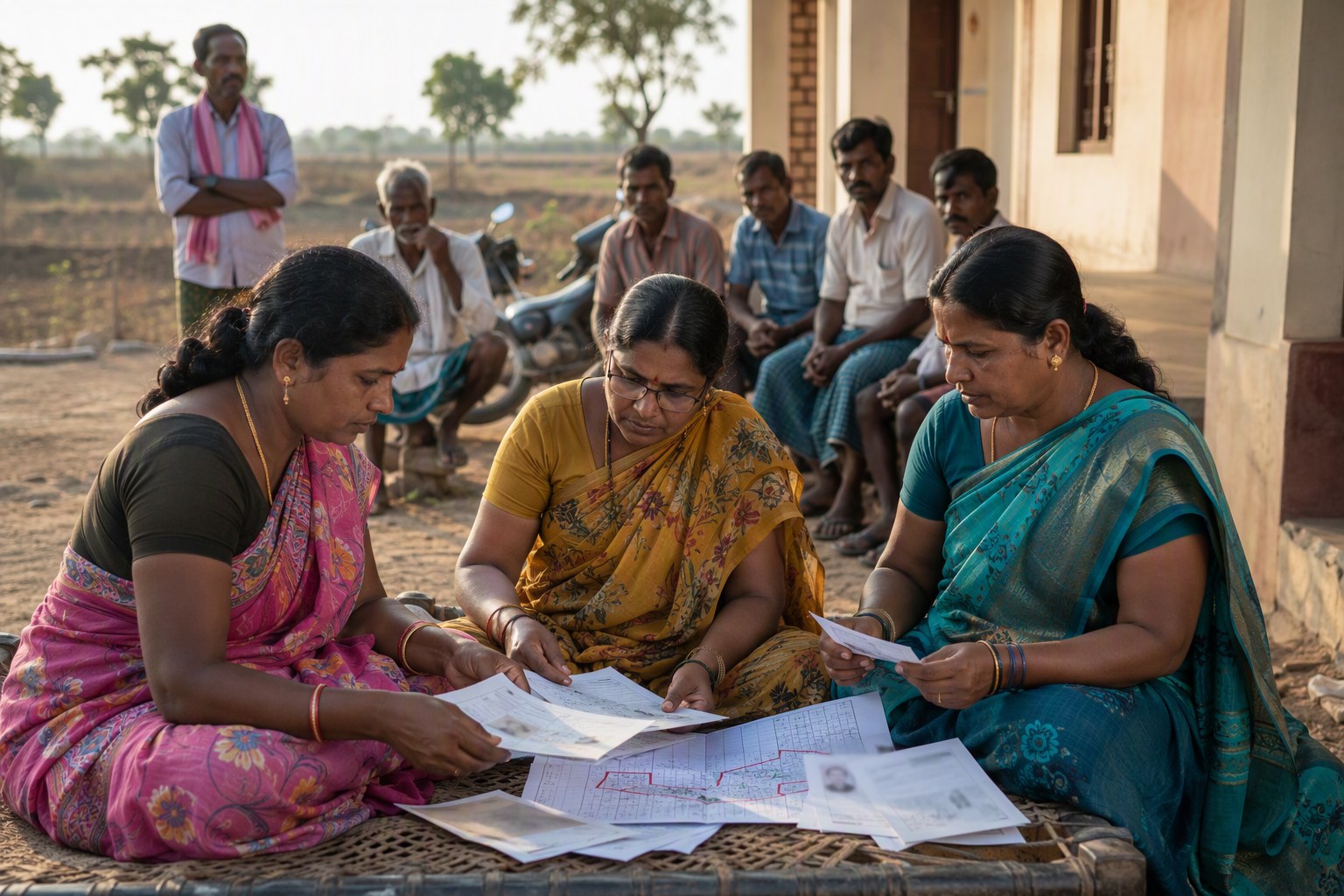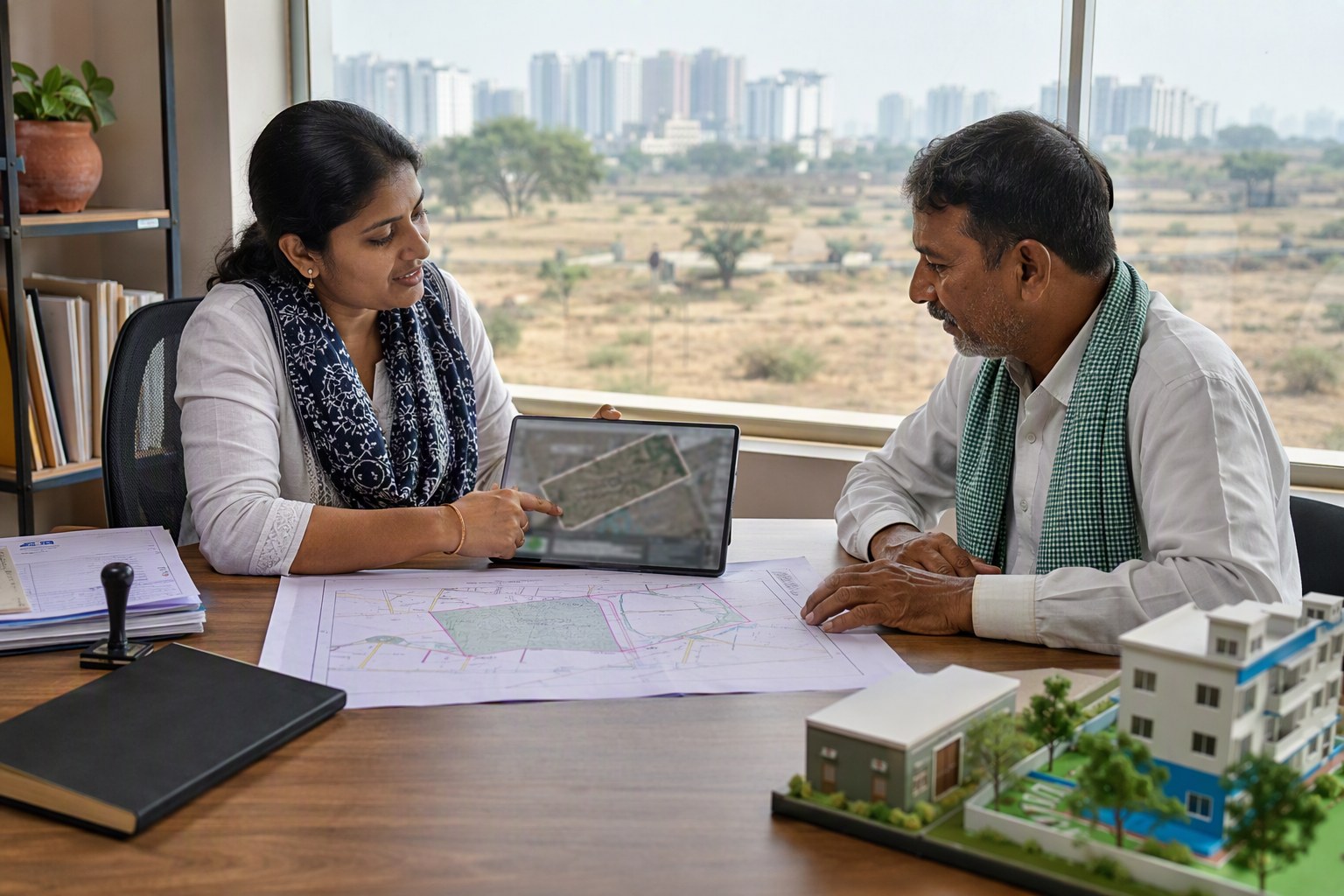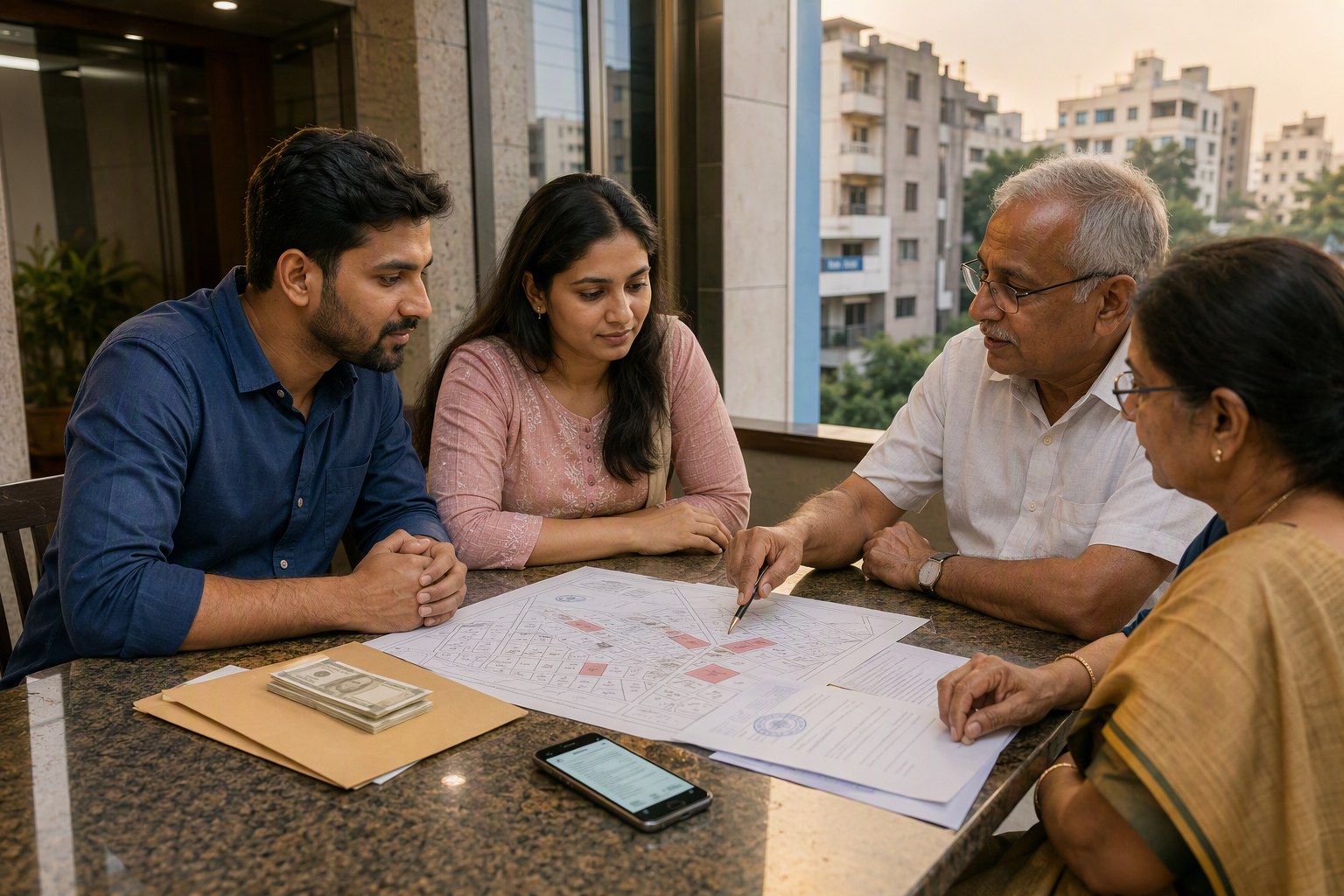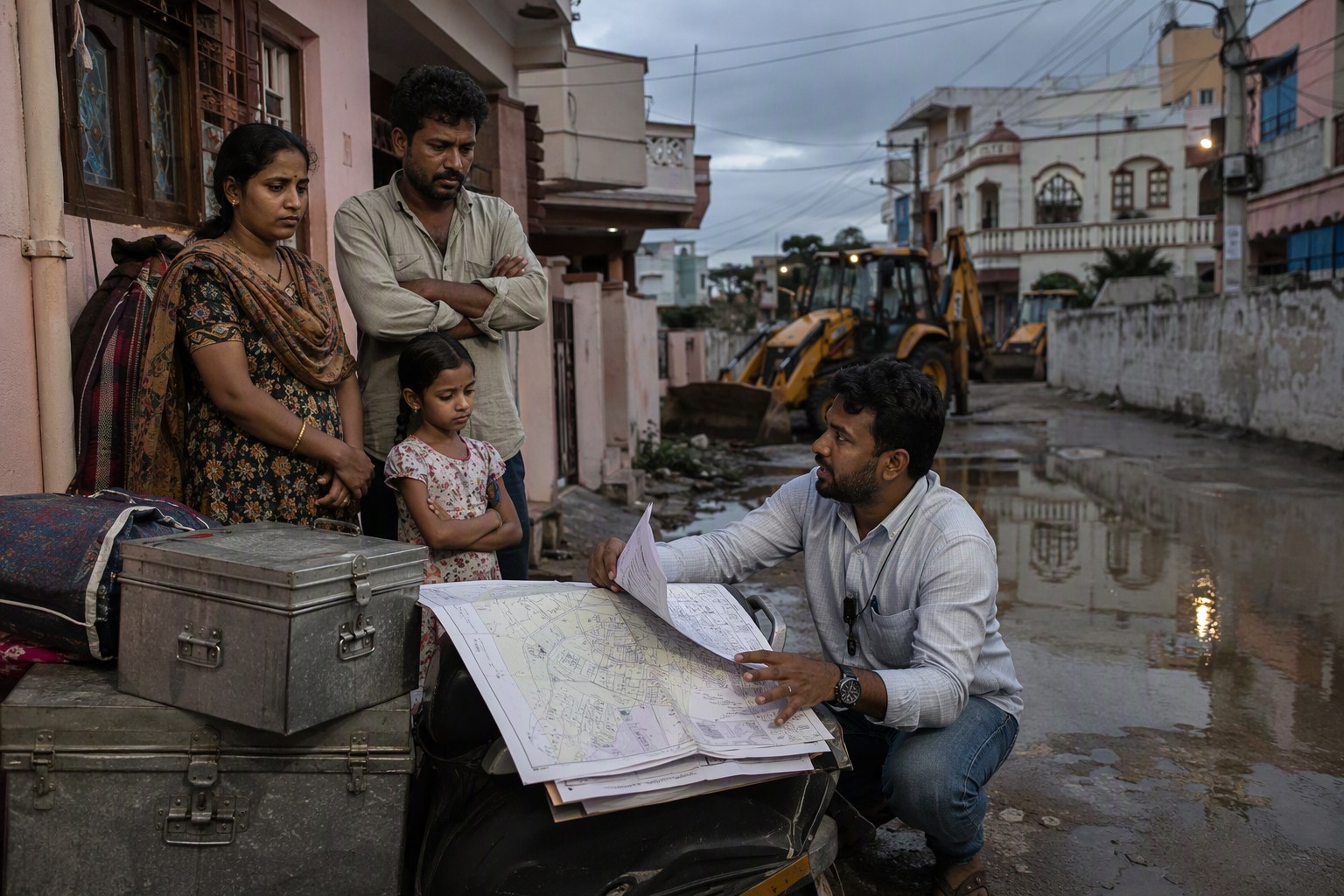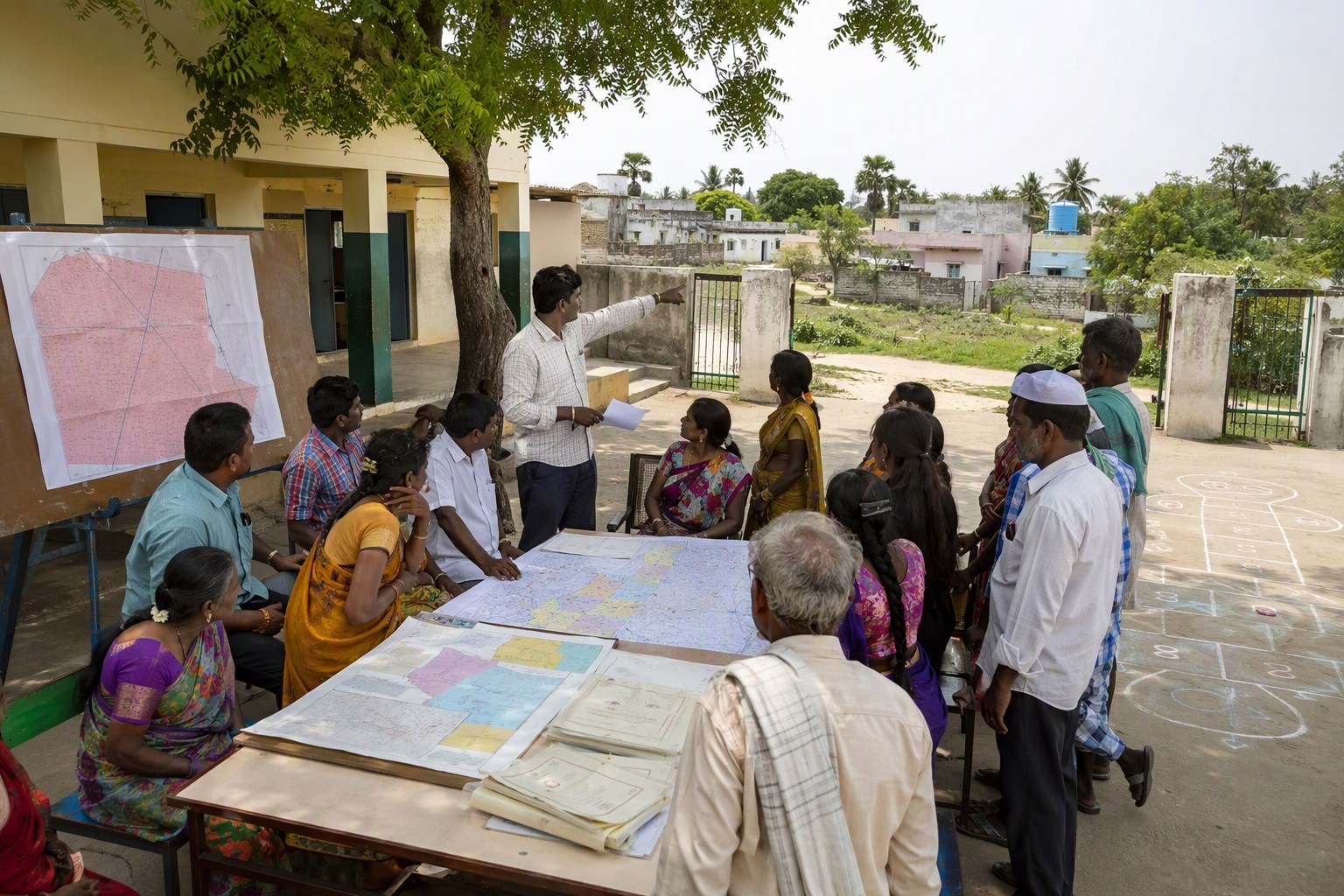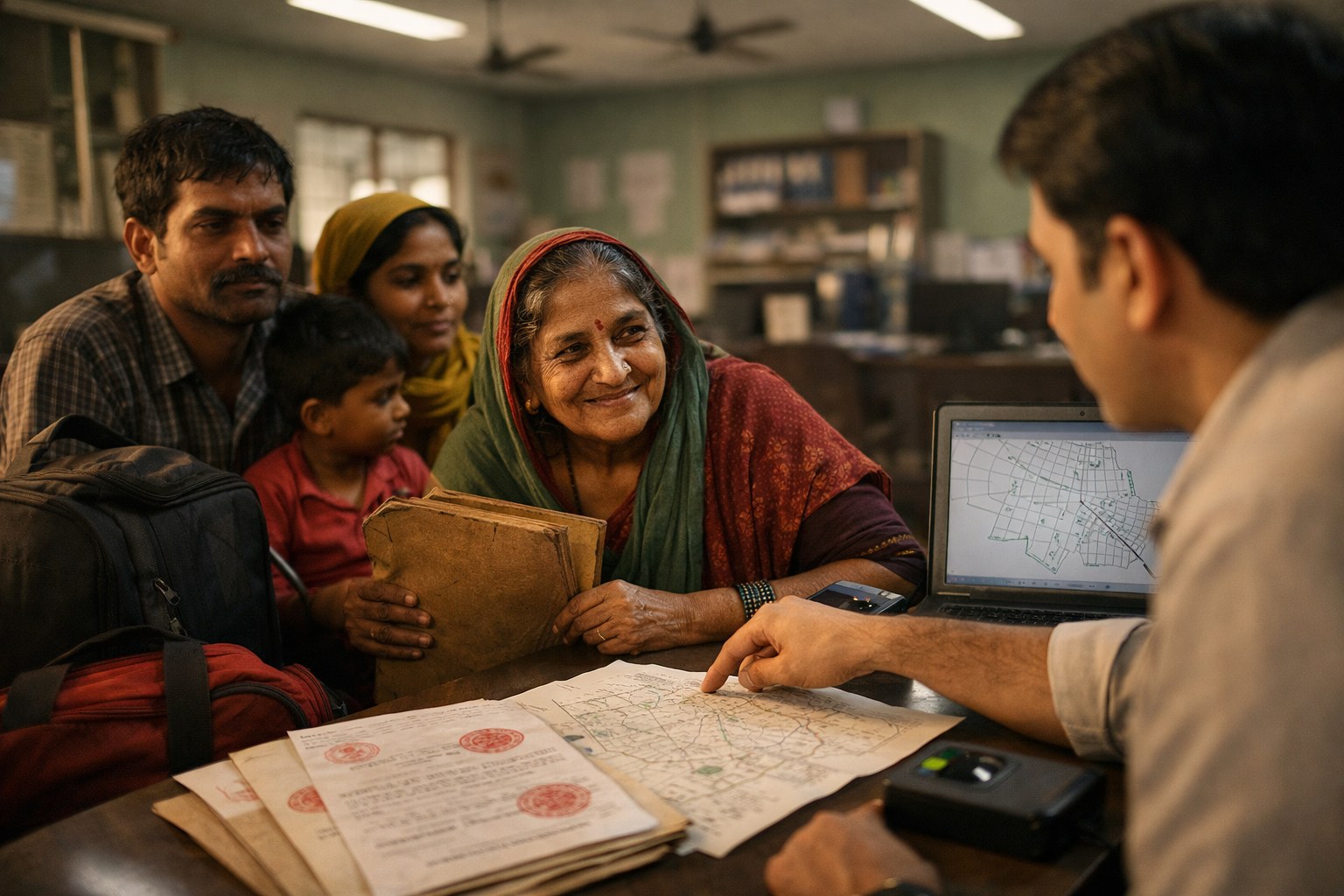
Telangana migrant families get property record help desks at a time when many Hyderabad-based and out-of-state families are struggling to keep track of ancestral lands, old pahanis, Encumbrance Certificates and possible Section 22-A restrictions without travelling repeatedly to their native villages. For families working in Hyderabad, Mumbai, Pune, Bengaluru, Dubai or the Gulf, this can reduce one big headache: finding out whether the land back home is clean, saleable and correctly recorded.
The bigger reason this matters is the scale of restricted land in Telangana. As per available database figures, 1,47,934 properties are listed under prohibited properties, commonly referred to as Section 22-A properties. Once a property falls into this category, registration can be blocked at the Sub-Registrar Office level. Many families come to know only when a buyer, bank or document writer flags it.
For migrant families, the problem is not only ownership. The problem is distance, paperwork, and not knowing which office or online record to trust first.
Telangana migrant families property record help desks: what they can actually solve
In our experience, migrant families rarely have one clean file for ancestral property. One brother may have an old pattadar passbook. A cousin may have a xerox of a 1980s sale deed. The village revenue assistant may know the survey number by memory, but the person sitting in Hyderabad does not. This is exactly where a local help desk can make a practical difference.
A useful property record help desk should not behave like a middleman. It should work like a verification counter. It can guide families to identify the correct survey number, mandal, village, SRO jurisdiction, market value, EC history, prohibited property status and current revenue record position.
For example, a family living in Kukatpally may have ancestral land in Moinabad mandal. Another family in Uppal may be trying to verify agricultural land near Shadnagar or Kothur. A software employee in Gachibowli may need to check if land in Chevella mandal is still in the grandfather’s name or already mutated through Dharani. These are not rare cases. We see them every week in Telangana property discussions.
Telangana migrant families property record help desks and the 22-A risk
The first red flag for any ancestral land is whether it is free from Section 22-A restrictions. Telangana has 1,47,934 prohibited properties in the current database count. That number is too large to ignore. A land parcel may be restricted because it is government land, assigned land, endowment land, wakf-related, ceiling surplus, litigation-marked, or otherwise barred from registration.
The painful part is that many families do not discover this at the planning stage. They find out after taking advance from a buyer or after spending money on document drafting, legal opinion and travel. A help desk can reduce that risk by asking one direct question first: “Is the survey number registrable at the SRO?”
Families can also run an early check through Verified.RealEstate’s Section 22-A Prohibited Property Check. It is not a replacement for official confirmation, but it gives a sensible starting point before someone travels from Hyderabad to the village only to hear bad news.
Why ancestral land verification is harder for migrant families
Land records in Telangana are now more digitised than before, but real life is not fully digital. Old partitions may be oral. Boundaries may be known by local names like “cheruvu side”, “banda pakkana”, or “road bit”. Family members may not agree on extent. Some records may show acres and guntas, while sale discussions happen in square yards. That gap creates confusion.
In Hyderabad, buyers are used to apartment-style clarity: flat number, UDS, built-up area, RERA number, EC and loan eligibility. But in village land, the questions are different. Is the pahani matching the possession? Is the passbook updated? Is the mutation complete? Is the survey number split? Is there a court case? Is there a 22-A block? Is the access road recorded or only used by habit?
A migrant family help desk should ideally help with:
- Finding the exact village, mandal and survey number
- Checking pahani, Dharani and mutation-related entries
- Guiding families to the correct SRO using Find Your SRO Office
- Checking EC history through Encumbrance Certificate Search
- Checking market value through Market Value / Guideline Value Search
- Verifying whether the property may be blocked under Section 22-A
- Preparing a clean document checklist before sale, gift deed or partition
Hyderabad families are dealing with village records and city rates at the same time
One interesting trend we have seen is that many migrant families are selling or regularising ancestral land to fund Hyderabad purchases. A family may sell land near Nalgonda, Kamareddy, Siddipet or Mahabubnagar and then buy an apartment in Miyapur, Narsingi, Uppal or LB Nagar. So the land record issue in a village directly affects the urban housing decision.
Current resale and new-sale conversations in Hyderabad show how high the stakes are. Kokapet and Gandipet apartment deals are often discussed around ₹9,000 to ₹13,000 per sq ft depending on builder, floor and possession stage. Narsingi and Financial District-adjacent projects commonly move in the ₹7,500 to ₹10,500 per sq ft band. Miyapur and Bachupally are frequently seen around ₹6,000 to ₹8,500 per sq ft, while Uppal, Nagole and LB Nagar see many practical family purchases around ₹5,500 to ₹7,500 per sq ft.
When a family is depending on ancestral land money for a Hyderabad flat, one 22-A surprise can disturb the entire plan. Stamp duty, market value, sale agreement timelines and home loan deadlines all get affected. Before signing anything, families should estimate transaction costs using the Stamp Duty Calculator and track title checks through the Property Verification Tool.
What a good property record help desk should ask first
A serious help desk should not begin with “bring all documents” and send people away. Many migrant families do not even know what they have. The first conversation should be structured.
| Question | Why it matters |
|---|---|
| Which district, mandal and village? | Records and SRO jurisdiction depend on location. |
| Do you know the survey number? | Without survey number, EC and 22-A checks become weak. |
| Is the property agricultural, open plot or house? | Different records and risks apply. |
| Who is the current pattadar or recorded owner? | Family possession and official record may differ. |
| Was there any partition, gift deed or court case? | Old family arrangements can affect saleability. |
| Has anyone checked Section 22-A status? | Registration may be blocked if the land is prohibited. |
If the family does not know the survey number, the first step is to locate it. A tool like Survey Number Finder can help families organise the search before they visit the mandal office or speak to the village-level contacts.
EC is useful, but it is not the full story
Many families think an Encumbrance Certificate is equal to title proof. It is not. EC shows registered transactions for a given period at the SRO. It may show sale deeds, mortgages, gifts, releases and some court attachments if registered. But it may not capture every revenue issue, oral partition, possession dispute or 22-A restriction.
That is why help desks must explain the difference between registration records and revenue records. The SRO can show registered document history. Dharani and revenue records can show pattadar and land classification details. A legal title check may still be needed when the family wants to sell, develop, mortgage or partition the property.
For urban buyers, we also advise checking project-side records. If the ancestral land sale is funding a flat purchase, do not ignore the buying side. Use RERA Project Lookup for registered projects and compare the market value, agreement value and registration costs. One clean sale should not lead to one careless purchase.
How help desks can reduce family disputes
In many Telangana families, land records become emotional very quickly. One sibling abroad wants to sell. One sibling in the village wants to keep the land. Another sibling says the land was already divided. The next generation may not know the history at all.
A help desk cannot settle family disputes like a court. But it can put facts on the table. Who is recorded? What is the extent? What does EC show? Is there any mortgage? Is the property prohibited? Which SRO has jurisdiction? What is the ready reckoner or market value? Once these basics are clear, families can take a better call.
We have seen several cases where just getting the correct EC and survey number map reduced unnecessary suspicion among family members. People argue less when the record is visible. Of course, if names are missing or succession is not recorded, the family must take proper legal advice.
What migrant families should do before visiting the village
Before booking a cab to the village or taking leave from office, families should prepare a small property file. It saves time and avoids repeated trips.
- Collect old sale deeds, gift deeds, partition deeds and passbooks if available.
- Write down the district, mandal, village and survey number.
- Check EC for at least the relevant ownership period.
- Check whether the property appears under Section 22-A prohibited list.
- Find the correct SRO and understand registration jurisdiction.
- Check guideline value before discussing sale price or stamp duty.
- Speak to all legal heirs before giving commitment to a buyer.
For families living in Hyderabad localities like Ameerpet, Chandanagar, Manikonda, Secunderabad, Dilsukhnagar or Kompally, this preparation can avoid two or three village visits. That is the real value of a help desk: fewer trips, fewer rumours, and better paperwork.
Verified view: help desks are useful only if they stay document-focused
Property record help desks for migrant families are a good idea, but only if they remain transparent and document-focused. They should not become informal brokerage counters. The best model is simple: help people identify records, guide them to official channels, flag risks, and tell them when a lawyer or revenue officer’s confirmation is needed.
Telangana’s property market is moving fast, especially around Hyderabad growth corridors like Kokapet, Tellapur, Patancheru, Shamshabad, Adibatla and Medchal. But ancestral land records move at a different speed. For migrant families, bridging that gap is not a luxury. It is basic financial protection.
If your family has land in a village and you are sitting in Hyderabad or outside Telangana, start with the records, not with the buyer. Check the survey number, EC, SRO, market value and 22-A status. A clean file gives confidence. A doubtful file should be fixed before money changes hands.
Frequently Asked Questions
What are Telangana property record help desks for migrant families?
They are local support counters or advisory points that help families verify ancestral land records, survey numbers, ECs, SRO jurisdiction, guideline values and possible Section 22-A restrictions without making repeated village visits.
Why is Section 22-A checking necessary before selling ancestral land?
If a property is listed under Section 22-A prohibited properties, registration can be blocked. Telangana has 1,47,934 prohibited properties in the available database count, so checking early is safer.
Is an Encumbrance Certificate enough to prove ownership?
No. An EC shows registered transactions at the SRO, but it may not show every revenue issue, possession dispute, oral partition or prohibited property restriction. It should be checked along with Dharani, pahani and legal documents.
How can Hyderabad-based families start verifying village land?
Start with the district, mandal, village and survey number. Then check EC, SRO jurisdiction, guideline value and Section 22-A status. Keep old deeds, passbooks and family partition papers ready.
Can a help desk settle family land disputes?
No. It can organise records and show facts, but disputes between legal heirs need family settlement, proper documentation or legal advice depending on the case.