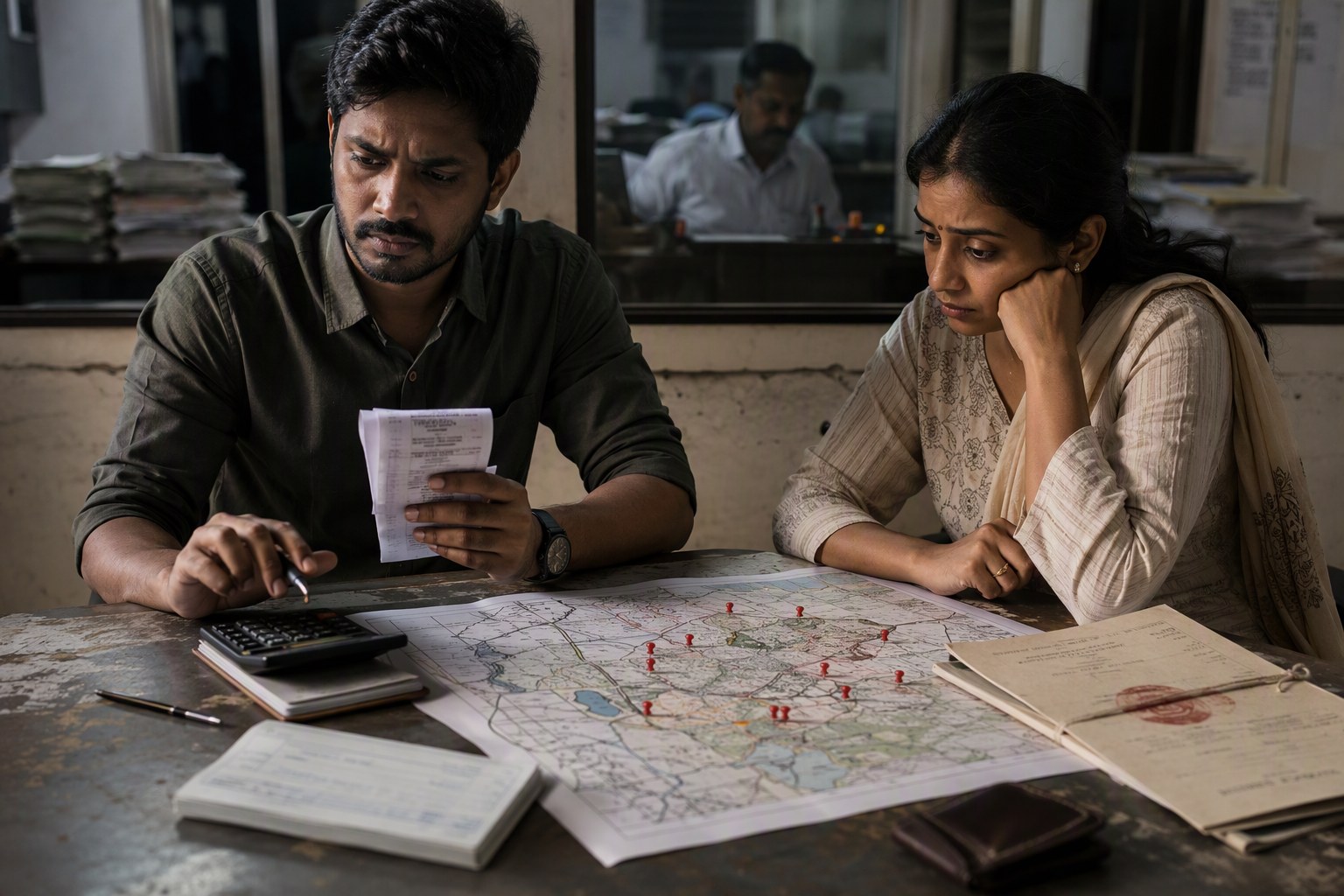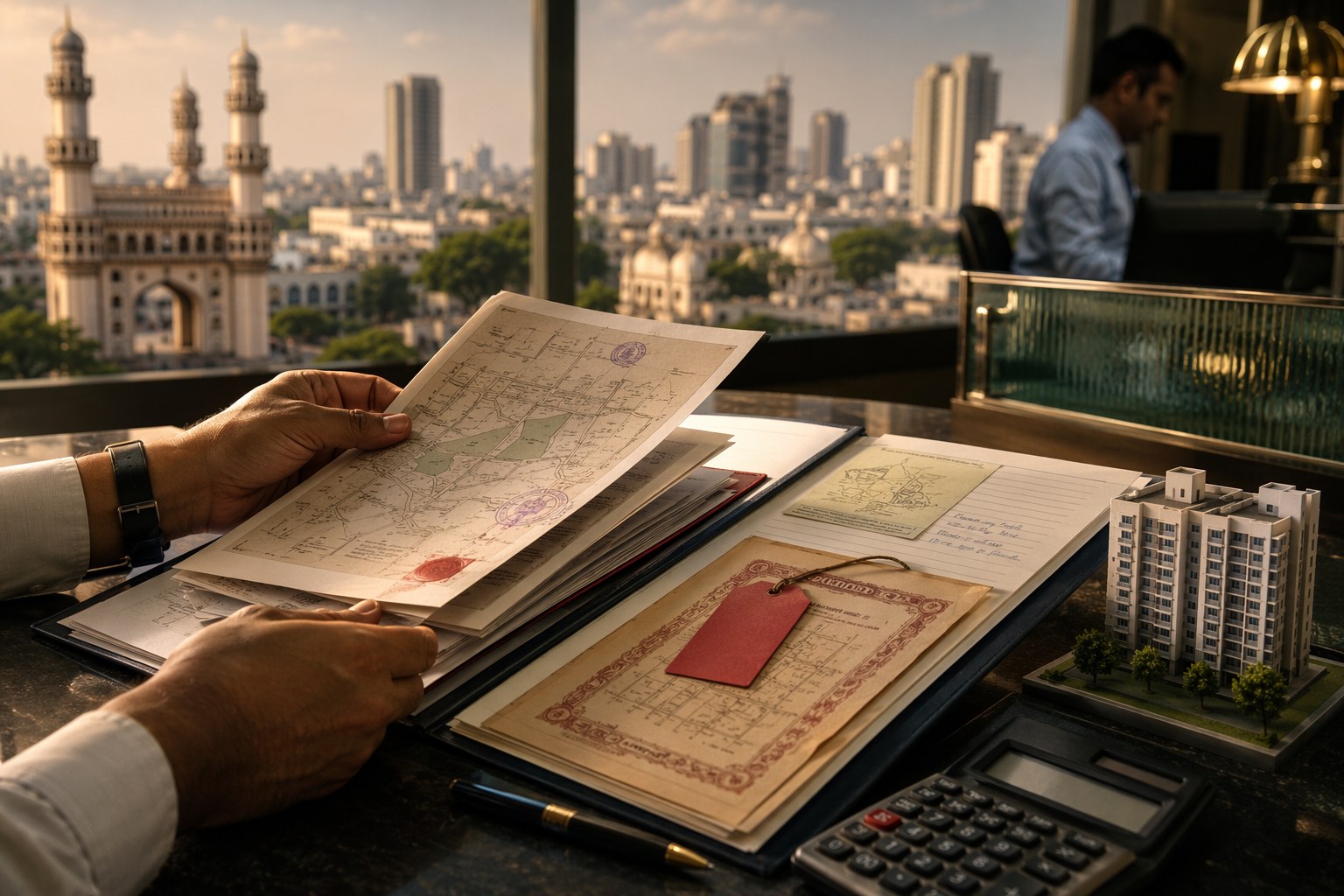
Telangana Loan Files May Get Costlier on 22-A Checks as banks, NBFCs, valuers and panel advocates start treating Section 22-A verification as a front-line risk item, not a last-minute registration formality. The reason is simple: Telangana has 3,076,153 prohibited properties under Section 22-A as per latest IGRS data. That is a large enough base to change how property-linked loans are screened, especially in Hyderabad’s active corridors like Serilingampally, Gandipet, Shamshabad, Maheshwaram, Ibrahimpatnam and Medchal-side mandals.
For borrowers, the impact may not always show up as a higher interest rate. It may come as extra document requests, longer legal scrutiny, repeat valuation visits, fresh EC checks, and more conservative loan-to-value calls when survey numbers, pahani entries or Dharani records are not cleanly matching the sale documents.
Telangana Loan Files May Get Costlier on 22-A Checks: What Has Changed for Borrowers?
Section 22-A is not a small footnote in Telangana property due diligence. It deals with properties that are restricted or prohibited from registration. In practical banking language, a 22-A flag can disturb the entire loan file. Even if the borrower has income strength, repayment capacity and a good CIBIL profile, the collateral can become unacceptable or require deeper clearance.
We’ve seen this pattern in Hyderabad property files: the buyer first checks the sale deed and EC, then the bank legal team asks for survey-number-level confirmation. In apartments, the issue may sit in the underlying land record. In open plots, it may be directly tied to the survey number, village, mandal and classification in government records. In old gram panchayat layouts, the problem may come from unclear conversion, missing link documents or mismatch between physical possession and revenue record.
That is why lenders are likely to spend more time on the basic question: can this property be safely mortgaged and, if needed, enforced later? If the answer is not clear, the loan may slow down even before sanction.
In our experience, a clean salary profile cannot rescue a weak title file. Banks lend against both the borrower and the property. Section 22-A directly affects the property side of that equation.
Why Telangana Loan Files May Get Costlier on 22-A Checks for Banks and NBFCs
The cost pressure is not only on homebuyers. Lenders also carry risk when they approve loans on disputed, restricted or wrongly classified properties. With 3,076,153 properties sitting in the prohibited-property base, loan processing teams cannot afford to treat 22-A verification as optional.
A bank’s credit officer may approve the borrower. A valuer may inspect the building. But the panel advocate has to confirm whether the mortgage can stand legally. If the land falls in a prohibited category, or if the records show a conflict, the lender may need more evidence before releasing money. That evidence takes time and professional effort.
This is where borrowers may feel the pinch. A legal opinion may need supporting documents such as old sale deeds, pahanis, mutation proceedings, layout approvals, land conversion papers, building permission records, release deeds, family settlement papers or court orders. A valuer may also ask for the exact survey number and boundaries instead of relying only on the flat number or plot number.
Where 22-A Risk Is Showing Up in Hyderabad Property Files
The risk is not limited to far-away land parcels. In and around Hyderabad, many loan files pass through fast-growing localities where revenue history and urban development have overlapped for years. Buyers looking at Gachibowli and Kondapur in Serilingampally mandal, Kokapet and Narsingi around Gandipet, Tellapur and Osman Nagar near Ramachandrapuram side, Kompally and Dundigal-Gandimaisamma, Adibatla in Ibrahimpatnam, Tukkuguda and Maheshwaram, or Shamshabad belt should not assume that a popular locality automatically means clean title.
In apartment projects, buyers often check RERA and builder reputation but forget the base land. In plotted ventures, buyers may focus on road width, HMDA or DTCP layout status and resale demand, but skip the 22-A check at survey-number level. For bank loans, that gap can become costly.
Before paying a token advance, buyers should run a basic document screen using the Section 22-A Prohibited Property Check, verify past transactions through the Encumbrance Certificate Search, and confirm the correct registration office using Find Your SRO Office. If the property is an apartment in an ongoing project, the RERA Project Lookup should also be checked.
How the Extra Cost Can Enter a Loan File
The extra cost may not be labelled as a “22-A fee”. It can come through different steps in the loan journey. Some are direct charges. Some are indirect costs such as delay, renegotiation, missed agreement timelines or repeated documentation.
| Loan stage | What may be checked more closely | Borrower impact |
|---|---|---|
| Login and document collection | Survey number, village, mandal, SRO, link deeds | More papers may be asked before file movement |
| Legal opinion | 22-A status, title chain, EC, pahani and Dharani consistency | Panel advocate may ask for clarifications or certified copies |
| Valuation | Land identity, access road, boundaries, approval status | Valuation may be held back till land details are clear |
| Sanction condition | Registration feasibility and mortgage enforceability | Loan sanction may carry conditions or may be reduced |
| Disbursement | Final title comfort and charge creation | Payment to seller may be delayed |
For buyers, the safer route is to verify the property before the sale agreement, not after the bank asks questions. Use the Property Verification Tool along with the Survey Number Finder when the seller provides only a plot number or flat number. For apartments and villas, guideline value can also be cross-checked through the Market Value / Guideline Value Search, but remember: market value does not cure a title defect.
What Sellers and Builders Should Expect
Sellers may also face tougher questions. A buyer’s bank can ask for documents that the seller never needed in a cash transaction. If the file is in a village where land records have changed over time, the seller may need to provide older link documents, revenue entries or proof that the survey number is not restricted.
Builders and developers may have to keep land-title packets ready in a more organised way. For projects in areas such as Kollur, Tellapur, Narsingi, Mokila, Shankarpally, Adibatla, Tukkuguda and Medchal-side growth pockets, buyers are increasingly using bank finance. If the project team cannot answer 22-A and EC questions quickly, bookings can get stuck at the loan stage.
There is also a reputation angle. A project with repeated bank file objections will struggle in the resale and end-user market, even if the location is strong. Hyderabad buyers talk to each other. Brokers also remember which projects face legal queries.
Borrower Checklist Before Applying for a Property Loan
- Ask for the survey number early. Do not wait till the agreement is signed.
- Check Section 22-A status. A clean-looking sale deed is not enough if the underlying land is restricted.
- Pull the EC. Check whether the title flow matches the seller’s claim.
- Confirm the SRO and village mapping. Wrong SRO assumptions create avoidable confusion.
- Compare Dharani, pahani and sale document details. Names, extents and survey numbers should not casually vary.
- For apartments, check the project and land documents. Flat-level comfort alone is not enough.
- Keep time buffer in the sale agreement. If the legal team asks for extra documents, you need breathing space.
If the property is already under another loan, buyers should also check whether any charge is recorded. The CERSAI Charge Check can help in that part of due diligence. For transaction planning, the Stamp Duty Calculator gives a quick view of registration cost, but do not treat stamp duty readiness as title readiness.
Our View: 22-A Checks Will Become Normal, Not Exceptional
Hyderabad’s property market has matured. Buyers are using home loans not only for budget reasons but also as a second layer of title checking. That is sensible, but it also means banks will become stricter when government records show a large prohibited-property base.
The headline issue is not fear. It is discipline. If you are buying in a proper gated community, an HMDA layout, a RERA-registered apartment project or an old independent house in the city, the same rule applies: verify the land record before falling in love with the property. A good location can support value. Only clean title can support a mortgage.
For now, Telangana borrowers should assume that 22-A verification will sit alongside EC, valuation, CERSAI and legal opinion in any serious loan file. The people who prepare early will close faster. The people who treat land records as “bank headache” may end up paying through delays, renegotiation or rejected files.
Frequently Asked Questions
What is Section 22-A in Telangana property records?
Section 22-A relates to properties that are restricted or prohibited from registration. If a property or its survey number appears under this category, banks may hesitate to accept it as loan collateral without further clarification.
Can a bank reject my home loan because of a 22-A issue?
Yes, if the legal team finds that the property cannot be safely mortgaged or registered, the bank can reject the loan or ask for more documents before sanction or disbursement.
Does 22-A checking apply only to open plots?
No. Apartments, villas, independent houses and open plots can all be affected if the underlying land or survey number has a prohibited-property issue.
When should I check 22-A status before buying property?
Check it before paying a token advance or signing the sale agreement. Early checking gives you room to negotiate, ask for documents or walk away if the title risk is serious.
Will a clean EC remove a 22-A problem?
Not always. EC shows registered transactions, while 22-A relates to registration restrictions. Both checks are needed for a safer property loan file.