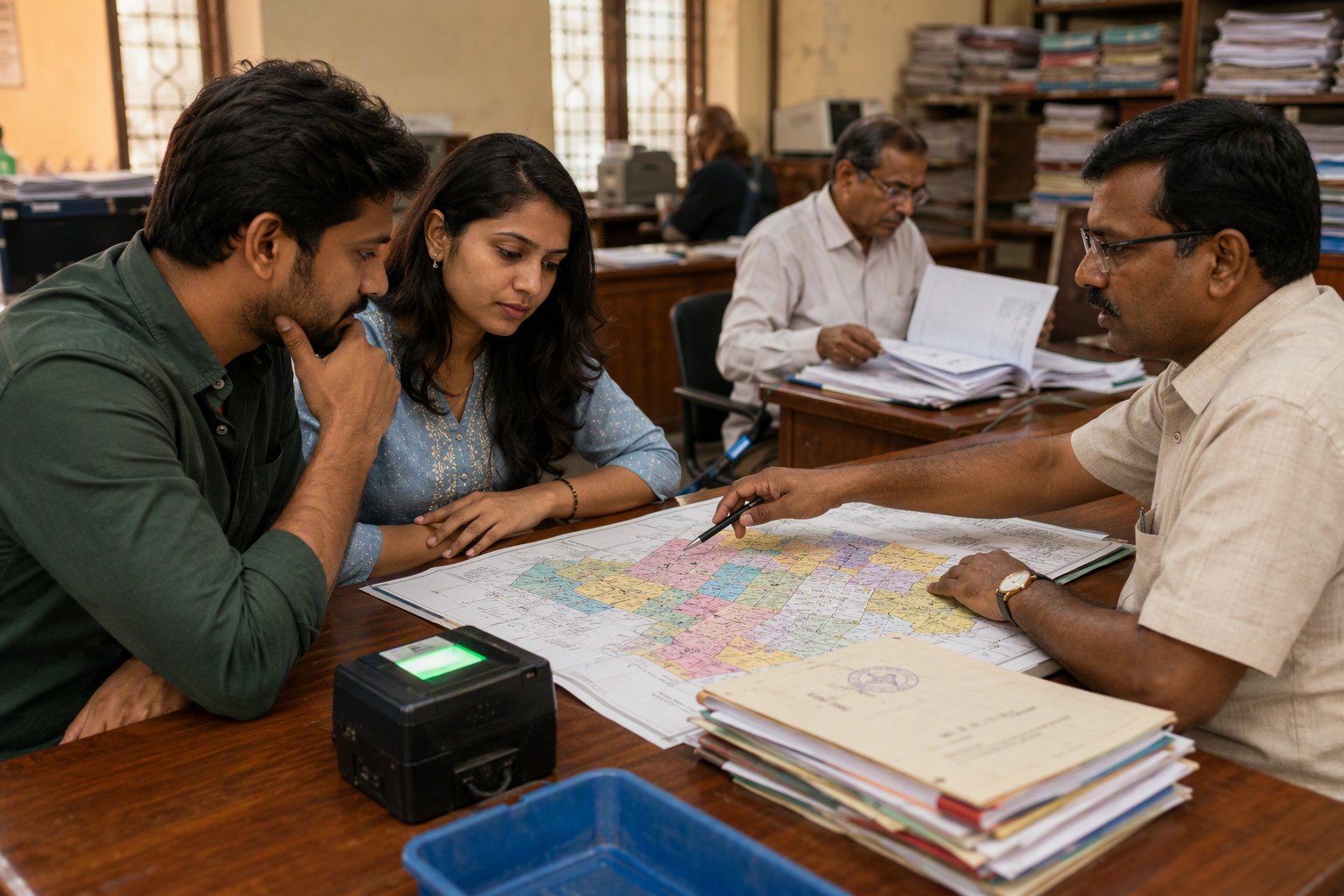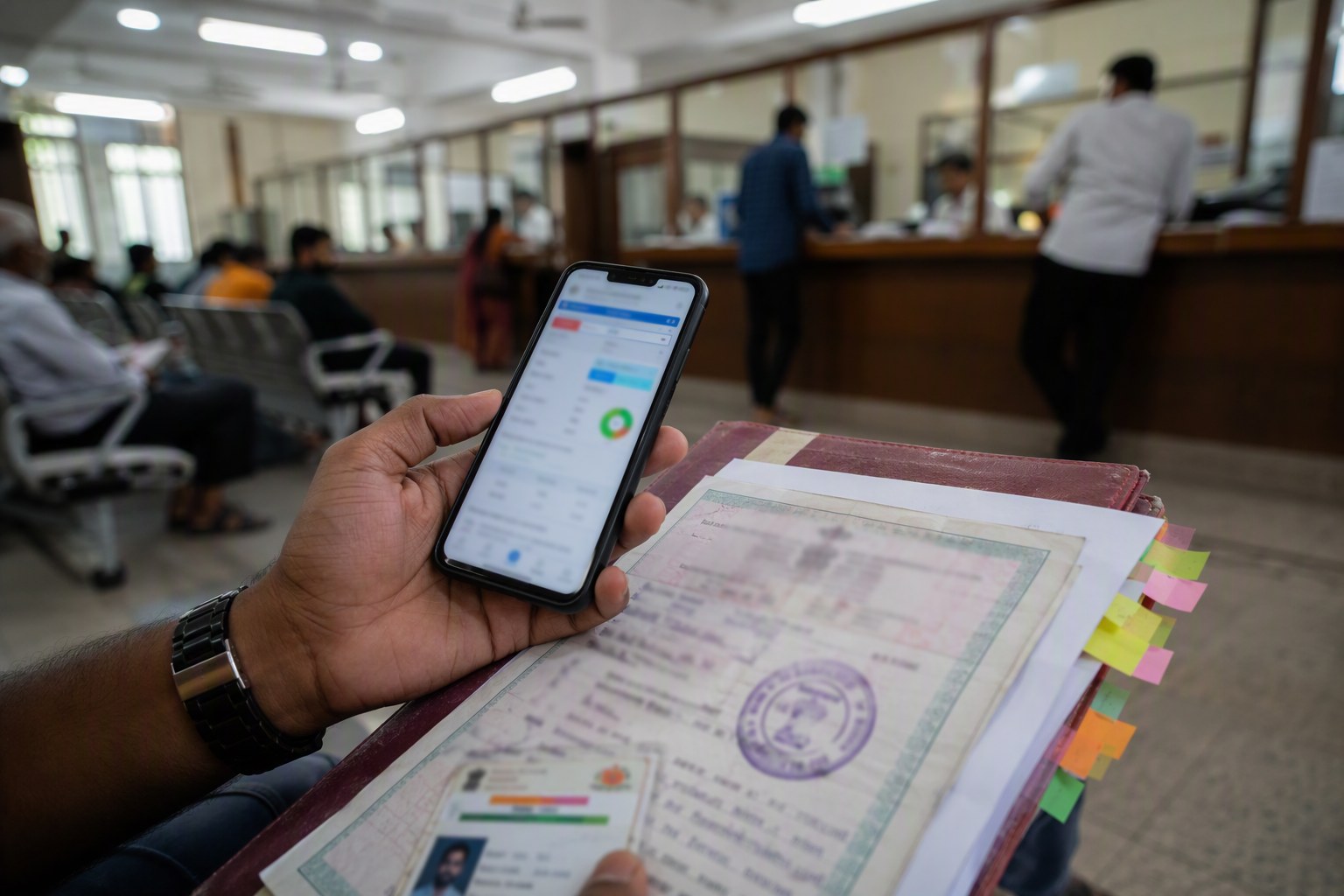
Telangana Buyer OTP Consent May Change Deed Filing if the proposed registration process is taken forward by the State. The idea is simple but significant: before a sale deed is filed at the Sub-Registrar Office, the buyer may have to confirm the transaction through an OTP-based consent step. For a market where land disputes, impersonation, wrong survey numbers and Section 22-A issues still trouble buyers, this could create a clear digital acknowledgement trail.
The timing matters. Telangana still has 147,934 properties listed as prohibited under Section 22-A. That number is not small. It directly affects buyers in Hyderabad’s growth corridors, village layouts, peri-urban mandals and old revenue pockets where land records may look clean in one document but throw up a block at the SRO stage.
In our experience, many buyers check the apartment, price and loan eligibility first. The SRO record, pahani history, Dharani entry and Section 22-A status are checked too late. An OTP consent step can reduce casual filing, but it cannot replace verification.
Telangana Buyer OTP Consent May Change Deed Filing: What is being proposed?
The proposed OTP consent step is expected to work as a digital confirmation from the buyer before a deed moves for filing or registration. In practical terms, the system may ask the buyer to confirm key details such as name, mobile number, property description, consideration value, SRO jurisdiction and deed type.
This means a buyer cannot later say, at least easily, that they were unaware of the deed being presented. It also gives the department a timestamped acknowledgement. For genuine buyers, this is useful. For fraudsters, brokers using half-information, and sellers trying to push a document without full buyer participation, it becomes one more hurdle.
Hyderabad buyers in Serilingampally mandal, Gandipet, Rajendranagar, Quthbullapur, Medchal, Shamirpet, Maheshwaram, Ibrahimpatnam and Shankarpally should watch this closely. These areas see high registration activity, rapid layout sales, HMDA and gram panchayat legacy issues, and frequent confusion over survey numbers.
Telangana Buyer OTP Consent May Change Deed Filing, but Section 22-A remains the real test
The OTP proposal may improve consent, but the larger risk is still title. Telangana’s Section 22-A list contains 147,934 prohibited properties. These may include government lands, assigned lands, endowment lands, wakf-related properties, court-disputed entries, and other categories where registration is restricted.
If a plot in a hot micro-market like Kokapet, Narsingi, Tellapur, Bachupally, Kompally, Tukkuguda or Adibatla is attractive, buyers should not assume it is safe only because the seller has an old sale deed. The SRO can still refuse registration if the property falls in a prohibited category. Even if an agreement of sale is signed, loan processing starts, and token advance is paid, Section 22-A can stop the deal at the last mile.
Before paying a major advance, buyers should run a Section 22-A Prohibited Property Check, verify survey details using the Survey Number Finder, and confirm recent transaction history through an Encumbrance Certificate Search. These are not optional checks anymore, especially outside core GHMC colonies.
What will the OTP trail actually prove?
An OTP trail will likely prove that the buyer’s registered mobile number received and confirmed a transaction request. Depending on how the system is designed, it may also show the date, time, property identifier, document number draft reference and SRO office.
That is useful evidence. But it will not prove that the title is perfect. It will not prove that the land is free from family claims. It will not prove that the apartment has RERA compliance. It will not automatically catch a wrong boundary or mismatch between pahani, Dharani and layout plan.
So, my reading is this: OTP consent is a process safety measure, not a title certificate. It may reduce disputes where buyers claim ignorance of filing. It may also help SRO staff avoid complaints that a document was pushed without buyer awareness. But the buyer still has to do the old-fashioned checks properly.
How this may affect Hyderabad home and land buyers
For apartment buyers in Gachibowli, Kondapur, Miyapur, Nallagandla, Puppalaguda and Financial District, the OTP step may become one more pre-registration action along with Aadhaar, PAN, challan payment and biometric attendance. For open plot buyers in Maheshwaram, Kandukur, Yacharam, Shadnagar, Chevella and Shankarpally, it may bring more discipline into transactions that often start with informal advances.
Telangana’s usual sale deed cost for many property purchases is around 6% of the higher of market value or consideration value: 4% stamp duty, 1.5% transfer duty and 0.5% registration fee. For a ₹1 crore flat or plot, that means about ₹6 lakh in statutory charges, before any other incidental costs. Buyers can calculate this using the Stamp Duty Calculator.
The buyer should also check the ready reckoner or government market value before the challan is paid. Use the Market Value / Guideline Value Search for this. If the property is under a project, especially an under-construction apartment or villa, use the RERA Project Lookup before signing.
Buyer checklist before OTP consent and deed filing
| Check | Why it matters | Suggested action |
|---|---|---|
| Section 22-A status | Registration may be refused if the property is prohibited | Check before paying advance |
| SRO jurisdiction | Wrong SRO planning can delay filing | Use Find Your SRO Office |
| Survey number and boundaries | Common issue in village and peri-urban lands | Match sale deed, pahani and Dharani details |
| EC history | Shows registered transactions and mortgages | Take EC for a suitable period, not just 2-3 years |
| Market value | Stamp duty is based on declared or guideline value, whichever is higher | Check ready reckoner value before challan |
| RERA status | Protects buyers in registered projects | Verify project, promoter and completion details |
Why Section 22-A creates last-minute shocks
Section 22-A issues are painful because they may not be visible in casual paperwork. A seller may show an old registered document. A broker may say, “registration happened earlier, so it will happen again.” That logic is risky. Government lists get updated. Court orders, land classification, assignment history and departmental objections can all affect registration.
In mandals like Gandipet, Rajendranagar, Moinabad, Maheshwaram and Ibrahimpatnam, buyers often deal with converted agricultural lands, old layouts, family partitions and survey subdivisions. One digit mismatch in survey number or extent can change the entire risk profile. We’ve seen buyers spend weeks negotiating price and only one afternoon checking title. That order should be reversed.
What sellers and developers should prepare
Sellers should expect buyers to ask for cleaner documentation before OTP consent. This includes link documents, latest EC, property tax receipts where applicable, mutation or Dharani details, approved layout or building permission, and clarity on possession. Developers should ensure the buyer’s mobile number, PAN, Aadhaar details and agreement terms match the deed draft.
For builders in Hyderabad’s western corridor and ORR-side villa markets, this may reduce clerical mistakes. If the buyer receives an OTP and sees the wrong flat number, wrong undivided share, wrong parking reference or wrong consideration value, the error can be caught before filing. That is a practical benefit.
My view: good reform, but buyers should not become relaxed
The proposed buyer OTP consent step is a sensible move. It brings accountability into deed filing and gives the registration department a digital record of buyer acknowledgement. But it should not be treated as a government guarantee of title.
With 147,934 properties still under Section 22-A, the safer approach is clear: verify first, consent later, register only after the paper trail is consistent. A clean OTP is useful. A clean title is better.
For serious buyers, a combined check using the Property Verification Tool, Property Change Tracker, EC search, guideline value check and SRO verification can save lakhs of rupees and months of tension.
Frequently Asked Questions
Will buyer OTP consent make a property legally safe?
No. OTP consent only confirms buyer acknowledgement for deed filing. It does not certify title, ownership history, Section 22-A status or land classification.
Why is Section 22-A important in Telangana property registration?
Section 22-A lists properties where registration is prohibited or restricted. Telangana still has 147,934 such properties listed, so buyers must check before paying advance.
What should I verify before giving OTP consent for deed filing?
Check the deed draft, seller name, buyer name, survey number, flat or plot number, extent, SRO, consideration value, EC, guideline value and prohibited property status.
Does OTP consent apply only to Hyderabad properties?
The proposal is for Telangana registration processes, so it can affect Hyderabad as well as other districts if implemented statewide.
How much are usual sale deed registration charges in Telangana?
For many sale deeds, the total is around 6%: 4% stamp duty, 1.5% transfer duty and 0.5% registration fee, based on applicable value rules.