


Telangana May Link Building Permits to Prohibited Property Check
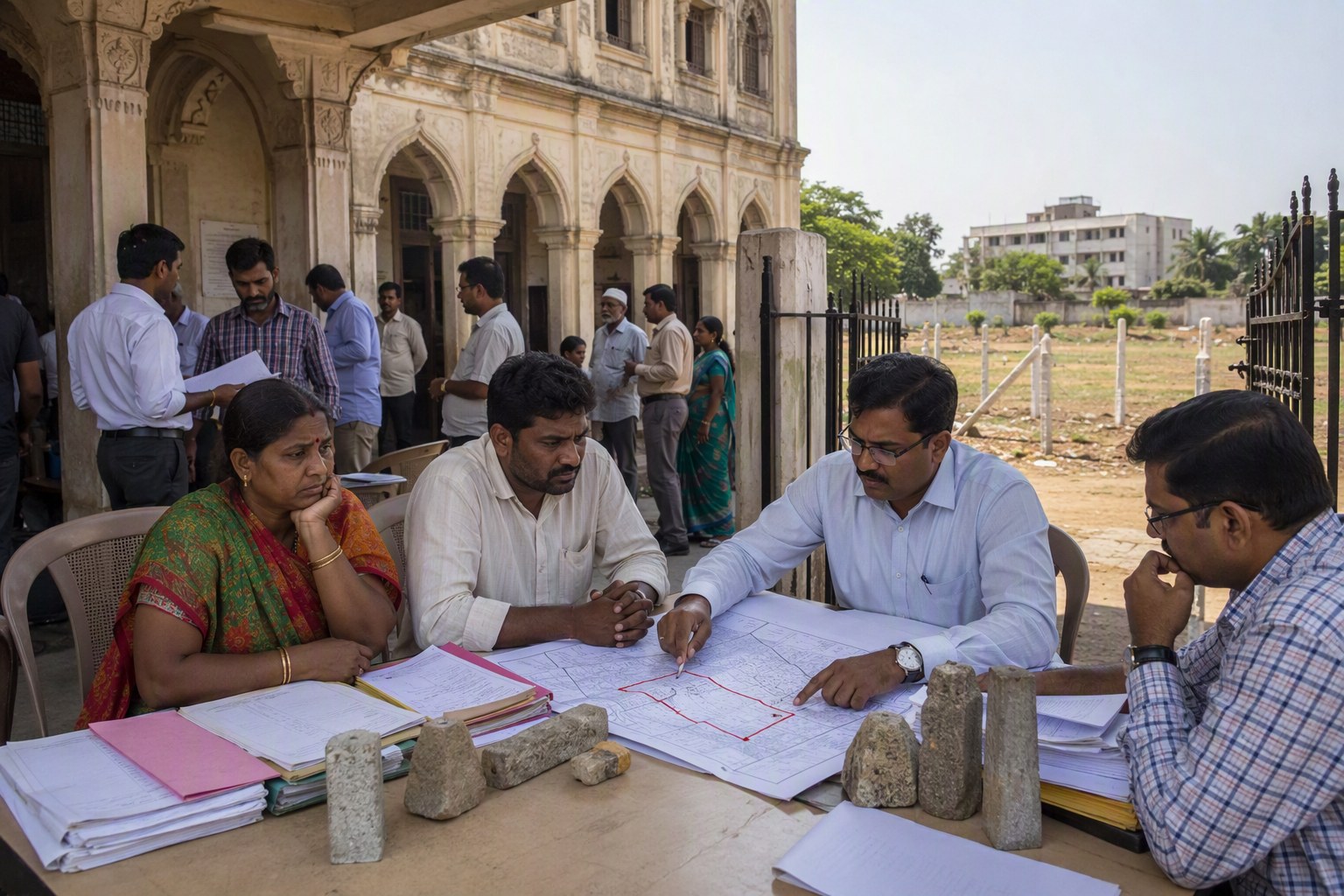
Telangana is considering a sharper check at the building permission stage: before a municipal body clears a building plan, the land parcel may have to pass a prohibited-property status check. If this proposal moves into formal implementation, the screening will not wait until sale deed registration. It can happen earlier, when a developer, landowner or buyer is seeking plan approval.
For Hyderabad and the fast-growing Telangana corridors, this is a meaningful shift. Today, many buyers discover land-status issues only during registration, loan processing, RERA scrutiny, or worse, after paying advance. A permit-stage hook can push the red flag to the front of the transaction. That is good for clean projects. It will be painful for projects built on vague title stories, old pattas, overlapping survey numbers, assignment land, government land claims, endowment issues, wakf claims, ceiling land disputes, or parcels already marked under prohibited categories.
My reading: this is not an anti-development move. It is an anti-surprise move. If the land is clean, early verification helps the builder sell with confidence. If the land is doubtful, the market should know before slabs and booking forms start.
What is being proposed?
The policy idea is simple. When an applicant applies for a building permit through the relevant municipal or planning authority, the system may check whether the land is present in the prohibited-property database or related government records. If the parcel is flagged, approval may be stopped, paused, or sent for clarification before the plan is sanctioned.
At present, many citizens treat prohibited-property checking as a registration office issue. They ask the Sub-Registrar Office only when the sale deed is almost ready. That is too late for development projects. By then, architects may have drawn plans, marketing teams may have launched pre-sales, and buyers may have paid token amounts. A municipal-stage check changes the order of risk.
Verified.RealEstate tracks 3,076,153 prohibited-property records in its database context. That number itself shows why casual checking is not enough. Telangana land history is layered: village records, revenue entries, urban layouts, old acquisitions, court orders, assignment restrictions, lake buffers, nala impacts, and zoning controls can all sit on the same parcel story.
Why this matters for buyers
For a flat buyer in Hyderabad, Warangal, Karimnagar, Nizamabad, Khammam, Siddipet, Mahbubnagar or any growing municipality, the immediate question is: will my project get stuck?
If permit-stage screening is introduced properly, a buyer gets one more safety point before investing. It does not replace legal due diligence. It does not mean every sanctioned project has perfect title. But it can reduce one major category of shock: finding out that the underlying land itself carries a prohibited-status problem.
Buyers should not stop with glossy brochures or “approval coming soon” claims. Ask for the land survey number, village, mandal, SRO, permit application number if available, and RERA status wherever applicable. Run a basic check on the parcel using Prohibited Property Check, then cross-check title movement through Ec Search. If the seller hesitates to share survey details, treat it as a warning sign.
Impact on developers and landowners
For serious developers, this proposal can clean up competition. Builders who already do title due diligence before entering a development agreement will adjust. They may add one more pre-approval checklist item and move ahead. The real pressure will be on smaller operators who take GPA, agreement of sale, or development rights on loosely checked land and start marketing early.
Landowners too must be ready. Many families assume that possession, old tax receipts or panchayat-era papers are enough. In Telangana, that is not always the case. A land parcel can be privately occupied but still carry restrictions on transfer or development. Assignment land, land recorded for public purpose, endowment-linked land, wakf-related entries, court-disputed parcels and government-notified lands need careful handling.
Before giving land for joint development, owners should verify survey details through Survey Number Finder, check jurisdiction with Find Your Sro, and review title risk using Verify My Land. Developers should also verify zoning through Landuse Zone Finder and planning feasibility through Fsi Calculator.
What could change in the approval workflow?
| Stage | Current market practice | If permit-stage screening is adopted |
|---|---|---|
| Land deal discussion | Title papers are shared informally; many checks are deferred. | Developers may insist on prohibited-property clearance before signing. |
| Plan submission | Focus is usually on layout, setbacks, road width, zoning and fee payment. | Land-status validation may become a gatekeeping step. |
| Buyer booking | Buyers rely on brochure claims and promised approvals. | Buyers can ask whether the land passed municipal screening. |
| Sale deed stage | Prohibited-property issues may surface at SRO level. | Some issues may be caught much earlier, before major buyer exposure. |
Where disputes may arise
No digital land check is perfect. Telangana has legacy record gaps, spelling variations in village names, survey subdivision confusion, old file numbers, pending mutations, and court matters not always reflected cleanly across systems. A property can be wrongly flagged. A risky property can also escape if the data is not mapped properly.
That is why the appeal or clarification process will matter. If the government implements this hook, it should provide a clear route for landowners to submit documents, court orders, de-notification papers, regularisation records or updated revenue entries. Without a time-bound correction mechanism, clean owners can get trapped in file movement.
The state also needs parcel-level accuracy. In peri-urban belts around Hyderabad, a single old survey number may have many subdivisions, layouts and plotted sales. If the system flags the entire parent survey number without identifying the affected portion, genuine plot owners may face unnecessary anxiety. Precision is not a luxury here; it is the difference between governance and confusion.
What buyers should do now
- Do not buy only on “HMDA approval applied” or “municipal permission under process” statements.
- Ask for survey number, plot number, village, mandal and SRO jurisdiction.
- Check whether the land appears in any prohibited-property list through Prohibited Property Check.
- Review past transactions through Ec Search and compare names, extents and boundaries.
- For apartment projects, verify project registration where required using Rera.
- Check land use, road access and planning basics before paying advance.
- Keep all payment records, WhatsApp commitments, brochures and booking forms.
What developers should fix internally
Developers should stop treating title due diligence as a late-stage legal formality. Before paying major advances or announcing a project, they should create a land-risk file. That file should include parent documents, pattadar records where applicable, EC, survey sketch, zoning status, SRO jurisdiction, prohibited-property search result, litigation search inputs, and copies of any clarification obtained from authorities.
For larger projects, this check should sit beside architecture, FSI, road width, fire norms, environmental triggers and RERA planning. Use tools such as Road Width Check, Landuse Zone Finder, Fsi Calculator and Rera as early filters. They are not substitutes for legal opinion, but they help teams ask sharper questions before money is locked.
Verified.RealEstate view
Telangana’s property market needs speed, but it also needs trust. A permit-stage prohibited-property check can improve buyer confidence if the implementation is transparent, searchable and correction-friendly. If it becomes only another opaque approval hurdle, it will create delays without solving the title problem.
The best version of this reform is a simple one: check the parcel early, show the reason for any flag, allow document-based correction, and maintain accountability for data quality. That way, clean land moves faster and doubtful land is not sold to unsuspecting buyers under the comfort of future approvals.
Until formal rules are notified and the workflow is clear, buyers and developers should behave as if this screening already exists. Verify first, negotiate next, pay last. In Telangana real estate, that order saves money and sleep.
Frequently Asked Questions
Will Telangana reject building permits if land is prohibited?
If the proposal is implemented, a flagged prohibited-property status may lead to rejection, pause, or clarification before plan approval. The final process will depend on official rules and system design.
Is a building permit enough proof of clean title?
No. A permit can show planning approval, but buyers should still verify title documents, EC, survey details, SRO records, RERA status where applicable, and legal history.
How can a buyer check prohibited-property risk?
Collect the survey number, village, mandal and SRO details. Then use a prohibited-property search, review EC entries, and take legal advice before paying any large advance.
Can a property be wrongly shown as prohibited?
Yes, data errors and old survey-number mapping issues can happen. Owners may need to submit supporting documents and seek correction or clarification from the relevant authority.
What should developers do before applying for permission?
Developers should complete title due diligence, prohibited-property checking, EC review, zoning verification, road access checks and RERA planning before launching sales or collecting bookings.