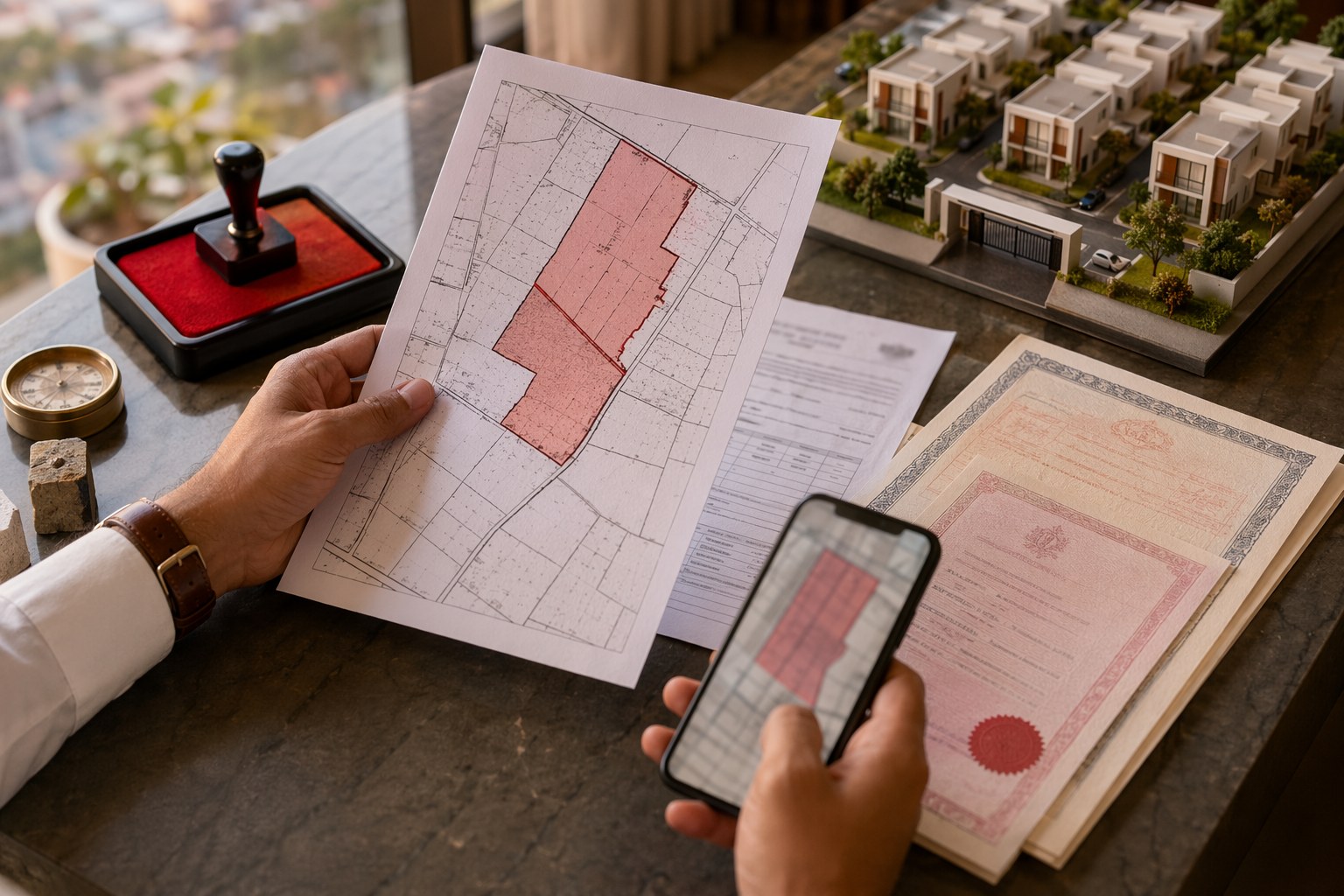



Telangana Banks Reprice Risk Around 22-A Property Loans as lenders take a harder look at collateral linked to the state’s prohibited property list. The trigger is not a new lending ban, but the scale: Telangana has 147,934 properties listed under Section 22-A, which can affect registration, mortgage creation, resale liquidity and legal clearance. In Hyderabad’s active corridors like Kokapet, Narsingi, Tellapur, Bachupally, Miyapur and Hayathnagar, this is now showing up in loan conversations much earlier than before.
Bankers, valuers and legal vendors we speak to are not treating 22-A as a small clerical issue anymore. If a survey number, sub-division, old pahani entry or Dharani record carries a prohibited flag, the file can move from normal housing loan processing to enhanced scrutiny. That means more documents, slower sanctions, and in some cases, outright rejection until the entry is clarified.
22-A Property Loans: Why banks are repricing risk now
Section 22-A of the Registration Act deals with properties that cannot be registered due to government restrictions, litigation, endowment claims, assigned land status, ceiling surplus, waqf/endowment entries, court orders or other notified prohibitions. For a buyer, the issue usually appears at the SRO stage. For a bank, it appears much earlier: at legal opinion, valuation and mortgage documentation.
In our experience, a clean sale deed alone is no longer enough for many lenders in Telangana. Banks now want to see whether the land parcel is clean in Dharani, whether the survey number tallies with the layout or apartment project records, whether the EC shows a clear chain, and whether the SRO will accept registration without objection.
This is especially relevant in fast-selling zones where old agricultural survey numbers have become apartment blocks, villas and plotted layouts. Areas such as Kokapet in Gandipet mandal, Narsingi in Gandipet mandal, Tellapur in Ramachandrapuram mandal, Bachupally mandal, Miyapur in Serilingampally mandal and Hayathnagar mandal have seen heavy land conversion and title layering over the last decade. One wrong entry in the base survey number can disturb the entire loan file.
Our view: 22-A risk is no longer only a registration office problem. It is becoming a credit risk, because banks are asking whether the property can be sold quickly if the borrower defaults.
22-A Property Loans and collateral valuation in Hyderabad
Collateral value is not just market price. A flat may quote at ₹8,000 to ₹12,000 per sq ft in Narsingi or Kokapet, and a plot in Shankarpally or Mokila may attract strong buyer interest. But if the underlying survey number has a 22-A shadow, the bank’s valuer may apply a practical discount or refuse to give a clean valuation.
Most lenders follow loan-to-value norms depending on ticket size. As a broad banking practice, home loans may go up to 90% for smaller loans, around 80% for mid-ticket loans and 75% for higher-value loans, subject to borrower profile and collateral quality. With a suspected 22-A entry, that neat calculation can change. The branch may ask for more margin money, a second collateral, indemnity, or a legal clarification before sanction.
Buyers should not confuse ready reckoner or market value with bankable value. Telangana sale registration normally attracts around 6% transaction cost on many sale deeds, including stamp duty, transfer duty and registration charges, depending on the document type and jurisdiction. But paying stamp duty does not automatically mean the bank will accept the property as mortgage-worthy. Before budgeting, buyers can check costs using our Stamp Duty Calculator and compare base values through the Market Value / Guideline Value Search.
How 147,934 prohibited properties can affect loan approvals
The number 147,934 matters because it is large enough to influence bank behaviour across the state. A branch manager in Hyderabad may not know every prohibited property by memory, but the credit team knows that such entries can damage enforceability of security. When that happens, the approval timeline stretches.
| Stage | Normal loan file | File with possible 22-A issue |
|---|---|---|
| Initial login | KYC, income proof, sale agreement | Same, plus survey number and old title records asked early |
| Legal check | Sale deed chain, EC, link documents | Dharani, pahani, SRO remarks, prohibition list and court history checked |
| Valuation | Market rate and construction quality | Marketability and registration risk also weighed |
| Sanction | Can move in days if documents are clean | May be held until clarification or extra collateral is given |
| Disbursement | Linked to sale deed or builder demand | May be stopped if registration is uncertain |
For buyers, the pain point is timing. Token advance is paid, sale agreement is signed, seller starts pressing for registration, and then the bank’s lawyer raises a query. We’ve seen this in plotted layouts around Abdullapurmet, Maheshwaram, Shadnagar, Shamirpet and Medchal, where old land records sometimes carry assigned land or government land objections. Even if the final clarification is positive, the buyer loses negotiation strength.
Localities where due diligence needs extra care
This is not to say every property in these areas is risky. Many projects are clean, RERA-registered and bank-approved. But land history in Telangana is uneven, so the check must be survey-number based, not locality-based.
- Kokapet and Narsingi, Gandipet mandal: Premium apartment and villa demand is strong, but buyers should verify whether the project land and approach roads are free from notified restrictions.
- Tellapur, Ramachandrapuram mandal: Large gated communities sit on converted land parcels. Link documents, layout permissions and EC should match the exact survey numbers.
- Bachupally mandal: Apartments and independent houses are moving fast here. Bank approvals differ from project to project, so do not rely only on neighbour approvals.
- Miyapur and Chandanagar, Serilingampally mandal: Older title chains, HUDA/HMDA layouts and apartment redevelopments need careful EC reading.
- Hayathnagar and Abdullapurmet mandals: Plotted layouts often need pahani, mutation and conversion checks before loan application.
- Shankarpally and Mokila belt: High-value villa land attracts buyers, but agricultural-to-non-agricultural conversion and title continuity must be clear.
Before paying a booking amount, buyers can run a basic legal hygiene check using the Section 22-A Prohibited Property Check, confirm the correct survey number with the Survey Number Finder, and review transaction history through the Encumbrance Certificate Search. These tools will not replace an advocate’s opinion, but they reduce blind spots.
What banks may ask before clearing 22-A Property Loans
When a file has even a faint 22-A concern, lenders may ask for documents beyond the usual sale deed and tax receipts. Common requests include old pahanis, Dharani passbook extracts, mutation proceedings, layout approval, conversion order, latest EC, SRO clarification, court case status, and a legal heir or family settlement trail if the property changed hands through inheritance.
For apartments, banks may ask for the builder’s land title report, development agreement, GPA, RERA registration and sanctioned plan. Buyers can cross-check project registration using our RERA Project Lookup. For plots and independent houses, the land record is even more critical because the buyer is directly exposed to the survey number.
One practical issue is the mismatch between municipal permissions and revenue records. A building may have a GHMC or HMDA approval, but the bank will still ask whether the land title is mortgageable. That is why serious buyers in areas like Pragathi Nagar, Kollur, Kompally, Peerzadiguda and Tukkuguda should check SRO jurisdiction through Find Your SRO Office before finalising timelines with the seller.
Buyer eligibility: good salary may not save a weak title
A salaried IT employee from Gachibowli with a strong CIBIL score may still face rejection if the collateral is weak. This is where many buyers get surprised. They assume loan approval is mainly about income. In reality, banks approve two things: the borrower and the property. If either fails, the file gets stuck.
For high-value homes above ₹1 crore, lenders are even more cautious. A small title objection can affect the bank’s resale strategy in case of default. That is why some banks prefer projects already vetted by their central legal team. But even “bank-approved project” status should not be treated as permanent comfort. Approvals can be conditional, outdated or applicable only to certain blocks and survey numbers.
Our opinion is simple: buyers should verify first, negotiate next, and apply for loan after that. In Hyderabad, people often do the reverse because they fear losing a good unit. That hurry can become expensive.
What sellers and developers should expect
Sellers with clean title should keep documents ready before listing. A full set of link documents, latest EC, property tax receipts, mutation records and layout permissions can reduce buyer doubt. If there was an old 22-A entry that was later deleted or clarified, keep the official order ready. A WhatsApp assurance will not satisfy a bank lawyer.
Developers, especially in plotted layouts and villa projects, should be prepared for more buyer-side legal queries. With 147,934 prohibited properties in the state list, bank legal teams are unlikely to relax quickly. Clean documentation can become a selling point, especially in peripheral growth corridors where buyers are anxious about land history.
For investors, the message is sharper. A discounted property with unresolved 22-A risk is not a bargain unless the legal route to correction is clear. Capital may get blocked for months, and exit may depend on whether the next buyer’s bank accepts the same title.
The bottom line for Telangana property buyers
22-A risk is now part of loan pricing, valuation and approval timelines in Telangana. The property may be in a hot locality, the seller may be genuine, and the price may look attractive. Still, if the survey number is under prohibition or linked to a disputed entry, banks can slow down or step away.
Before paying advance, check the prohibited property status, EC, guideline value, SRO jurisdiction and RERA status where applicable. Spend two days on verification before you commit lakhs as token. In Hyderabad’s current market, that is not being overly cautious. That is basic financial sense.
Frequently Asked Questions
What is a 22-A property in Telangana?
A 22-A property is a property listed as prohibited for registration under Section 22-A. It may involve government land, assigned land, endowment or waqf claims, court orders, ceiling issues or other notified restrictions.
Can I get a bank loan on a 22-A property?
Usually, banks avoid lending if the property is actively listed under 22-A. If the entry is old, mistaken or already cleared, the bank may ask for official proof before sanction or disbursement.
Does a clean EC mean the property is not under 22-A?
No. An Encumbrance Certificate shows registered transactions and charges. It may not fully confirm revenue prohibitions. Buyers should check EC, Dharani records, SRO status and the 22-A prohibited list together.
Which Hyderabad areas need extra 22-A checking?
Buyers should be careful in all areas, but extra checks are sensible in fast-growing land conversion belts such as Kokapet, Narsingi, Tellapur, Bachupally, Shankarpally, Mokila, Hayathnagar, Abdullapurmet and Maheshwaram.
When should I check 22-A status?
Check it before paying token advance or signing a sale agreement. Once money is paid, the buyer has less bargaining power and may face delays if the bank raises a legal query.