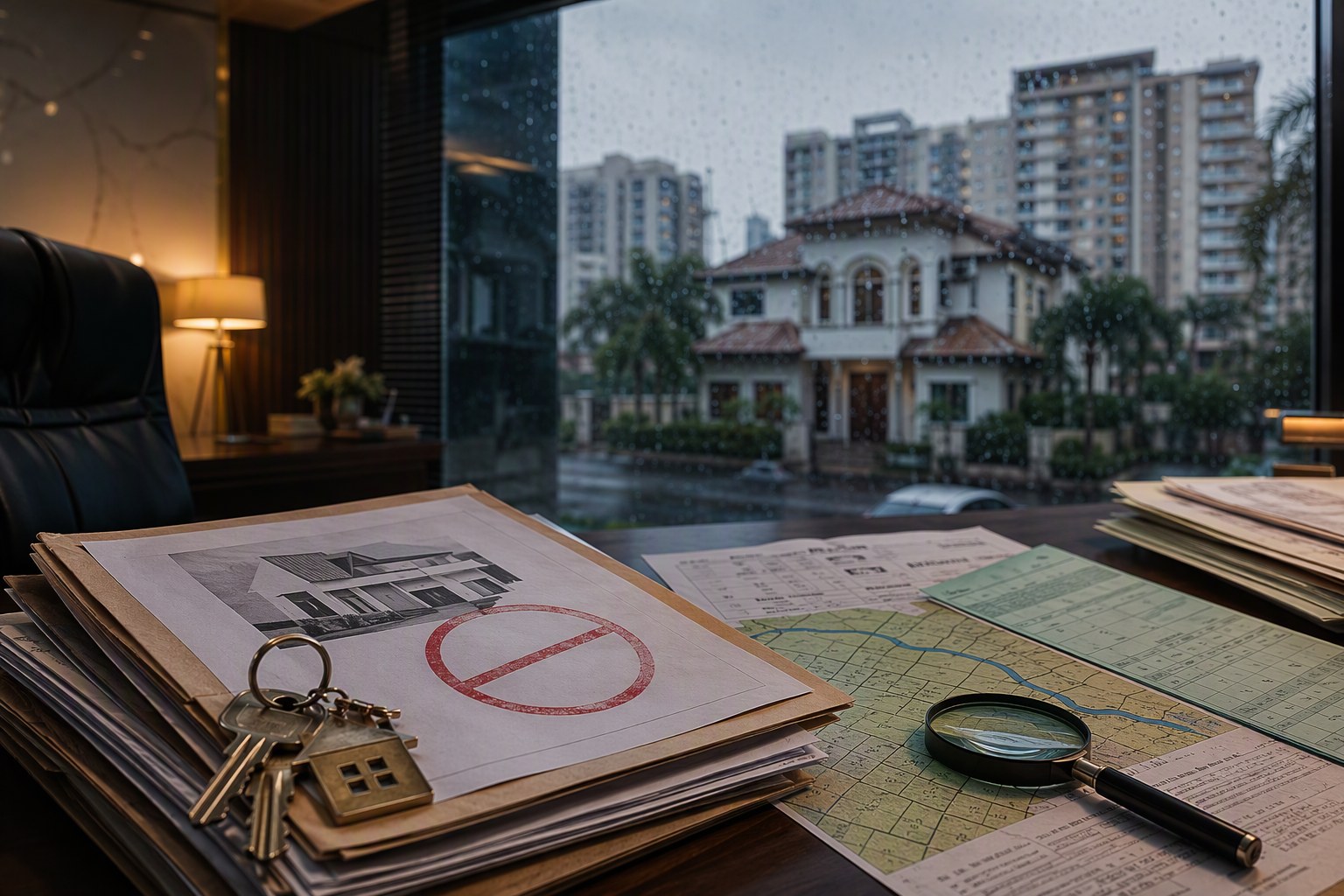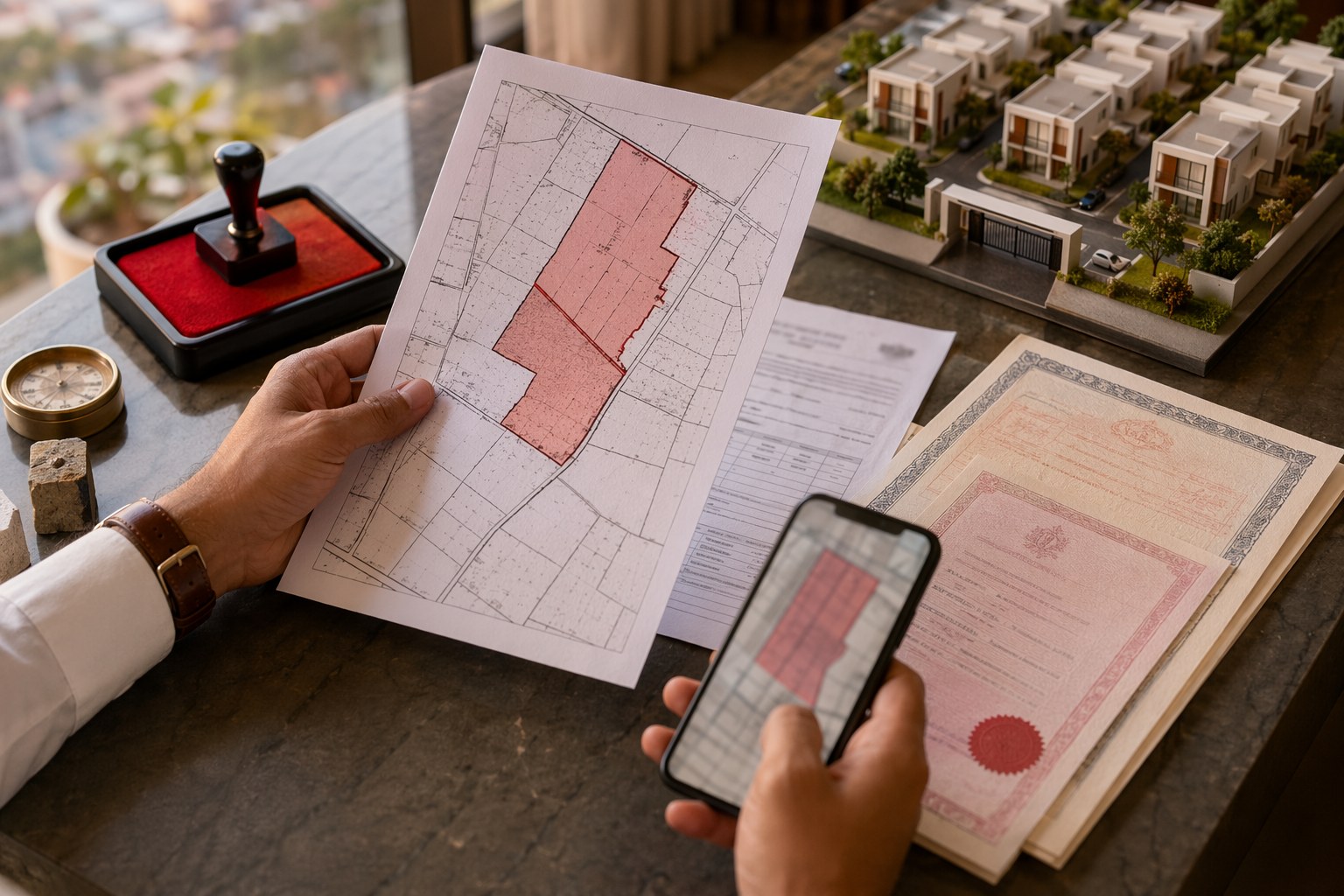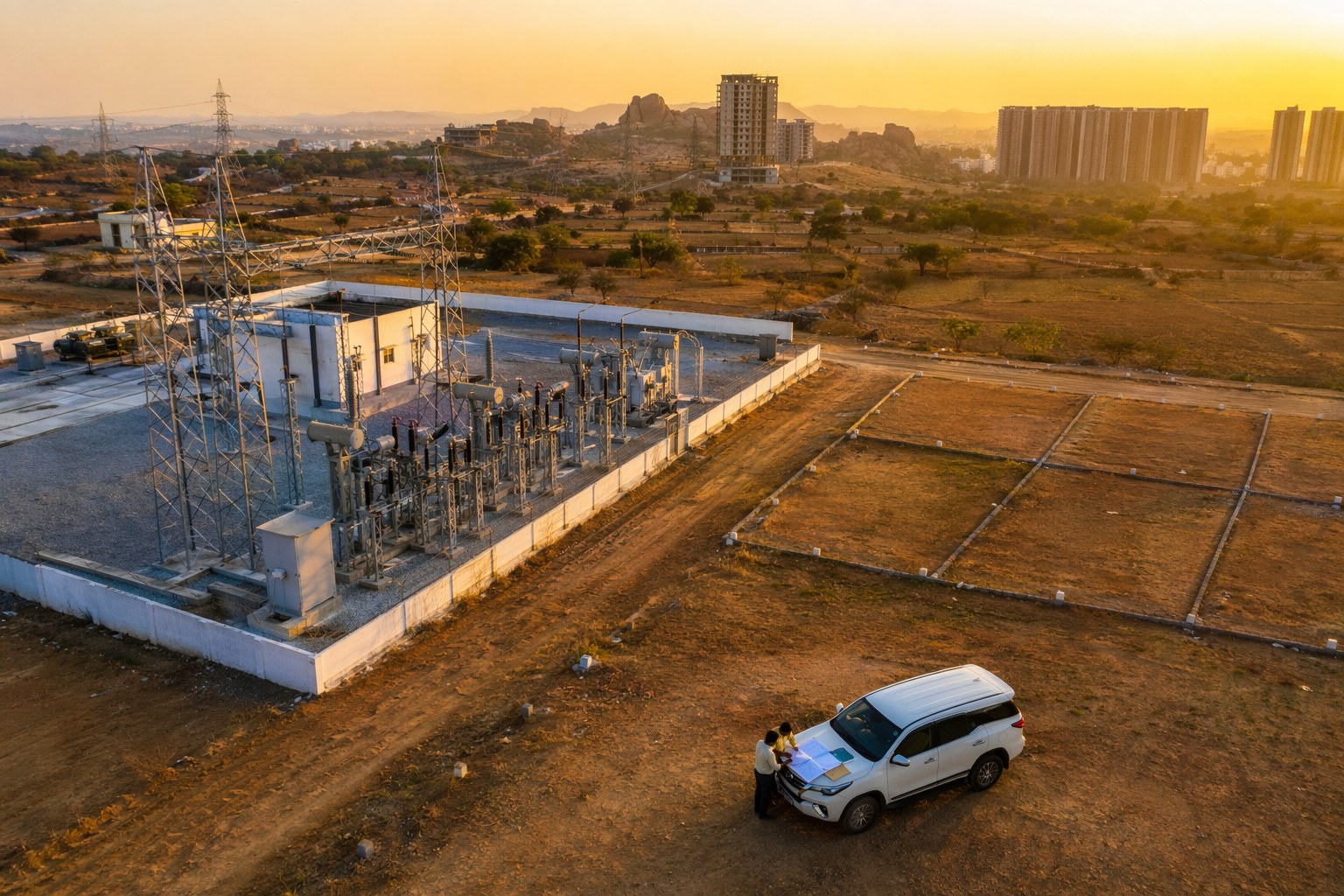
Telangana 22-A Freeze has moved from being a landowner grievance to a revenue question for the state. With 147,934 properties sitting under Section 22-A prohibited status, the issue is no longer limited to individual survey numbers in one village or one mandal. It can affect stamp duty collections, registration volumes and liquidity in land-heavy corridors around Hyderabad, especially where buyers still depend on clear title before paying full consideration.
For the property market, the message is simple. A land parcel may have demand, road access, HMDA potential and a willing buyer, but if it is flagged under 22-A, the Sub-Registrar Office will not register the transaction. That means no sale deed, no stamp duty, no registration fee, and often no bank loan. We’ve seen this play out in parts of Rangareddy, Medchal-Malkajgiri, Sangareddy and Yadadri-Bhuvanagiri, where old revenue entries, assigned land claims, endowment issues and government land notings can keep a property frozen for years.
Telangana 22-A Freeze and why revenue officials are watching it closely
Section 22-A of the Registration Act allows the government to prohibit registration of certain properties. In Telangana, these can include government lands, assigned lands, endowment lands, wakf properties, ceiling surplus lands and parcels affected by court or departmental restrictions. Once a property is listed, the SRO is expected to refuse registration.
From the buyer’s side, this is a title safety mechanism. From the revenue side, it is a brake on transactions. Stamp duty income is directly linked to the number and value of registered documents. Telangana generally collects around 6% on a standard sale transaction, including stamp duty, transfer duty and registration charges. So, every blocked sale also blocks immediate revenue.
The impact is sharper in high-value locations. A 500 square yard plot in Gandipet mandal, a villa land component in Shankarpally, or an agricultural-to-layout conversion case in Maheshwaram can carry a far bigger revenue implication than a small rural parcel. When multiple such survey numbers remain frozen, the effect is not just legal; it becomes financial.
In our experience, 22-A does not kill demand. It freezes movement. Buyers wait, sellers discount, and the government loses the registration event until the title cloud is cleared.
Telangana 22-A Freeze could slow stamp duty collections in active corridors
Hyderabad’s property economy has been powered by registrations in and around growth belts such as Kokapet, Narsingi, Tellapur, Mokila, Shankarpally, Tukkuguda, Adibatla, Shamshabad, Bachupally, Kompally and Uppal. Many of these areas have a mix of plotted layouts, old patta lands, assigned land disputes, venture regularisation cases and family partition transactions.
When a parcel is under 22-A, the first visible hit is to the SRO counter. A buyer may be ready with token advance, bank sanction and stamp duty estimate, but the document cannot move if the survey number is blocked. For a state that depends heavily on urban and peri-urban property registrations, this creates a measurable drag.
For example, take a property valued at ₹1 crore for registration purposes. At roughly 6% transaction cost, the government may collect about ₹6 lakh when the sale deed is registered. If the same property is under 22-A, that ₹6 lakh does not arrive. Multiply this across even a small portion of the 147,934 prohibited properties, and the revenue sensitivity becomes obvious.
Buyers can run a quick cost check through our Stamp Duty Calculator, but that number is useful only after the title is registrable. Before paying an advance, it is safer to check the survey number through the Section 22-A Prohibited Property Check.
Transaction volumes: where 22-A hurts the market most
The pain is not uniform across Telangana. In apartment-heavy areas such as Madhapur, Kondapur, Gachibowli and Nanakramguda, most buyer risk is around RERA status, project approvals, mortgage entries and delivery timelines. But in land-heavy markets, especially in gram panchayat layouts and HMDA conversion zones, 22-A status can decide whether a deal closes at all.
We see higher caution in mandals such as Shankarpally, Moinabad, Shamshabad, Maheshwaram, Ibrahimpatnam, Keesara, Medchal, Ghatkesar and Yacharam. These are not weak markets. In fact, many are strong long-term bets because of ORR access, upcoming industrial clusters, Pharma City influence, airport-side demand and warehousing growth. But land title must be clean.
A frozen survey number creates three market effects:
- Deals get postponed: Buyers ask sellers to clear 22-A entries before registration.
- Discounting starts: Sellers may quote below nearby market rates if the land has a title cloud.
- Finance becomes difficult: Banks avoid properties where registration itself is blocked or uncertain.
This is why a cheap plot in a hot corridor needs more checking, not less. A buyer comparing a plot in Mokila with one in Kardanur should not only compare road width and layout plan. They must check survey number, pahani, Dharani status, EC and SRO jurisdiction.
For this, our Survey Number Finder, Encumbrance Certificate Search and Find Your SRO Office pages are practical starting points.
Market liquidity is the bigger story behind the Telangana 22-A Freeze
Revenue loss is one part. Liquidity is the larger issue. A liquid property market allows owners to sell, buyers to enter, banks to lend and developers to aggregate land. When 147,934 properties are prohibited from registration, a sizeable pool of assets becomes difficult to trade.
For families, this can be serious. Many Hyderabad and district landowners depend on land sale for children’s education, business capital, medical expenses or family settlements. If a land parcel in a village record is wrongly or outdatedly included under 22-A, the owner may be asset-rich but cash-poor.
Developers also face friction. Land aggregation for plotted ventures, villas and warehouses requires clean contiguous parcels. One blocked survey number inside a larger land pocket can disturb planning, access, mortgage funding and approvals. In places like Tukkuguda, Kongara Kalan, Kollur and Patancheru side villages, this can alter project timelines.
That is why serious buyers now verify land before negotiating. We recommend checking the official market value using the Market Value / Guideline Value Search, then matching it with title checks through the Property Verification Tool. For apartments and gated communities, the RERA Project Lookup is equally useful.
What buyers should do before paying token advance
A 22-A problem usually becomes costly when the buyer discovers it late. By then, money may have changed hands, an agreement may be signed, and emotions may be involved. In Telangana land transactions, verification should happen before token advance, not after.
| Check | Why it matters |
|---|---|
| 22-A prohibited status | Confirms whether the SRO can register the property |
| Survey number and village | Prevents confusion between similar land parcels |
| EC search | Shows past registered transactions and mortgages |
| Dharani/pahani entries | Helps identify ownership and land classification |
| Guideline value | Helps estimate stamp duty and minimum registration value |
Do not rely only on a seller’s word that “registration will happen”. Ask for the exact survey number, village, mandal, passbook details if applicable, old link documents and latest EC. If the property is in a layout, ask for approval details, road widths and open space status. For development land, check zoning and FSI potential through tools such as the Land Use Zone Finder and FSI/FAR Calculator.
What the state may need to balance
The government has a difficult balance. Removing genuine government land or assigned land from 22-A carelessly can create litigation and public asset loss. Keeping wrongly listed private land frozen for years can hurt citizens, market confidence and revenue.
A clean, time-bound review mechanism will help. Revenue, registration and survey departments need consistent data between village records, Dharani, prohibited lists and SRO systems. Where land is genuinely private and wrongly frozen, removal should be faster. Where the prohibition is valid, the record should clearly say why.
For now, the 147,934 figure is a reminder that title clarity is not a small back-office matter. It affects how quickly Telangana’s land market can trade, how much stamp duty the state can collect, and how confidently buyers can invest.
Our view is straightforward: the Telangana 22-A Freeze is both a legal filter and a liquidity issue. If the state can clean up incorrect entries without weakening protection for public land, the benefit will be visible at SRO counters, in buyer confidence and in genuine landowner relief.
Frequently Asked Questions
What is Telangana 22-A Freeze?
It refers to properties listed as prohibited under Section 22-A, where the Sub-Registrar Office cannot register sale deeds or other documents until the restriction is cleared.
How many prohibited properties are listed in Telangana?
As per the available database fact, Telangana has 147,934 properties under Section 22-A prohibited status.
Does 22-A status affect stamp duty revenue?
Yes. If a property cannot be registered, the government does not receive stamp duty, transfer duty and registration charges for that transaction.
Can I buy a 22-A prohibited property?
You should not proceed without legal clearance. If the property is blocked under 22-A, registration may be refused even after you pay an advance.
How can I check if a property is under 22-A?
Use the Section 22-A check, verify the survey number, review EC records, and confirm with the relevant SRO before committing money.