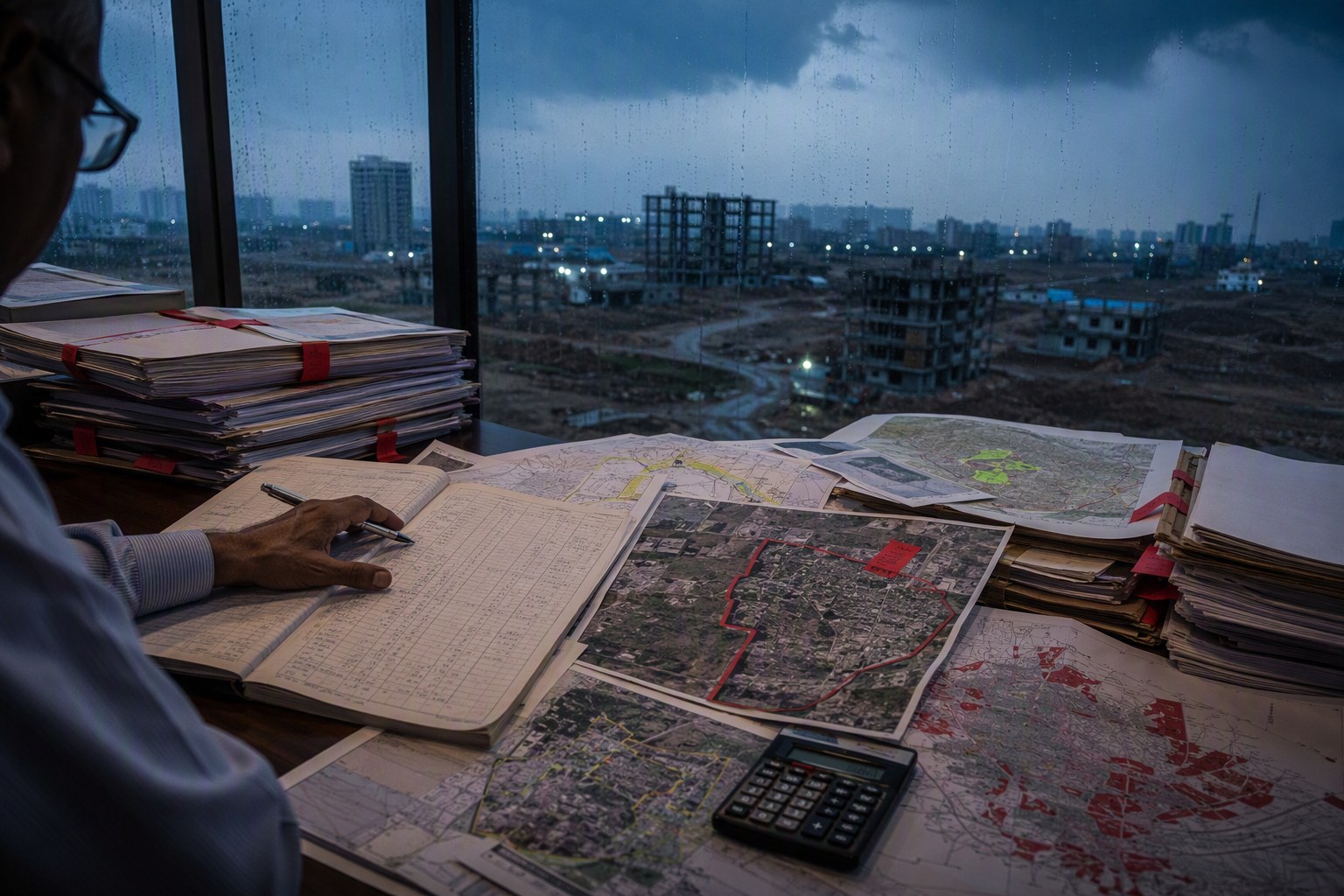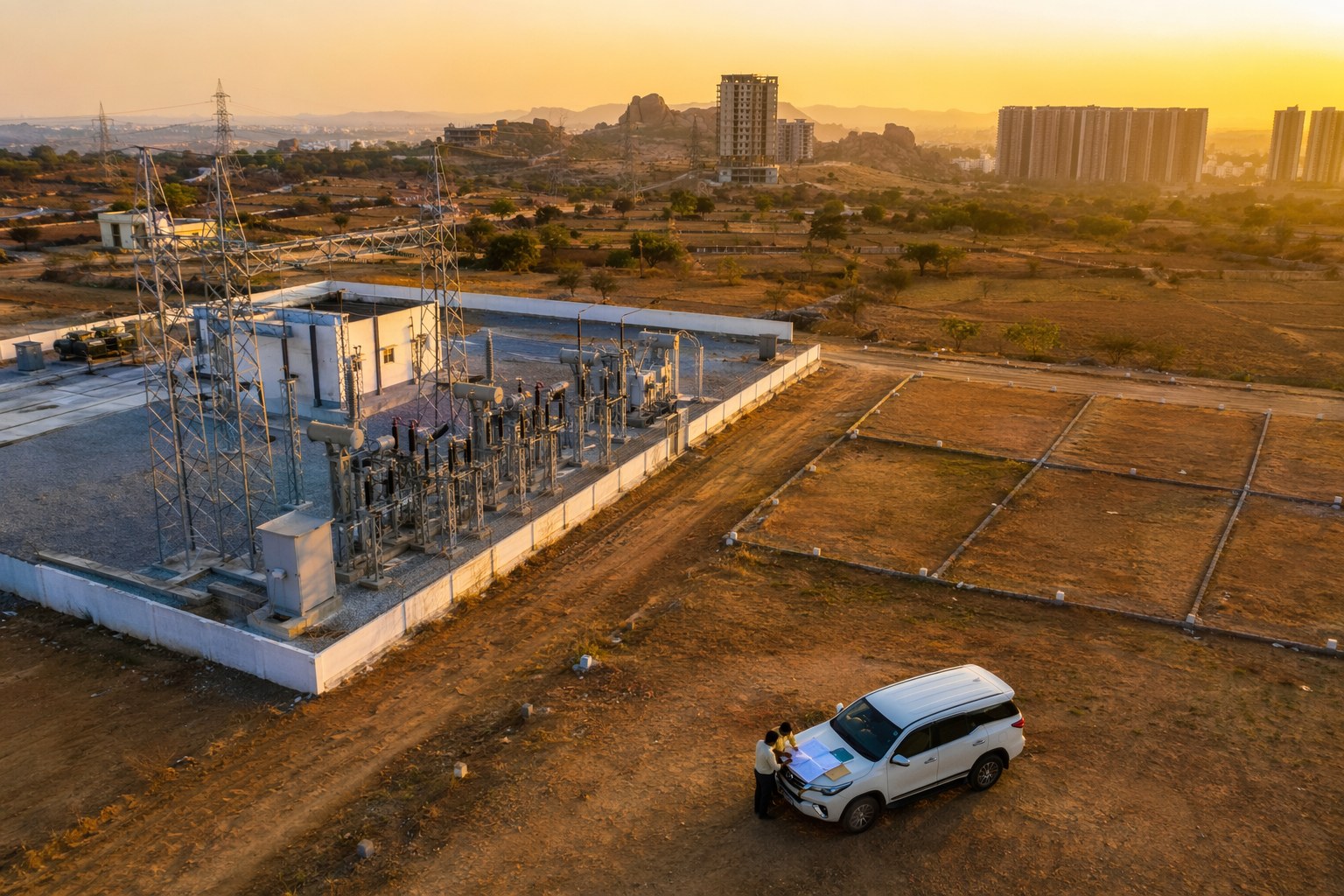



Telangana 22-A Count has become a serious budgeting signal for district administrations, with 147,934 properties currently falling under the prohibited-property list under Section 22-A. For the registration department and district revenue teams, this is not just a legal housekeeping number. It can change how they estimate stamp duty collections, SRO workload, land market activity, and even demand assumptions in high-growth mandals around Hyderabad.
In our experience tracking Hyderabad and Telangana land transactions, a 22-A entry can quietly freeze market movement. A buyer may be ready, token advance may be paid, bank loan may be sanctioned, but the SRO will not register the document if the survey number or property appears in the prohibited list. That means revenue that looked likely on paper may never reach the treasury.
For districts, the 147,934 prohibited-property count is a revenue forecasting issue as much as it is a land administration issue.
Telangana 22-A Count and the revenue math districts must now revisit
Registration revenue forecasting usually works on a few assumptions: number of documents expected, guideline value of properties, likely market activity, and seasonal transaction behaviour. But a large prohibited-property base can distort all four.
Take a typical open plot transaction in Hyderabad outskirts. If a plot is registered at a guideline value of ₹50 lakh, Telangana’s usual registration cost structure of around 6% — stamp duty 4%, transfer duty 1.5%, and registration fee 0.5% — can mean about ₹3 lakh in government receipts. If that plot is blocked under Section 22-A, the revenue is postponed or lost, depending on whether the issue is later cleared.
Now apply that thinking across districts with active land markets: Rangareddy, Medchal-Malkajgiri, Sangareddy, Yadadri-Bhuvanagiri, Vikarabad, and parts of Siddipet. Even a small portion of the 147,934 entries affecting saleable land can alter monthly collection estimates at the SRO level.
Buyers can check the risk early through the Section 22-A Prohibited Property Check. For district officials, the same pattern of blocked survey numbers can help identify where forecast assumptions are too optimistic.
Telangana 22-A Count may affect SRO-level market activity readings
One issue many people miss is that registration data shows completed transactions, not attempted transactions. If 100 agreements are discussed in Shankarpally mandal and 20 fail because of 22-A concerns, official registration figures capture only the 80 that survived. That can make the market look weaker or slower than the ground reality.
We have seen this in pockets around Mokila, Kollur, Tellapur, Shankarpally, Maheshwaram, Adibatla, Tukkuguda, Ghatkesar, Pocharam, and Shamirpet. These are not sleepy markets. Enquiries are active, especially for plots and villa land. But if a survey number has a government land claim, assigned land issue, endowment link, court attachment, wakf concern, or other prohibited-property entry, the transaction stops at verification stage.
This is where mandal-level analysis matters. A district may show flat growth in registrations, but one mandal may be losing transactions due to title restrictions while another mandal is genuinely seeing lower demand. Both are different stories. Treating them as the same can lead to wrong revenue targets.
What a 22-A block does to the transaction chain
- Buyer confidence drops: Families delay or cancel purchase plans when the pahani, Dharani record, or SRO response does not match the seller’s claim.
- Bank funding slows: Lenders usually ask for title flow, EC, link documents, and registration feasibility before disbursal.
- Stamp duty collection is deferred: Even if the buyer has money ready, the government receipt does not happen until registration is possible.
- Market values become harder to read: A locality may have demand, but blocked parcels reduce actual registered sale volume.
Why the 147,934 Telangana 22-A Count matters for Hyderabad’s growth belt
Hyderabad’s land market is no longer confined to core city areas. Much of the current transaction pressure sits in surrounding mandals: Gandipet, Serilingampally, Rajendranagar, Shamshabad, Maheshwaram, Hayathnagar, Abdullapurmet, Medchal, Ghatkesar, Keesara, Patancheru, Ameenpur, and Sangareddy.
These locations carry different risk profiles. In Kokapet or Financial District, apartment transactions may be driven by RERA-registered projects and institutional developers. In Shankarpally, Chevella, Moinabad, Kandukur, and Yacharam, buyers may be dealing with agricultural land conversions, plotted layouts, old pahanis, family partitions, and survey boundary issues. The revenue department cannot apply one uniform assumption to all these markets.
For a buyer, the minimum checklist should include an EC check through the Encumbrance Certificate Search, guideline value review using the Market Value / Guideline Value Search, and SRO confirmation through Find Your SRO Office. If it is land, the Survey Number Finder and Property Verification Tool become even more useful.
District forecasts may need a haircut, not just a footnote
Revenue forecasting often treats prohibited properties as a side note. That approach may not hold when the count is 147,934. District collectors and registration officials may need to create a separate adjustment factor for 22-A exposure, especially in SROs where land and plot registrations form a large share of receipts.
A practical model can look like this:
| Forecast factor | Why 22-A changes it | Likely impact |
|---|---|---|
| Expected document count | Some sale deeds cannot be registered despite buyer demand | Lower realised registrations |
| Stamp duty receipts | Transactions stuck at legal verification do not generate duty | Collection gap at SRO level |
| Market activity reading | Attempted deals are invisible in final registration data | Demand may be underestimated |
| Guideline value planning | Blocked parcels may distort comparable sale evidence | Uneven ready reckoner signals |
| Administrative workload | More citizens seek clarifications, corrections, and NOCs | Higher pressure on revenue offices |
For citizens, the money angle is immediate. Before paying an advance, buyers should calculate transaction costs through the Stamp Duty Calculator. Builders and landowners looking at apartments or commercial feasibility can use the FSI/FAR Calculator and Land Use Zone Finder. These tools do not replace legal due diligence, but they help people ask sharper questions before money changes hands.
What district administrations can do with the Telangana 22-A Count
The cleanest financial response is not to simply reduce all revenue targets. That would be lazy. Districts need a sharper classification of the 147,934 prohibited-property entries. Which are old entries with no current market activity? Which are in high-demand mandals? Which relate to government land, assigned land, endowment land, court cases, or data mismatch? Each category has a different revenue implication.
For example, a 22-A entry in a remote low-liquidity village may have little effect on near-term collections. A similar entry in a fast-moving corridor like Kollur, Mokila, Tukkuguda, Adibatla, Pocharam, or Patancheru can affect several linked transactions — sale agreements, developer aggregations, layout approvals, bank funding, and resale activity.
There is also a citizen-service angle. When buyers get a clear answer early, they either proceed safely or step away. When records are unclear, disputes increase. That hurts both families and the revenue system. We’ve seen many cases where a simple survey-number check before token advance would have saved months of running between the seller, village revenue office, Dharani helpdesk, and SRO.
The market signal: demand is not the same as registrability
The main message from the Telangana 22-A Count is this: demand cannot be counted as revenue until the property is registrable. Hyderabad’s growth corridors still have genuine buyer interest, especially where ORR access, Metro expansion talk, employment hubs, and villa layouts are influencing decisions. But district revenue estimates must separate market appetite from legally registerable inventory.
For investors, this means title discipline will matter more than brochure pricing. For district administrations, it means registration revenue forecasts should carry a 22-A risk layer. For sellers, it means cleaning records before listing the property may improve buyer confidence. For buyers, it means checking the prohibited list, EC, guideline value, SRO jurisdiction, land use, and survey details before paying even a small advance.
The 147,934 figure is large enough to change assumptions. Not every entry will hit revenue. But ignoring it can make district forecasts look cleaner than the market really is.
Frequently Asked Questions
What is the Telangana 22-A Count?
It refers to the number of properties listed as prohibited for registration under Section 22-A. The current count is 147,934, which can affect sale deeds, stamp duty receipts, and district revenue planning.
Can a 22-A property be registered in Telangana?
Usually, the SRO will not register a property if it appears in the prohibited-property list. The owner may need correction, clarification, NOC, court order, or revenue department action depending on the reason for the entry.
How does the 22-A list affect district revenue forecasts?
Blocked properties reduce the number of completed registrations. Since stamp duty and registration fee are collected only when documents are registered, districts may need to revise expected receipts in affected mandals.
How can buyers check 22-A risk before paying an advance?
Buyers should check the prohibited-property status, EC, survey number, guideline value, and SRO jurisdiction before paying token money. Verified.RealEstate tools can help with these checks at the early stage.