

Hyderabad Lake Buffer Mapping Could Reset Plot Due Diligence
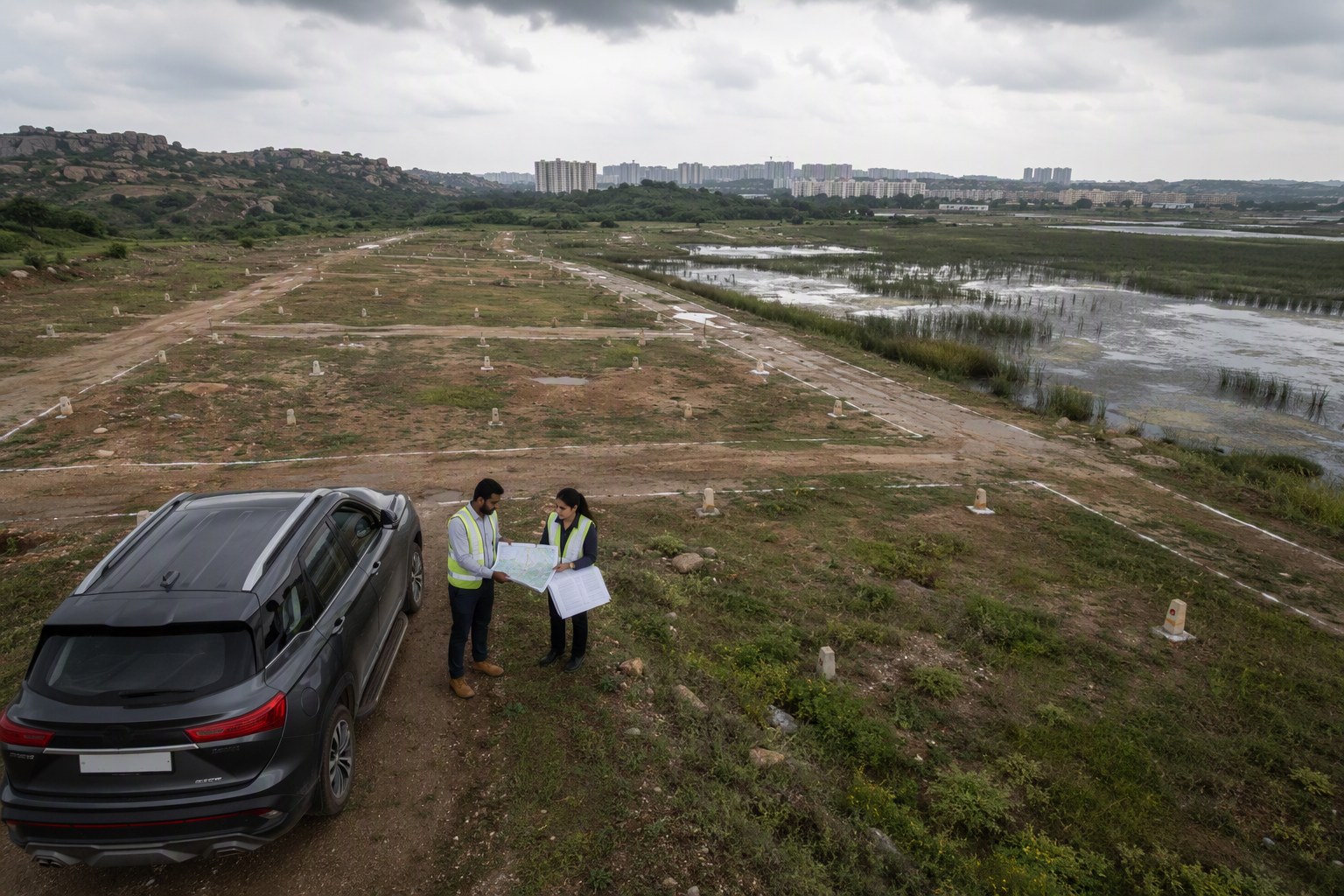
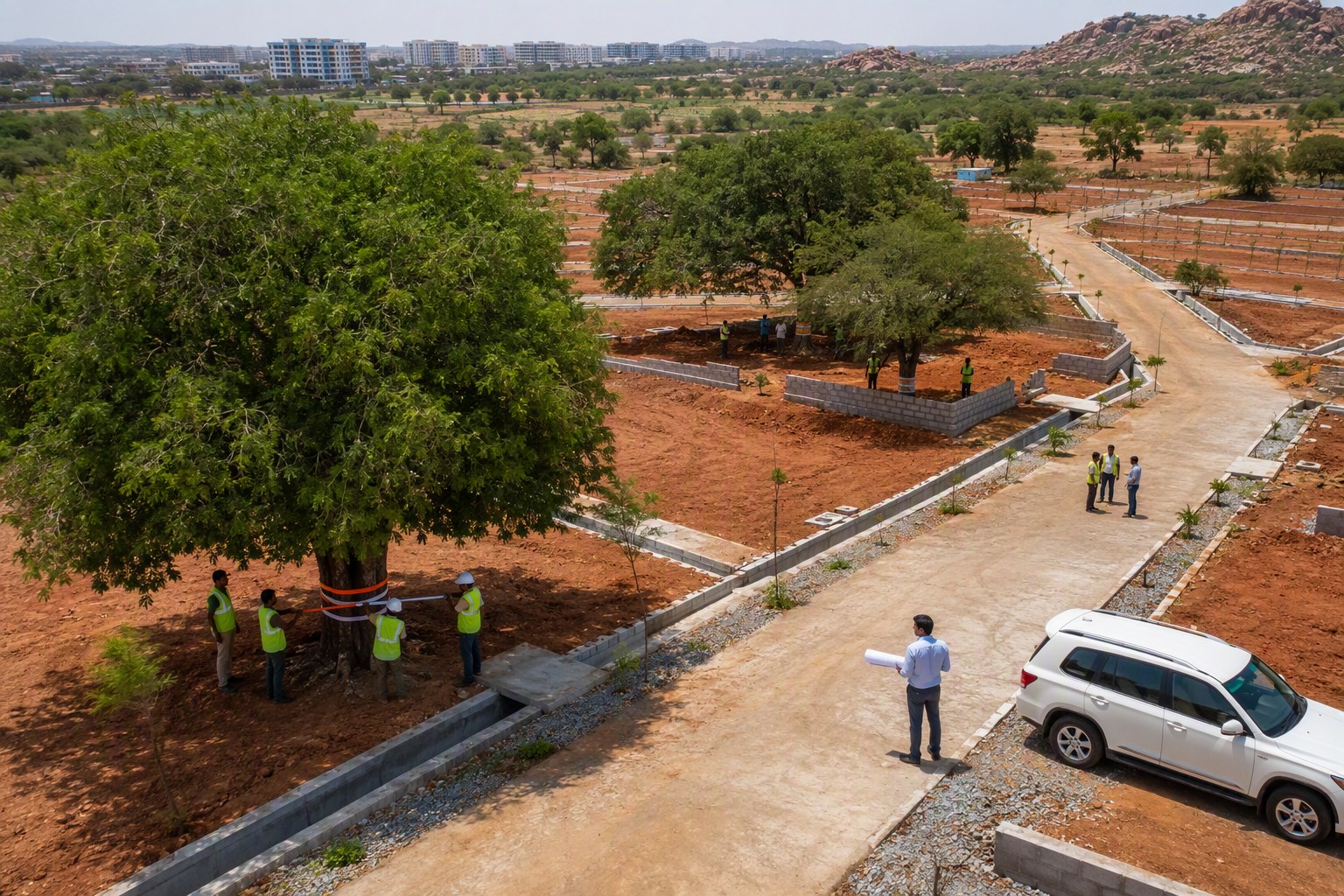
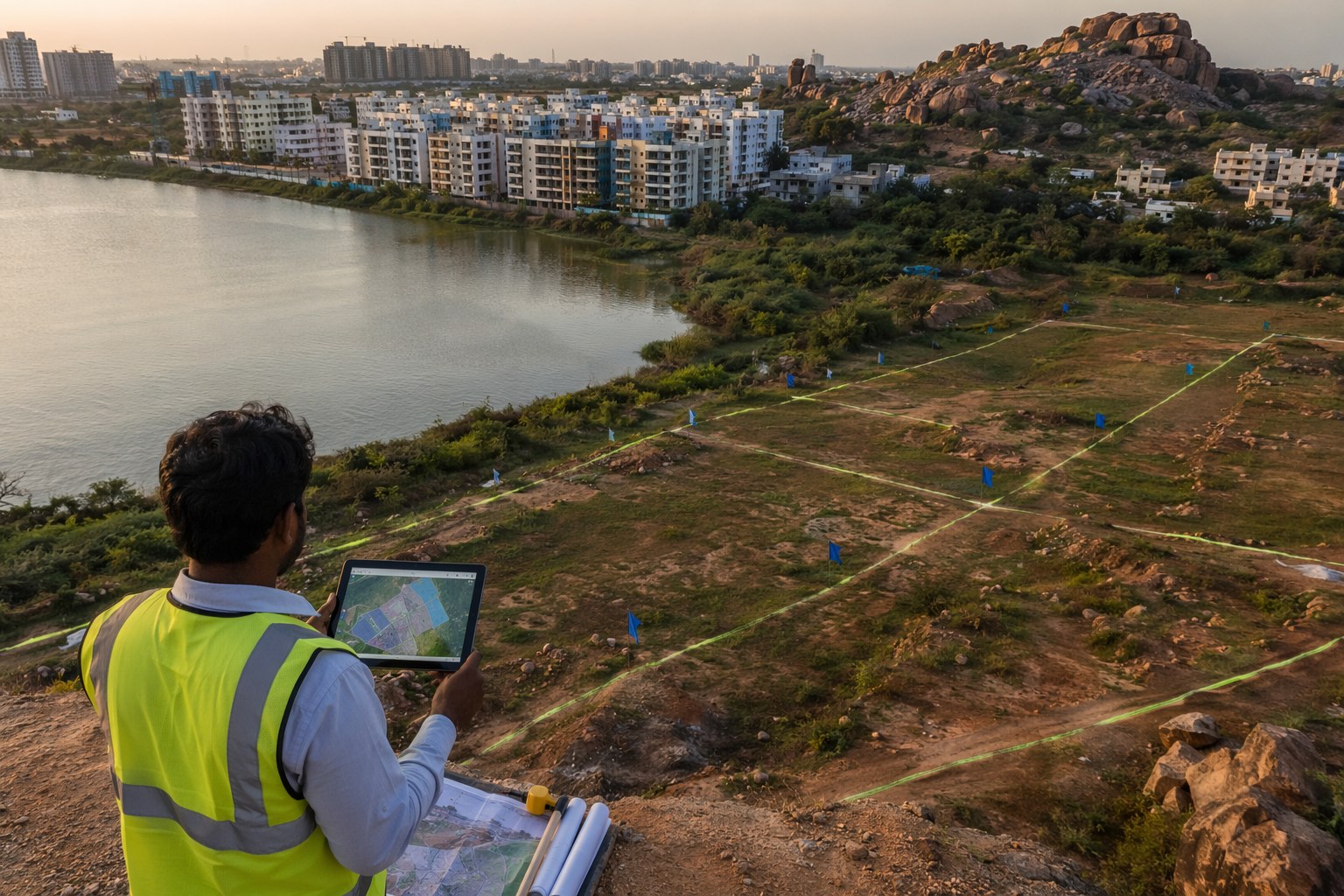
Hyderabad Lake Buffer Mapping is likely to change how serious plot buyers check land near tanks, kuntas, nalas and lake beds across the city’s growth corridors. The short answer: a clean-looking document set may not be enough anymore. Before paying token advance for a plot in Narsingi, Kokapet, Ameenpur, Tellapur, Bachupally, Shamirpet or Adibatla, buyers should check FTL, buffer, survey number history, Section 22-A status, EC entries, SRO jurisdiction and planning permissions together.
That last point matters because Telangana’s property risk database is already heavy. Verified.RealEstate has 30,76,153 (3,076,153) Section 22-A prohibited properties in its database. Once lake buffer and FTL mapping becomes more usable at plot level, many transactions that earlier moved only on pahani, dharani entry and seller confidence may face tougher questions.
Our view is simple: for land near a water body, the first due diligence question should not be “rate enti?” It should be “survey number FTL lo unda, buffer lo unda, or clean buildable land aa?”
Hyderabad Lake Buffer Mapping: what changes for plot buyers
FTL means Full Tank Level. In plain language, it is the boundary up to which a lake or tank can hold water. A buffer is the protected area around that water body where construction restrictions may apply depending on the notified records, planning rules and approvals. For a buyer, this is not an academic environmental point. It can decide whether a plot is usable, mortgageable, registerable or saleable later.
In Hyderabad’s western and northern belt, many old tanks are now surrounded by layouts, villas, farm plots and apartment projects. We’ve seen buyers get attracted by location tags like “near Kokapet”, “close to ORR”, “near IT corridor” or “beside upcoming development”. But if the plot is close to a cheruvu, kunta or nala, the due diligence has to go beyond marketing words.
Areas where this check has become very practical include Gandipet mandal villages around Narsingi and Kokapet, Serilingampally side pockets near Gachibowli and Miyapur, Ramachandrapuram and Ameenpur side layouts, Medchal and Shamirpet side land parcels, and Abdullapurmet-Adibatla growth areas. I am not saying every plot in these localities is risky. I am saying water body adjacency changes the standard of verification.
For a normal urban plot, buyers usually ask for link documents, EC, tax receipts and layout approval. For a lake-side or nala-side plot, add these checks: FTL overlay, buffer boundary, land use zone, survey subdivision, village map, prohibited property status, and whether the SRO will accept registration without objection.
Hyderabad Lake Buffer Mapping and Section 22-A checks must be read together
Section 22-A is the government’s prohibited property filter. If land is marked under this category, registration can be blocked or questioned. The presence of 30,76,153 (3,076,153) Section 22-A prohibited properties in the database shows why buyers should not treat registration as a formality.
Lake buffer mapping may not automatically mean a property is under Section 22-A. Both are separate checks. But in practice, buyers should read them together because both affect transaction certainty. A plot can have an attractive location, a willing seller and even old sale deeds, yet still face trouble if the survey number falls in a restricted category, water body boundary, government land classification or disputed entry.
Start with Section 22-A Prohibited Property Check. Then verify the exact survey number using Survey Number Finder. If you only check by flat plot number or venture name, you may miss the original revenue identity of the land. In Telangana land matters, survey number is the backbone. Plot number is only a later layer.
Why old EC and pahani are not enough near lakes
An Encumbrance Certificate tells you registered transactions, mortgages and certain legal charges reflected in SRO records. It does not certify environmental clearance, FTL safety or buffer compliance. A pahani or dharani record tells you revenue ownership and land classification as per available records. It also does not, by itself, prove that a plot is outside lake impact.
Use Encumbrance Certificate Search to see sale deed flow and mortgage entries. Then use EC Analyzer if the transaction chain is long or confusing. For pricing, buyers can cross-check the ready reckoner angle through Market Value / Guideline Value Search, but please don’t confuse guideline value with clean title. A government market value is not a safety certificate.
Similarly, SRO jurisdiction should be verified early. Some buyers realise the correct SRO only at the registration stage. Use Find Your SRO Office or SRO Village Directory before drafting sale terms. If the land sits near a village boundary, mandal boundary or old gram panchayat layout, this small check can save time.
Buyer due diligence checklist for plots near water bodies
| Check | Why it matters | Practical action |
|---|---|---|
| Survey number | Confirms the revenue identity of the land | Match sale deed, pahani, dharani and layout papers |
| FTL and buffer | May affect construction and future saleability | Ask for mapped boundary, village map reference and planning opinion |
| Section 22-A | Can block or question registration | Run prohibited property check before token advance |
| EC and link deeds | Shows transaction trail and registered charges | Read names, extents, survey numbers and schedules carefully |
| Land use zone | Residential use may not be allowed everywhere | Check master plan zoning before buying |
| Road access | Impacts building approval and resale | Verify legal access, not only physical approach road |
For zoning, use Land Use Zone Finder. For road access, use Road Width Check. If you are buying a larger parcel and planning plotting, the OSR Calculator can help you understand open space reservation implications at a basic level. These tools do not replace legal opinion, but they make your first screening sharper.
Localities where buyers should be extra alert
Hyderabad’s lake network is not limited to famous names. Many smaller kuntas and tanks sit inside expanding real estate pockets. In our experience, the highest confusion happens where urban layouts have grown around older village water bodies.
- Gandipet mandal: Narsingi, Kokapet and nearby pockets need careful review because land values, villa demand and water body proximity often overlap.
- Serilingampally belt: Miyapur, Gachibowli-side pockets and older village lands can have mixed document histories.
- Ameenpur and Ramachandrapuram side: Lake-side development interest is high, so FTL and buffer clarity is not optional.
- Medchal, Kompally and Shamirpet: Buyers of open plots and farm-style parcels should verify village maps and access roads.
- Adibatla and Abdullapurmet side: Fast development often brings aggressive marketing. Survey-level checking is a must.
Do not rely only on “neighbours already built houses” as proof. Encroachments and past permissions can have their own history. Your plot needs its own verification.
How sale agreements should change after Hyderabad Lake Buffer Mapping
For plots near lakes, the sale agreement should have stronger conditions. Put the survey number, extent, boundaries, village, mandal and SRO clearly. Add a clause that token advance is refundable if the property is found affected by FTL, buffer, Section 22-A, government land claim, adverse EC entry or land use restriction. This is common sense, not overthinking.
Before paying stamp duty, calculate your cost using Stamp Duty Calculator. If you are comparing land plus building or redevelopment value, Composite Value Calculator may help. For apartment projects near water bodies, also run RERA Project Lookup and check whether approvals mention any environmental or planning conditions.
My opinion: the days of buying plots on one photocopied link document and broker confidence should end, especially near water bodies. Hyderabad land has become too valuable for casual verification. Lake buffer mapping, if made usable at citizen level, will push buyers to ask better questions before money moves.
What sellers and developers should do now
Sellers with clean land near a lake should not wait for buyers to raise doubts. Keep survey sketches, pahani copies, dharani extracts, link documents, EC, layout approval, land use proof and any FTL/buffer clarification ready. A clean file will command more trust than a defensive answer at negotiation time.
Developers should mark water body distance and buffer position clearly in brochures and agreement schedules. If a plot is outside the affected zone, show the basis. If a portion is affected, disclose it. Hyderabad buyers are becoming sharper, and half-answers create bigger suspicion than clear disclosure.
The bottom line for Hyderabad plot buyers
Hyderabad Lake Buffer Mapping could become one of the most practical due diligence layers for land transactions near water bodies. It will not replace title verification, EC, dharani, pahani or SRO checks. It will sit above them as a location-risk filter.
Before you pay advance, verify the land. Use Property Verification Tool for a wider first-pass check and Property Change Tracker if you want to monitor future changes. For lake-side plots, delay is better than regret. A missed FTL or buffer issue can be far costlier than losing one attractive deal.
Frequently Asked Questions
Does Hyderabad Lake Buffer Mapping mean all plots near lakes are illegal?
No. A plot near a lake is not automatically illegal. The risk depends on the exact survey number, FTL boundary, buffer position, land classification, layout approval and SRO records.
Is Section 22-A the same as lake buffer restriction?
No. Section 22-A relates to prohibited properties for registration purposes. Lake buffer and FTL restrictions relate to water body protection and planning controls. Buyers should check both.
Can an Encumbrance Certificate prove that a plot is outside FTL?
No. An EC shows registered transactions and certain charges. It does not certify FTL, buffer safety, land use permission or environmental compliance.
What should I check before buying a plot near a cheruvu or kunta?
Check survey number, pahani, dharani entry, EC, link documents, Section 22-A status, FTL and buffer mapping, land use zone, road access and correct SRO jurisdiction.