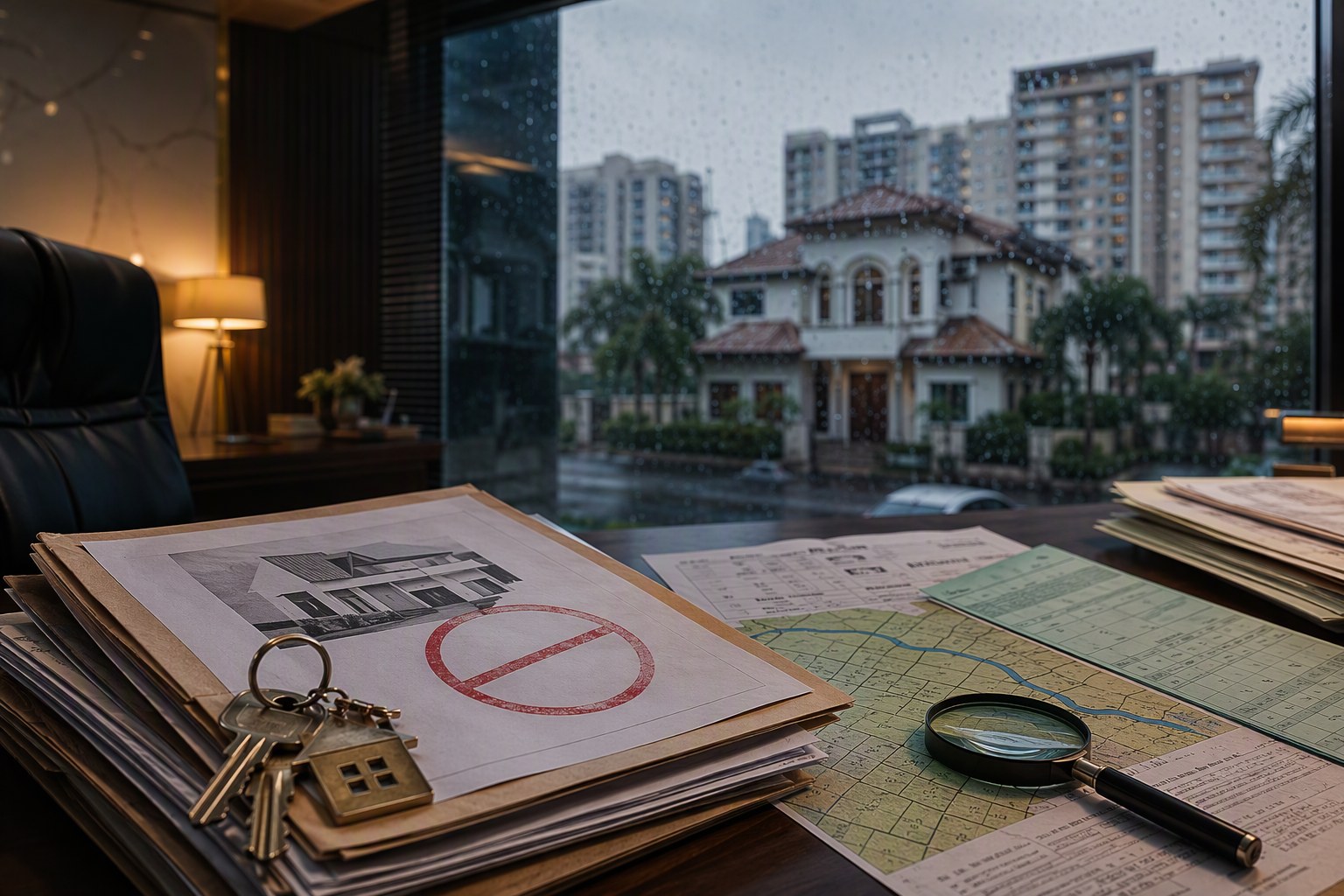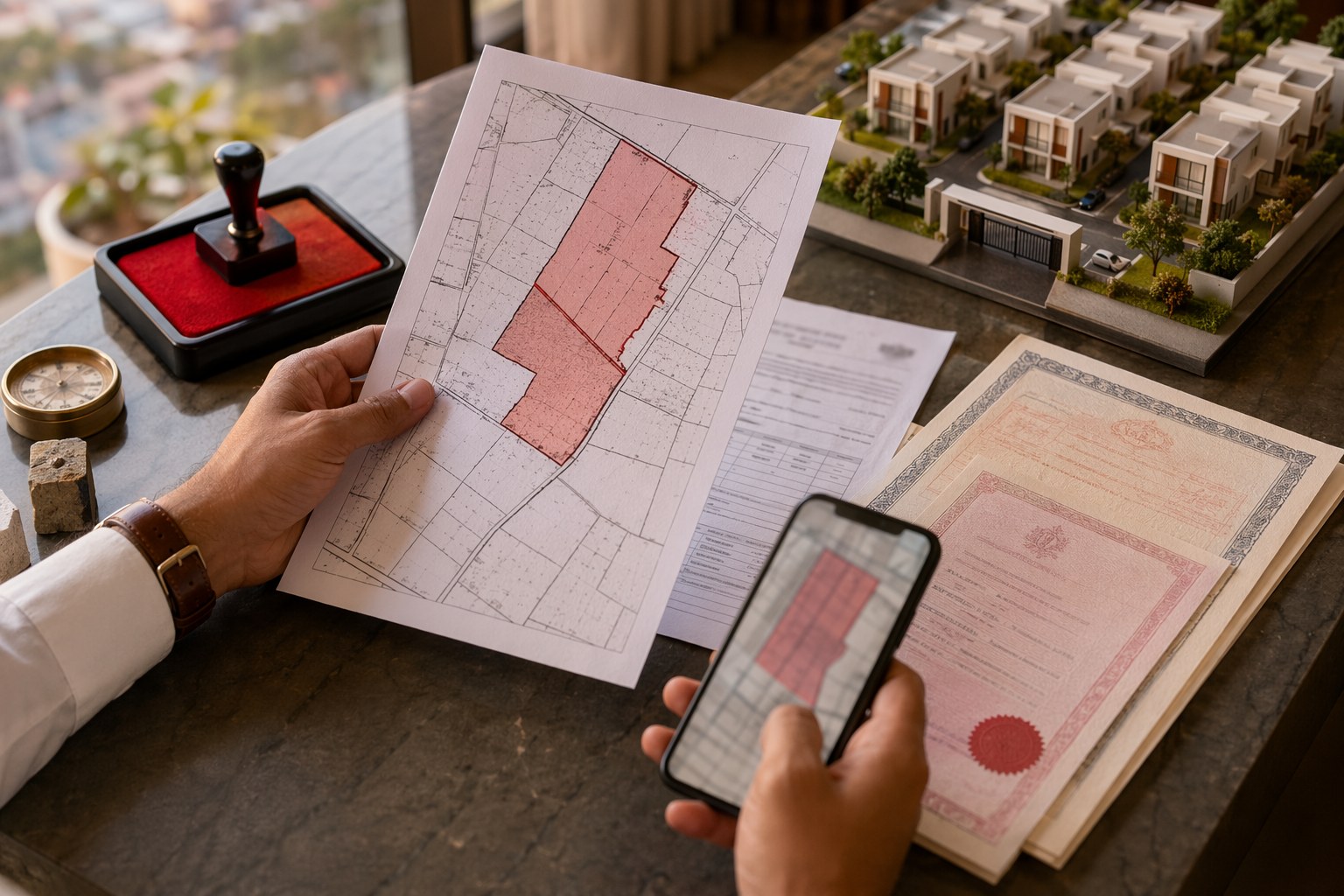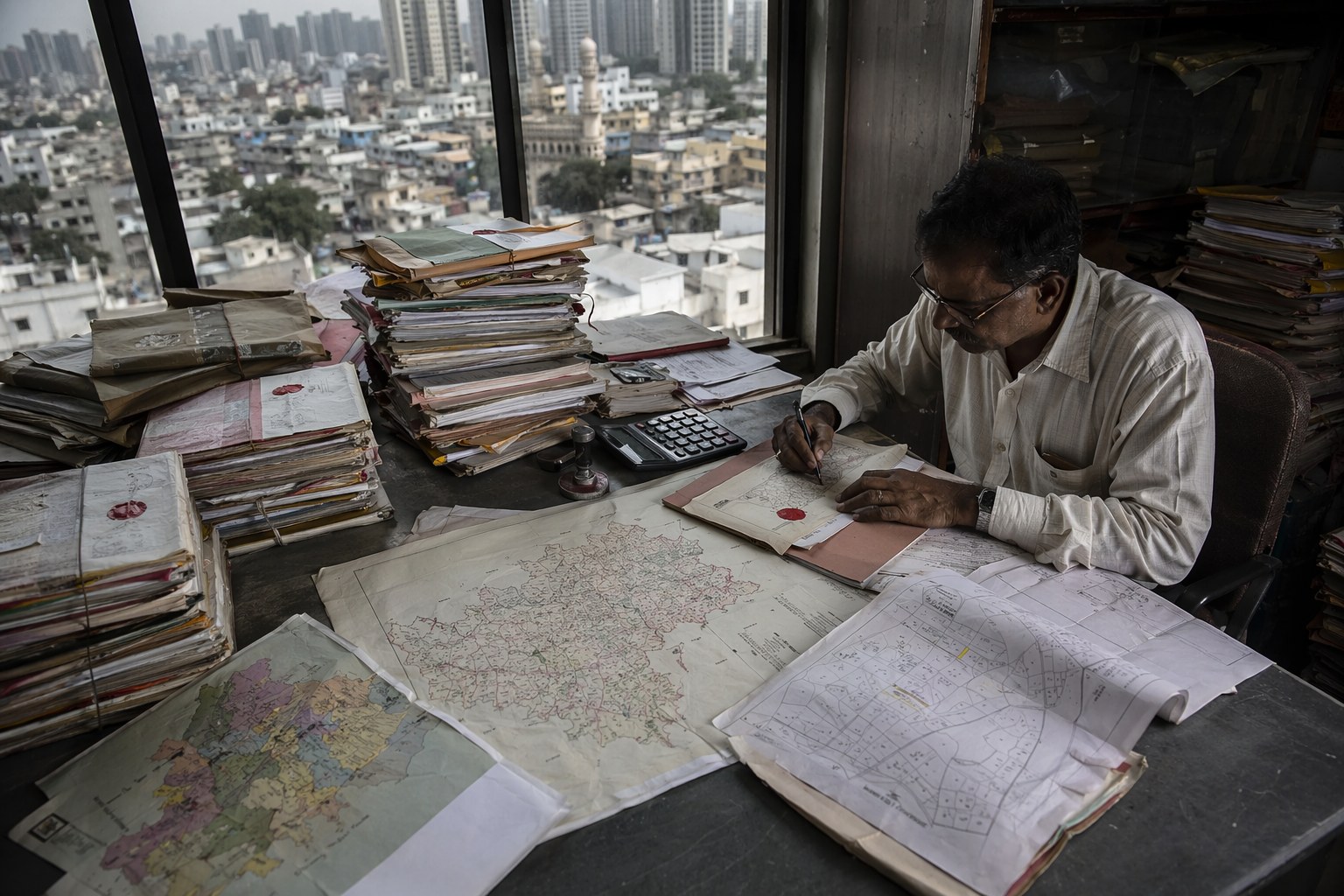
3.07 Million Blocked Properties Put Telangana Revenue in Focus as the State’s registration ecosystem faces a practical question: how much market activity is sitting outside normal sale, mortgage and development channels because of Section 22-A prohibitions?
As per latest IGRS data, Telangana has 3,076,153 prohibited properties recorded under Section 22-A. That is not a small back-office entry. It is a large land and property pool that can directly influence buyer confidence, bank lending comfort, SRO-level registration flow and revenue discussions around stamp duty and market value collections.
3.07 Million Blocked Properties Put Telangana Revenue in Focus
Section 22-A prohibited property entries usually stop or restrict registration when a property falls under categories such as government land, assigned land, endowment land, wakf-related entries, court-disputed land, ceiling surplus issues or other notified restrictions. In simple Hyderabad market language, if the survey number is blocked, the deal may not move at the SRO even if the buyer and seller have agreed on price.
For Telangana, the financial angle is clear. Registrations are not just paperwork. They create stamp duty, transfer duty and registration fee inflows. When a property cannot be registered, liquidity gets frozen. Sellers cannot exit cleanly, buyers hesitate, banks avoid funding, and developers become cautious about aggregation.
We’ve seen this play out in many Hyderabad-side land discussions. A land parcel in a growth belt may look attractive on location, access road and future demand. But once the buyer checks Dharani, pahani, EC and SRO records and finds a 22-A issue, the negotiation changes immediately. Either the buyer walks away, asks for a heavy discount, or waits till the entry is clarified. In all three cases, transaction velocity slows.
Why 3.07 Million Blocked Properties Matter for Telangana’s Market Liquidity
Liquidity in real estate means the ability to sell, buy, mortgage or develop a property without legal friction. In Hyderabad and surrounding districts, liquidity is strongest where title is clean, survey boundaries are clear, approach roads are recognised, and SRO records match revenue records.
When 3,076,153 properties are sitting in a prohibited category, the effect is not limited to one village or one mandal. It touches multiple layers of the market:
- Buyers delay decisions because they do not want to get stuck after paying token advance.
- Sellers lose bargaining power even when the land is physically in their possession.
- Banks and NBFCs become cautious because mortgage enforceability depends on clean title and registrability.
- Developers avoid land pooling where one blocked survey number can disturb the full layout or project plan.
- SRO offices face more queries, document checks and refusal-related pressure.
In our experience, the biggest damage is not always the final refusal. It is uncertainty. A buyer in Narsingi, Puppalaguda, Miyapur, Bachupally, Kompally or Tukkuguda may be ready to proceed, but one unclear revenue entry can pause the whole deal. That pause has a financial cost.
3.07 Million Blocked Properties and Registration Revenue Discussions
For any State government, registration-linked revenue depends on actual registered transactions. If eligible properties move freely, SROs record sale deeds, gift deeds, development agreements, mortgage deeds and partition documents. If a large number of properties cannot move, potential revenue stays outside the system until the issue is resolved.
This does not mean every prohibited property would have been sold immediately. That would be a wrong assumption. But a large prohibited pool can affect market sentiment. It makes due diligence longer and reduces the number of bankable assets in circulation. For fast-growing corridors around Gandipet, Serilingampally, Rajendranagar, Shamshabad, Shankarpally, Maheshwaram and Medchal mandals, even a small title doubt can shift buyer money to safer apartments, HMDA-approved plots or RERA-registered projects.
In Telangana real estate, legal clarity is now a pricing factor. Location still matters, but clean revenue records, EC history, Dharani status and SRO acceptance decide whether a deal can actually close.
That is why buyers are increasingly checking Section 22-A status before discussing advance amount. A practical starting point is the Section 22-A Prohibited Property Check. It should not replace legal opinion, but it can alert a buyer early.
How Prohibited Property Entries Affect Hyderabad Growth Corridors
Hyderabad’s land market is not uniform. A flat in Gachibowli behaves differently from agricultural land near Mokila. A plotted layout near Shankarpally is different from a village land parcel near Maheshwaram. But the title discipline required is the same.
In West Hyderabad, areas such as Kokapet, Narsingi, Puppalaguda and Tellapur have seen strong buyer attention because of connectivity and employment access. In North Hyderabad, Kompally, Medchal and Dundigal-side enquiries often involve open plots and conversion questions. In South Hyderabad, Shamshabad, Tukkuguda, Adibatla and Maheshwaram attract buyers looking at airport-side growth. In these belts, a 22-A entry can reduce the buyer pool sharply.
For apartment buyers, the risk may appear lower if the project is approved and registered, but land title still matters. Before buying, check project registration through the RERA Project Lookup, review the EC through the Encumbrance Certificate Search, and compare the government value using the Market Value / Guideline Value Search.
For land buyers, the checklist is stricter. Confirm survey number, village, mandal, extent, pahani entries, mutation trail, Dharani status, SRO jurisdiction and any prohibitory remarks. The Survey Number Finder and Find Your SRO Office can help with the first round of checking.
What Buyers Should Do Before Paying Advance
Many disputes start with one mistake: paying advance before checking the registration status. In Telangana, especially for land transactions, do not rely only on seller assurance or a broker’s word. Ask for documents first, then discuss money.
| Check | Why it matters | Useful tool |
|---|---|---|
| Section 22-A status | Shows whether registration may be blocked or restricted | Section 22-A Prohibited Property Check |
| Guideline value | Helps understand official market value used for registration | Market Value / Guideline Value Search |
| Encumbrance history | Shows registered transactions and charges where available | Encumbrance Certificate Search |
| SRO jurisdiction | Identifies the correct registration office for the village or locality | Find Your SRO Office |
| Stamp duty estimate | Gives a planning view before executing documents | Stamp Duty Calculator |
A simple rule works well: if the property cannot pass basic checks, pause the deal. Do not treat a blocked entry as a minor clerical issue unless a competent revenue or legal professional confirms the exact nature of the entry and the removal route.
Impact on Developers, Lenders and SRO-Level Sentiment
Developers are especially sensitive to prohibited entries because one affected survey number can disturb layout planning, road access, mortgage funding and customer confidence. If the project depends on land aggregation across multiple pattadars, every pahani entry and every Dharani reflection matters.
Lenders also read these risks conservatively. If a property cannot be registered or mortgaged cleanly, it is not attractive as security. Even where the borrower is financially strong, banks may avoid a transaction if title movement is uncertain.
At the SRO level, prohibited property entries create another kind of pressure. Sub-registrars cannot simply ignore notified restrictions. Buyers may arrive with sale agreements, DDs and family expectations, but if the property falls under a prohibited list, registration can stop. This is why checking early is better than arguing at the counter.
From a revenue standpoint, Telangana’s discussion should not be only about increasing rates or revising ready reckoner values. Clean registrability is equally relevant. If properties are legally clear and records are updated properly, the market transacts with more confidence. If records remain unclear, buyers keep cash parked or move to safer inventory.
What the Government Record Number Signals
The figure of 3,076,153 prohibited properties signals that Section 22-A is not a fringe issue in Telangana. It is a central land administration and market liquidity issue. Some entries may be valid protections for government or assigned land. Some may need correction, clarification or updated mapping. The key is accurate classification.
For genuine buyers and sellers, transparency is the real requirement. If a property is prohibited for a valid legal reason, the system should show it clearly. If an entry is outdated or wrongly mapped, there must be a clear path for correction through the proper authority. This is where revenue offices, mandal-level records, Dharani data and SRO systems need to speak the same language.
My view is straightforward: Telangana’s property market does not need shortcuts. It needs cleaner records, faster clarifications and better buyer awareness. Hyderabad has enough demand across apartments, villas, plots and commercial spaces. But demand converts into registered revenue only when title confidence is high.
3.07 Million Blocked Properties: The Bottom Line for Telangana
3.07 Million Blocked Properties Put Telangana Revenue in Focus because prohibited entries affect more than individual owners. They influence liquidity, saleability, mortgage comfort, development planning and the broader mood at registration offices.
For buyers, the message is simple: check before you commit. For sellers, resolve revenue record issues before entering the market. For policymakers, registration revenue discussions should include record cleanup and clarity, not only valuation and fee conversations.
In Telangana real estate, a good location can attract enquiry. A clean title closes the deal.
Frequently Asked Questions
What does 3.07 million blocked properties mean in Telangana?
As per latest IGRS data, Telangana has 3,076,153 properties recorded as prohibited under Section 22-A. Such properties may face restrictions at the time of registration, depending on the nature of the entry.
Can a Section 22-A prohibited property be sold?
If a property is listed under Section 22-A, registration may be blocked unless the issue is legally cleared or the entry is corrected by the competent authority. Buyers should not pay advance without legal verification.
How can I check if a Telangana property is prohibited?
You can start with the Section 22-A Prohibited Property Check, then verify Dharani records, pahani, EC, survey number details and the correct SRO jurisdiction. A property lawyer should review the final documents.
Does a prohibited property affect bank loan approval?
Yes. Banks usually avoid funding properties with unclear title or registration restrictions. If the property cannot be registered or mortgaged cleanly, loan approval can become difficult.
Why does this matter for Telangana registration revenue?
Registration revenue depends on completed registered transactions. When a large property pool faces registration restrictions, market liquidity and transaction sentiment can weaken, which becomes relevant for revenue discussions.