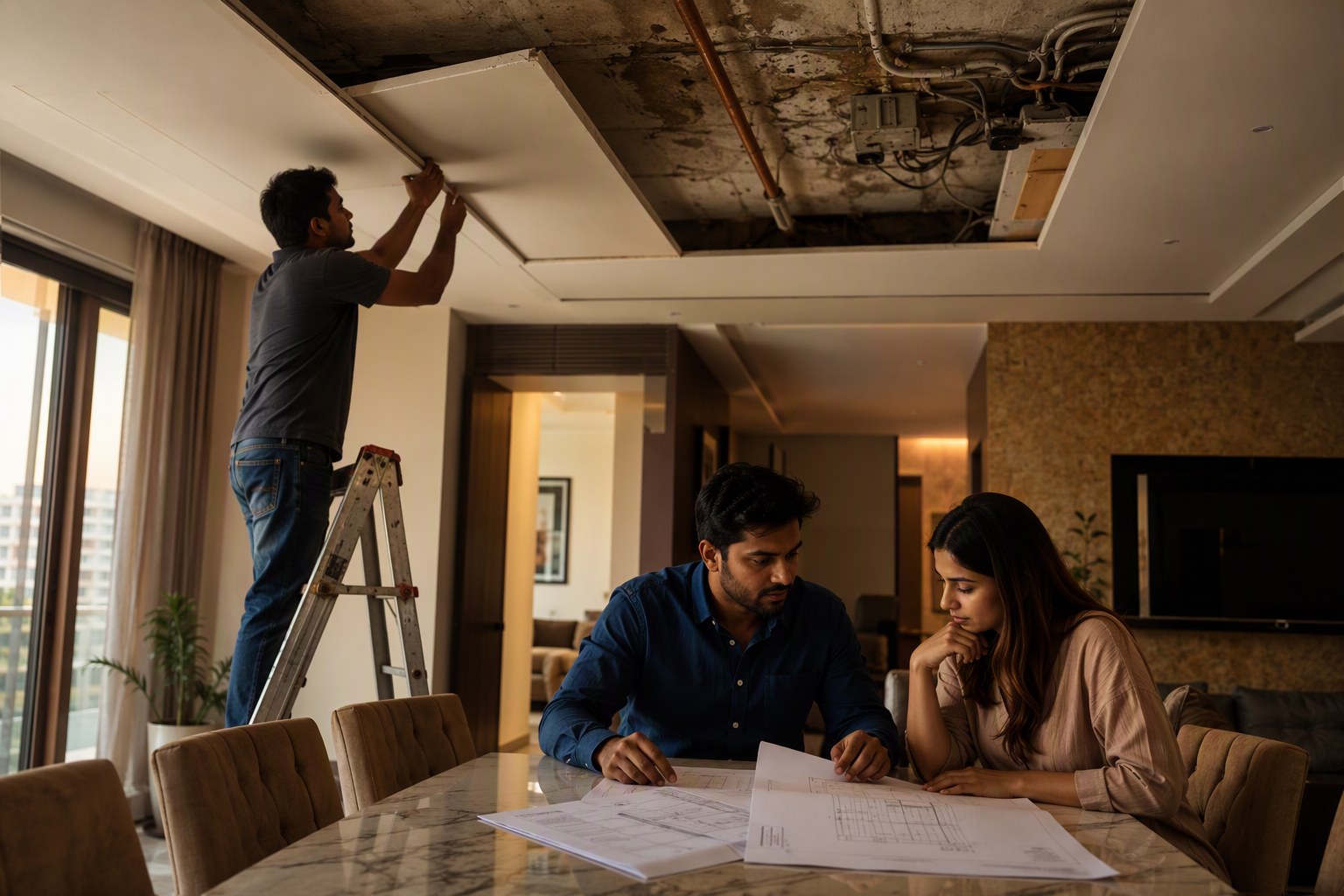
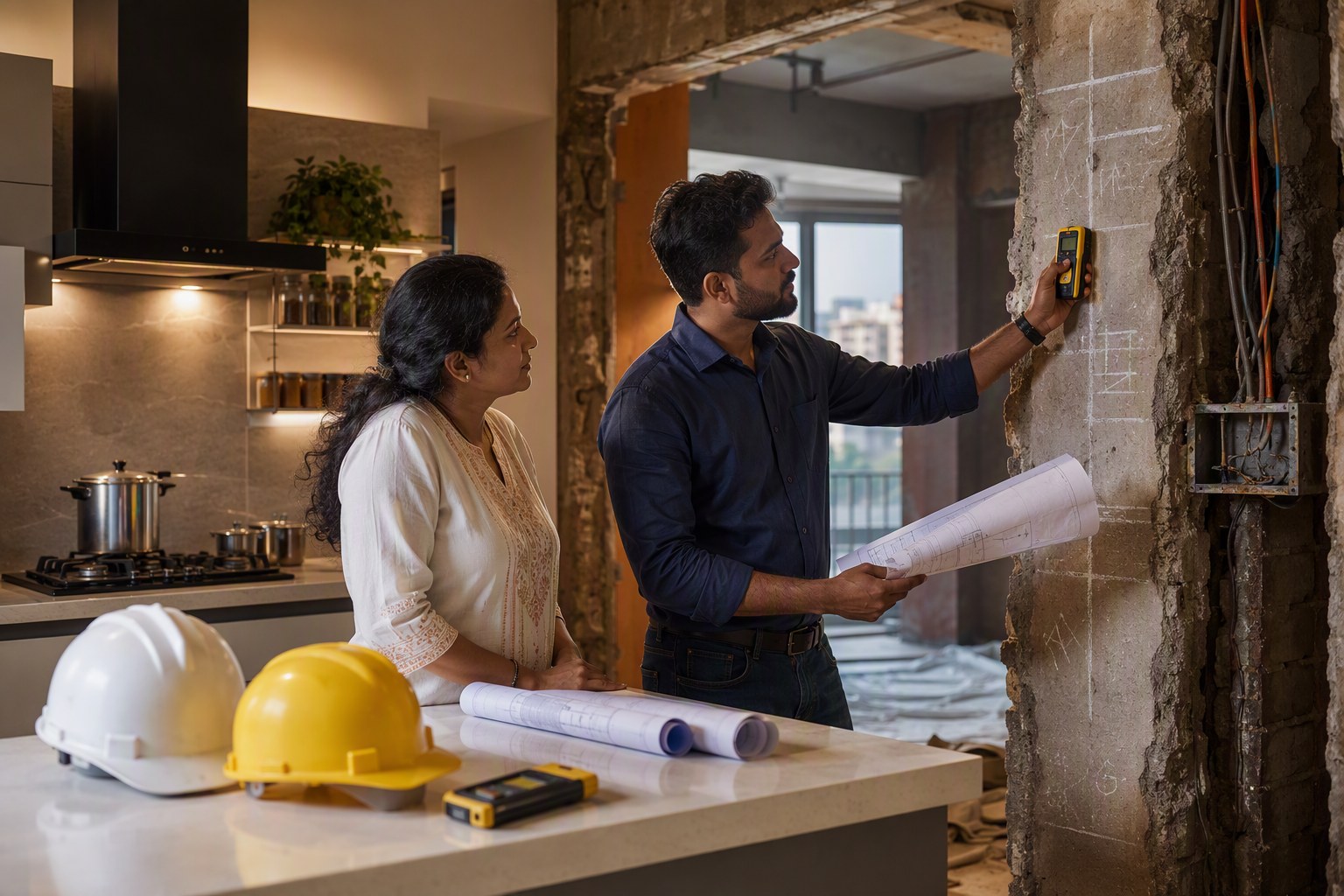
Telangana Bathroom Renovation plans should not start with tile samples, shower fittings or Pinterest screenshots. They should start with papers. In Telangana, 30,76,153 properties are listed under Section 22-A prohibited records as per latest IGRS data, and that single number is enough reason for flat owners, villa buyers and landlords to pause before breaking a bathroom wall.
The risk is not only legal. A bathroom renovation can disturb plumbing shafts, waterproofing layers, common walls, structural beams, society rules and even future resale documentation. In Hyderabad apartments, especially in dense pockets like Madhapur, Kondapur, Kukatpally, Nallagandla, Manikonda, Attapur and Kompally, one badly planned wet-area job can create disputes that last longer than the renovation itself.
Our newsroom view is simple: before the tiles come off, verify the property, read the society rules, check the building structure and keep written approvals. A bathroom is a small room, but the paperwork around it is not small.
Telangana Bathroom Renovation Must Begin With Title Checks
Many homeowners think title verification is only for buying or selling property. In our experience, that is a costly misunderstanding. If you are spending serious money on a bathroom upgrade in a flat, independent house or builder floor, you should know whether the property has any restriction, charge, dispute or prohibited status.
Section 22-A records matter because they can affect registration and transferability. A property may look normal from outside, the family may be living there for years, and the society maintenance may be paid regularly. Still, if the land or property record is tagged under prohibited categories, resale, gift deed, mortgage or future regularisation can become difficult.
Before appointing a contractor, owners should run a basic check through the Section 22-A Prohibited Property Check. This is especially relevant for properties in expanding Hyderabad corridors where village land, converted land, layout approvals and apartment developments overlap. Areas around Kokapet, Tellapur, Bachupally, Ameenpur, Peerzadiguda, Adibatla and Shankarpally have seen rapid construction; document discipline has not always moved at the same speed.
If the bathroom renovation is being done before selling the flat, title checks become even more practical. A renovated bathroom may attract buyers, but a buyer’s lawyer will still ask for EC, link documents, sanction plan, occupancy certificate where applicable, mutation details and society no-dues. Good fittings cannot cover weak documents.
Telangana Bathroom Renovation And The 30,76,153 Prohibited Records Warning
The 30,76,153 figure for Section 22-A prohibited properties is not a small footnote. For the residential market, it is a reminder that every home improvement decision sits on top of a legal base. If the base is unclear, even a good renovation can become a poor investment.
For example, a flat owner in Gachibowli may plan to replace old bathroom tiles, shift the commode, install a wall-hung WC and change concealed plumbing. The civil work may cost effort, dust and coordination. But if the flat’s parent land record has a pending issue, or if the sale deed boundaries do not match the approved plan, the renovated bathroom will not solve the larger problem.
In older colonies of Secunderabad, Himayatnagar, Chikkadpally, Mehdipatnam, Dilsukhnagar and Banjara Hills, many houses have gone through multiple owners and internal modifications. Sometimes old bathrooms have been extended into balconies, setbacks or utility spaces. A new renovation may accidentally continue an earlier violation. That is why document review should include the approved building plan and not just the latest sale deed.
Use the Encumbrance Certificate Search to check transaction history. For apartments in registered projects, use the RERA Project Lookup where applicable. If you are unsure about the relevant registration jurisdiction, the Find Your SRO Office tool helps identify the SRO connected to the property location.
Society Permission Is Not A Formality
In Hyderabad gated communities, society permission is often treated as a gate-pass issue. That is not enough. Bathroom renovation touches common infrastructure: vertical plumbing lines, drainage stacks, waterproofing continuity, duct access, shared walls, electrical earthing and sometimes fire-safety routes.
Societies in localities like Narsingi, Financial District, Hafeezpet, Miyapur, Uppal, LB Nagar and Sainikpuri generally have renovation timings, debris movement rules, lift protection conditions and contractor entry norms. Some associations also insist on refundable deposits to cover damage to corridors, lifts or common areas. These are not mere inconveniences. They protect every flat owner from one flat’s dust becoming the whole block’s problem.
Before work starts, ask the apartment association or welfare society for written approval. The request should mention the scope: tile removal, plumbing change, waterproofing, false ceiling, electrical points, geyser position, exhaust opening and any wall chasing. If you are changing the bathroom layout, say it clearly. If the contractor says “small change only, no need to tell anyone”, that is usually the first warning sign.
What To Ask The Society Before Bathroom Work
- Permitted work timings and weekly off-day rules.
- Whether hacking machines are allowed and during which hours.
- Debris storage and disposal instructions.
- Lift usage rules for tiles, sand, cement and sanitaryware.
- Whether plumbing shaft access requires a society plumber.
- Waterproofing test requirements before retiling.
- Penalty rules if leakage affects the flat below.
- Any restriction on changing external exhaust openings or ducts.
In our experience, a polite email with drawings and contractor details prevents half the fights. WhatsApp approval is common, but keep the final permission in a traceable format. If the flat is rented, the tenant should not approve structural or plumbing changes on behalf of the owner unless the rental agreement permits it.
Structural Checks Before Tiles Are Removed
A bathroom looks simple: floor, wall tiles, wash basin, WC, shower, geyser. Behind that surface are pipes, slabs, beams, ducts and waterproofing. In many apartments, bathroom walls may include service lines running to other flats. A worker with a breaker machine can damage more than your own bathroom.
The safest first step is to inspect the approved plan and understand whether the wall is a partition wall, shaft wall or load-bearing element. In high-rise buildings, owners should not cut beams, columns or slabs for concealed pipes. Even small chasing in the wrong place can create long-term concerns.
For independent houses in Alwal, Boduppal, Nagole, Rajendranagar, Shamshabad or Medchal side, the issue may be different. Older homes may have uneven slabs, ageing pipelines, terrace seepage or bathrooms added after original construction. A civil engineer’s inspection is sensible before shifting drainage points. The cost of an inspection is usually smaller than repairing a neighbour’s ceiling after seepage.
If the renovation involves extending the bathroom into another room, utility or balcony, do not treat it as interiors alone. It may affect sanctioned plan compliance, ventilation and floor loading. Check the land use and development context through the Land Use Zone Finder and, where broader redevelopment is planned, review buildability using the FSI/FAR Calculator.
Bathroom Waterproofing Is A Legal Risk Too
Most bathroom disputes are not about tile colour. They are about leakage. The flat below sees damp patches, paint bubbles, fungus and ceiling damage. The upstairs owner says the issue is old. The society asks both parties to settle. The contractor has already moved to another site. This is a familiar Hyderabad apartment story.
Waterproofing should be documented with photos and dates. Before tiling, conduct a ponding test as per the method agreed with the contractor and society. Keep photos of pipe routing, floor trap position, wall inlets and waterproofing layers. If a future buyer asks what was changed, you should not depend on memory.
Bathrooms in older flats at Ameerpet, Somajiguda, Tarnaka, Koti and West Marredpally often have hidden plumbing that has been repaired several times. When tiles are removed, the owner may discover corroded pipes or weak plaster. At that stage, do not rush to close the wall because the mason is waiting. Take a day, call the plumber, inspect the line and decide properly.
Check Sale Deed, EC, Pahani And Dharani Where Relevant
For apartments within GHMC limits, owners usually rely on sale deed, link documents, approved plan and EC. For houses or villas on plotted land, especially in peripheral mandals, the checklist can go deeper. You may need to look at survey number, pahani, Dharani entries, mutation, layout approval and road access.
In mandals around Hyderabad’s growth belt, land history matters. Serilingampally, Gandipet, Rajendranagar, Hayathnagar, Medchal, Shamirpet, Ghatkesar, Maheshwaram and Shankarpally have different development patterns. Some are dense urban pockets; some still carry village revenue record traces. If your property is a villa or independent house in such areas, confirm the survey number and revenue record status before investing in upgrades.
The Survey Number Finder can help you start with location-level clarity. The Property Verification Tool is useful when you want a broader document view. For owners who want to monitor later changes, the Property Change Tracker can be useful after purchase or before resale preparation.
When Renovation Can Affect Future Resale
Buyers in Hyderabad have become sharper. They ask whether the bathroom was recently renovated, why it was renovated and whether there was leakage earlier. In premium flats at Jubilee Hills, Banjara Hills, Nanakramguda, KPHB, Kondapur and Tellapur, buyers may even bring a home inspection professional before final negotiation.
A neat bathroom improves first impression, but unauthorised layout changes can reduce buyer confidence. If the bathroom has been extended into a duct, balcony or utility without permission, a careful buyer may discount the property or walk away. If the renovation damaged common lines, the society may refuse no-dues until repairs are completed.
Keep a renovation file. It should have society approval, contractor invoice, waterproofing warranty if given, photos before and after, plumbing layout sketch, electrical changes, sanitaryware warranty cards and debris disposal receipt if available. This file helps during resale, rental, insurance claims and neighbour disputes.
Cost Planning Without Ignoring Registration Reality
Bathroom budgets often expand because owners select tiles first and check site conditions later. A better method is to split the planning into legal, society, structural and material buckets. Legal and document checks should happen before ordering tiles. Society approval should come before labour enters. Structural and plumbing inspection should happen before demolition. Material purchase should happen after measurements are final.
If the renovation is linked to a sale, gift, partition or settlement deed, check transaction costs using the Stamp Duty Calculator. To understand official value references, use the Market Value / Guideline Value Search. If you are evaluating a built-up property where structure and land value both matter, the Composite Value Calculator can support your internal estimate.
I would not advise anyone to spend heavily on interiors if the property papers are not in order. First fix title clarity. Then fix seepage. Then fix tiles. That sequence saves money and stress.
Practical Checklist Before Bathroom Tiles Come Off
| Check | Why It Matters | Who Should Confirm |
|---|---|---|
| Section 22-A status | Prohibited records can affect registration and transfer | Owner or legal advisor |
| Encumbrance certificate | Shows registered transactions and possible charges | Owner, buyer or lawyer |
| Approved building plan | Confirms original bathroom location and layout | Owner, society or builder |
| Society permission | Controls noise, debris, lift use and common service access | Apartment association |
| Structural review | Prevents damage to beams, columns, slabs and shafts | Civil engineer |
| Waterproofing test | Reduces leakage disputes with lower flats | Contractor and society plumber |
| Photo documentation | Helps future resale and dispute resolution | Owner |
Telangana Bathroom Renovation Advice For Different Property Types
For Apartments
Check association rules first. Do not touch ducts or common plumbing without approval. In large communities at Gachibowli, Nallagandla, Kokapet and Miyapur, facility teams usually know the service shaft design better than outside contractors. Listen to them.
For Independent Houses
Review property documents, survey number and building plan. If the house is old, inspect roof slab, floor slope and drainage lines before buying new fittings. In areas like Uppal, Vanasthalipuram, Malkajgiri and Rajendranagar, many homes have seen staged construction over years.
For Villas
Check project approvals, association rules and external drainage connections. Villa owners sometimes assume full freedom because there is no upstairs or downstairs neighbour. That is not fully correct. Common stormwater, sewerage and façade rules may still apply.
For Rental Properties
Tenants should not start bathroom renovation without written owner permission. Owners should define who pays, who selects materials, what happens to fixtures at lease end and who handles leakage complaints.
Red Flags We See Too Often
- The contractor says no approval is needed because the work is inside the flat.
- The owner does not have a copy of the approved plan.
- The bathroom is being shifted without checking drainage slope.
- Old leakage is covered with new tiles without source repair.
- The flat below is not informed before heavy hacking work.
- Debris is dumped in the cellar, setback or roadside corner.
- No photos are taken before closing concealed pipes.
- The owner plans resale but has not checked EC or prohibited property status.
These are avoidable mistakes. Hyderabad’s property market rewards clean documentation. It also punishes casual alterations, especially when buyers, banks and societies start asking questions.
Final Word: Do The Boring Checks First
Bathroom renovation is satisfying when done right. Fresh tiles, better lighting, proper ventilation and dry floors can change daily living. But in Telangana, and especially in Hyderabad’s document-sensitive property market, the boring checks are the real foundation.
Start with title and prohibited property status. Check EC. Read the society rules. Understand the structure. Document waterproofing. Keep every approval and invoice. Only then bring in the tiles, fittings and labour team.
We have seen homes where a bathroom upgrade helped resale because the work was clean and documented. We have also seen homes where one hidden leakage complaint delayed a deal. The difference is preparation before the first tile is broken.
Frequently Asked Questions
Should I check Section 22-A status before bathroom renovation in Telangana?
Yes. Telangana has 30,76,153 properties listed under Section 22-A prohibited records as per latest IGRS data. If you are investing in renovation before sale, mortgage, gift deed or long-term holding, check the property status first.
Do apartment owners in Hyderabad need society permission for bathroom renovation?
Yes, especially when the work involves tile breaking, plumbing changes, waterproofing, debris movement or shaft access. Written society approval reduces disputes with neighbours and facility teams.
Can I shift my bathroom layout inside my flat?
Do not shift the layout without checking the approved plan, drainage slope, structural elements and society rules. Moving WC or floor trap positions can affect leakage, ventilation and common plumbing lines.
Which documents should I keep after bathroom renovation?
Keep society approval, contractor invoice, waterproofing photos, plumbing layout photos, warranty cards, electrical change details and before-after images. These help during resale, rental and leakage disputes.
Is an Encumbrance Certificate needed for a home improvement project?
For small repairs, it may not be needed. But for major renovation before selling, gifting, mortgaging or regularising a property, checking the EC is sensible because buyers and banks will ask for it.