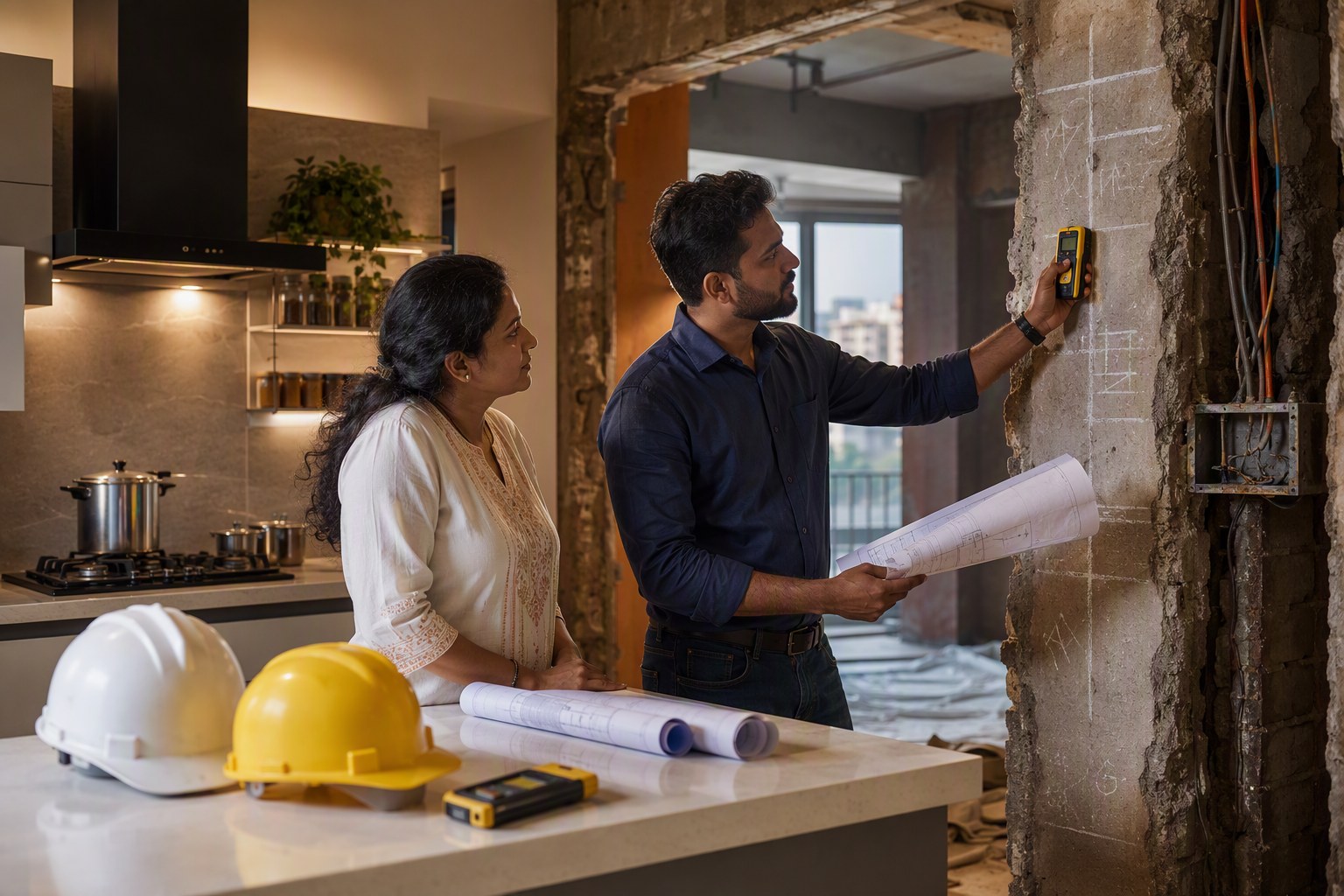



Hyderabad Load-Bearing Wall Renovation work is facing tighter scrutiny in gated communities and older apartment blocks, especially when owners want to remove a kitchen wall, open up a balcony, merge two rooms, or shift a door opening. The short answer: work can be stopped by the apartment society, municipal officials, a structural engineer, a neighbour complaint, missing sanctioned plans, fire-safety concerns, or even land-record issues that surface during verification.
We are seeing this more often in Gachibowli, Kondapur, Madhapur, Kukatpally, Miyapur, Narsingi, Manikonda, Uppal, LB Nagar and Kompally, where flat interiors are getting upgraded aggressively after resale purchases. Owners are spending ₹8 lakh to ₹35 lakh on interiors, but many are still treating wall removal like a carpentry decision. It is not. In Hyderabad’s apartment market, a wrong cut in a wall, beam, column, duct or shear element can affect the entire block.
Our view is simple: before touching any wall in an apartment, get the sanctioned plan, society NOC and a structural engineer’s written opinion. If title or land-record doubts exist, verify those also. Interior beauty cannot come at the cost of building safety.
Hyderabad Load-Bearing Wall Renovation: Why Work Is Being Stopped
The main reason is safety. Many flat owners assume that only pillars carry load. In newer RCC-framed buildings, that is partly true, but not enough. Some walls may still act as stiffening walls, duct walls, fire compartment walls, shaft enclosures, or service walls. In older load-bearing apartment blocks in areas like Himayatnagar, Chikkadpally, Ameerpet, Dilsukhnagar, Mehdipatnam and Secunderabad, brick walls may carry slab load directly.
Societies are now asking for proof before allowing demolition because they have seen cracks appear in neighbouring flats after aggressive renovation. In high-rise projects in Nanakramguda, Financial District, Kokapet and Tellapur, facility teams are stricter because structural systems are more complex. Shear walls, core walls and service shafts cannot be casually touched.
Work can stop at the gate itself if the owner does not submit renovation drawings, contractor details, debris-removal plan, working-hour commitment and engineer certificate. Some societies also collect a refundable renovation deposit, usually between ₹25,000 and ₹2 lakh depending on project size and flat value. In premium communities in Gachibowli and Narsingi, we have seen deposits go higher when heavy civil work is involved.
Hyderabad Load-Bearing Wall Renovation Checks Before Demolition
Before the first hammer hits the wall, these checks matter:
- Sanctioned building plan: Confirms original wall, beam, column, shaft and balcony positions.
- Structural drawings: Shows whether the wall is load-bearing, non-load-bearing, shear wall, block wall or service wall.
- Society NOC: Required in most apartment associations before civil work starts.
- Licensed structural engineer report: Gives written approval or rejection for proposed alteration.
- Contractor undertaking: Fixes responsibility for damage, debris, noise and worker safety.
- Neighbour consent where needed: Useful when common walls, seepage-prone bathrooms or shafts are involved.
- Fire and service checks: No blocking of fire ducts, electrical risers, gas lines, plumbing shafts or ventilation.
Flat owners buying resale units should also verify property documents before investing heavily in interiors. A ₹20 lakh renovation on a flat with title disputes or blocked registration history is a bad bet. Start with the Encumbrance Certificate Search, check market value using the Market Value / Guideline Value Search, and run a wider check on the Property Verification Tool.
What Exactly Can Stop Your Wall Renovation?
In practical Hyderabad terms, these are the most common stoppage points:
1. Society refuses permission
This is the first barrier. Apartment associations in Kondapur, Manikonda, Nallagandla, Miyapur and Kukatpally have become stricter after repeated complaints about noise, cracks, lift damage and debris. If your renovation contractor starts wall cutting without prior approval, security may stop workers from entering the block.
A society cannot blindly harass an owner, but it can regulate work that affects common safety. If the wall is suspected to be structural, the association will usually demand an engineer’s report. In our experience, genuine cases get cleared faster when the owner shares drawings instead of arguing at the gate.
2. Structural engineer says no
A written “no” from a structural consultant should be treated seriously. Some owners try to get a second opinion, which is fair. But if two engineers warn against removal, drop the idea. Try design alternatives: open shelves, arch without deep cutting, glass partition, sliding door, or furniture-based zoning.
In Hyderabad, a basic structural engineer site visit is commonly quoted around ₹8,000 to ₹15,000. A written audit with drawings review may cost ₹20,000 to ₹60,000, depending on building age, flat size and complexity. For a 1,600 sq ft flat in Gachibowli where resale values often sit around ₹8,500 to ₹13,500 per sq ft, this fee is not expensive. It is insurance against a much larger problem.
3. Sanctioned plan does not match current flat
Many older flats already have unauthorised changes made by previous owners. A balcony may have been enclosed, a bathroom shifted, a utility area merged, or a duct covered. When the new owner applies for renovation approval, these changes come out.
This is common in older colonies of Ameerpet, SR Nagar, Somajiguda, Begumpet, Tarnaka and Dilsukhnagar. If the sanctioned plan and actual site differ heavily, the society may pause work till the owner clarifies responsibility. Buyers should check this before registration, not after paying interior advances.
4. Common services are affected
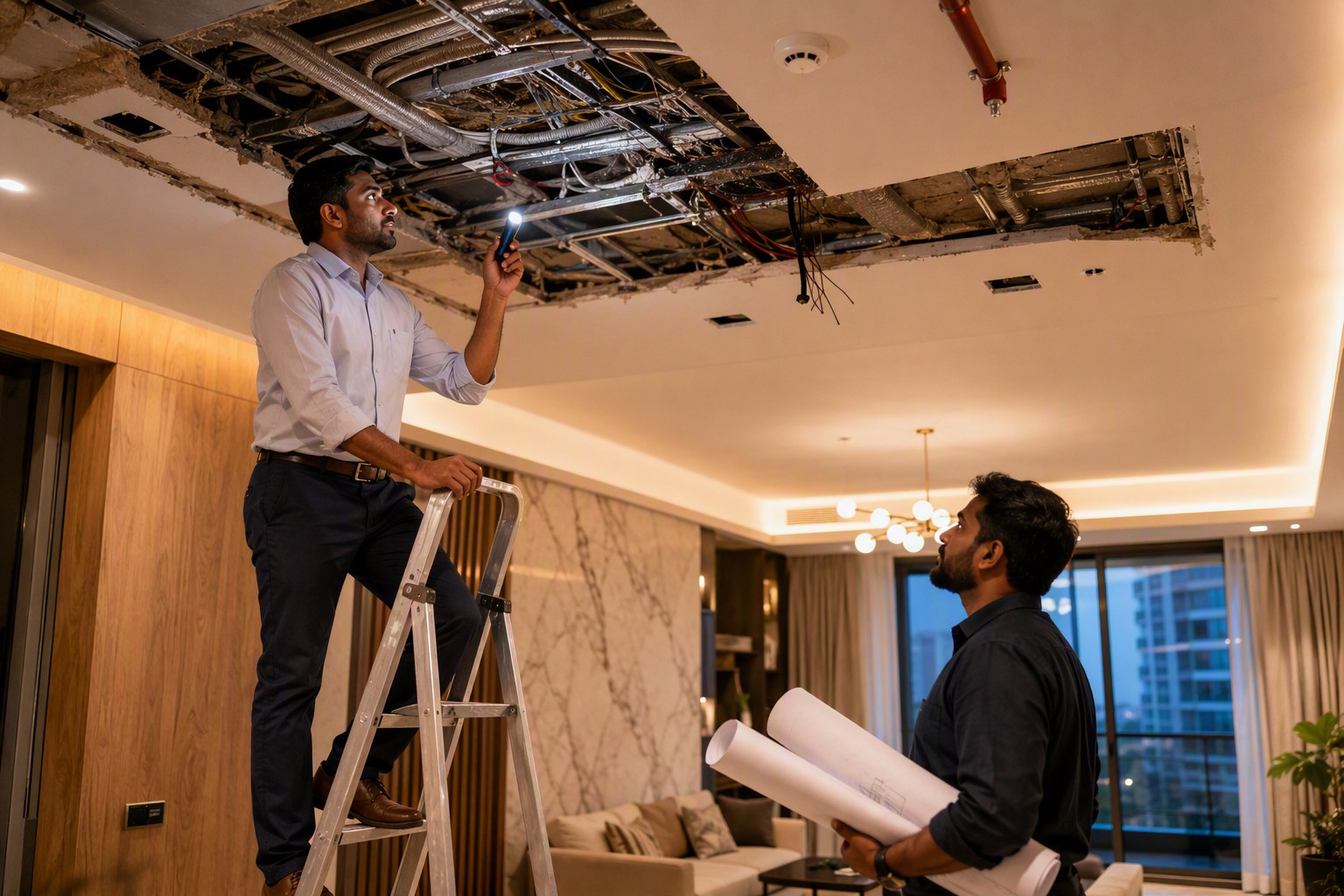
Walls around plumbing ducts, electrical risers, gas pipelines, AC drain lines and fire shafts are sensitive. Even if the wall is not load-bearing, cutting it may damage common services. A neighbour’s bathroom seepage, electrical trip or gas-line issue can quickly become a society-level dispute.
Bathroom and kitchen renovations are the most dispute-prone. If you are shifting a kitchen platform or breaking a wall between kitchen and living room, get plumbing and ventilation checked. In apartments with piped gas, ask the authorised vendor before changing the layout.
5. Municipal or legal complaint is filed
If a neighbour sees cracks, heavy vibration or unsafe debris handling, they may complain to the society or municipal authorities. In GHMC limits, building safety complaints are not taken lightly, especially in high-density zones like Kukatpally, Moosapet, Ameerpet, Mehdipatnam, Tolichowki and Secunderabad.
Even where no formal municipal permission is sought for small interior work, structural alteration is a different matter. Owners should not assume “inside my flat means my wish”. Apartment ownership comes with shared structural responsibility.
Land Records Also Matter Before Heavy Renovation
At first glance, land records may look unrelated to wall renovation. But for resale buyers, they are connected. If the property title, survey number, SRO record or prohibited-property status has a problem, spending heavily on interiors increases risk. A buyer may get possession and start renovation, only to later face loan, resale or registration issues.
Telangana’s prohibited properties list under Section 22-A is not a small number. The database records 147,934 prohibited properties. That figure alone should make buyers cautious. Before buying and renovating, run a Section 22-A Prohibited Property Check. It is especially relevant for flats built on land parcels that had past government, assigned land, endowment, wakf, ceiling or litigation questions.
For apartments, buyers should also check the parent land survey numbers. Use the Survey Number Finder when you have village and mandal details, then verify the SRO through Find Your SRO Office. In areas like Tellapur in Ramachandrapuram mandal, Narsingi and Manikonda around Gandipet mandal, Bachupally mandal, and Kompally in Medchal side, mandal and SRO mapping can confuse first-time buyers.
Hyderabad Load-Bearing Wall Renovation and Resale Flat Risk
Resale buyers are driving a large part of the renovation market. A family buys a 10-year-old 3BHK in Kondapur for around ₹1.4 crore to ₹1.9 crore, then wants an open kitchen, larger pooja area and hotel-style bathrooms. Another buyer picks a Miyapur 2BHK around ₹65 lakh to ₹95 lakh and wants to combine balcony space with living. In Uppal and LB Nagar, buyers of older flats often want to remove walls to improve light and ventilation.
The intention is understandable. But resale flats need extra checking because the building may already have aged, settled, leaked or been modified. Before planning civil demolition, ask for:
- Copy of sale deed and link documents
- Occupancy Certificate, if available
- Sanctioned plan and floor plan
- Latest property tax receipt
- Society no-dues certificate
- Maintenance and renovation rules
- Past seepage or crack complaints
- EC for at least 13 years, preferably longer for older properties
If the project is registered or was sold during the RERA period, use the RERA Project Lookup to check project disclosures. For valuation sanity, compare registration value using the Composite Value Calculator and stamp duty through the Stamp Duty Calculator.
Typical Hyderabad Renovation Costs and Safety Triggers
These are indicative market rates we keep hearing from contractors, engineers and flat owners. Rates change by locality, building rules and contractor quality.
| Work Item | Typical Hyderabad Rate | Safety Trigger |
|---|---|---|
| Structural engineer site visit | ₹8,000 - ₹15,000 | Needed before wall removal or beam-adjacent cutting |
| Written structural audit | ₹20,000 - ₹60,000 | Society may demand it for major civil changes |
| Wall demolition | ₹35 - ₹80 per sq ft | Risky if wall type is not confirmed |
| Debris removal | ₹4,000 - ₹12,000 per mini-truck | Lift, basement and common-area damage complaints |
| Bathroom renovation | ₹1.5 lakh - ₹4 lakh per bathroom | Waterproofing and seepage disputes |
| Full 3BHK interiors with civil changes | ₹12 lakh - ₹35 lakh | Requires planning, NOC and contractor control |
One pattern is clear. Owners negotiate hard on engineer fees but casually approve expensive false ceilings, Italian-look tiles and modular kitchens. That priority is upside down. If a wall decision is wrong, even premium interiors will not save the flat from cracks, seepage or resale objections.
Locality Watch: Where Checks Are Becoming Stricter
In high-rise western Hyderabad, checks are stricter because buildings are taller and societies are professionally managed. Gachibowli, Nanakramguda, Kokapet, Narsingi, Financial District, Tellapur and Nallagandla usually have facility teams, app-based permissions and work-hour controls. Flat resale rates in these belts often run from ₹7,000 to ₹14,500 per sq ft depending on project brand, age and road access.
In mid-market belts like Miyapur, Bachupally, Kukatpally, Pragathi Nagar, Nizampet and Chandanagar, associations are becoming more organised. Renovation deposits, debris charges and lift-protection rules are now common. Flat values here often range from ₹5,500 to ₹9,000 per sq ft, so a bad structural decision can wipe out years of appreciation.
In older central and eastern areas like Ameerpet, Himayatnagar, Tarnaka, Habsiguda, Uppal, Dilsukhnagar and LB Nagar, the bigger issue is building age. Some apartment blocks were built before modern society compliance became routine. Buyers should be extra careful with load-bearing walls and terrace-level modifications.
Document Checklist Before Removing or Altering a Wall
Keep this checklist ready before starting Hyderabad load-bearing wall renovation work:
- Sale deed and latest EC
- Sanctioned plan and structural drawing, if available
- Society renovation application
- Structural engineer certificate
- Contractor ID, labour list and work schedule
- Debris disposal plan
- Photos of existing wall, ceiling, floor and neighbouring surfaces
- Waterproofing plan for bathroom or kitchen changes
- Electrical and plumbing route plan
- Insurance or indemnity undertaking, where society asks
Also check road access and building compliance if you are buying an independent house or builder floor for renovation. The Road Width Check and Land Use Zone Finder can help before you plan expansion or major remodelling. For apartment buyers, these tools are useful when studying the parent project and neighbourhood growth.
What Owners Should Do If Work Is Stopped
Do not fight with security staff or start work at odd hours. That only weakens your case. First, ask the society for written reasons. If the objection is structural, appoint a qualified engineer. If the issue is debris, noise or timing, solve it through a revised work plan. If the issue is document mismatch, collect the sanctioned plan and clarify.
If you bought the flat recently and a serious title or land-record issue appears, pause all major spending. Check EC, SRO, survey number and prohibited-property status. Speak to a property lawyer before paying the next contractor instalment. We have seen buyers discover problems only after paying for wardrobes and kitchen work. That is painful and avoidable.
For societies, the better approach is to create a clear renovation policy. Mention allowed timings, prohibited activities, engineer certificate format, deposit amount, debris rules, lift protection and penalty for common-area damage. When rules are written, disputes reduce.
Our Take
Hyderabad’s renovation market is maturing. Flat owners want open layouts, bigger kitchens and better interiors, but apartment buildings are shared structures. A wall may look private, yet its impact may not be private. Societies are right to ask questions when a wall is being removed. Owners are also right to expect quick, fair approvals when they submit proper documents.
The smart path is not complicated: verify property records, check the sanctioned plan, get society approval, hire a structural engineer and then begin civil work. In a city where one locality can have high-rise towers, old load-bearing apartments and disputed land parcels within a few kilometres, this discipline matters.
Frequently Asked Questions
Can I remove a wall inside my Hyderabad flat without society permission?
No, not advisable. Most societies require prior permission for civil work, especially wall removal. If the wall affects structure, services, shafts or neighbouring flats, work can be stopped immediately.
How do I know if a wall is load-bearing?
Do not rely on contractor guesswork. Check the sanctioned plan and structural drawings, then get a qualified structural engineer to inspect the flat. Older apartments in areas like Himayatnagar, Ameerpet and Dilsukhnagar need extra care.
Why should land records be checked before interiors?
If the flat or parent land has title, EC, SRO, survey number or Section 22-A issues, resale and loan prospects may suffer. Heavy interior spending before verification increases financial risk.
What documents should I submit to the apartment society?
Submit renovation drawings, structural engineer certificate, contractor details, work schedule, debris plan and an undertaking for any damage. Some societies also ask for a refundable deposit.
Can a structural engineer approve partial wall cutting?
Yes, in some cases. The engineer may allow a limited opening with lintel, frame or strengthening detail. But if the wall is structural, around a shaft, or part of a shear system, approval may be refused.