


Bathroom Waterproofing: Checks Before Tiles Hide the Risk
Bathroom Waterproofing is now moving from the contractor’s checklist to the buyer’s pre-handover verification list in Hyderabad. Flat buyers in Kondapur, Nallagandla, Kokapet, Bachupally, Miyapur and Tellapur are asking for ponding tests, drain slope checks and pipe-joint inspection before tiles are fixed. In our experience, this is a sensible shift. Once the tiles go on, most waterproofing mistakes become invisible, and by the time stains appear on the ceiling below, everyone starts blaming everyone else.
The new buyer attitude is clear: bathroom waterproofing is not only an interior upgrade. It is a construction-quality issue, a resale-risk issue and, in apartment communities, a neighbour-dispute issue. A small missed corner near the wall-floor junction can become a recurring maintenance headache after occupation.
Our view is simple: the best time to question bathroom waterproofing is before tiles, before sanitary fixtures, and certainly before final handover.
Bathroom Waterproofing Is Becoming a Pre-Handover Check
Across many gated community handovers in West Hyderabad and North Hyderabad, buyers are no longer satisfied with only wall finish, door alignment and modular kitchen measurements. They are asking one more practical question: has the bathroom waterproofing been tested before tile work?
This is particularly visible in high-density apartment belts such as Serilingampally mandal, Gandipet mandal, Rajendranagar mandal and Medchal side growth corridors. In these areas, many buyers are first-time apartment owners. They may have already checked RERA registration using the RERA Project Lookup, searched ownership history through the Encumbrance Certificate Search, and compared government market value through the Market Value / Guideline Value Search. Now the same verification mindset is entering the site inspection stage.
That is a good development. Legal verification protects ownership. Construction verification protects daily living. Both matter.
Telangana’s property market also has its own documentation risks. As per latest IGRS data, Section 22-A prohibited properties stand at 3,076,153. That number reminds buyers that property due diligence cannot stop at brochure promises. Before paying serious money, people are checking land status, EC, RERA, SRO mapping and now even bathroom waterproofing at site level. For land-side checks, the Section 22-A Prohibited Property Check and Property Verification Tool are useful starting points.
Bathroom Waterproofing Before Tiles: What Buyers Are Asking Builders
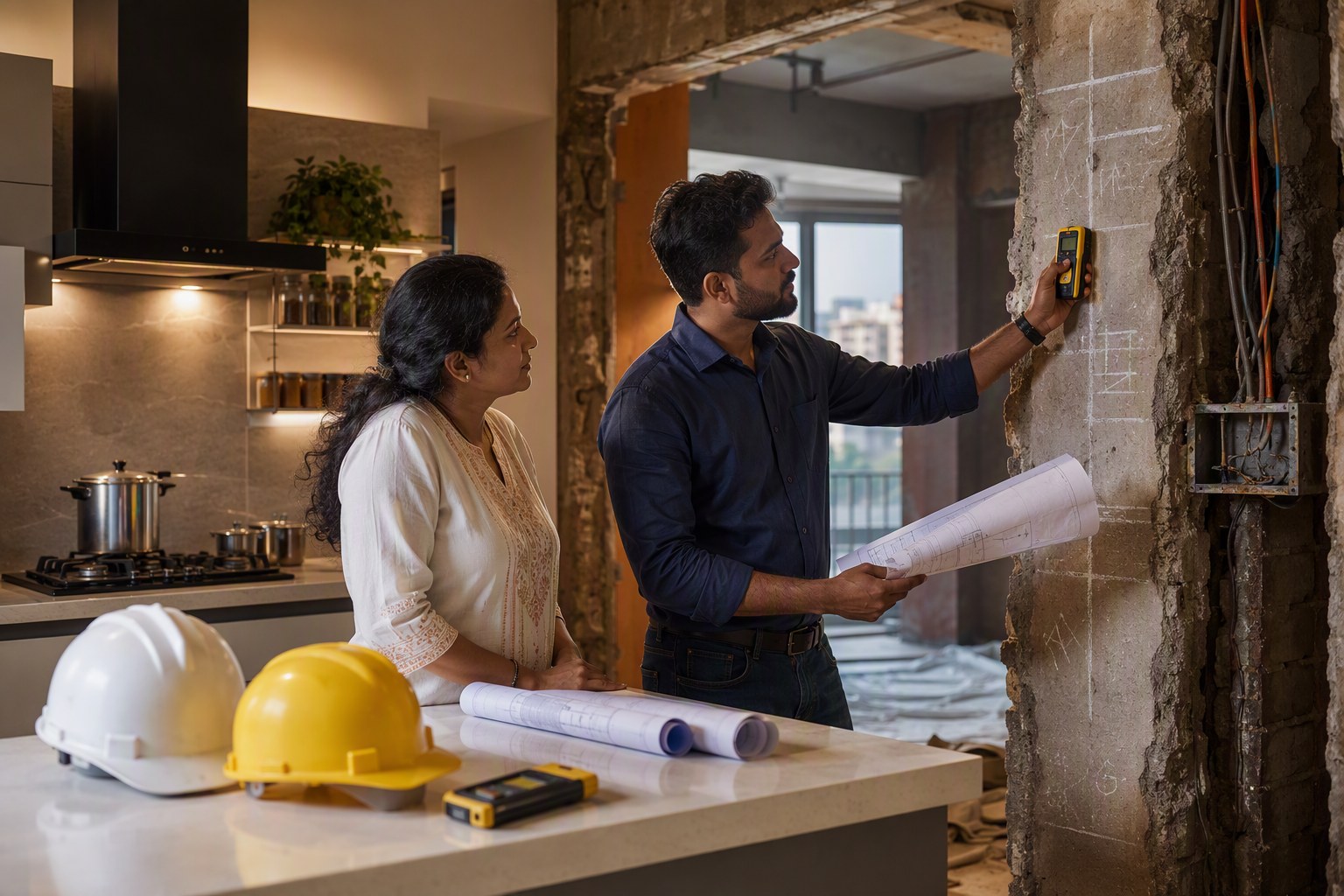
Earlier, many owners thought waterproofing was something the interior contractor would handle after possession. That thinking is changing. In an apartment, the primary wet-area waterproofing is part of building construction. It sits below the tiles, around the drain outlets, near the sunken slab, and along wall-floor corners. Once concealed, it cannot be properly inspected without breaking finished work.
During recent handover conversations in areas like Gachibowli, Nanakramguda, Puppalaguda, Manikonda, Kompally and Uppal, we have seen buyers asking builders for practical proof. Not fancy certificates, but basic site evidence:
- Was a ponding test done before tile laying?
- How long was water retained during testing?
- Were pipe sleeves and drain outlets sealed properly?
- Were wall-floor junctions treated with waterproofing bands or equivalent detailing?
- Was the bathroom slope checked before final flooring?
- Was any leakage found in the flat below during testing?
These are fair questions. A buyer is not trying to become a civil engineer. The buyer is only trying to ensure that a concealed defect does not become a personal expense later.
Why Hyderabad Buyers Are Taking Bathroom Waterproofing Seriously
Hyderabad homes have changed. Bathrooms are not small, basic utility spaces anymore. In many premium and mid-segment flats, bathrooms now include concealed plumbing, wall-mounted fixtures, shower partitions, vanity counters, geyser points, glass doors and false ceilings. That means one leakage point can disturb tiles, woodwork, electrical fittings and the flat below.
In Kokapet and Financial District apartments, buyers often spend a good amount on bathroom upgrades after handover. In Nallagandla and Tellapur, many families buy under-construction flats and plan interiors months in advance. In Bachupally, Miyapur and Ameenpur, budget-conscious buyers may stretch their finances to buy a home; they cannot afford repeated civil repair bills after moving in.
There is also the apartment association angle. If your bathroom leaks into the neighbour’s ceiling, it becomes a community maintenance issue. The resident below may ask for repainting, ceiling repair and compensation for inconvenience. The builder may say the defect happened because of owner interiors. The owner may say waterproofing was weak from the beginning. Without pre-tile evidence, the discussion becomes messy.
That is why a simple dated photo set, site video and written handover note can help. It may not solve every dispute, but it creates a record.
Bathroom Waterproofing Checklist Before Tiles Are Laid
Here is the checklist we would personally use before allowing tile work in a new flat or independent house. It is practical, not theoretical.
1. Check the wet area boundary
The waterproofed portion must cover the full floor area where water may collect. The treatment should not stop only at the shower corner. Bathroom cleaning water spreads. Buckets overflow. Drain blockages happen. A safe wet-area boundary matters.
2. Inspect wall-floor junctions
Many leakages start where the vertical wall meets the floor. This corner is vulnerable because the slab and wall can behave differently. Ask whether the junction has been treated with proper sealing, waterproofing coat and corner reinforcement as per the project’s method statement.
3. Look around drain outlets
Floor trap and drain outlet areas need special attention. If sealing around the pipe is weak, water can travel along the pipe sleeve and appear in the ceiling below. This is one of the most common practical complaints after possession.
4. Ask for a ponding test
A ponding test means water is retained on the bathroom floor before tile laying to check for leakage. The test should be done before the surface is covered. If there is a flat below, inspection from the lower ceiling side is useful. If the project team says the test is already done, ask for site photos or a sign-off record.
5. Confirm slope before tile fixing
Water should move towards the drain without standing in corners. Poor slope is not exactly the same as waterproofing failure, but it creates constant wetness. Constant wetness increases the chance of grout failure, damp smell and future seepage.
6. Avoid breaking waterproofing during interiors
After possession, interior teams may drill for shower partitions, vanity units, mirrors and accessories. Careless drilling can puncture treated areas. Owners should keep plumbing routes and waterproofed zones in mind before approving bathroom accessories.
Where Waterproofing Risk Is Higher in a Home
Bathrooms are the first concern, but they are not the only wet areas. In Hyderabad apartments and villas, owners should also check:
- Utility balconies with washing machine outlets
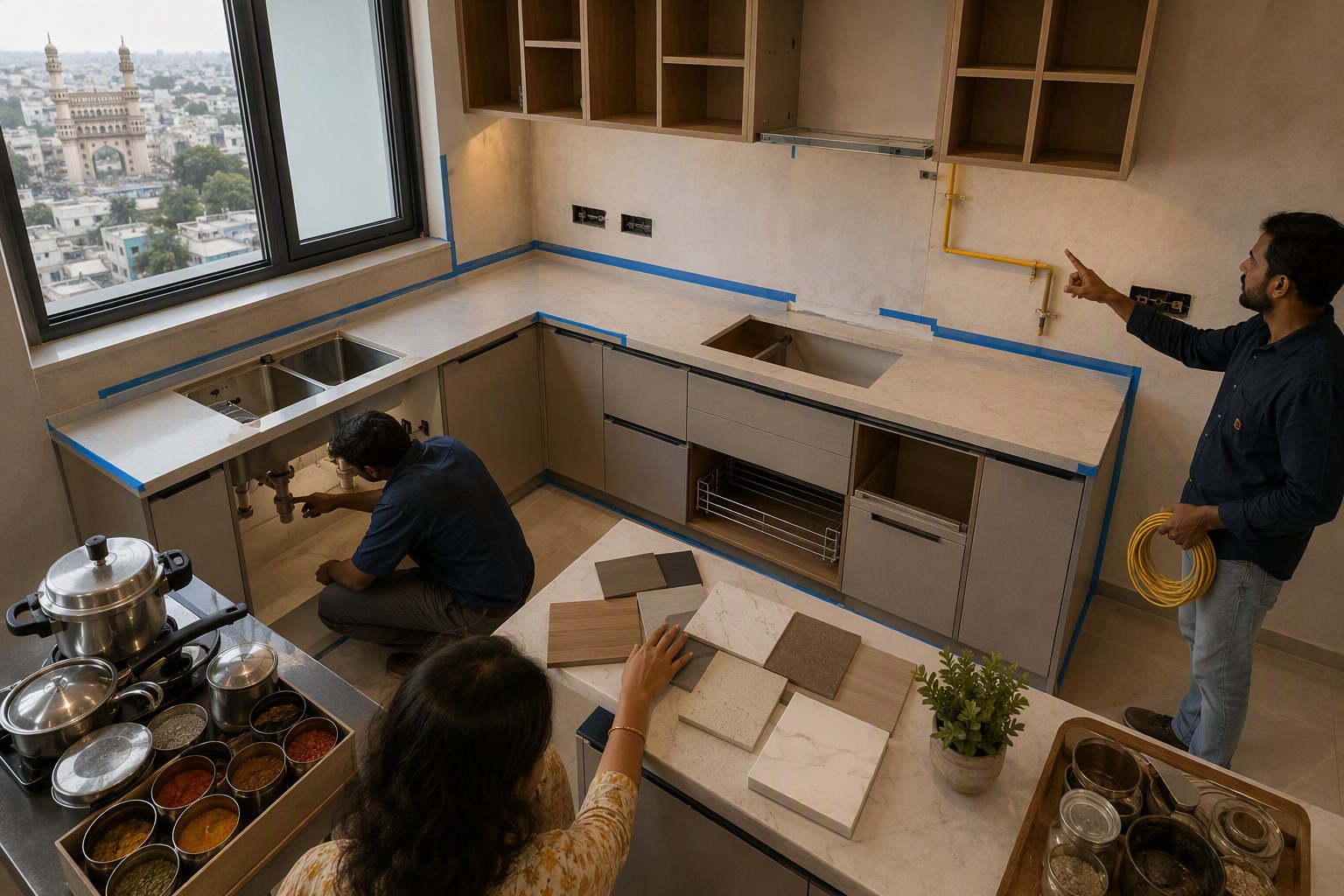
- Kitchen sink wall and floor junctions
- Attached toilet duct walls
- Terrace areas above bedrooms
- Balcony drain outlets
- Planter boxes in premium apartments and villas
In villas around Mokila, Kollur, Shankarpally side and Gandipet mandal, terrace waterproofing becomes as critical as bathroom waterproofing. In older independent houses in Secunderabad, Malkajgiri, Dilsukhnagar and LB Nagar, bathroom renovation can expose weak old plumbing and slab cracks. So the approach should match the property type.
Builder Handover: Documents and Site Checks Should Go Together
Many buyers are disciplined about paperwork but casual about site checks. They will verify the sale deed draft, check the SRO, calculate stamp duty using the Stamp Duty Calculator, and ask for EC. But during physical handover, they may only check keys, switchboards and paint touch-ups.
That gap is costly. A flat is not only a registered asset. It is a built product. The handover file should ideally include more than legal papers. It should include construction-related confirmations also, especially for concealed works.
| Verification Area | What to Check | Why It Matters |
|---|---|---|
| Legal title | EC, sale deed chain, SRO jurisdiction | Confirms ownership and transaction history |
| Project compliance | RERA details, approved plan references | Checks whether the project is registered and traceable |
| Land risk | Section 22-A, survey number, dharani-linked records where applicable | Reduces prohibited land and record mismatch risk |
| Bathroom waterproofing | Ponding test, drain sealing, slope, wall-floor junctions | Prevents concealed leakage and neighbour disputes |
| Final handover | Snag list, photos, written closure | Creates evidence before possession |
For buyers checking land and document basics, tools like Survey Number Finder, Find Your SRO Office and EC Analyzer can sit alongside the physical inspection checklist. One protects your title; the other protects your walls, ceiling and peace of mind.
Bathroom Waterproofing Red Flags During Site Visit
You do not need instruments to spot every warning sign. Some issues are visible even to a careful buyer.
- Tiles already fixed without any test record: Ask for proof of pre-tile testing. If there is no record, insist on written confirmation from the builder.
- Water stagnation after cleaning: If water stands away from the drain, slope correction may be needed.
- Damp smell before occupation: A new bathroom should not smell damp unless water is trapped somewhere.
- Cracks near drain or corners: Even small cracks in wet areas deserve attention before handover.
- Visible gaps around pipe outlets: These must be sealed before final finishing.
- Repeated patchwork: Fresh local repair marks may indicate earlier leakage complaints.
In our experience, the most dangerous sentence at handover is: “Sir, after you move in, we will fix it.” Some minor paint issues can wait. Concealed wet-area issues should not.
Independent House Owners Need a Different Waterproofing Approach
Apartment buyers usually depend on the builder’s civil team. Independent house owners have more control, but also more responsibility. If you are building in areas such as Nagole, Boduppal, Kompally, Beeramguda, Adibatla or Shamshabad side, do not leave bathroom waterproofing entirely to the mason’s judgement.
Ask the contractor to show the waterproofing layer before tile work. Maintain photos by room name: ground-floor common toilet, first-floor attached bath, terrace bath, utility wash area. If there is a site engineer, ask for a simple sign-off after ponding tests.
Owners should also coordinate plumbing and waterproofing. If plumbers cut, chase or alter lines after waterproofing is completed, the treated surface can be damaged. The correct sequence matters: plumbing rough-in, surface preparation, waterproofing, testing, protection layer where required, then tile work.
What Apartment Associations Can Do After Handover
Apartment associations in Hyderabad are becoming more assertive about construction defects. Bathroom leakage is usually one of the early complaints in new communities. A practical association approach can reduce conflict.
- Create a standard leakage complaint format with photos and flat numbers.
- Ask builder facility teams to maintain a wet-area defect register during the defect-liability period.
- Encourage owners not to drill bathroom floors or lower wall areas without checking plumbing routes.
- Record whether leakage appeared before or after owner interior works.
- Push for root-cause repair, not only repainting the affected ceiling.
This is especially useful in large communities where hundreds of bathrooms are handed over within a short period. Without records, individual complaints get lost.
Bathroom Waterproofing and Resale Value
Buyers of resale flats are also asking sharper questions now. In a resale inspection, visible bathroom seepage can reduce buyer confidence immediately. Even if the rest of the flat is good, stains near toilet ducts, swollen door frames, loose tiles and damp walls create doubt.
For resale sellers in Hitech City, Madhapur, Kukatpally, Sainikpuri, Attapur and Mehdipatnam, it is better to repair leakage properly before listing the property. Cosmetic painting over dampness rarely works. Buyers notice. Home loan valuers and technical teams may also flag visible defects.
If you are buying resale, ask the seller directly whether any bathroom leakage complaint has occurred earlier. Check the flat below if possible. In older apartments, speak to the association office. Hyderabad buyers are becoming more verification-driven, and that is healthy for the market.
Practical Owner Checklist Before Final Payment
Before releasing final payment or signing full handover satisfaction, use this short list:
- Take dated photos of each bathroom before and after tile work.
- Ask for ponding test confirmation for every wet area.
- Check slope by pouring water towards different corners.
- Inspect the ceiling of the flat below if access is available.
- Keep written communication with the builder or contractor.
- Do not approve bathroom accessory drilling blindly.
- Add waterproofing concerns to the snag list, not only WhatsApp chats.
For property-side due diligence, keep your paperwork equally clean. Check EC, SRO, market value, survey number and prohibited property status before registration. Hyderabad’s ready reckoner and market value references are useful, but they do not replace construction inspection. A good purchase needs both.
Our Take: Do Not Let Tiles Hide the Risk
Bathroom waterproofing deserves attention before it disappears below tiles. Once the flooring, wall tiles, sanitary ware and vanity are fixed, the cost and inconvenience of correction go up sharply. Buyers should not feel shy about asking for test evidence. Builders with good site systems should also welcome this because it reduces future complaints.
In Telangana’s active real estate market, verification is becoming normal. People check pahani, dharani records where relevant, EC, SRO, RERA and Section 22-A status. Adding bathroom waterproofing to that list is not overthinking. It is practical home ownership.
Our advice is direct: during pre-handover inspection, spend extra time in bathrooms, utility areas and balconies. The best-looking tile can hide the weakest waterproofing. Once you take possession, the argument becomes harder. Before tiles hide the risk, ask, test and record.
Frequently Asked Questions
Is bathroom waterproofing a builder responsibility or owner responsibility?
In a new apartment, basic bathroom waterproofing is generally part of the builder’s construction work. Owners become responsible if later interior drilling, plumbing changes or fixture installation damages the treated surface.
When should I check bathroom waterproofing before handover?
The best stage is before tile laying, after plumbing rough-in and waterproofing application. Ask for ponding test evidence and add any concerns to the written snag list before possession.
What is the biggest warning sign of poor bathroom waterproofing?
Water stains on the ceiling below, damp smell, loose tiles, standing water near corners and gaps around drain outlets are common warning signs. In a new flat, ask the builder to inspect before accepting handover.
Should resale flat buyers check bathroom leakage?
Yes. Resale buyers should inspect bathrooms, toilet duct walls, door frames and the ceiling of the flat below if possible. Previous leakage history should be discussed with the seller and association.
Which property checks should I do along with bathroom inspection?
Check EC, RERA registration, SRO jurisdiction, guideline value, survey number and Section 22-A prohibited property status. Legal checks and construction checks should both be completed before final commitment.