Interior Fit-Out Advance Before Sale Deed payments are risky in Telangana, especially when title checks are still pending. The safer rule is simple: do not pay a big interiors advance until the sale deed is registered, the Encumbrance Certificate is clean, and the property is not hit by Section 22-A restrictions. According to government records in our database, Telangana has 3,076,153 Section 22-A prohibited property entries. That number alone should make every buyer slow down before ordering wardrobes, modular kitchens, false ceilings, smart locks or civil changes in a flat or villa that is not yet legally theirs.
We have seen this problem most commonly in Hyderabad’s active residential belts: Kokapet, Narsingi, Tellapur, Kollur, Mokila, Bachupally, Kompally, Manikonda, Uppal and LB Nagar. Buyers emotionally commit to a home, finalise interiors with a designer, pay an advance, and only later discover that the registration is stuck at the SRO, the EC has an old charge, the survey number needs checking, or the seller’s documents are not matching. By then, the interiors vendor has already started procurement, and the buyer is trapped between the seller, bank, designer and landlord of the temporary house they are staying in.
Our view is blunt: interiors are a possession-stage decision. Title verification is an ownership-stage decision. Do not mix both.
Interior Fit-Out Advance Before Sale Deed: Why Section 22-A Changes the Risk
Section 22-A entries are not small clerical items for a buyer to ignore. If a property is listed as prohibited, registration can be refused or held up. The issue may relate to government land, assigned land, endowment land, wakf-related entries, court matters, ceiling surplus land, acquisition or other restrictions. Some entries may be outdated or disputed, but a buyer cannot assume that the SRO will register first and ask questions later.
In Telangana, a flat may look perfect from the outside. The brochure may show clubhouse, landscaping and pleasant elevation. But the underlying land is still connected to survey numbers, village records, mandal records, pahani history, Dharani entries and registration department data. In places like Kokapet and Narsingi under Gandipet side, or Tellapur and Osman Nagar around Serilingampally and Ramachandrapuram side, land history can be layered. Older layouts, converted lands, development agreements and sharing arrangements are common.
That is why a buyer should first run a Section 22-A Prohibited Property Check. If the survey number or property details raise a red flag, your interiors plan must pause. No carpenter, designer or vendor should receive a heavy payment while your legal ownership is still uncertain.
The same caution applies to individual houses and open plot-linked villas in Mokila, Shankarpally mandal, Adibatla side, Ghatkesar side and Medchal belt. Many buyers think Section 22-A is only a land-buyer problem. It is not. Flats also sit on land. If the project land has unresolved registration or title issues, your interior advance becomes exposed.
Interior Fit-Out Advance Before Sale Deed: What Can Go Wrong in Telangana
Interiors feel practical. You want the house ready for Gruhapravesam. You want wardrobe measurements before moving. You want the kitchen ordered early because factory delivery takes time. All fair. But until the sale deed is registered, the legal relationship is still incomplete.
Here are the common risk points we see in Hyderabad transactions:
- Registration refusal or delay: The SRO may not register if the property falls under a prohibited category or if document details do not match.
- EC mismatch: The Encumbrance Certificate may show a mortgage, agreement, court order, previous transaction or other charge that needs explanation.
- Bank loan delay: Your bank’s legal team may hold disbursement if title documents are incomplete.
- Seller backtracking: If market sentiment changes, some sellers suddenly renegotiate or delay signing.
- Possession confusion: A builder or owner may allow measurements but not legal possession. Buyers mistake access for ownership.
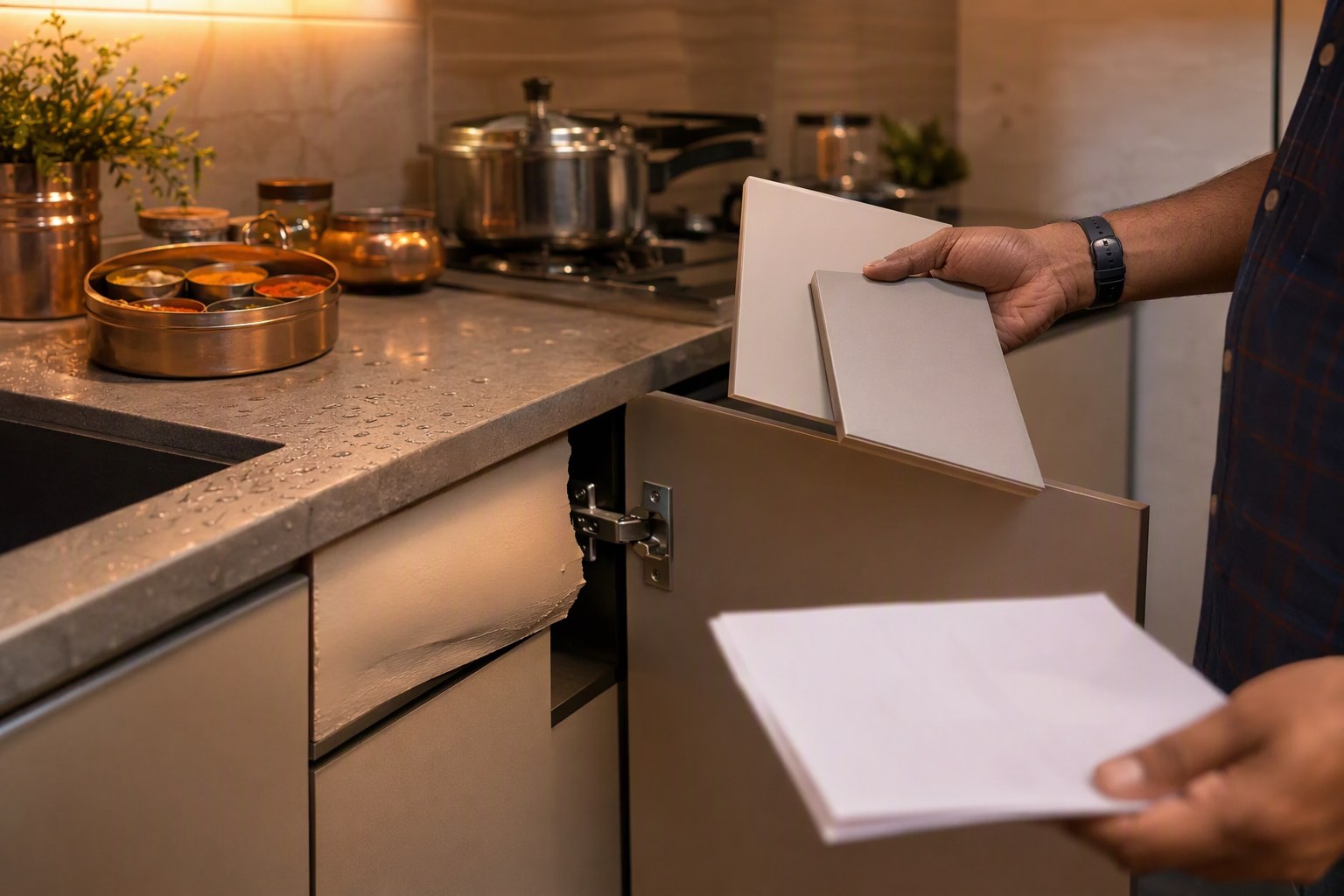
- Interior vendor lock-in: Once material is ordered, refund terms become difficult. Custom wardrobes, kitchen shutters and stone counters cannot be easily transferred to another property.
- Association restrictions: Gated communities in areas like Nanakramguda, Puppalaguda, Kondapur and Tellapur may restrict work timings, lift use, debris movement and contractor entry until formal ownership or possession documents are produced.
Before paying the designer, check the EC through Encumbrance Certificate Search. If you already have an EC and want a second-level reading, use the EC Analyzer. For project apartments, verify the developer and project record using RERA Project Lookup. These checks are not decoration; they are basic buyer hygiene.
Why Interior Vendors Push for Advance Before Registration
Interior companies have their own business logic. They need to block design resources, order boards, laminates, hardware, appliances, stone, glass, electrical fixtures and labour slots. Many vendors work on tight procurement cycles. In peak seasons before festivals, they will push harder.
But the buyer’s risk is different. A vendor’s procurement problem should not become your title risk. If you pay a big advance and registration fails, the designer may say the payment is non-refundable because design work started or materials were ordered. The seller may say interiors are your personal arrangement. The builder may say fit-out work cannot start without formal handover. Everyone will point to someone else.
In our experience, the most dangerous line is: “Sir, sale deed is only a formality.” In Telangana property buying, sale deed registration is not a formality. It is the legal transfer event. Until it is done, you are not the registered owner.
What to Check Before Paying Any Interior Fit-Out Advance
If you still want to start early, keep it restricted to design discussions, site measurement with written permission, mood boards and broad budgeting. Payment should be conservative and tied to refund-friendly milestones. Before any meaningful fit-out advance, check the following:
| Check | Why it matters | Helpful tool |
|---|---|---|
| Section 22-A status | Confirms whether registration may be blocked due to prohibited property entry | Section 22-A Prohibited Property Check |
| EC search | Shows registered transactions, mortgages and charges as per available records | Encumbrance Certificate Search |
| SRO mapping | Helps confirm the correct registration office for the property | Find Your SRO Office |
| Survey number check | Useful for plots, villas and projects where land identity must be clear | Survey Number Finder |
| Market value check | Helps understand government guideline value before registration planning | Market Value / Guideline Value Search |
| Stamp duty estimate | Helps budget registration costs before spending on interiors | Stamp Duty Calculator |
For resale flats in Hitec City, Gachibowli, Kondapur, Miyapur, Kukatpally, Uppal and Attapur, check whether the seller has a clear sale deed, link documents, latest EC, property tax details, society NOC where applicable, loan closure proof if mortgaged, and handover documents. For villas and plots in Shankarpally, Mokila, Kollur, Tukkuguda and Adibatla, spend more time on survey number, land classification, approach road, layout approval and revenue records.
Interior Fit-Out Advance Before Sale Deed in Flats: The Builder Project Scenario
Many buyers in new apartment projects ask whether they can start interiors after paying the final demand but before registration. The answer depends on project rules, RERA status, occupancy stage, bank disbursement and builder handover policy. But from a risk point of view, starting full-scale fit-out before sale deed registration is still uncomfortable.
In a builder project, you may face these issues:
- The unit may not be registered yet because the builder’s documentation is pending.
- The bank may release the last tranche only after specific documents are submitted.
- The builder may allow only measurement, not drilling or carpentry.
- Common area lifts may not be ready for material movement.
- Society or facility team may ask for work deposits, contractor IDs and timing approvals.
- RERA record, sanctioned plan or unit details may need cross-checking before final payment.
Before committing to interiors in a project flat, use RERA Project Lookup. If the property is still under construction, also compare the agreement terms and handover clauses. If the builder is asking you to pay for interiors through an affiliated vendor before registration, read the fine print twice. The interior contract should not dilute your rights under the sale agreement.
Interior Fit-Out Advance Before Sale Deed in Resale Homes
Resale homes bring a different set of risks. The seller may already be living there, or the flat may be vacant. Sometimes the buyer requests early access for measurements after paying token advance. That is acceptable only if the seller gives written permission and the work is non-invasive.
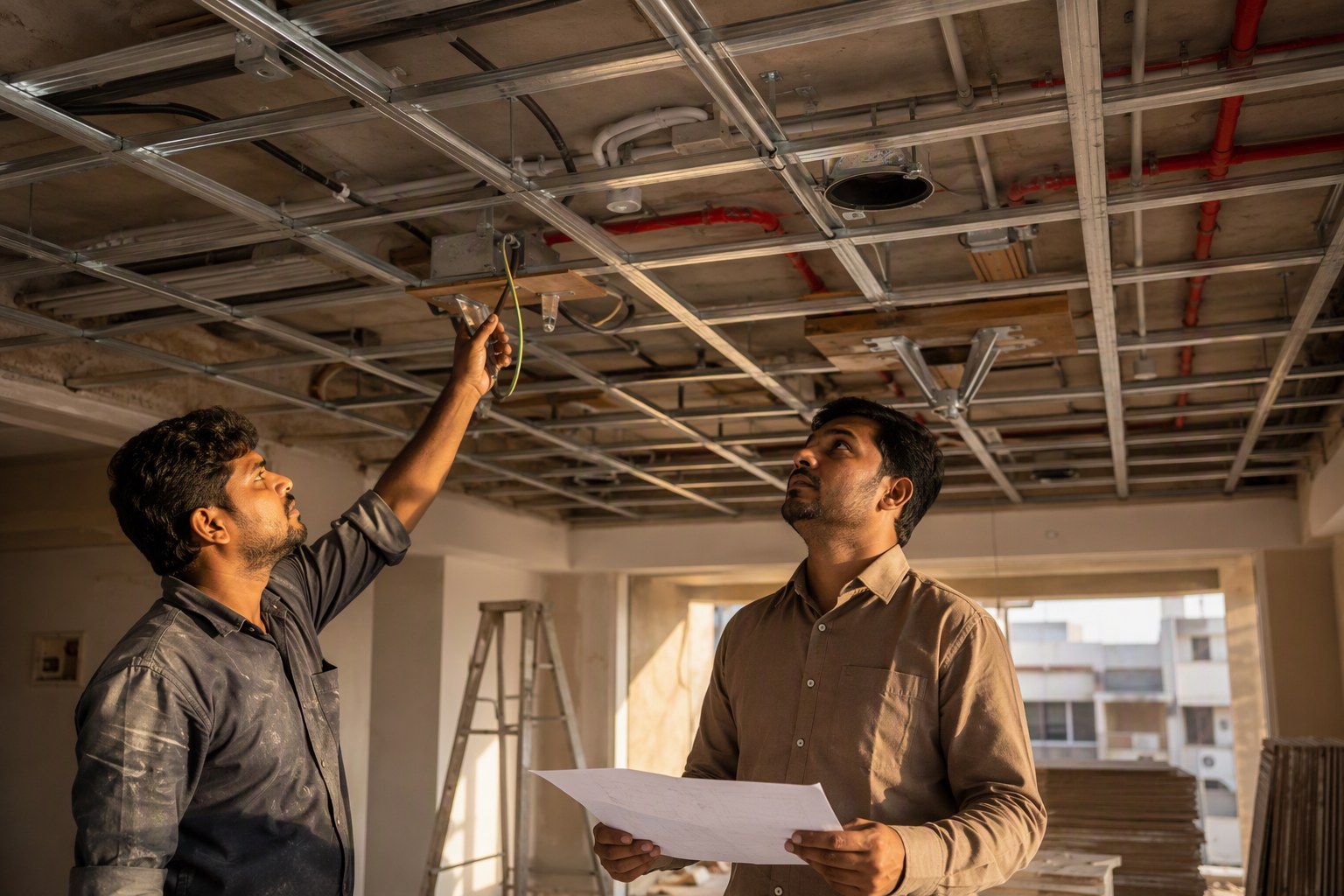
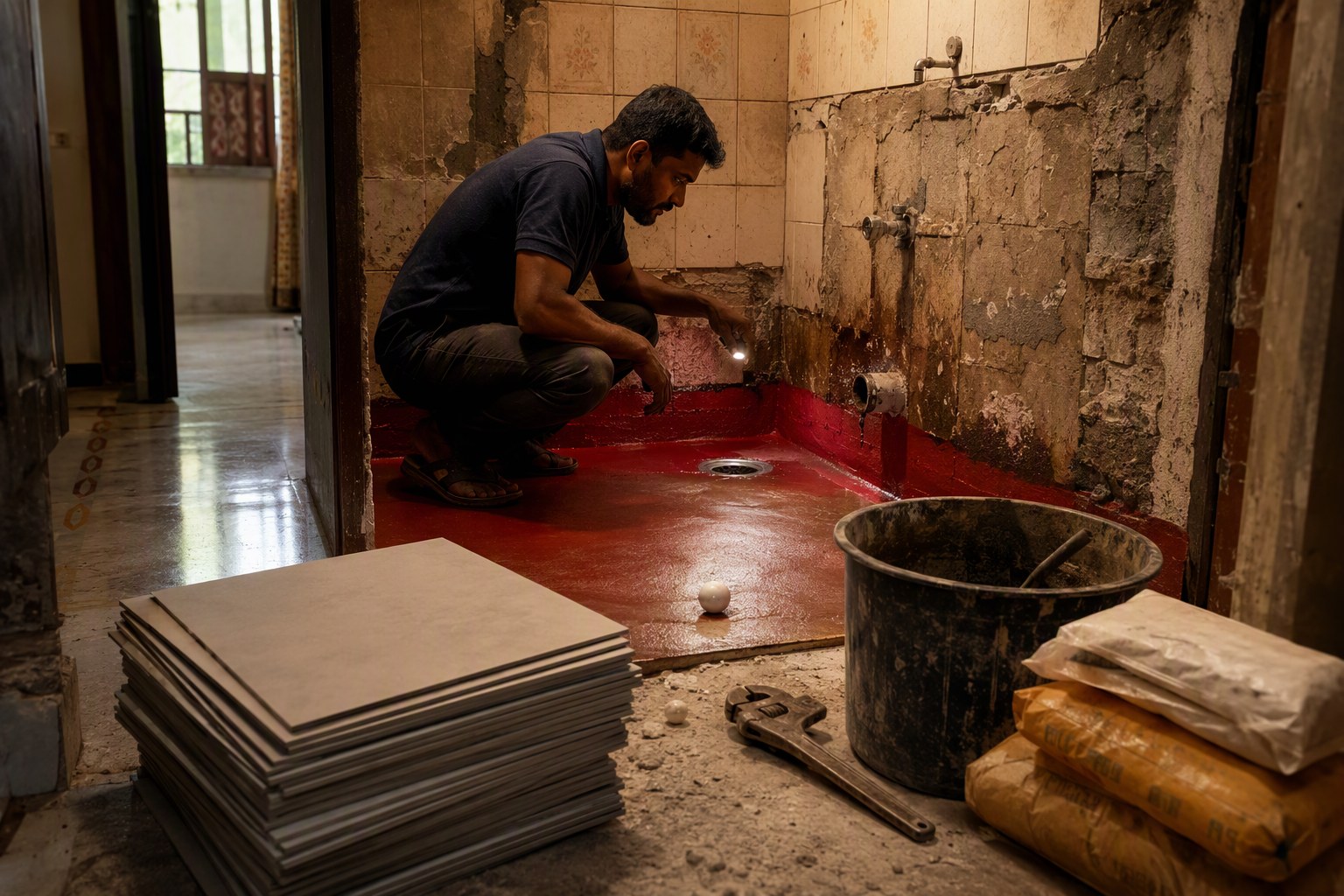
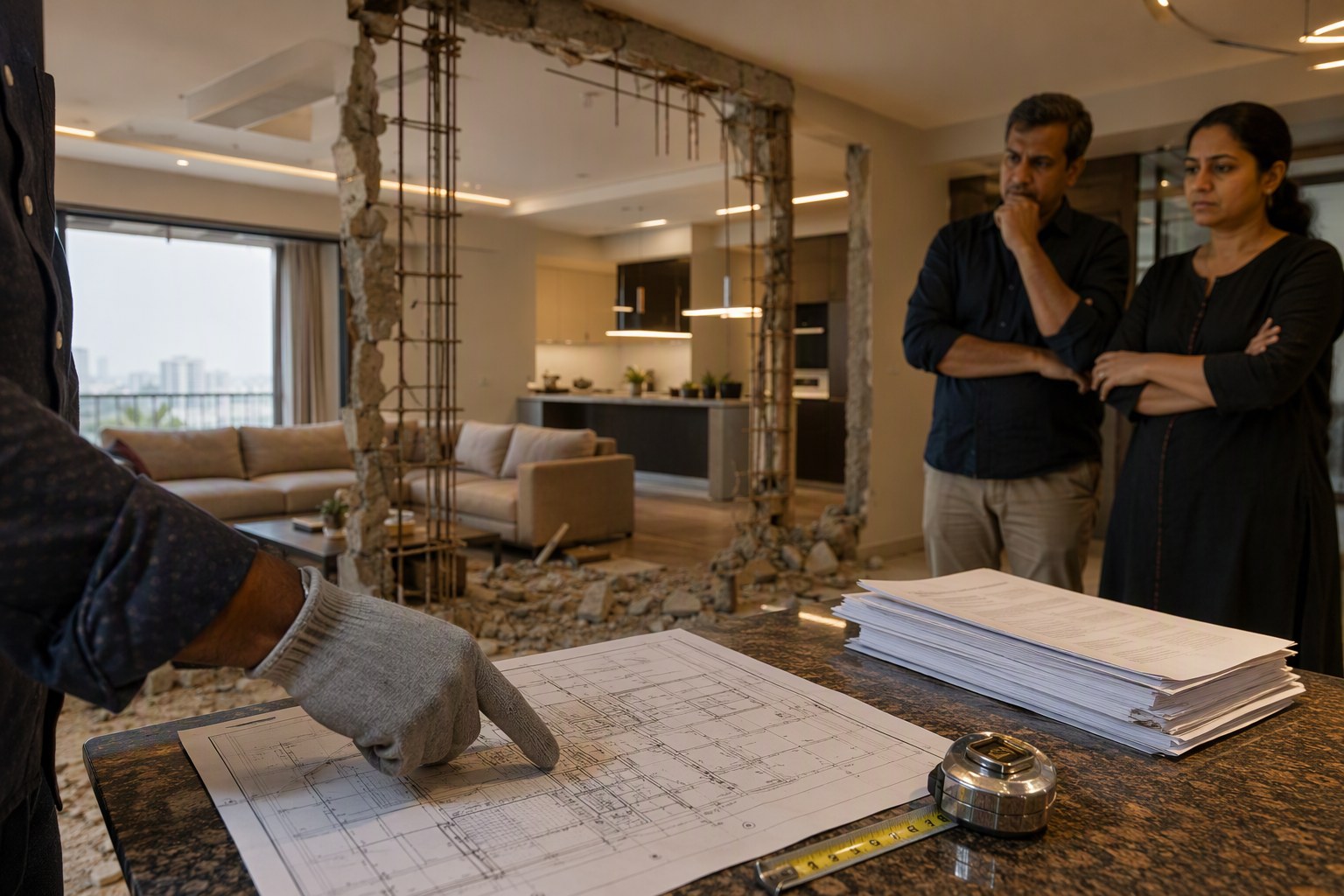
Do not start demolition, electrical chasing, plumbing changes, false ceiling framing or carpentry fixing before registration. If the deal fails, you may end up improving someone else’s property. Even worse, disputes may arise on damage, unpaid vendor bills, security deposits and society permissions.
For resale deals, insist on:
- Copy of registered sale deed and link documents.
- Latest EC checked against the seller’s ownership period.
- Loan closure letter or bank NOC if the property was mortgaged.
- Property tax and maintenance dues status.
- Society or association confirmation where relevant.
- Clear sale agreement mentioning timelines, refund terms and default clauses.
- Registration date fixed at the correct SRO.
If you are not clear about terminology like pahani, mutation, link document, EC, market value, SRO or prohibited property, use the Telugu-English Property Terms Dictionary. It is especially useful for first-time buyers who are dealing with Telugu revenue words for the first time.
How Much Interior Planning Is Safe Before Sale Deed?
You can plan. You should not overpay. There is a clean difference.
Safe activities before sale deed registration usually include design consultation, approximate budgeting, layout discussion, material shortlisting, site measurement with written permission, and checking society fit-out rules. Risky activities include paying a large non-refundable advance, ordering custom material, beginning civil work, removing existing fixtures, shifting appliances to the site, or giving contractor access without owner documentation.
| Stage | Buyer action | Risk view |
|---|---|---|
| Before title checks | Only discuss design and budget | Low risk |
| After EC and Section 22-A checks | Take measurements with written permission | Manageable |
| After loan sanction and sale agreement | Negotiate interiors contract, avoid custom procurement | Moderate |
| After sale deed registration | Pay main fit-out advance and begin work as per society rules | Safer |
| After possession or handover | Start full execution | Best stage |
For high-rise apartments in Financial District, Kokapet, Narsingi and Nanakramguda, also check lift protection rules, debris charges, working hours, fire safety restrictions and contractor access cards. For independent houses in Sainikpuri, Yapral, Nagole, Bandlaguda Jagir and Manikonda, check setbacks, old structural condition, electrical load and water connection before planning heavy fit-outs.
The Telangana Document Order I Prefer
When a buyer asks me whether to pay the interior designer first or register first, I usually suggest this order:
- Identify the property and collect basic documents.
- Check survey number, village and mandal details where applicable.
- Run Section 22-A and EC checks.
- Verify SRO jurisdiction and market value.
- Review title documents with a property lawyer.
- Execute a clear sale agreement with refund and default clauses.
- Complete bank legal and technical checks if taking a loan.
- Pay stamp duty and complete sale deed registration.
- Take possession or formal handover.
- Then pay the main interior fit-out advance and start work.
This order may feel slow when your family is waiting to move in. But it is far better than rushing into interiors and then discovering that the property cannot be registered. A good designer will understand this. A pushy vendor who ignores legal risk is not the right partner for a serious home purchase.
Contract Clauses to Add If You Must Pay Early
Sometimes buyers have practical pressure. Lease is ending, school admission is nearby, parents are moving in, or festival dates are fixed. If you must pay some amount before registration, protect yourself in writing. The interior contract should clearly say:
- Work will not start until sale deed registration or written possession permission.
- Any pre-registration payment is refundable if registration fails due to title, SRO, Section 22-A, EC, bank legal or seller-side issues.
- No custom material should be ordered without written approval after registration.
- Measurements before registration do not mean work approval.
- Vendor cannot claim site delay charges until legal access is available.
- Design files, estimates and material specifications should be shared with the buyer.
- GST, warranty, brand names, finish details and delivery timelines should be written.
Use written communication. WhatsApp is helpful for quick coordination, but the contract should carry the main terms. If needed, prepare a basic written understanding through Legal Document Generator and get it reviewed by a lawyer. Do not rely only on verbal assurance from the sales manager, seller, site supervisor or interior consultant.
What Buyers in Hyderabad Should Remember
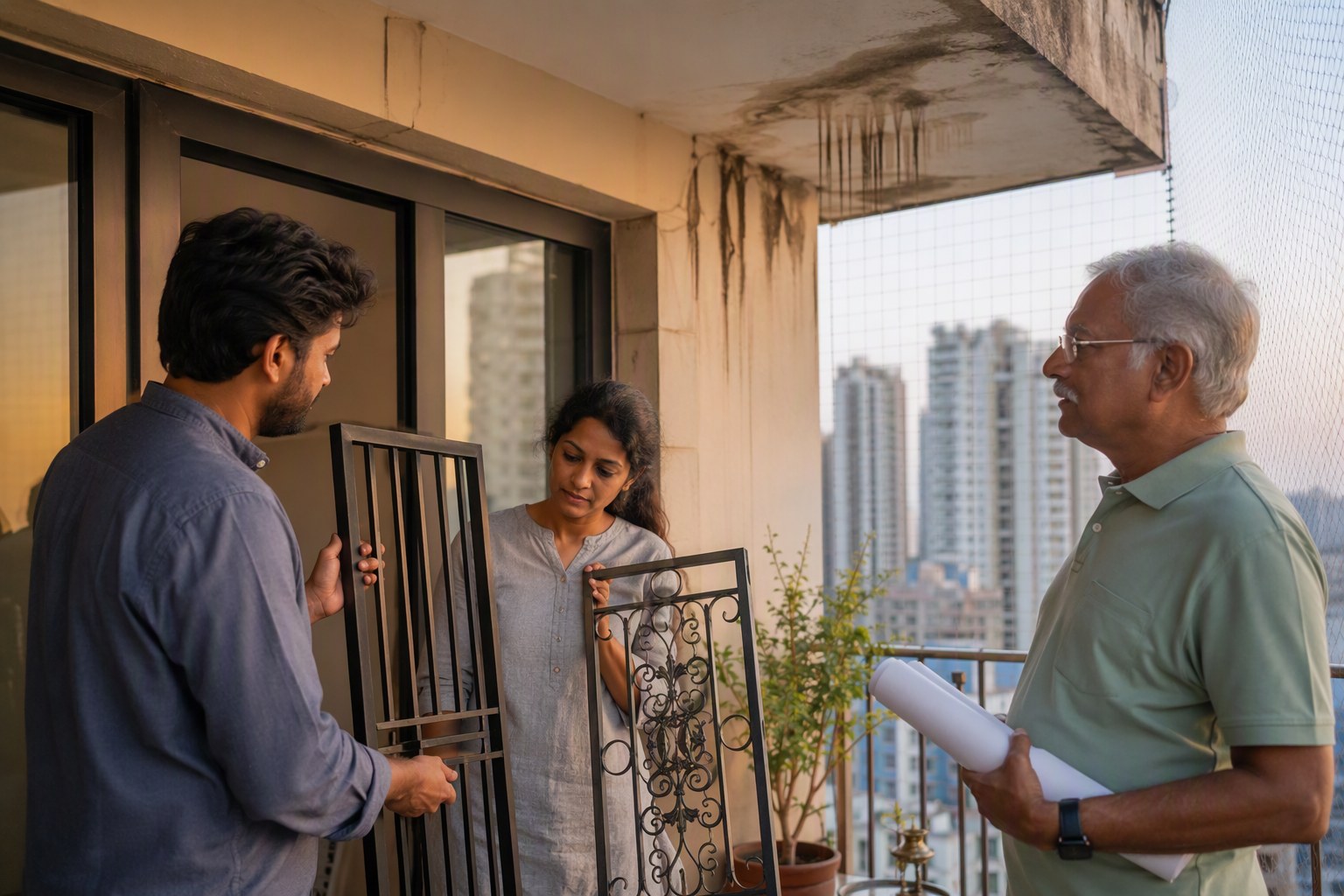
Hyderabad buyers are becoming smarter, but emotions still enter the deal. A flat in Kokapet with good view, a villa in Mokila with garden space, a resale apartment in Kondapur near office, or a budget-friendly home in Uppal can make people rush. Interiors add another emotional layer. Families start discussing pooja room direction, wardrobe colour, breakfast counter and kids’ room wallpaper even before the legal file is complete.
Nothing wrong in dreaming. Just keep the money protected.
The presence of 3,076,153 Section 22-A prohibited property entries in Telangana government records is a strong reminder that land and registration checks cannot be treated casually. Before you pay a big interior fit-out advance, verify the property through Property Verification Tool, run an EC, check the SRO, and confirm that the sale deed can actually be registered. After that, spend on interiors with a free mind.
My practical advice: design early, pay carefully, execute only after registration. That one discipline can save months of stress.
Frequently Asked Questions
Can I pay an interior fit-out advance before sale deed registration in Telangana?
You can, but it is risky. Keep any pre-registration payment limited and refundable. Do not pay a major advance or start custom work until the sale deed is registered and title checks are complete.
Why is Section 22-A relevant to interiors?
If the property or underlying land is affected by a Section 22-A prohibited entry, registration may be blocked or delayed. If you have already paid an interiors vendor, recovering that money can become difficult.
What checks should I complete before paying a big interiors advance?
Check Section 22-A status, EC, SRO jurisdiction, seller title documents, loan closure proof if any, RERA details for projects, and society or builder fit-out rules.
Is it safe to take measurements before registration?
Taking measurements is usually manageable if the seller or builder gives written permission. But avoid drilling, demolition, carpentry fixing, electrical work or ordering custom material before registration.
What should my interior contract say if I pay before registration?
It should mention refund terms if registration fails, no custom procurement without your written approval, no work start before legal access, and clear payment milestones linked to registration and possession.