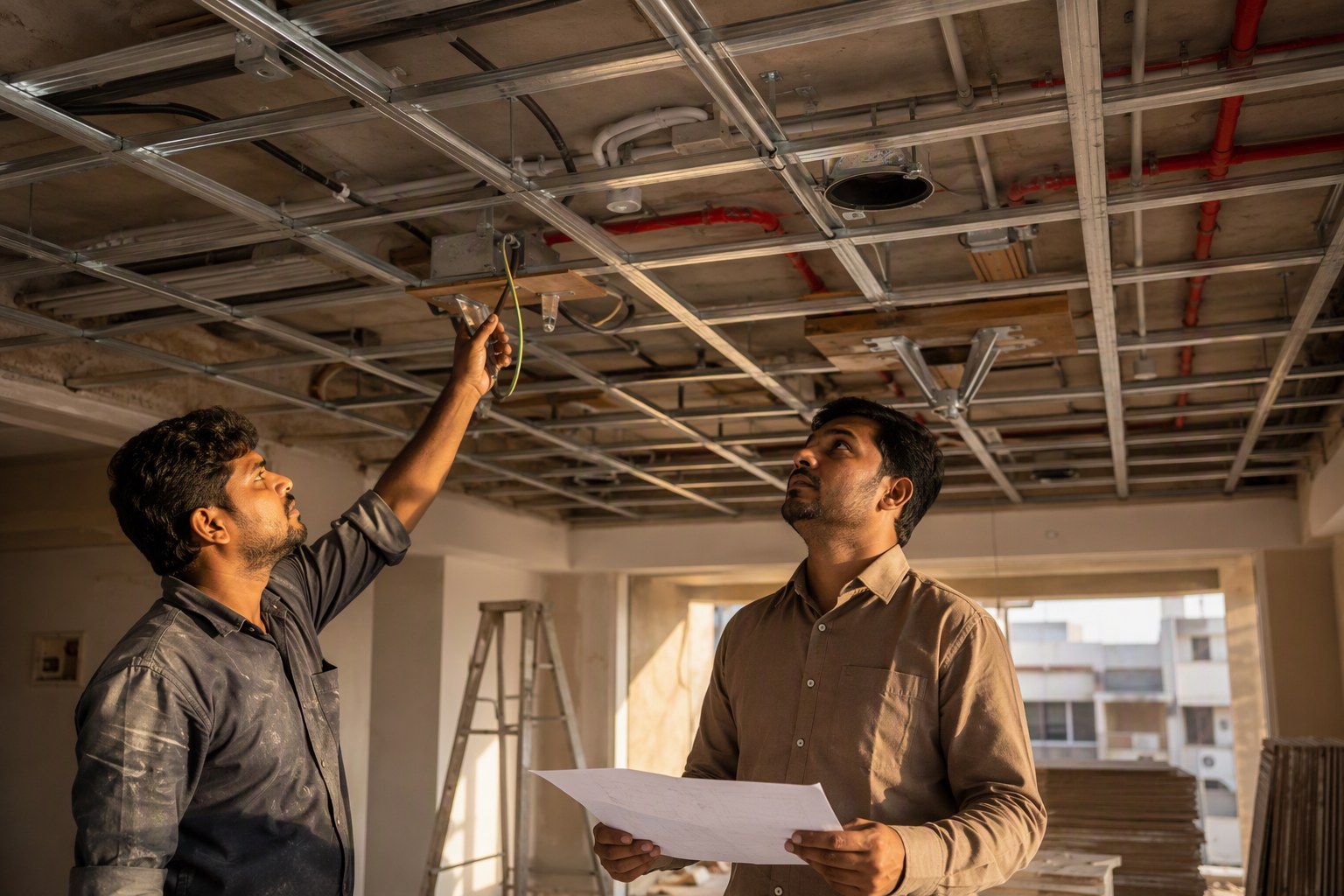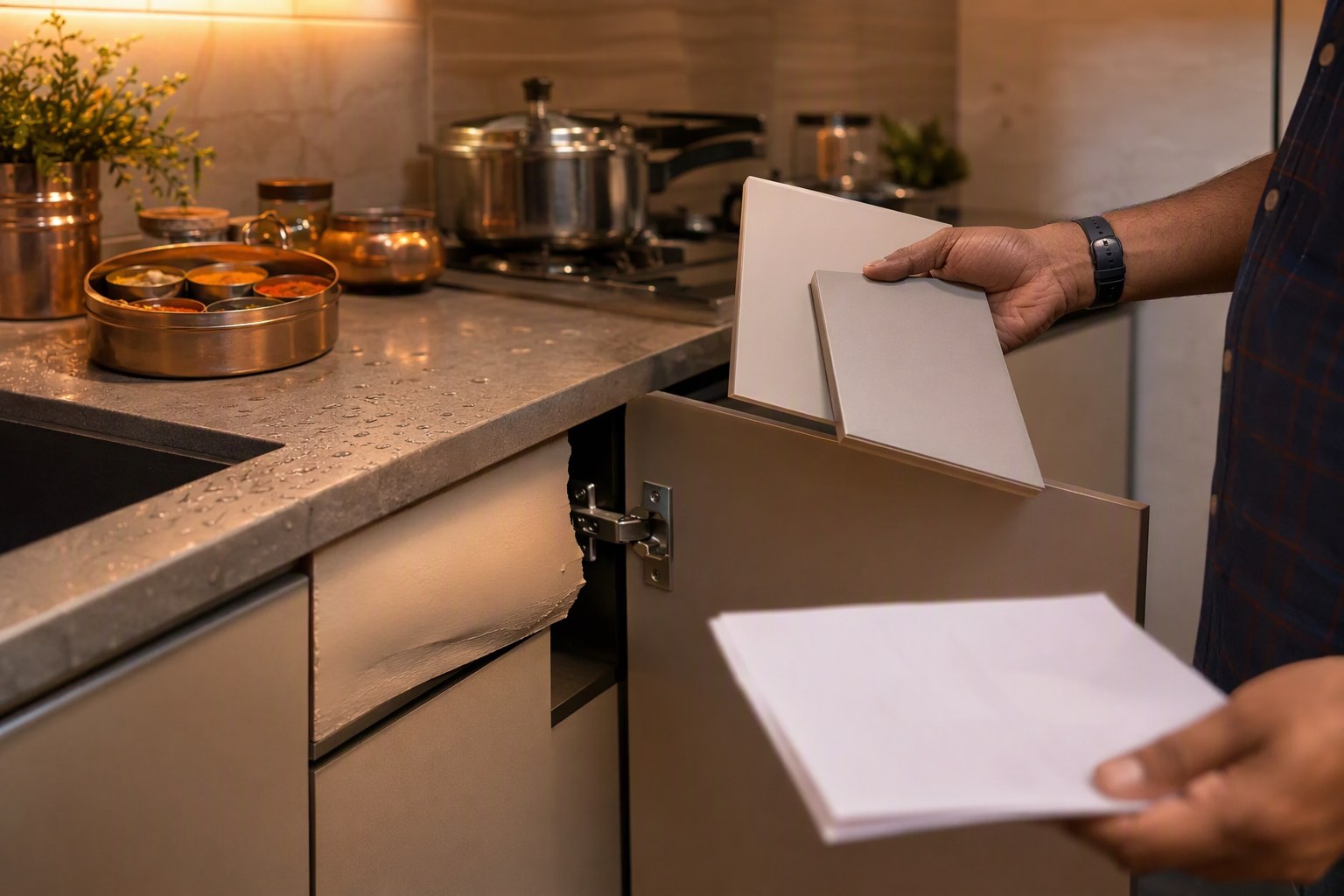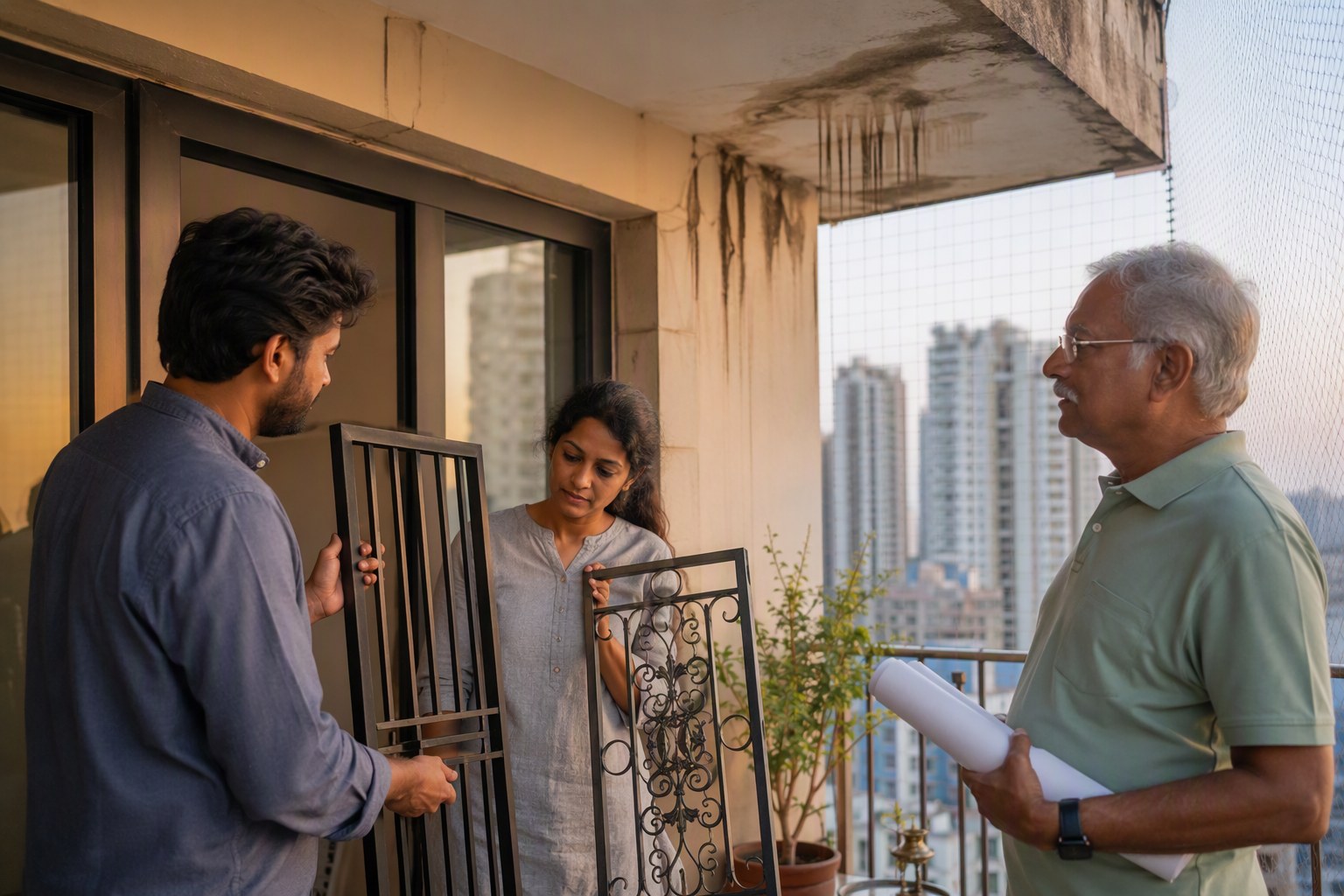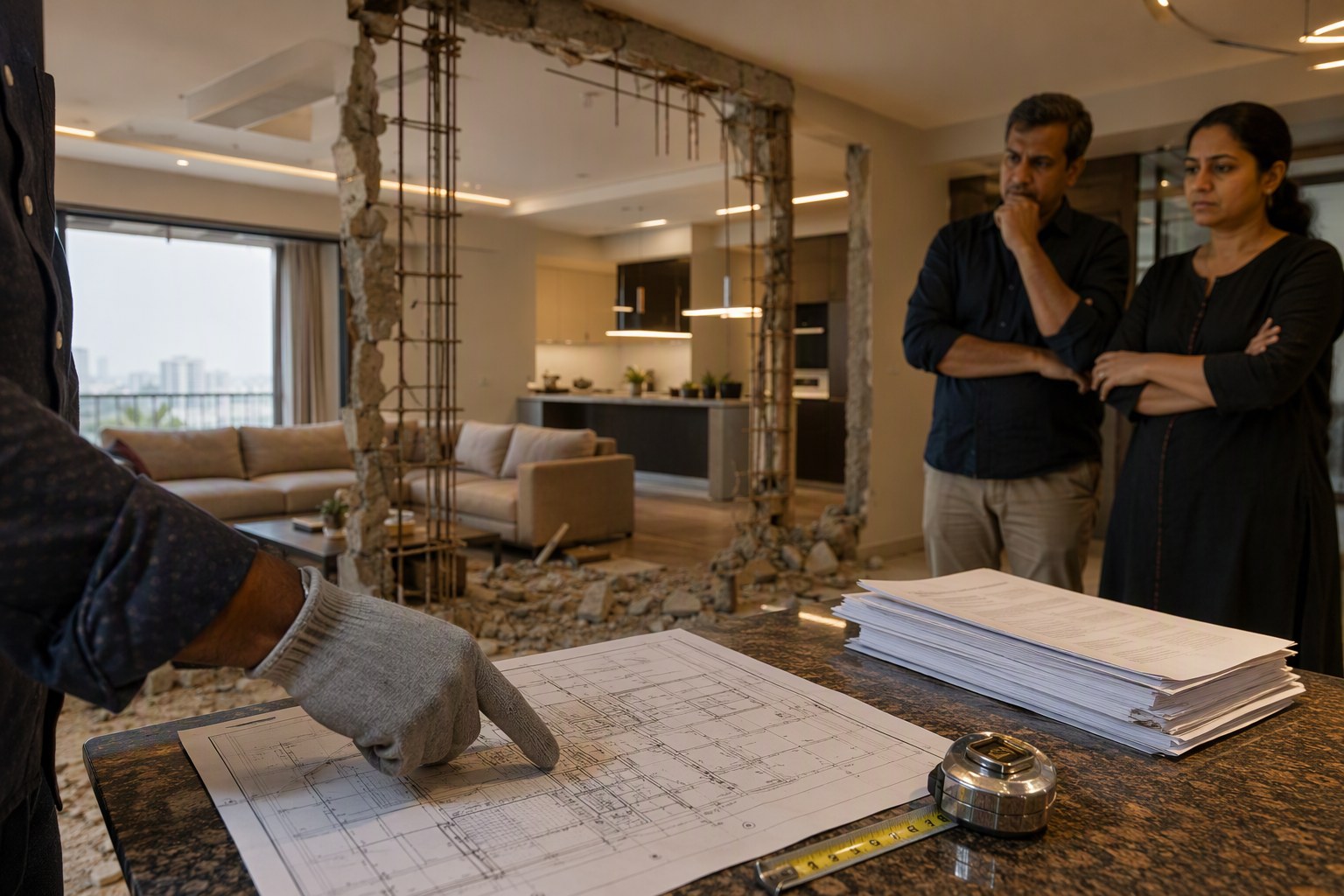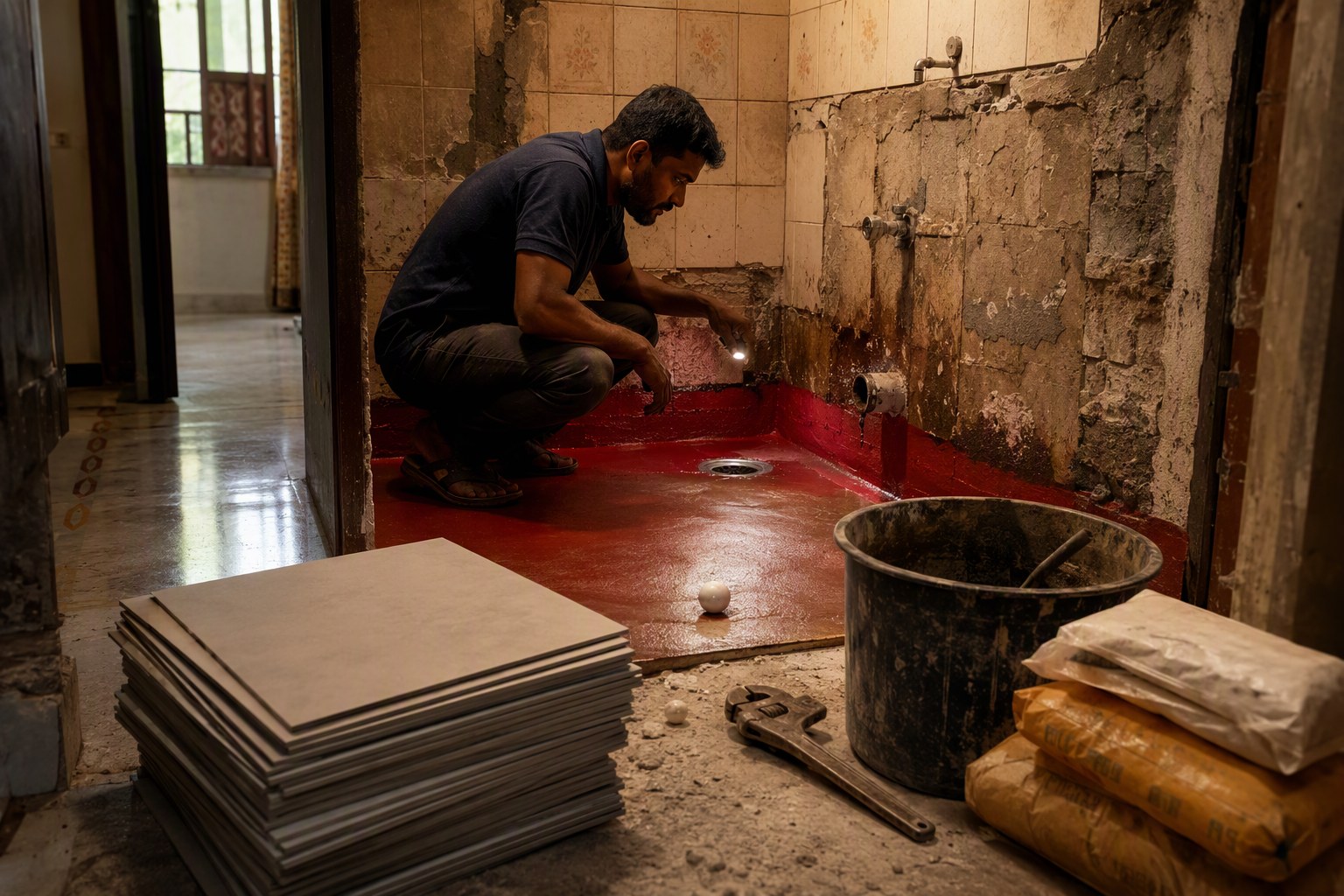
Bathroom Makeover in a Resale Flat sounds like a small weekend decision when you are standing inside an old Hyderabad apartment with Pinterest screenshots in hand. New tiles, wall-mounted commode, glass partition, matte black fittings, maybe a niche for shampoo bottles. Nice plan. But in resale flats, the bathroom does not always behave like a blank canvas. It behaves like old plumbing, concealed seepage, society rules, and a floor slope that may have been wrong from day one.
We recently saw a buyer in a resale flat near Kondapur, Serilingampally mandal, get carried away by the idea of a stylish bathroom. The flat looked decent during the first visit. The hall had good light, the bedrooms were usable, and the location was close to offices. The bathroom looked dated, but manageable. His first comment was, “Tiles we can change.” That is a common Hyderabad buyer line. In our experience, it is also where many renovation budgets start leaking.
Only after possession did the real story come out. The bathroom floor held water near the door. The wall behind the vanity had damp patches after every bath. The flat below had already complained to the association once. The society asked for written approval before breaking tiles, and they insisted that the licensed plumber must inspect common vertical lines. What began as a simple makeover became repair work, plumbing correction, waterproofing, debris handling, and neighbour coordination.
A resale flat bathroom should be checked like a service area, not like a design corner. Tiles are the last layer. Leakage, slope and society approval come first.
Bathroom Makeover in a Resale Flat: Why Leaks Matter Before Design
In localities like Ameerpet, Somajiguda, Himayatnagar, SR Nagar, Kukatpally, Miyapur, Manikonda and parts of Banjara Hills, many resale apartments have bathrooms that have gone through at least one round of patchwork. Sometimes the previous owner changed only the visible tiles. Sometimes a tenant installed a new geyser line. Sometimes the original plumbing was not touched for years. On a quick site visit, everything may look dry because the bathroom has not been used that morning.
A buyer sees dull tiles. A good contractor sees risk points. The joint between wall and floor. The area around the floor trap. The concealed mixer line. The shaft wall. The sunken slab, if the building has one. The damp skirting outside the bathroom. The false ceiling stain in the flat below. These signs decide whether you are doing a makeover or a repair project.
The worst mistake is ordering tiles before doing a leak inspection. Once you buy tiles, your mind starts defending the design. You may ignore warnings because the material is already at the site. I tell buyers to keep the tile showroom visit after the plumber and waterproofing person inspect the bathroom. It feels less exciting, but it saves painful rework.
Bathroom Makeover in a Resale Flat: The Hyderabad Resale Reality
Hyderabad resale flats have their own pattern. In older apartments around Punjagutta, Begumpet and Ameerpet, bathroom shafts may be compact. In high-density pockets of Kukatpally and Miyapur, associations are strict about work timings and debris movement. In gated communities around Gachibowli, Kondapur, Nallagandla and Financial District side, there may be vendor registration, lift protection rules and written permissions. In Manikonda and Narsingi belt, some buildings have mixed-quality internal works depending on the builder and year of construction.
That is why the same bathroom makeover behaves differently in different mandals. A flat in Serilingampally mandal may have a well-managed association with formal approval steps. A smaller standalone building in Khairatabad mandal may depend on the secretary and neighbours. A resale flat in Gandipet mandal, especially in newer growth pockets, may have better layouts but still needs document and quality checks.
Before spending on interiors, buyers should also finish basic property verification. A beautiful bathroom does not help if the flat has title issues, mortgage traces, wrong SRO mapping or a document gap. Use our Property Verification Tool for a first-level check, and run an Encumbrance Certificate Search before getting emotionally locked into renovation plans.
Check the Bathroom Before You Check Tile Catalogues
During a resale flat visit, do not just open the bathroom door and say “we will renovate this.” Spend time inside. Run the shower if water is available. Pour water near different corners and watch where it travels. The water should move towards the drain without forming lazy puddles near the door or corners. If the floor slope is poor, new tiles alone will not fix it unless the base level is corrected.
Look at the outer wall of the bathroom too. Many buyers only inspect inside. Dampness often shows outside first, near the bedroom wall, passage skirting or kitchen-adjacent wall. If paint is bubbling, if the skirting has dark marks, or if there is a musty smell, treat it as a warning. Do not accept “sir, only old paint” as the final answer. Ask when the bathroom was last used, whether any leakage complaint came from the lower flat, and whether waterproofing was ever done.
Quick on-site leak checks
Check the ceiling of the flat below if access is possible. This is the most honest inspection.
Look for dampness outside the bathroom wall, especially near wardrobes and skirting.
Open the shaft door or inspection panel and check for wet pipes, stains and patchwork.
Run water and see whether it reaches the drain naturally or sits near the entrance.
Ask the association if any written complaint exists for seepage from this flat.
Check if previous renovation changed the commode position or shower area. Such changes often disturb slope and pipe alignment.
Floor Slope Is Not a Small Issue
Many buyers underestimate bathroom slope. They think the mason will “adjust while laying tiles.” In reality, slope correction may require removing old tiles, checking the base, locating drain height, and sometimes reworking the floor trap. If the drain level itself is wrong, a cosmetic tile job will only hide the problem for a short time.
Poor slope causes daily irritation. Water stands after every bath. The door frame absorbs moisture. The bedroom side may smell damp. Anti-skid tiles also lose value if water does not drain. In resale flats, slope issues become tricky because you cannot freely raise floor height. If you raise too much, the bathroom threshold changes, the door may need cutting, and the finished floor may sit awkwardly against the passage.
In old bathrooms, the slope may be uneven because previous owners did patch repairs. A corner tile replacement, a new western commode, a changed drain cover, or an added shower partition can disturb water movement. A good contractor will pour water and observe before quoting. A weak contractor will show tile samples first.
Society Approval Can Decide Your Bathroom Makeover Timeline
Hyderabad apartment associations have become stricter, especially after repeated leakage disputes. In many buildings, you cannot start breaking bathroom tiles without informing the association. They may ask for owner undertaking, contractor ID, work timing, debris removal plan and lift protection. Some societies also restrict noisy work on weekends or festival days.
This is not just bureaucracy. Bathroom work can affect the flat below, the common shaft and the building plumbing. If your plumber damages a vertical line, the issue is not private anymore. If debris blocks a common drain, other residents will be dragged into it. In our experience, a buyer who takes society approval early gets better cooperation when inspection access is needed from neighbouring flats.
Questions to ask the association before bathroom work
Is written permission needed for bathroom tile breaking?
Are there approved plumbers or waterproofing vendors for the building?
Can the contractor inspect the shaft and common plumbing lines?
What are the working hours for drilling, breaking and debris movement?
Is there any pending leakage complaint against this flat?
Does the association require a refundable repair deposit?
Buyers should ask these questions before registration, not after. If the seller says there were no complaints, confirm with the association office or committee member. A polite chat can reveal more than a freshly painted bathroom wall.
Do Not Separate Interiors from Property Due Diligence
Interior decisions usually start after token advance. That is where buyers must slow down. Before planning bathroom demolition, verify the flat documents, SRO jurisdiction, EC, market value and any restrictions. Telangana has a large property record ecosystem, and government records must be respected. As per latest IGRS data available in our database, Section 22-A prohibited property records stand at 3,076,153. That number is a reminder that document checks are not a formality in this state.
For apartments, Section 22-A issues may not be the usual bathroom discussion, but the underlying land and registration history still matter. Before you emotionally commit to a resale flat in Madhapur, Kondapur, Attapur, Miyapur or Uppal, run a title-side check. Use the Section 22-A Prohibited Property Check where relevant, verify the SRO through Find Your SRO Office, and compare government market value using the Market Value / Guideline Value Search.
If the property is part of a larger project and RERA details are relevant, you can also use the RERA Project Lookup. For resale flats with loan history, do not skip charge checks and EC review. A bathroom renovation should never begin while legal clarity is still pending.
Bathroom Makeover in a Resale Flat: What to Inspect Room by Room
A bathroom leak rarely stays inside the bathroom. It travels. In a resale flat, inspect adjacent rooms with the same seriousness. If the bathroom shares a wall with a bedroom wardrobe, open the wardrobe and smell inside. If it backs onto the kitchen, check the lower cabinets. If it is attached to the master bedroom, inspect wooden flooring, skirting, door frames and electrical switchboards nearby.
| Area to inspect | What to look for | Why it matters |
|---|---|---|
Bathroom floor | Standing water, uneven tile levels, loose tiles | May indicate poor slope or weak base work |
Wall behind fittings | Damp patches, hollow sound, fresh paint | Concealed pipe leakage may be hidden |
Outer bathroom wall | Bubbling paint, dark skirting, musty smell | Seepage often appears outside first |
Flat below | Ceiling stains or patch repairs | Confirms whether leakage has affected another owner |
Shaft area | Wet pipes, rust marks, previous repairs | Common line issues can complicate renovation |
Society records | Complaints, approvals, vendor rules | Affects timeline and responsibility |
When the Seller Says “Only Tiles Need Changing”
This sentence needs careful handling. Many sellers are not trying to mislead. They may genuinely think the bathroom is fine because they adjusted to it over the years. But buyers should not accept verbal comfort. Ask direct questions. Was waterproofing done? Was the commode shifted? Was there ever a complaint from downstairs? Did any wall outside the bathroom need repainting? Were pipes replaced or only fittings changed?
If the seller recently repainted the bathroom ceiling, passage wall or bedroom wall beside the bathroom, ask why. Fresh paint before sale is common, but it can hide dampness for a while. If the flat was vacant, test results may not show immediately because the bathroom has not been under daily use. Try to inspect after water usage if possible.
Also check whether the bathroom has proper ventilation. Exhaust points, window opening and shaft airflow matter in Hyderabad weather. A bathroom that stays wet for long hours will spoil grout, paint, woodwork and fittings faster. Design cannot compensate for bad ventilation.
Plan the Makeover in the Correct Order
A good bathroom makeover in a resale flat follows a practical order. First, inspect leakage and slope. Next, speak to society. Then finalise scope with plumber and waterproofing contractor. After that, select tiles and fittings. This order may sound boring, but it is the difference between smart renovation and repeated repair.
Suggested sequence
Complete flat document checks, EC review and SRO verification.
Inspect the bathroom, adjoining walls, shaft and flat below.
Take society approval for breaking work and debris movement.
Open old tiles only after plumbing and waterproofing scope is clear.
Test waterproofing before final tile laying.
Check slope with water before grouting and final handover.
Keep photos of concealed plumbing before closing the walls.
Those photos help later. If a mixer line leaks or a drilling point is needed, you know where the pipe runs. Many owners forget this step and later depend on guesswork.
Locality Examples: Same Bathroom, Different Risk
In an older Ameerpet or SR Nagar flat, the risk may be old plumbing and tight shafts. In a Kukatpally Housing Board side resale unit, the concern may be previous alterations and society permissions. In Kondapur and Gachibowli apartments, the bathroom may look modern but concealed leakage can still occur if earlier tenant usage was heavy or repair work was patchy. In Manikonda, Puppalaguda and Narsingi belt, buyers should check both building quality and association process because many projects came up during different construction cycles.
For flats in Uppal, LB Nagar, Attapur and Mehdipatnam, also look at water pressure and drain behaviour. Some apartments have strong motor pressure, and weak joints show leakage only when pressure is high. In Banjara Hills and Jubilee Hills older buildings, bathrooms may have premium finishes but ageing lines behind them. Expensive tile does not mean healthy plumbing.
Where Buyers Commonly Overspend
Most overspending starts with visible items. Designer tiles, concealed showers, premium diverters, glass partitions and vanity counters. These are fine if the base is healthy. But when the base is weak, spending on fittings before waterproofing is like buying curtains before fixing a leaking window.
Another mistake is changing layout without technical need. Moving the commode, shifting the shower, relocating the basin and adding a partition can all affect drainage and pipe routes. In resale flats, every change should earn its place. If the old layout works and only looks dated, improve it without disturbing major lines. If the layout is functionally bad, then open it properly and repair from the base.
We’ve seen buyers argue over tile colour for days but spend only a short site visit on leakage checks. The bathroom does not care about colour if water is entering the slab.
Final View: Tiles Are Decoration, Waterproofing Is Protection
A bathroom makeover in a resale flat is not just an interior design activity. It is part civil work, part plumbing, part society coordination and part due diligence. In Hyderabad’s resale market, where flats change hands across different building ages and maintenance cultures, buyers should treat the bathroom as a risk zone until proven otherwise.
My practical advice is simple. Before you buy tiles, test the floor. Before you break tiles, get society approval. Before you spend on interiors, verify the property papers. Use the available tools, speak to the association, and bring a plumber who is willing to inspect, not just quote. A neat bathroom is nice. A dry bathroom is better.
Frequently Asked Questions
Should I renovate the bathroom immediately after buying a resale flat?
Renovate only after checking leakage, floor slope, plumbing condition, society rules and basic property documents. If the bathroom has seepage, treat it as repair work first and design work later.
How can I check if a resale flat bathroom has hidden leakage?
Inspect the outer bathroom wall, shaft, floor slope, door frame, adjoining wardrobe area and the ceiling of the flat below if access is possible. Ask the association whether any past complaint exists.
Do Hyderabad apartment societies allow bathroom tile breaking without permission?
Many societies require written approval, fixed work timings, contractor details and debris rules. Always check with the association before starting demolition, especially in gated communities and older apartment blocks.
Which property checks should I do before spending on interiors?
Check the Encumbrance Certificate, SRO jurisdiction, market value records, title flow and any relevant prohibited property status. Interior spending should start only after legal comfort is clear.
Can new tiles fix poor bathroom floor slope?
Not always. If the base level or drain position is wrong, only changing tiles may not solve water stagnation. The contractor must correct the slope before final tile laying.