


Hyderabad Societies Tighten Rules on Balcony Makeovers
Hyderabad Societies Tighten Rules on Balcony Makeovers as apartment associations across Gachibowli, Kokapet, Narsingi, Kondapur, Miyapur, Bachupally and Tellapur are taking a stricter stand on visible balcony changes. The trigger is simple: one owner closes a balcony with glass, another adds a grill in a different colour, someone else fixes heavy planters or outdoor AC units, and the building elevation starts looking patchy. In gated communities, associations are now asking flat owners to get written approval before changing balcony grills, tiles, glass partitions, awnings, pergolas, safety nets or utility extensions.
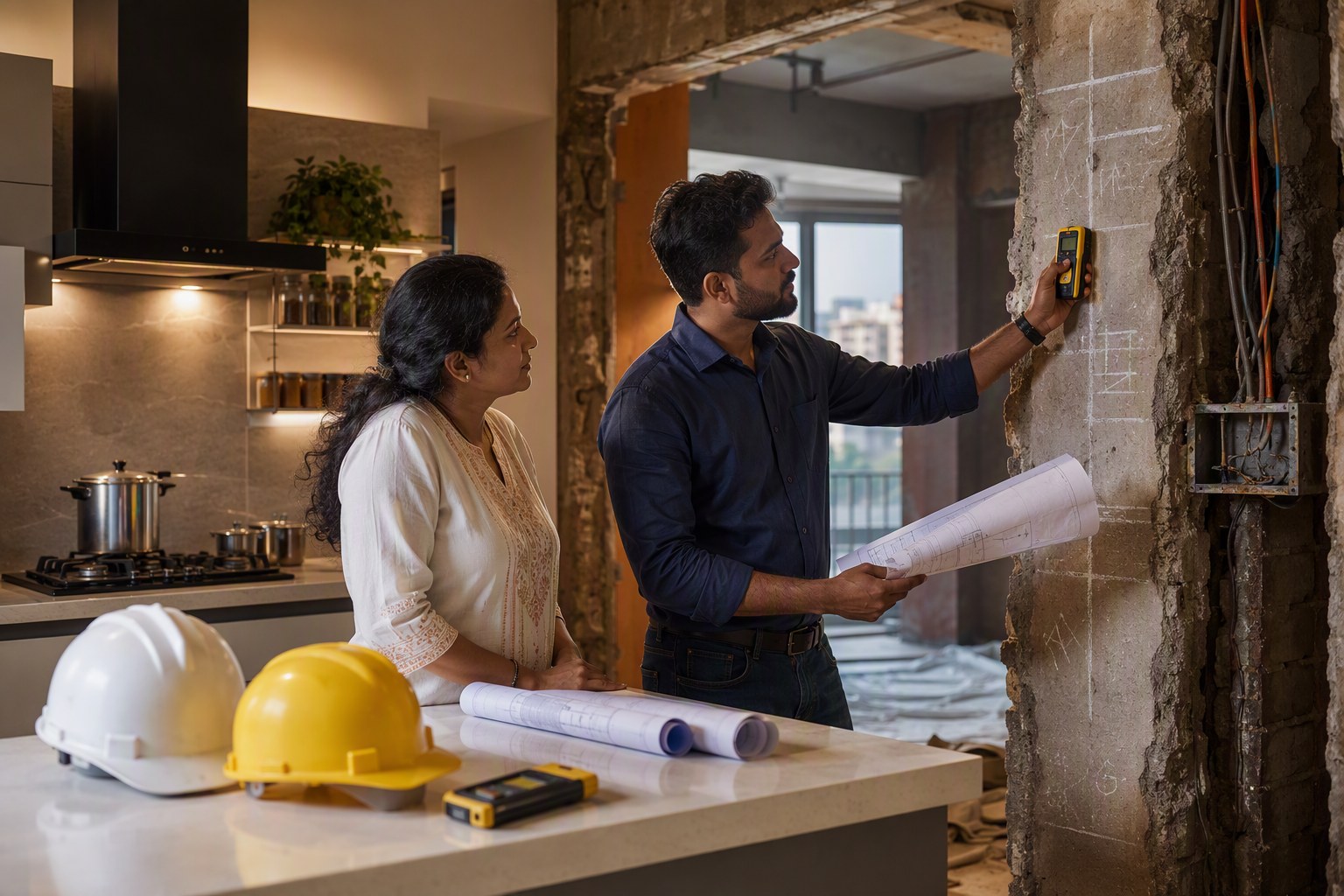
The stricter mood is not only about looks. It is also about structural safety, fire access, water seepage, children’s safety, insurance, and future resale due diligence. In our experience, many balcony disputes start as a small interior job and then become a society meeting issue because the owner did not check the approved elevation, association bye-laws or property papers before giving advance to a contractor.
Our practical advice: treat a balcony makeover like a small building alteration, not like a loose furniture purchase. Check the society rule book, approved plan, ownership documents and safety limits before work starts.
Hyderabad Societies Tighten Rules on Balcony Makeovers: what owners are being asked to follow
In several Hyderabad apartment blocks, the first question from the association is no longer “what design are you doing?” It is “will it change the external facade?” That one line decides most approvals.
A balcony is part of your flat for use, but the outer appearance of the tower is usually controlled by the association or builder’s approved design. This is especially common in high-rise communities in Serilingampally mandal localities like Gachibowli, Kondapur and Nanakramguda, and in western growth corridors around Narsingi, Kokapet, Puppalaguda, Tellapur, Osman Nagar, Bachupally and Miyapur. These areas have many towers where elevation uniformity is treated as part of the project’s brand value.
Associations are generally objecting to changes such as:
- Closing an open balcony with aluminium, UPVC or glass panels without permission
- Changing railing height, railing colour or railing material
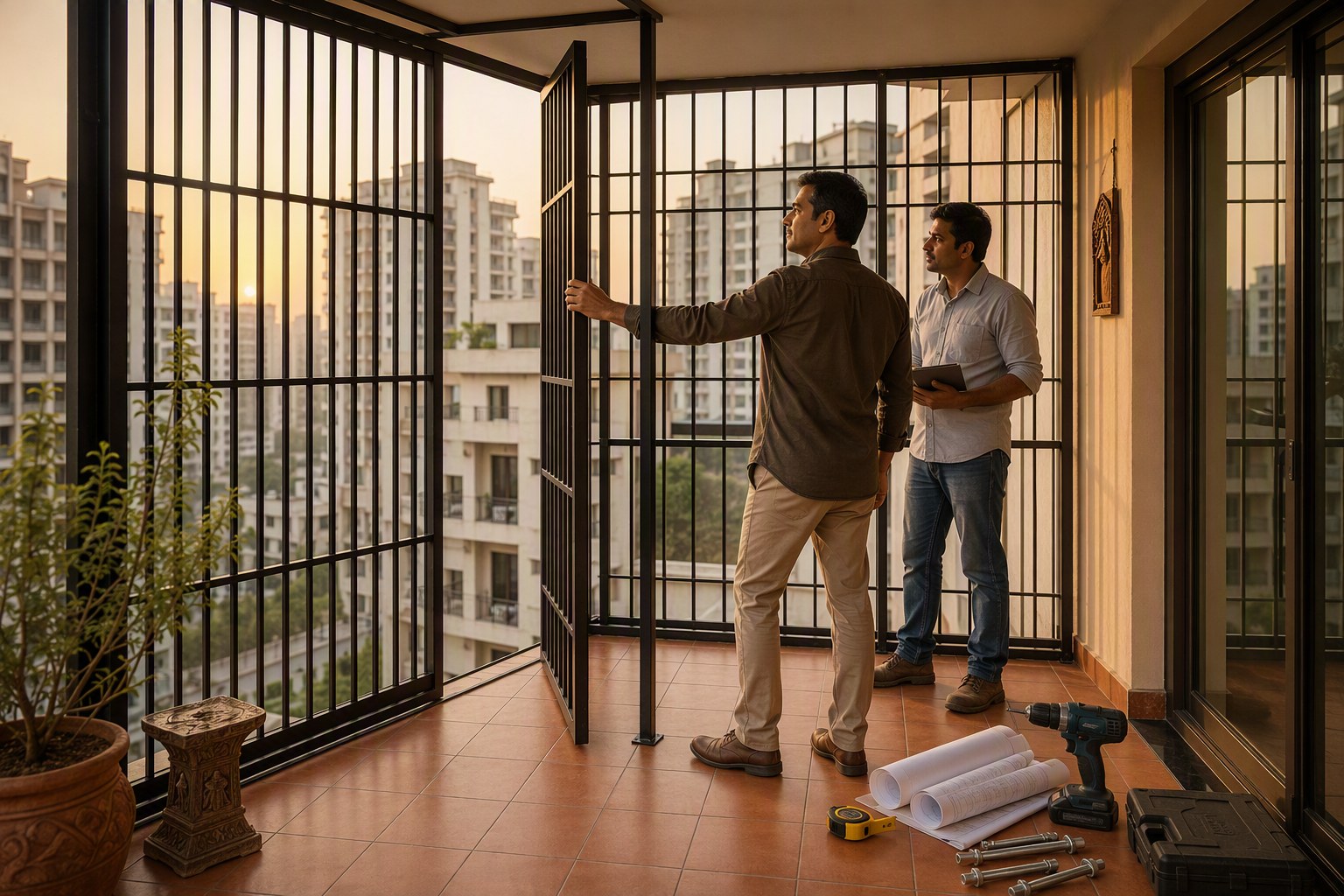
- Fixing permanent grills that differ from the approved elevation
- Adding heavy stone cladding, cement shelves or brick planters
- Installing shade structures, awnings or pergolas visible from outside
- Shifting AC outdoor units to locations not marked in the builder plan
- Routing drainage or washing machine lines through balcony edges
- Changing floor slope in a way that pushes water to lower floors
- Putting safety nets or pigeon nets in colours not approved by the society
Some associations are allowing reversible, light-weight work such as balcony deck tiles, loose planters and approved safety nets. Others are insisting on one standard grill design for all flats. The stricter societies are asking owners to submit drawings, contractor details and an undertaking that any damage to waterproofing, facade or neighbouring flats will be repaired by the owner.
Hyderabad Societies Tighten Rules on Balcony Makeovers because facade is a shared asset
Many flat owners feel, quite naturally, “I bought the flat, so why can’t I change my balcony?” The answer lies in the difference between private use and common appearance. The floor inside your flat is private. The external wall, facade line, elevation colour, balcony projection and structural members are not always fully private in practical terms. They affect every other owner in the block.
In a high-rise, even a small balcony enclosure can create three issues. First, it changes the elevation. Second, it may add load to a slab that was not designed for heavy permanent work. Third, it can affect ventilation, smoke movement and water flow. A society that ignores these issues today may face complaints tomorrow from residents, insurers, prospective buyers or local authorities.
We’ve seen this pattern in premium communities also. A buyer visiting a resale flat in Financial District or Narsingi may reject a unit if the balcony enclosure looks unauthorised or if the association has issued a notice. Banks and buyers may not always check balcony modifications deeply, but serious purchasers do ask for association no-dues, approved plan, occupation certificate and clarity on alterations.
First check the association bye-laws before paying your interior contractor
Before you finalise tiles, glass, grill work or a swing installation, ask the apartment association or facility office for the written balcony modification policy. Do not rely only on a WhatsApp reply from a security supervisor or one committee member. Get the format, if any, and submit a proper request.
Your request should ideally include:
- Flat number, tower name and owner details
- Simple sketch or photograph showing the proposed change
- Material details, especially for glass, metal, tiles and planters
- Weight estimate if you are adding fixed shelves, stone or heavy pots
- Contractor name, contact number and work schedule
- Confirmation that no structural beam, slab, railing base or common drain will be damaged
- Undertaking to follow work timing, debris removal and lift protection rules
If the association has a standard design for balcony grills or safety nets, follow it. A slightly cheaper local variation can become expensive if the committee asks you to remove it later. In Hyderabad societies, removal disputes are more common than owners expect, especially when a new managing committee takes over and starts enforcing old rules.
Check your property documents, not just your Pinterest board
A balcony makeover sits at the meeting point of interior design and property compliance. That is why owners should read the documents linked to the flat. The sale deed, construction agreement, allotment letter, association bye-laws, approved floor plan, occupancy certificate and handover manual can all contain restrictions.
For under-construction or recently handed-over apartments, use the RERA Project Lookup to check project details before assuming that every open area shown in brochures is available for permanent alteration. If you are buying a resale flat where the previous owner already enclosed the balcony, ask whether the change had written society approval.
For ownership clarity, pull an Encumbrance Certificate using the Encumbrance Certificate Search. An EC will not usually list balcony grill changes, but it helps you verify transaction history and whether the seller’s title chain is clean. For a broader document review, the Property Verification Tool is useful before committing to a resale flat with visible alterations.
Hyderabad buyers should also be alert to government restrictions on some properties. As per latest IGRS-linked government records in our database, Telangana has 3,076,153 prohibited properties under Section 22-A. Most apartment buyers may not think of Section 22-A while planning balcony interiors, but when buying, selling or registering property, prohibited-property checks become very relevant. Use the Section 22-A Prohibited Property Check if there is any doubt about the land or survey number behind the project.
Document checklist before a balcony makeover in Hyderabad
| What to check | Why it matters for balcony work | Where to start |
|---|---|---|
| Association bye-laws | They may restrict grills, glass enclosures, nets, colours and facade changes | Society office or MC circulars |
| Approved building plan | Shows balcony line, railing position, ducts and service areas | Builder handover file or association records |
| Occupation Certificate | Confirms the completed building was accepted as per sanctioned plan | Builder, association or buyer document file |
| Sale deed and schedule | Clarifies flat area, undivided share and rights attached to the unit | Your registered documents |
| RERA project details | Useful for project-level information and buyer declarations | RERA Project Lookup |
| EC and title chain | Useful when purchasing a flat that already has alterations | Encumbrance Certificate Search |
| SRO and guideline value | Relevant for registration, resale and valuation checks | Find Your SRO Office and Market Value / Guideline Value Search |
Safety permissions: the part owners should not ignore
Balcony work can look harmless. A few tiles, one grill, two planter boxes. But in high-rise apartments, balcony safety is a serious matter. The slab edge, railing anchoring and waterproofing layer are not meant to be casually drilled by every contractor. If the contractor damages the waterproofing, the flat below may face seepage during the next rain. If railing bolts are disturbed, the risk is worse.
Before allowing any drilling or welding, ask these questions:
- Will the work touch the railing, slab edge, beam or external wall?
- Will welding sparks fall to lower balconies or common areas?
- Will any material be lifted externally instead of through service lifts?
- Is the balcony being enclosed in a way that blocks smoke or ventilation?
- Will the drainage slope be changed?
- Will the design add dead load through stone, concrete, masonry or large water-filled planters?
If your society has an in-house civil engineer or technical consultant, take their written comment. If it is an older apartment in Himayatnagar, Begumpet, Ameerpet, Tarnaka, Sainikpuri or LB Nagar, be even more cautious. Older buildings may not have the same maintenance records as newer gated communities. Do not assume the slab can take any load just because your neighbour has done something similar.
Facade rules are now part of resale value
Earlier, many buyers focused only on carpet area, woodwork, modular kitchen and view. Now, serious Hyderabad buyers also look at whether the flat has any society dispute. A balcony enclosure without permission may not reduce the registered value directly, but it can slow down a resale discussion. If the association refuses no-dues or asks the seller to restore the balcony, the buyer will bargain hard.
This is particularly visible in micro-markets where resale competition is high: Kondapur, Nallagandla, Manikonda, Narsingi, Kokapet, Tellapur, Miyapur and Bachupally. When several flats are available in the same project, a buyer will prefer the unit with cleaner documents and fewer compliance worries.
If you are valuing a flat for resale, check the government guideline value through the Market Value / Guideline Value Search. For stamp duty planning during purchase, use the Stamp Duty Calculator. These tools will not approve a balcony makeover, but they help you understand the property side of the decision instead of seeing it only as an interior design spend.
What owners in Gachibowli, Kokapet and Narsingi should watch closely
The western corridor has many newer high-rise projects where associations are quite particular about elevation. In Gachibowli and Kondapur, which fall in the Serilingampally side, towers often have defined balcony glass, railing shades and AC ledge positions. In Kokapet and Narsingi, many communities market themselves as premium gated projects, so associations are strict about anything visible from the driveway, clubhouse or main road.
Owners here should avoid three common mistakes. One, enclosing the balcony with tinted glass because it “matches enough”. Two, putting a permanent grill after only getting oral consent from neighbours. Three, routing utility water lines in a way that stains the external wall. These are small decisions, but they create long-term maintenance arguments.
My view is simple: if the work is visible from outside, assume permission is needed. If it is fixed to the building structure, assume technical clearance is needed. If it affects water, drainage, fire movement or ventilation, do not proceed without written approval.
Hyderabad Societies Tighten Rules on Balcony Makeovers: how to apply without friction
A clean application reduces drama. Associations are not always against improvements. Many committees only want uniformity and safety. Owners who submit clear details usually get faster answers than owners who start work first and ask later.
Use this practical flow:
- Step 1: Read the society circular or bye-law on balcony changes.
- Step 2: Take photographs of your existing balcony from inside and outside.
- Step 3: Prepare a simple design note with material, colour and fixing method.
- Step 4: Confirm whether drilling, welding or external scaffolding is required.
- Step 5: Submit the request to the association by email or written form.
- Step 6: Wait for written approval before paying the contractor’s major advance.
- Step 7: Keep the approval safely with your flat documents for future resale.
If the society rejects your design, ask whether a standard approved design exists. Many conflicts can be solved by matching colour, grill pattern or net type. If the committee gives an unclear answer, request a written clarification instead of arguing in the residents’ group. WhatsApp fights rarely help property value.
Balcony interiors that usually create fewer issues
Not every balcony upgrade is risky. Some design choices are usually easier to get approved because they are reversible and do not alter the facade heavily. Still, every society has its own rule.
- Loose outdoor chairs and foldable tables
- Artificial grass or interlocking deck tiles placed without damaging waterproofing
- Light planters kept away from railing edges
- Approved pigeon net in society-approved colour
- Warm lighting fixed internally, not on the external facade
- Vertical garden systems that do not overload the wall or block drainage
- Roll-up bamboo blinds, if allowed and not visible as a permanent facade change
Avoid turning the balcony into a closed room unless the approved plan and society rules allow it. Many owners want to make a study, pooja corner or utility room by closing the balcony. That may look attractive for space-starved families, but it can create compliance questions. If the original sanction treats it as an open balcony, permanent enclosure can be challenged by the association.
What buyers should ask when a resale flat already has a balcony makeover
If you are buying a resale flat in Hyderabad and the balcony is already modified, do not ignore it because the interiors look nice. Ask for written approval from the association. If the seller says “everyone has done it”, still verify. In property matters, common practice is not the same as permission.
Ask these questions before paying token advance:
- Was the balcony enclosure or grill approved by the association?
- Is there any pending notice or penalty from the society?
- Did the work affect waterproofing or create complaints from lower-floor flats?
- Will the association issue no-dues without asking for restoration?
- Is the modification visible in a way that violates the project’s facade policy?
- Are all registered documents, EC and title papers available?
For registration planning, identify the correct sub-registrar office through the Find Your SRO Office. If the land details behind the apartment project are unclear, the Survey Number Finder can help you start the survey-number trail. For ongoing monitoring after purchase, the Property Change Tracker is useful for keeping an eye on property-related updates.
Our newsroom view: balcony freedom is real, but not unlimited
Hyderabad apartment living has changed. Balconies are no longer just drying areas. Owners want coffee corners, pet zones, mini gardens, work-from-home nooks and utility extensions. That is understandable. Flats are expensive, and families want to use every square foot properly.
But apartment ownership is also shared living. One owner’s makeover can become another owner’s leakage issue, view problem or safety concern. A uniform facade is not only cosmetic; it affects market perception. In premium towers, the outside appearance is part of the asset owners collectively paid for.
So yes, improve your balcony. Make it beautiful. Just do it with paper trail, society approval and safety sense. Hyderabad societies are becoming stricter, and frankly, many of them have reason to be. The best owners are not the ones who avoid upgrades. They are the ones who upgrade without creating legal, structural or resale headaches.
Quick owner checklist before starting balcony work
- Get the balcony rule from the association in writing.
- Check whether your design changes the external facade.
- Avoid drilling into slab edges, beams and railings without technical clearance.
- Use light, removable materials wherever possible.
- Do not block drainage outlets or AC service access.
- Keep approval emails, drawings and bills with your property documents.
- For resale flats, verify EC, RERA details, SRO jurisdiction and prohibited-property status.
Frequently Asked Questions
Can my Hyderabad apartment association stop me from changing my balcony?
Yes, if the change affects the building facade, safety, drainage, railing, waterproofing or common appearance. Most associations allow reasonable balcony use, but permanent grills, glass enclosures and visible structural changes usually need written approval.
Do I need government permission for a balcony grill in Hyderabad?
For a normal internal safety grill, owners usually deal with society approval first. If the work changes the approved building plan, encloses an open balcony or affects fire and structural safety, you should take technical advice and check the sanctioned plan before proceeding.
Will an unauthorised balcony enclosure affect resale of my flat?
It can. Buyers may ask for association approval, no-dues and clarity on alterations. If the society objects or asks for restoration, the buyer may renegotiate or delay the transaction.
What documents should I check before buying a flat with balcony modifications?
Check the sale deed, EC, approved plan, occupancy certificate, association no-dues, written approval for the balcony work and RERA project details if applicable. Also verify SRO jurisdiction and land-related restrictions where relevant.
Are pigeon nets and balcony deck tiles usually allowed?
Many societies allow them if they follow approved colour, fixing method and safety rules. Still, get written confirmation because some premium communities have strict facade standards even for nets and blinds.