


The Hyderabad Pooja Room Makeover story I keep remembering is from a family in Nallagandla. They had bought a 3BHK resale flat near Tellapur side, spent weekends selecting white marble, brass bells and a backlit Om panel, and paid an advance to a contractor. Only after the carpenter came for measurements did the housing society secretary ask one basic question: ‘Have you checked whether drilling is allowed on that wall?’ That one question delayed the work by three weeks.
This is not a rare case. In Hyderabad apartments, a small pooja room can quickly become permanent civil work. Marble cladding, granite platforms, electrical points, wall niches, false ceiling, exhaust, concealed wiring and heavy idols all need basic checks before money is locked. In villas and independent houses also, one wrong drill through a concealed pipe or electrical conduit can become a costly repair. We have seen families plan a ₹60,000 mandir and end up with a ₹1.5 lakh correction bill because the first contractor worked without checking the wall, slab and society rules.
My view is simple: before you spend on marble, first check the wall, the ownership papers, the society permission, the electrical layout and the load. A pooja room is sacred space, but the work is still civil work.
Hyderabad Pooja Room Makeover: Why permanent work needs checking first
In older Hyderabad houses, pooja rooms were usually built as a small enclosed space near the kitchen or central hall. In new apartments at Gachibowli, Kokapet, Kondapur, Bachupally, Miyapur, Uppal and Kompally, the pooja space is often a wall niche or a corner near the dining area. That means families create the mandir through interiors rather than through original construction.
This shift matters. Marble fixed on a wall is not like hanging a photo frame. Once the adhesive, anchors and brackets go in, the work becomes difficult to remove. If the wall has plumbing lines, AC drain lines, fire-fighting conduits, electrical conduits or a structural shear wall restriction, the damage can be serious.
Hyderabad interior contractors usually quote pooja room work in a few ways. A small laminate and veneer mandir may start from ₹45,000 to ₹90,000. A marble-backed pooja wall with granite base and lighting can sit between ₹1.2 lakh and ₹3 lakh. Italian marble, CNC jaali, brass inlay and custom doors can push the cost much higher. In premium apartments at Financial District, Jubilee Hills, Kokapet and Nanakramguda, we have seen pooja room budgets crossing ₹5 lakh, especially where stone, lighting and carpentry are combined.
But the cost is only one part. The bigger issue is reversibility. If you are living in a rented flat, a builder-handover flat, a resale apartment under loan, or a gated community with strict alteration rules, permanent pooja work should not begin without written clarity.
Hyderabad Pooja Room Makeover checklist before marble cladding
Before selecting the stone, take one slow round of the house. Do it with the electrician, carpenter and, if possible, the apartment facility team. The following checks save both money and arguments.
1. Confirm whether the wall can take drilling
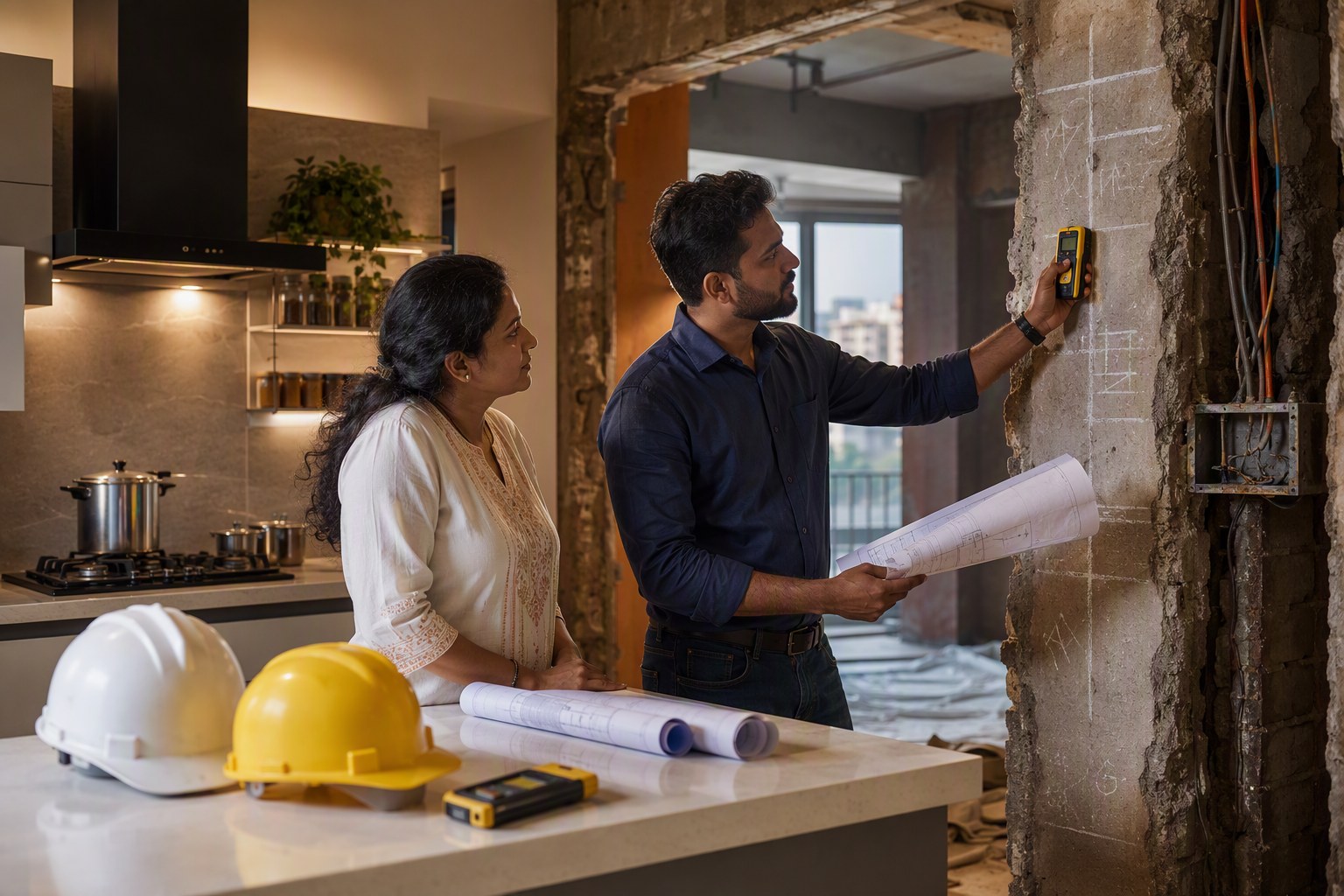
Many Hyderabad apartments use RCC shear walls, block walls and partition walls differently. A normal brick or block wall may allow regular drilling. A structural wall may have restrictions. A gypsum partition will not safely hold a heavy marble panel or stone shelf without extra support.
Ask the builder maintenance office for the electrical and plumbing drawing. In projects at Hitech City, Manikonda and Narsingi, facility teams often have handover drawings, though residents may not ask for them. If drawings are not available, ask the electrician to use a wire detector before drilling. This is a small cost compared to repairing a damaged line.
2. Check concealed pipes and electrical conduits
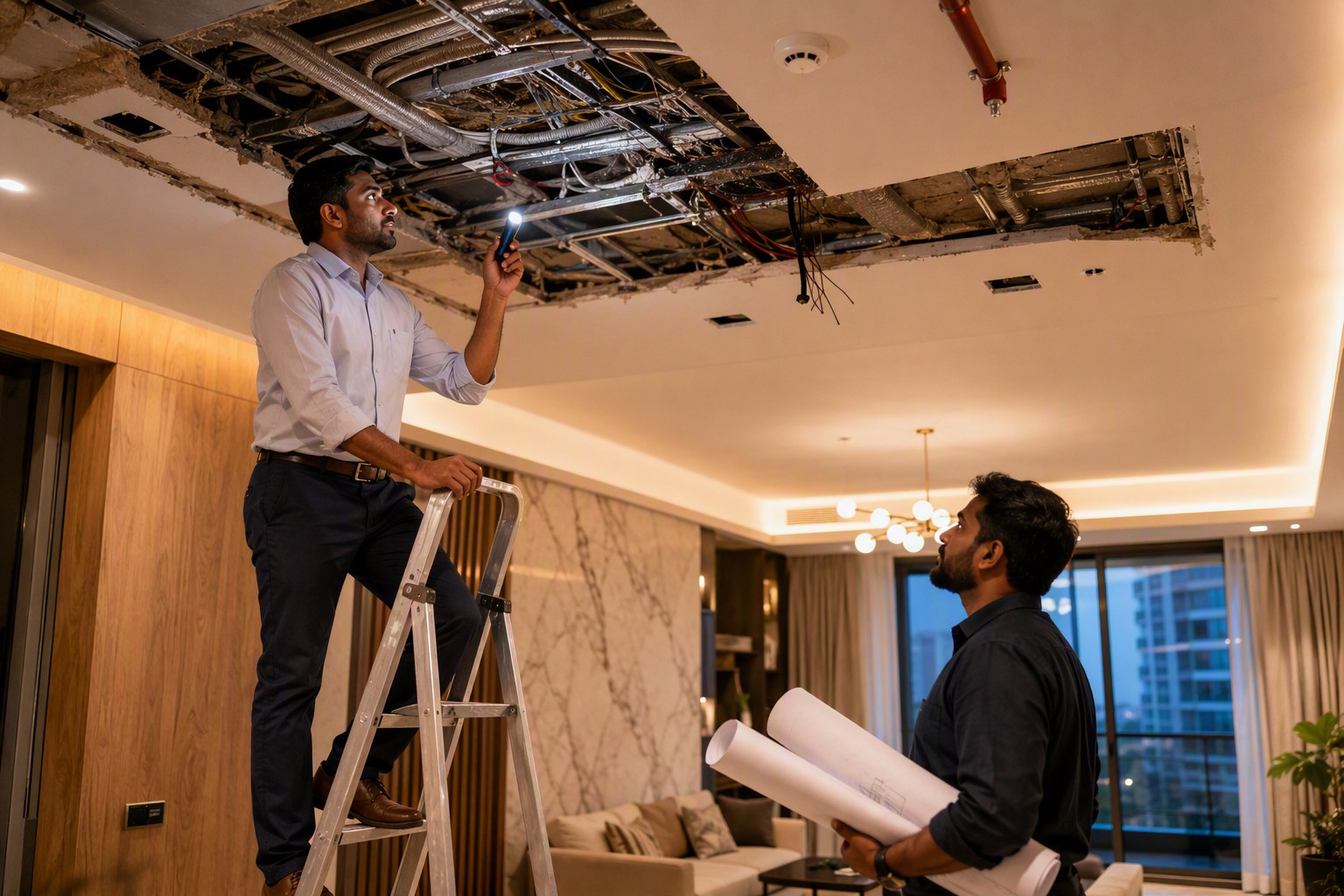
Pooja rooms need lighting, bells, lamps, sometimes an exhaust fan and sometimes a concealed plug point for decorative lights. Families often ask for warm LED strips behind marble. That needs routing. If the same wall has kitchen plumbing or bathroom lines on the other side, avoid deep cutting.
In flats at Miyapur, Chandanagar and Kukatpally, compact layouts often place the pooja niche close to the kitchen wall. That is convenient for daily use, but it also means more chance of hidden water lines. One small pipe puncture behind marble can remain unnoticed for days and later show damp patches.
3. Take society permission in writing
Most gated communities in Hyderabad allow interiors only during fixed timings. Drilling may be restricted after 6 pm, on Sundays or during festival days. Some societies ask for refundable deposits, labour ID cards, debris removal rules and lift protection. Marble work creates dust, sound and heavy material movement, so the association may treat it as civil work, not simple carpentry.
If you are in a large society in Gachibowli, Tellapur, Nallagandla, Kokapet, Puppalaguda or Bachupally, do not rely on a WhatsApp approval from a security guard. Send a short email or society app request mentioning marble cladding, drilling, electrical work, material movement and expected dates. Keep the approval saved.
4. Check if the flat is fully yours to alter
This sounds obvious, but Hyderabad has many resale flats where registration is done, bank loan is active, mutation is pending, or internal family settlement is still not clean. Before spending heavily on permanent interiors, verify the property position. If the flat is under a dispute, pending registration, blocked transaction or legal objection, money spent on interiors may not be recoverable.
For a quick document hygiene check, use the Encumbrance Certificate Search to see registered transactions. If you are buying a resale flat and planning interiors immediately after token payment, please slow down. Check the market value through the Market Value / Guideline Value Search, confirm the SRO using Find Your SRO Office, and estimate registration cost with the Stamp Duty Calculator.
Telangana has 1,47,934 prohibited properties under Section 22-A in the official prohibited property records. This number is not small. For plots, villas and certain land-linked transactions, do a Section 22-A Prohibited Property Check before you plan permanent construction or major interiors. Apartment buyers should also verify title flow, approvals and builder status, especially in outskirts where land history can be messy.
Hyderabad Pooja Room Makeover in apartments: society, safety and vastu realities
In our experience, pooja room discussions in Hyderabad homes usually start with vastu. North-east is preferred by many families. East-facing worship is common. Some families avoid placing the mandir against a toilet wall or below a staircase. These choices are personal, and I respect them. But the practical side should sit next to vastu, not after it.
If the north-east corner is a glass balcony wall, fixing marble may not be possible. If the ideal wall is a structural wall with concealed electrical main lines, choose a different design. If the corner is near the entrance and blocks shoe cabinet movement, daily use will become irritating.
For high-rise flats, also think of weight. Marble and granite are heavy. A single 18 mm marble slab may look harmless, but a full-height cladding, stone platform, side panels and heavy idols can add significant dead load in a small area. Generally, apartments are designed for normal residential loads, but concentrated loading should be checked when you are building heavy platforms or stone counters.
| Work item | What to check before starting | Common Hyderabad cost range |
|---|---|---|
| Marble wall cladding | Wall type, hidden conduits, adhesive, bracket support | ₹250 to ₹900 per sq ft for stone and basic fixing, depending on marble |
| Granite or marble platform | Load, support frame, height, cleaning access | ₹8,000 to ₹35,000 for small pooja counters |
| LED backlight panel | Power point, driver access, heat ventilation | ₹5,000 to ₹25,000 depending on design |
| Wooden doors or jaali | Opening clearance, hinge strength, polish finish | ₹20,000 to ₹1.2 lakh based on wood and CNC work |
| Electrical point shifting | Conduit path, MCB load, safety from diya heat | ₹2,500 to ₹15,000 for minor work |
Hyderabad Pooja Room Makeover for villas and independent houses
Villas in Mokila, Kollur, Shankarpally, Kompally, Tukkuguda and Adibatla usually give more freedom than apartments. You may have a dedicated pooja room, better ventilation and more wall options. Still, the checks are not optional.
In villas, families often want temple-style marble work, carved pillars, gopuram-style woodwork, brass doors and stone flooring. If the house is newly built, wait for initial settlement and dampness checks before fixing expensive marble. If the villa is under a gated community handover stage, confirm whether external elevation, wall chiselling and debris movement are allowed.
Independent houses also need land and approval checks when owners plan extensions around the pooja room. A small extension into setback may look harmless, but GHMC, HMDA and municipal rules can become an issue later. For plots or houses, use the Survey Number Finder and Property Verification Tool if you are unsure about land records. If you are planning a bigger alteration, the Road Width Check and Land Use Zone Finder can help you understand planning constraints.
Electrical safety before diya, lamps and backlit marble
Pooja rooms use fire and electricity in the same small space. That is why design should be practical. A diya kept below a wooden shelf, fabric curtain or low acrylic panel is risky. LED drivers hidden behind sealed marble may overheat. Loose plug points near camphor flame are a bad idea.
Ask your electrician for a dedicated switch control outside or near the entrance of the pooja room. Keep the LED driver accessible. Use good-quality wires, proper earthing and heat-resistant placement near lamps. Avoid placing plug points directly behind idols where oil, flowers and water may fall.
If you are doing marble cladding, finalise electrical points before stone fixing. Cutting marble again for one missed socket is painful and usually ugly. Many contractors say, ‘Sir, we will manage later.’ That later is where costs start climbing.
Document checks before spending on permanent interiors
People ask me why property documents matter for a pooja room makeover. The answer is simple: permanent interiors are sunk cost. If the property transaction has a title issue, loan issue, registration delay or family dispute, the buyer may not enjoy the space long enough to justify the spend.
For resale flats in Ameerpet, Begumpet, Banjara Hills, Kondapur, Madhapur, Sainikpuri or LB Nagar, check the sale deed, link documents, EC, property tax, electricity name transfer and society NOC. For new projects, verify the project through the RERA Project Lookup. For plots and villas, survey number, pahani history, Dharani status, land nature and prohibited list checks are even more critical.
Telangana registration costs are also part of planning. For many urban property transactions, buyers calculate around 6% as stamp duty, transfer duty and registration fee combined, subject to the property type and prevailing government rules. If you are buying a home and immediately planning interiors, do not spend the entire cash buffer on design. Keep registration, shifting, maintenance deposit, curtains, appliances and emergency repairs in the budget.
Marble selection: what works for Hyderabad homes
Hyderabad weather is hot for many months, and dust is a daily reality in growing corridors like Kokapet, Tellapur, Bachupally and Uppal. White marble looks beautiful in a pooja room, but it needs regular cleaning. Oil stains, kumkum, turmeric and agarbatti smoke can mark porous stone.
If you want low maintenance, consider vitrified slab, quartz, engineered stone or a granite platform with marble only as a backdrop. Makrana-style white marble gives a traditional look. Italian marble gives a premium finish but needs better care and cost control. For rented homes, a free-standing wooden mandir is wiser than cladding.
Ask the contractor about edge polishing, sealant, stain protection and joint lines. A cheap stone with poor fixing can look dull within a year. Also inspect the slab in daylight, not only under showroom lighting. Hyderabad stone markets can show big variation from slab to slab.
A practical pre-work checklist
- Take society or builder permission for drilling, marble movement and debris disposal.
- Check wall type: RCC, block wall, brick wall or gypsum partition.
- Scan for hidden electrical and plumbing lines before drilling.
- Finalise electrical points, LED driver location and switch controls before stone work.
- Check ventilation if you use diya, camphor or incense daily.
- Confirm the property title, EC and registration status before heavy permanent interiors.
- Keep access for future repairs. Do not seal every wire and driver behind marble.
- Budget 10% to 15% extra for correction, polishing, transport and small design changes.
- Use written contractor scope with material brand, stone thickness, payment stages and completion date.
What I would tell a Hyderabad homeowner
If you are planning a Hyderabad Pooja Room Makeover, spend one day on checks before spending one rupee on marble. Go to the wall, not the showroom first. Ask where the wires run. Ask whether the society permits drilling. Ask whether your property documents are clean. Ask whether the design can be repaired later.
A pooja room should bring peace, not arguments with the association, leakage from the kitchen wall or a cracked marble panel. The best makeovers I have seen in Hyderabad are not always the most expensive ones. They are the ones where the family balanced devotion, design, safety and paperwork with common sense.
Frequently Asked Questions
Do I need society permission for a Hyderabad pooja room makeover?
Yes, if the work involves drilling, marble cladding, debris movement, electrical changes or heavy material transport. Most Hyderabad gated communities have timing rules, lift protection rules and worker entry rules.
Is marble safe for pooja room walls in apartments?
Marble is safe if the wall can take the load and the fixing is done properly. Avoid heavy cladding on weak partitions. Check hidden conduits and use proper brackets or adhesive as advised by a skilled contractor.
Should I check property documents before doing interiors?
Yes, especially for resale flats, villas and plots. Check EC, registration status, society NOC and title flow. For land-linked properties, also check survey number, Dharani records and Section 22-A prohibited status.
What is a sensible budget for a small pooja room in Hyderabad?
A basic wooden mandir may cost ₹45,000 to ₹90,000. Marble cladding with lighting and platform can range from ₹1.2 lakh to ₹3 lakh or more, depending on stone, carpentry and electrical work.
Can I do a pooja room makeover in a rented flat?
Use a movable wooden or modular mandir in a rented flat. Avoid permanent marble, wall cutting and concealed wiring unless the owner gives written approval and the rental agreement permits alterations.