

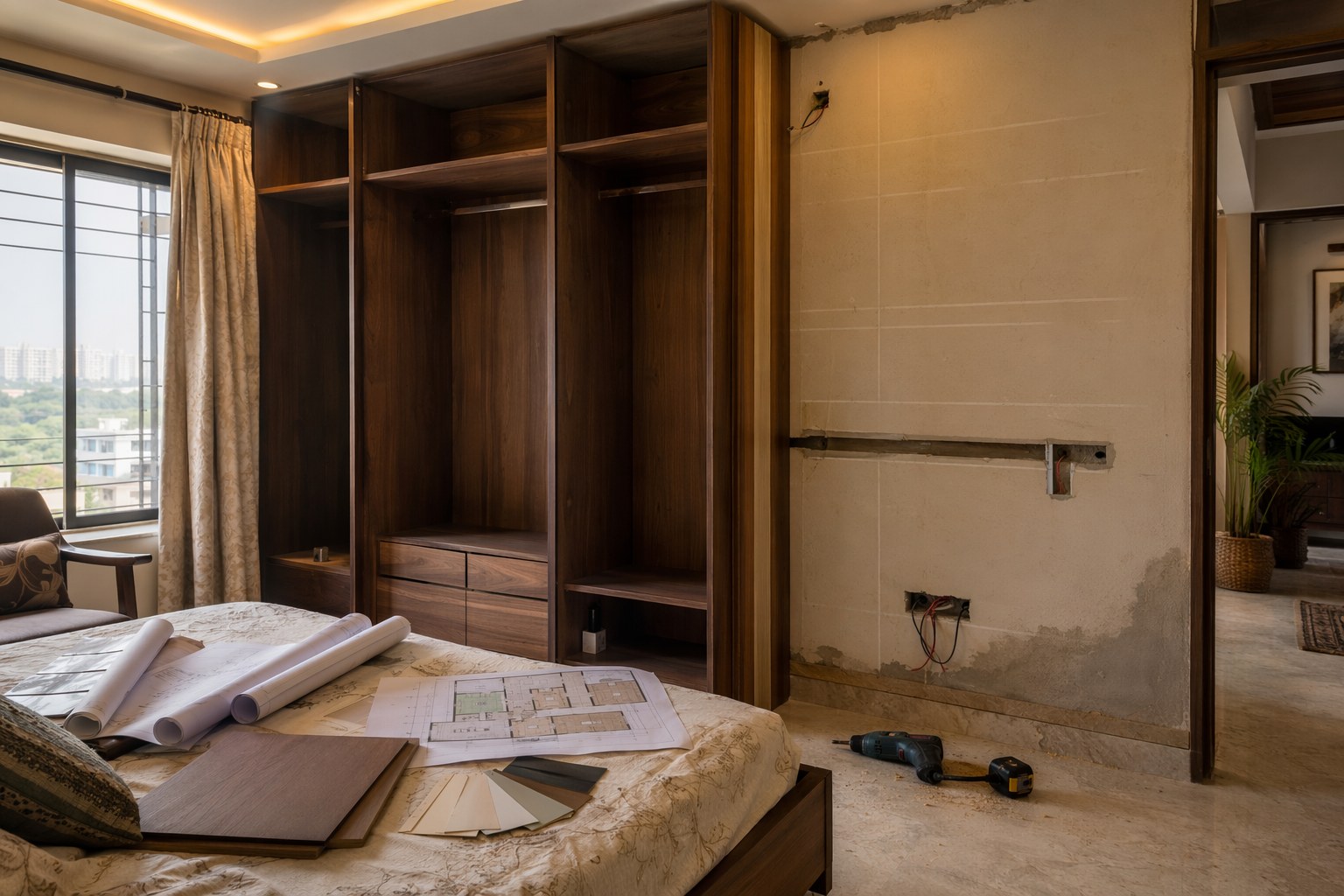
Built-In Wardrobes: Check Wall Rules Before You Spend
Built-In Wardrobes are becoming the default choice in new Hyderabad flats, but the work should not start with laminate samples and handle catalogues. It should start with the wall. A wardrobe fixed to the wrong wall, drilled into a restricted surface, or placed against a damp patch can turn a good-looking bedroom into a costly repair job.
That is the practical message we are hearing from site engineers, apartment associations and home owners across Gachibowli, Kondapur, Miyapur, Kokapet, Narsingi, Tellapur, Kompally and Uppal. Interior work is usually treated as a finishing decision. In reality, built-in wardrobe work is also a civil, plumbing, electrical and society-permission issue.
Our view is simple: do not pay a major advance for fixed wardrobes until the wall type, seepage risk, drilling permission, electrical points and society rules are checked on site.
Built-In Wardrobes Need Wall Checks Before Design Choices
Most owners first discuss shutter finish, loft height, mirror panels, sliding tracks and internal storage. Those decisions matter, but they come later. The first question is: what wall are you fixing the wardrobe to?
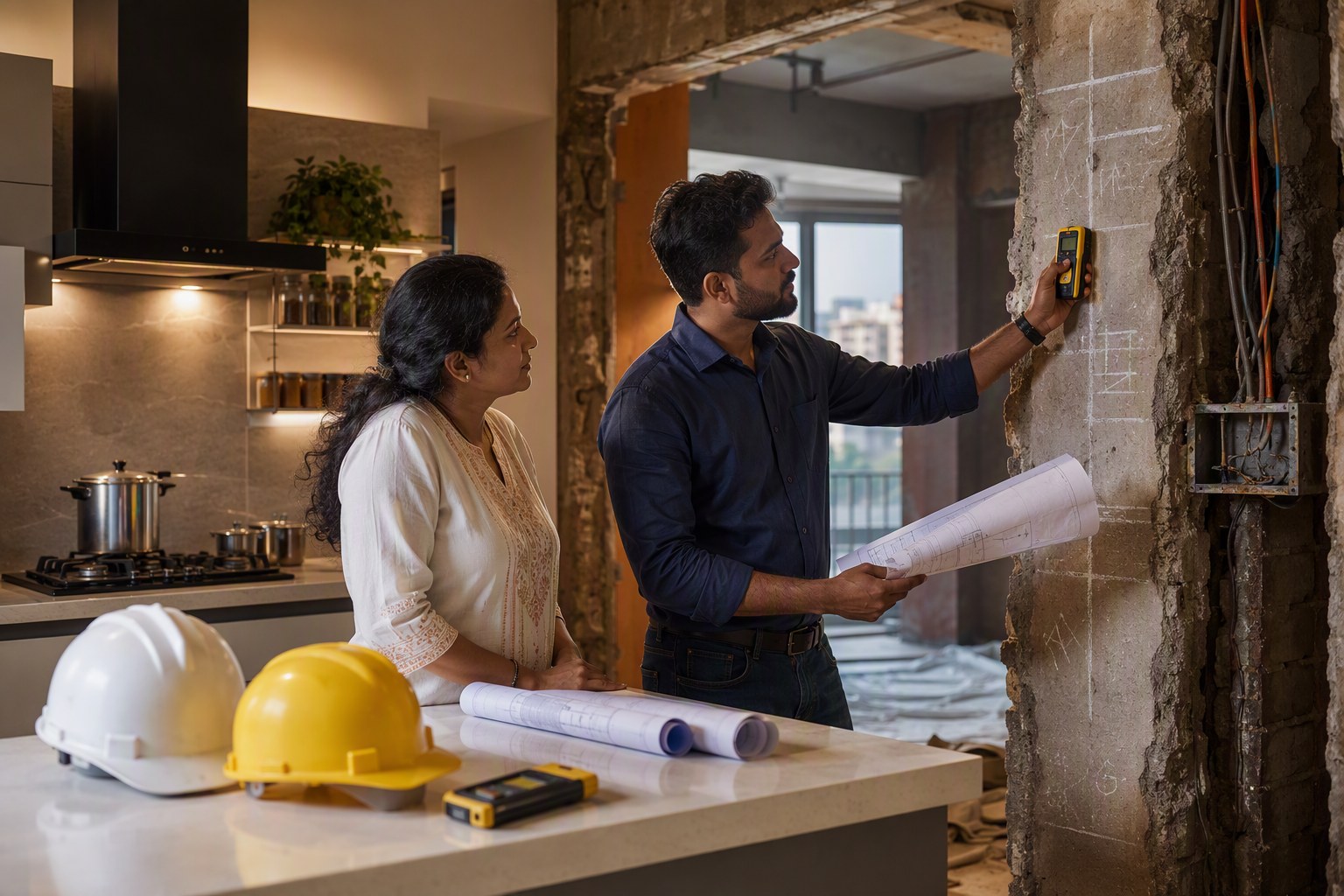
In many Hyderabad apartments, especially in high-rise projects around the Financial District, Nanakramguda, Kokapet and Narsingi belt, some bedroom walls may be RCC shear walls. Some may be block masonry. Some may have service ducts, concealed plumbing lines, AC drain routes or electrical conduits. A carpenter or modular vendor cannot assume every wall can take the same drilling depth and load.
Owners should ask the builder or maintenance office for the wall layout, as-built drawing or at least a written confirmation on drilling restrictions. If the society has already taken handover from the builder, the facility manager may have standard rules. In large gated communities, drilling time slots, lift usage, debris movement and contractor registration are also controlled.
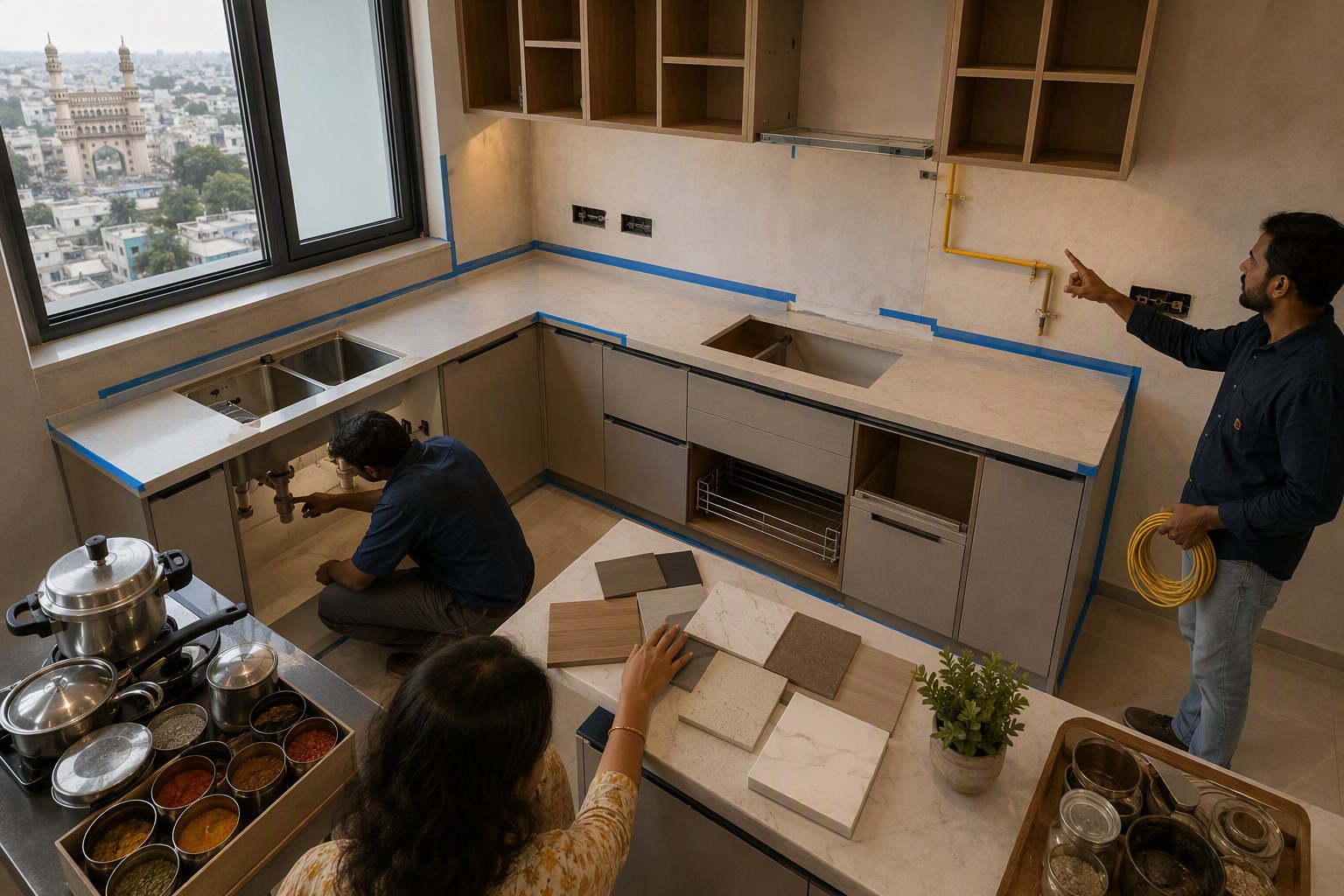
We have seen cases where residents in Serilingampally-side apartments ordered full-height wardrobes, only to learn later that the back wall had a recurring seepage issue from an attached bathroom line. Once the wardrobe is fixed, inspection becomes difficult. Removing shutters and carcass panels later is painful, especially when the family has already moved in.
Built-In Wardrobes And The Hyderabad Apartment Reality
Hyderabad homes are not all built the same way. A compact flat in an older Kukatpally apartment, a villa in Mokila, a high-rise unit in Kokapet, and a standalone building in Uppal will have very different wall behaviour. Even within one flat, one bedroom wall may be dry and safe, while another may sit against a bathroom, shaft or external elevation.
In our experience, wardrobe problems usually come from four places:
- Wrong wall selection: The wardrobe is placed against a wall with moisture, plumbing or cracks.
- Unsafe drilling: The vendor drills into a restricted RCC wall, column edge, beam zone or concealed service line.
- Poor ventilation: The unit is closed fully against a wall that needs breathing space.
- Society rule breach: Work starts without permission, creating complaints over noise, lift damage, debris or timing.
The practical risk is higher when the owner is not living at the site. NRIs, investors and buyers shifting from another city often approve designs on WhatsApp. That is convenient, but fixed furniture is not like buying a loose cot or table. Once a built-in wardrobe is anchored, mistakes become expensive to undo.
Check The Wall Type Before Approving Built-In Wardrobes
A wall may look plain after putty and paint, but it can hide different construction systems. Before a carpenter starts marking drill points, get clarity on these categories:
| Wall / Surface | What to Check | Why It Matters |
|---|---|---|
| RCC shear wall | Builder or society drilling permission | Deep drilling may be restricted in structural walls |
| Brick or block wall | Strength, plaster condition, cracks | Weak plaster can loosen fasteners and panels |
| Bathroom adjoining wall | Moisture marks, tile-side leakage, plumbing route | Wardrobe back panels can swell or smell if dampness continues |
| External wall | Rain exposure, window joint leakage, paint bubbling | Monsoon seepage can damage stored clothes and plywood |
| Service duct wall | Shaft position, pipes, maintenance access | Covering access points can create future repair disputes |
| Gypsum or lightweight partition | Stud position and load capacity | It may not safely hold a heavy built-in unit without support planning |
If the vendor says, “Sir, we do this everywhere,” do not treat that as technical clearance. Ask for a site-specific marking plan. The drilling locations, anchor type and load transfer should match the wall. This is basic workmanship, not overthinking.
Seepage Risk Can Spoil Built-In Wardrobes Faster Than Bad Design
Seepage is the silent enemy of fixed furniture. It may not be visible during a dry week. It may appear after the first heavy rain, after bathroom usage increases, or after the upstairs flat starts renovation. Owners in localities with many new handovers, such as Tellapur, Kollur, Bachupally, Kokapet and Kompally, should be cautious during the first monsoon cycle after possession.
Before placing a wardrobe, inspect the wall at skirting level, near bathroom corners, around window frames and behind existing loose furniture. Look for bubbling paint, powdery plaster, dark patches, fungus smell or repeated repainting. If the flat is newly painted, ask why. Fresh paint can hide a damp patch for a short period.
A carpenter may suggest a gap behind the wardrobe or a moisture-resistant board. Those can help in some cases, but they are not a cure for active leakage. If the wall is damp, fix the source first. That may involve plumbing testing, external wall treatment, bathroom waterproofing, window seal correction or builder warranty follow-up.
For rental flats, owners should be even more careful. Tenants may not report small dampness early. By the time a smell appears inside the wardrobe, the panels, hinges and clothes may already be affected.
Society Rules Matter Before Built-In Wardrobes Work Starts
Apartment associations in Hyderabad are becoming stricter about interior works. This is especially true in large communities in Gachibowli, Nallagandla, Kokapet, Manikonda, Kondapur and Miyapur, where hundreds of residents may be doing fit-outs at the same time after handover.
Common rules may cover:
- Permitted working hours for drilling and cutting.
- Prior intimation to the facility office.
- Use of service lift for material movement.
- Protection of lift panels, corridor tiles and lobby walls.
- Debris packing and disposal.
- Contractor ID submission and daily entry registration.
- Restriction on cutting, chasing or core drilling without written approval.
Owners sometimes feel these rules are irritating. I disagree. A proper rule book protects both the flat owner and the building. If a contractor damages a common wall or lift, the owner may be asked to pay. If drilling noise continues beyond permitted hours, neighbours can stop the work. That delay can disturb the whole move-in plan.
Before signing the final interior order, collect the society fit-out policy and share it with the wardrobe vendor. The vendor should price and plan the work with those limits in mind. If cutting is allowed only during certain hours, do not assume the work will finish in the same timeline promised at the showroom.
Do Property Checks Before Spending Heavily On Interiors
There is one more point many buyers ignore: do not spend heavily on fixed interiors until the property papers are clean and the possession status is clear. A built-in wardrobe cannot be shifted easily like a sofa. If a registration issue, title issue, builder handover issue or loan charge issue appears later, your interior spend gets locked inside the disputed asset.
As per the Verified.RealEstate database, Telangana has 3,076,153 prohibited properties recorded under Section 22-A. That number is a reminder that property due diligence is not a formality. It may not relate to your flat directly, but it shows why buyers must check records before committing large sums to immovable improvements.
For a resale flat, check the Encumbrance Certificate and registration trail before starting interior works. You can use our Encumbrance Certificate Search and EC Analyzer to review the transaction flow. If you want to check whether a property falls under prohibited property records, use the Section 22-A Prohibited Property Check.
For a new project, verify the project details through the RERA Project Lookup. If you are still at purchase stage, compare government market value through the Market Value / Guideline Value Search and estimate registration outgo with the Stamp Duty Calculator. If the SRO is unclear, the Find Your SRO Office tool can help you identify the relevant office.
These checks may sound unrelated to wardrobes, but they are linked by one common rule: fixed expenditure should follow verified ownership and safe possession.
Electrical And AC Planning Before Built-In Wardrobes
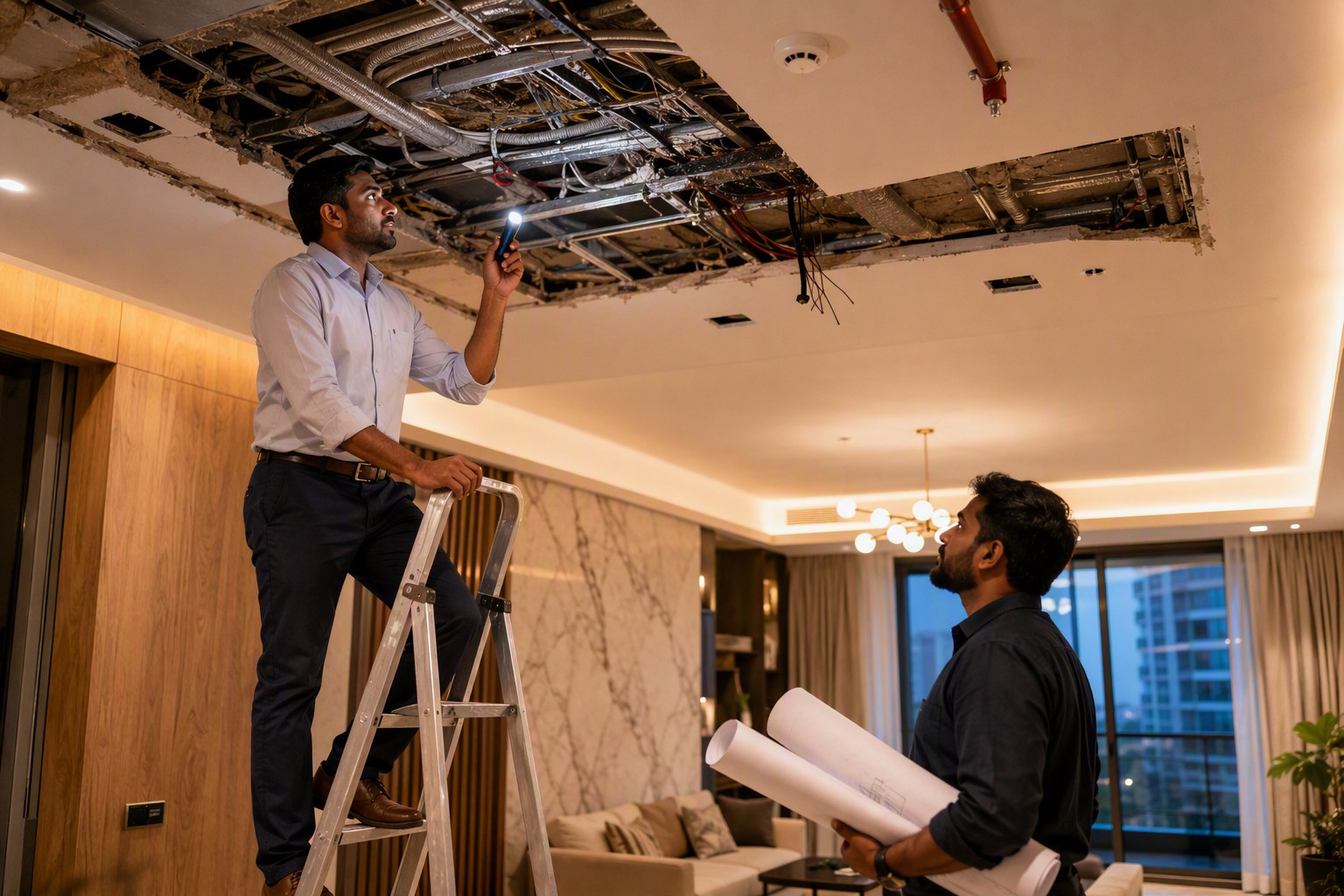
Wardrobes often clash with electrical planning. A bedroom wall may already have switchboards, AC drain lines, TV points, internet conduits, dressing mirror lights or a future study table point. If the wardrobe covers those points, the owner later pays for rework.
Before final measurements, mark every switch, socket, light point, AC route and data point on the wall. Decide whether the wardrobe needs internal lights, a dressing mirror plug point, locker power access or space for a dehumidifier. The electrician and wardrobe vendor should inspect the site together, not separately.
In many Hyderabad flats, owners ask for wardrobes up to the slab with loft storage. That can be useful, but check the false ceiling height, AC indoor unit position and curtain pelmet line. A wardrobe shutter that hits a curtain rod or AC unit is a common design mistake.
What Owners Should Put In The Wardrobe Work Order
A verbal promise is weak when carpentry problems begin. Put practical details in the work order or quotation. It need not be complicated. It should clearly record what is being fixed, where it is being fixed, and who is responsible if site conditions are different from what was assumed.
- Room-wise wardrobe location and wall reference.
- Material specification for carcass, shutters, backing and edge banding.
- Hardware brand or equivalent standard, without vague wording.
- Ventilation gap or back-panel treatment, if required.
- Responsibility for checking seepage before installation.
- Drilling method and restriction compliance.
- Society permission responsibility and work timing.
- Damage responsibility for tiles, flooring, skirting, walls and lifts.
- Post-installation service period and complaint process.
If you are entering into a written understanding with a contractor, our Legal Document Generator can help prepare a cleaner draft. For land or independent house cases where survey identity is being checked, the Survey Number Finder and Property Verification Tool are useful starting points.
Independent Houses Need A Different Built-In Wardrobes Checklist
Apartment owners mainly deal with society rules and structural drilling restrictions. Independent house owners in areas like Bandlaguda Jagir, Peerzadiguda, Boduppal, Nagole, Shamshabad, Adibatla, Mokila and Shankarpally should look at a different set of issues.
Ground-floor bedrooms may have rising dampness from soil contact, poor plinth protection or bathroom leakage. First-floor rooms may face roof slab seepage. External walls may take rain depending on elevation exposure. If the house is old, the wall may not be straight enough for factory-finished modular units. A site carpenter may adjust better, but only if the wall is dry and stable.
For villas and independent houses, also check whether any future electrical rewiring, plumbing repair or wall-breaking work is planned. Do not build a permanent wardrobe over a wall that may need service access. If the property is still under construction, final plaster curing and dampness observation should be completed before wardrobes are closed.
Final Word On Built-In Wardrobes Before You Spend
Built-in wardrobes make sense in Hyderabad homes because they save space and give a cleaner bedroom layout. But they are not a quick decor purchase. They are fixed furniture attached to a building surface. That building surface must be suitable.
My advice to owners is direct: take one slow site visit before paying the main advance. Carry the floor plan. Speak to the facility manager. Check the wall after rain if possible. Ask the vendor to mark drilling points. Confirm society rules. Verify property documents if possession or resale title is still pending.
Good wardrobe work begins before the first board is cut. It begins with the wall.
Frequently Asked Questions
Should I install built-in wardrobes immediately after possession?
Not blindly. First check wall dampness, builder snags, bathroom leakage, electrical points and society fit-out rules. If the flat is newly handed over, observing the wall through one rain spell is often sensible.
Can a carpenter drill into any bedroom wall?
No. Some walls may be RCC shear walls, service duct walls or walls with concealed pipes and conduits. Get builder or society clearance before deep drilling or chasing.
What should I check if the wardrobe wall is next to a bathroom?
Check for damp patches, smell, paint bubbling, plumbing leakage and tile-side seepage. If there is active moisture, fix the leakage before closing the wall with a wardrobe.
Do I need society permission for wardrobe work in Hyderabad apartments?
Usually yes, especially in gated communities. Societies may control drilling hours, lift usage, debris disposal, contractor entry and common-area protection.
Should I verify property documents before spending on interiors?
Yes. For resale flats and new purchases, check EC, RERA details where applicable, SRO details and prohibited property status before making large fixed interior investments.