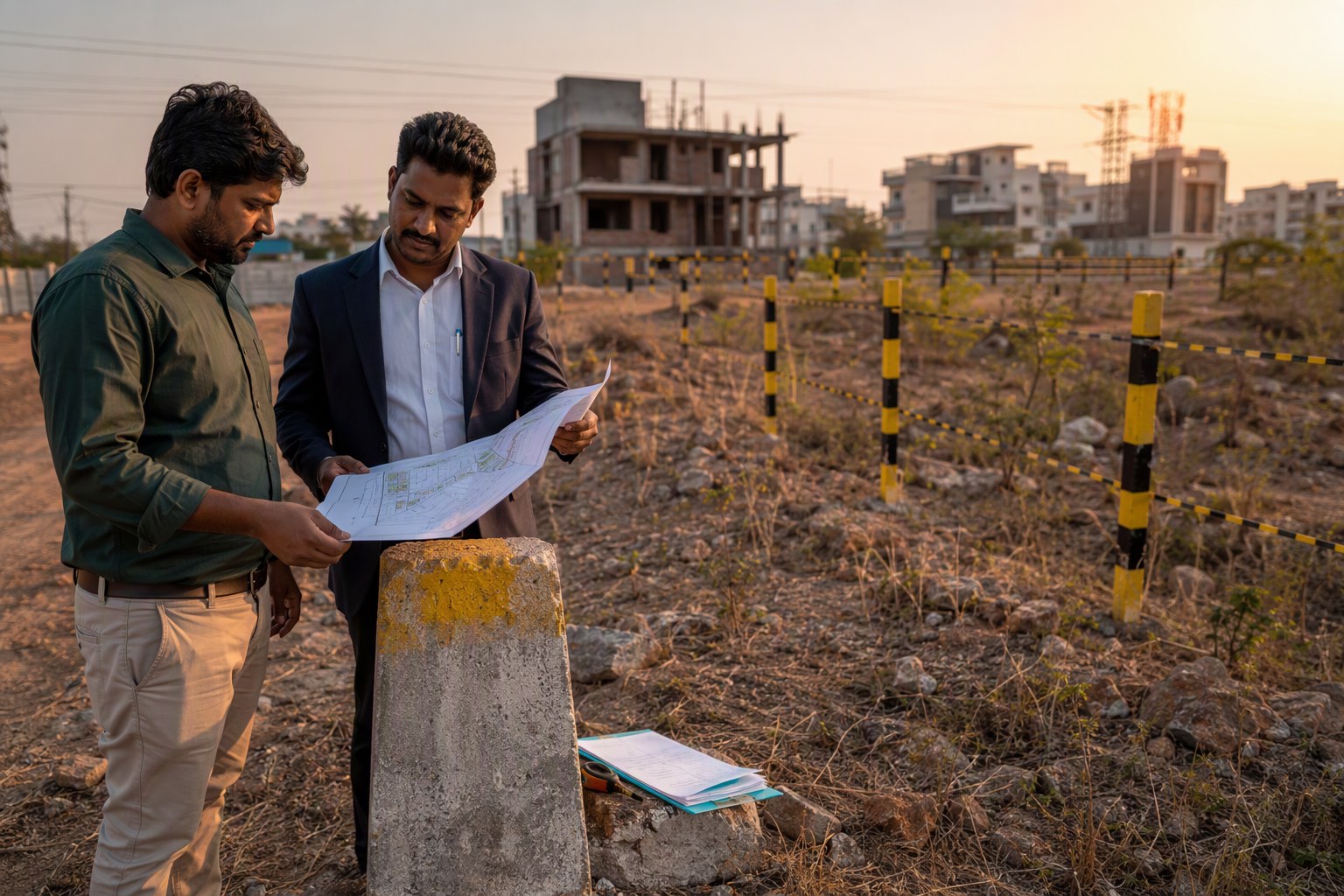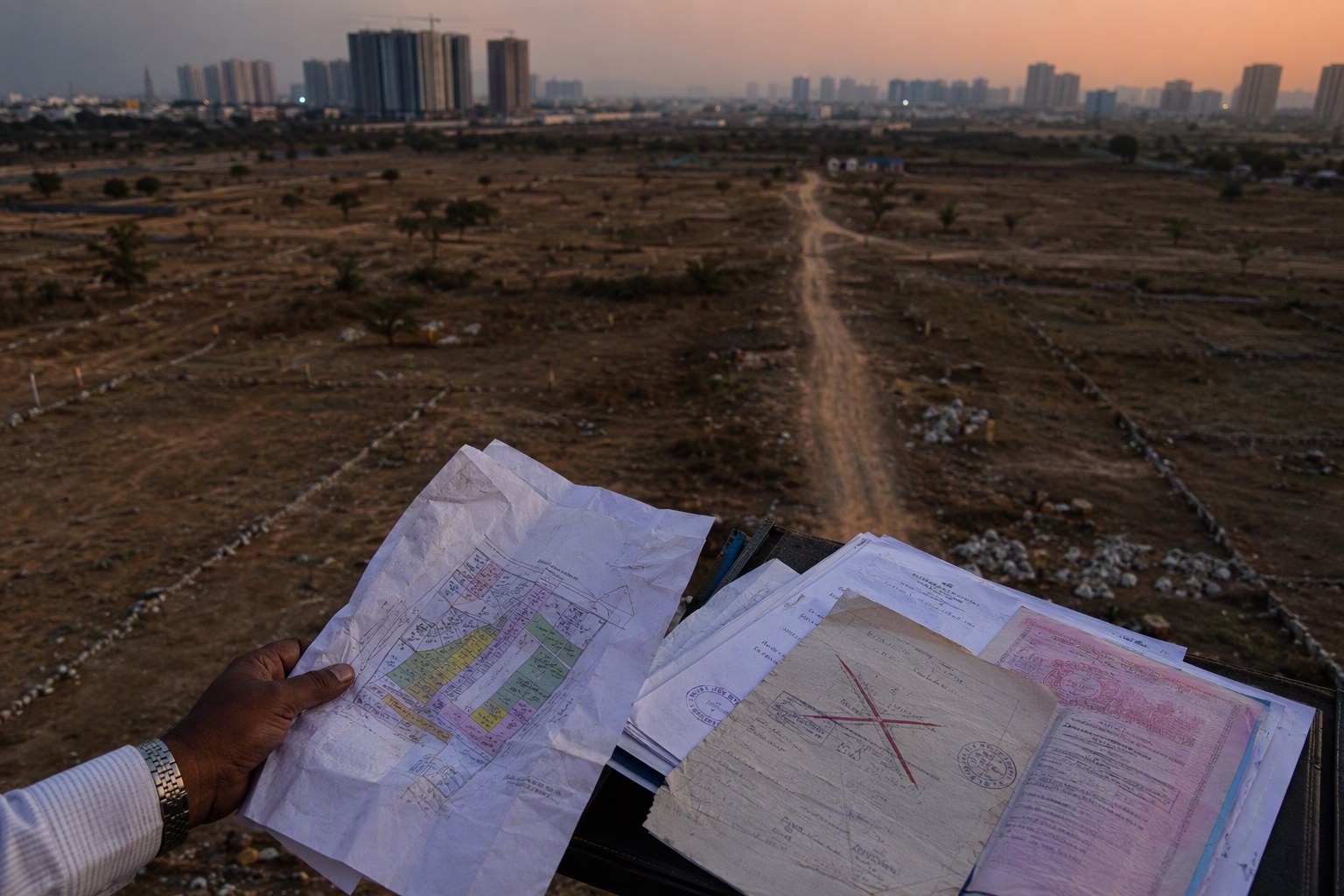
Bank Auction Homes in Telangana are attracting sharp attention from Hyderabad investors, especially in areas where resale supply is tight and regular sellers are quoting aggressively. But the headline discount is only one side of the story. The safer question is not whether the auction price looks attractive. It is whether the title, Encumbrance Certificate, possession status, CERSAI charge, SRO records and Section 22-A status can survive a hard legal check.
As per latest IGRS-linked property data available with Verified.RealEstate, Telangana has 30,76,153 prohibited property entries under Section 22-A. That number should make every auction buyer slow down. A bank may have the right to recover dues from a borrower, but the buyer still has to live with registration issues, possession disputes, family claims, land classification problems and survey-number mismatches if they were missed before bidding.
Our view is simple: a bank auction is not a shortcut to safe property. It is a shortcut only if your document verification is stronger than the discount temptation.
Bank Auction Homes in Telangana: Why the Discount Can Be Misleading
Bank auction notices usually come with language like “as is where is”, “as is what is” and “whatever there is”. In plain Hyderabad market language, that means the bank is selling its secured interest, not giving you a comfort certificate on every legal, revenue and possession issue. If there is a tenant, an old family dispute, a society maintenance claim, a missing link document or a 22-A block at registration stage, the buyer has to deal with it.
We have seen investors get excited over flats in Kondapur, Miyapur, Nizampet, Kukatpally, Uppal, LB Nagar, Kompally and Manikonda because the auction reserve price looks lower than the surrounding resale quote. In premium pockets like Kokapet, Narsingi, Gachibowli and Financial District side, even a small pricing gap can feel attractive. But these are also localities where documentation history can be layered: builder land aggregation, development agreements, UDS calculation, mortgage releases, RERA registration, society handover and multiple prior loans.
In land-linked properties, the risk can be sharper. Around Gandipet mandal, Rajendranagar mandal, Serilingampally mandal, Shankarpally side, Maheshwaram, Shamshabad, Patancheru and Shadnagar belts, a buyer must connect the auction notice to the correct survey number, village, mandal, SRO and land classification. If one digit in the survey number is wrong, or if the extent shown in the bank notice does not match pahani, Dharani or registration records, the bargain can turn into a long file chase.
Bank Auction Homes in Telangana Need a 22-A Check First
Section 22-A risk is not a theoretical issue in Telangana. With 30,76,153 prohibited property entries in the state database, any auction property must be checked before EMD payment, not after winning the bid. A property may be affected due to government land classification, assigned land, endowment concerns, waqf-related entries, court attachments, ceiling issues or other prohibitory categories reflected in registration systems.
This is where many auction buyers make a costly assumption. They think, “If a bank is auctioning it, the property must be clean.” That assumption is unsafe. Banks usually lend after due diligence, yes, but lending due diligence and purchase due diligence are not the same. A loan file may be old. A 22-A entry may have appeared later. A mutation may not have been updated properly. A borrower may have offered collateral that is physically different from what is reflected in revenue records.
Before bidding, run a Section 22-A check using Section 22-A Prohibited Property Check. If it is land, also verify the survey number through Survey Number Finder. For a flat, check whether the undivided share and parent land are free from prohibitory flags. In our experience, apartment buyers often check only the flat number and ignore the land below the building. That is a weak check.
Start With EC, Not With the Auction Price
The Encumbrance Certificate is the first working document for any bank auction home in Telangana. It tells you the registered history: sale deeds, mortgages, releases, gift deeds, partitions, court orders if registered, and other recorded transactions. It will not show every private dispute, but it is still the most practical starting point.
Use Encumbrance Certificate Search to pull the EC for the correct period and property details. Then read it like a chain, not like a certificate. The last owner in the EC must match the borrower or mortgagor named in the bank auction notice. The mortgage entry must match the bank or financial institution conducting the sale. If the EC shows older mortgages without release deeds, ask for clarity in writing. If the EC shows a sale deed followed quickly by a loan and then default, examine whether possession and title ever settled properly.
A clean-looking EC is useful, but it is not the full story. In Telangana, especially for plotted land and old houses, the EC must be compared with link documents, pahani or revenue record, municipal tax records, layout approval, building permission and SRO jurisdiction. The EC Analyzer can help you read transaction patterns, but a lawyer should still review the chain documents before you bid seriously.
Possession Status: Symbolic Possession Is Not the Same as Keys in Hand
This is one of the biggest practical issues in bank auction homes in Telangana. The auction notice may say the bank has symbolic possession or physical possession. These two are very different in real life.
Symbolic possession usually means the bank has taken legal steps under recovery law and issued notices, but the property may still be occupied by the borrower, tenant, relatives, caretaker or even an unknown person. Physical possession means the bank claims actual control of the property. Even then, a site visit is needed. Locked premises, hostile occupants and pending local disputes are not rare.
For a flat in places like Gachibowli, Nallagandla, Bachupally or Pragathi Nagar, check with the apartment association. Ask about unpaid maintenance, corpus dues, electricity arrears, water charges, parking allotment, clubhouse transfer and any dispute with the builder. For an independent house in Uppal, Boduppal, Alwal, Malkajgiri or LB Nagar, verify municipal tax, electricity service number, water connection, access road and physical boundaries. For land near Shamshabad, Maheshwaram or Shankarpally, walk the boundaries and speak to neighbouring pattadars if possible.
Do not rely only on photographs in the auction notice. A site visit in the morning and another at a different time can reveal occupancy patterns. If the bank refuses inspection or gives vague answers on possession, treat that as a serious warning sign.
Check CERSAI and Multiple Mortgage Risk
Many buyers stop after EC because they assume every mortgage will reflect in registration records. That is not always enough. CERSAI helps identify security interests created in favour of lenders. For bank auction homes, a CERSAI search is a sensible layer, especially where the borrower has dealt with multiple lenders.
Use CERSAI Charge Check along with EC review. If you find another charge, ask whether it has been satisfied, released or legally addressed. A secured creditor conducting auction should have authority to sell, but buyers must understand priority of charges and whether any other institution may raise a claim later.
Also ask for the bank’s possession notice, demand notice, sale notice, valuation summary if shared, reserve price details, property schedule and any available title papers. Some banks provide documents only at branch level and only during a limited inspection window. Go prepared with a checklist, not just an EMD receipt.
Guideline Value, Stamp Duty and the Real Cost After Winning
Auction buyers often compare only bid price with neighbourhood resale asking price. That is incomplete maths. Registration cost, stamp duty, transfer charges, society dues, legal fee, renovation, eviction effort if any, and time cost all affect the final return.
Before bidding, check the government market value or ready reckoner style benchmark through Market Value / Guideline Value Search. Then estimate registration outgo using Stamp Duty Calculator. If the property is a flat, calculate whether the value split between land share and building is logical. For construction-heavy assets, Composite Value Calculator and Building Value Calculator can help you form a practical view.
Do not assume the bank’s reserve price is the final acquisition cost. Your final cost is the bid amount plus statutory and practical costs. If the property requires litigation or eviction, the “discount” may disappear before you can rent or resell it.
Bank Auction Homes in Telangana: Due Diligence Checklist Before EMD
Here is the minimum checklist I would follow before paying earnest money for a bank auction property in Hyderabad or anywhere in Telangana.
| Check | What to verify | Why it matters |
|---|---|---|
| Title chain | Sale deed, link documents, partition/gift/release deeds where applicable | Confirms whether the borrower had saleable title |
| EC | Mortgage, release, sale, court or attachment entries | Shows registered encumbrances and ownership flow |
| 22-A status | Prohibited property entry against survey number or property | Can block registration or create legal exposure |
| Possession | Symbolic or physical possession; actual site condition | Decides whether you can use, rent or sell after purchase |
| CERSAI | Existing security interests and charge details | Helps spot multiple lender risk |
| SRO and jurisdiction | Correct SRO, village, mandal and property schedule | Prevents registration-stage surprises |
| Approvals | Layout, building permission, RERA where applicable | Checks planning and development compliance |
For SRO mapping, use Find Your SRO Office and SRO Village Directory. For a broader review, run the property through Property Verification Tool. If the asset is part of an ongoing or recently completed project, check project details using RERA Project Lookup.
What Investors Should Ask the Bank in Writing
Verbal answers from branch officials are not enough. Ask for written clarification where the issue is material. At minimum, seek copies or inspection of the title deeds deposited with the bank, the mortgage creation record, possession notice, sale notice, property schedule, reserve price basis if available, and known litigation details if any.
Ask whether the bank is selling with physical possession or symbolic possession. Ask whether any borrower, guarantor, tenant or third party is in occupation. Ask if any stay order has been received. Ask whether previous auctions failed and why. A failed auction is not automatically a red flag, but the reason matters. Sometimes the price was high. Sometimes bidders found a document issue.
In our experience, serious investors in Hyderabad do not bid on every auction notice. They shortlist only those where documents, possession and registration path are reasonably visible. That discipline is what separates investment from speculation.
Local Risk Patterns We See Around Hyderabad
In the western corridor, around Kokapet, Narsingi, Gachibowli, Nanakramguda and Tellapur, buyers must be careful with development agreements, UDS, builder dues and project approvals. In Serilingampally mandal localities like Kondapur, Hafeezpet and Miyapur, older apartments may have complex mortgage histories and society-level dues.
In northern and north-western pockets like Kompally, Bachupally, Dundigal side and Medchal belt, plotted layouts need careful checks on layout approval, road width, land use and survey boundaries. Tools like Road Width Check and Land Use Zone Finder are useful before treating a plot as development-ready.
In the airport and pharma-corridor direction, including Shamshabad, Maheshwaram and nearby villages, auctioned land must be checked against land classification, access, conversion status and government restrictions. Around older city and eastern localities like Uppal, Ramanthapur, Nagole and LB Nagar, occupancy and old title documents often require patient verification.
The Final View: Discount Is Real Only After Documents Pass
Bank auction homes in Telangana can be attractive for disciplined buyers. The opportunity is real when the title chain is traceable, EC is consistent, 22-A status is clear, possession is manageable, SRO details match and the final cost still makes sense after stamp duty and repairs. Without that, the discount is only a headline.
My advice to investors is blunt: do not fall in love with the reserve price. Fall in love with clear documents. A good auction buy should allow you to sleep peacefully after registration, not spend months running between the bank, SRO, lawyer, police station, society office and revenue office.
Telangana’s property market rewards speed, but only after verification. With 30,76,153 Section 22-A prohibited property entries in the state dataset, the buyer who checks first is the buyer who survives the auction market.
Frequently Asked Questions
Are bank auction homes in Telangana safe to buy?
They can be safe if the title chain, EC, possession, CERSAI charge and Section 22-A status are checked before bidding. Do not assume the bank has cleared every buyer-side risk.
What is the biggest risk in a bank auction property?
The biggest practical risks are unclear possession, pending encumbrances, defective title, wrong property schedule and 22-A prohibition. Any one of these can affect registration, resale or actual use.
Should I check EC before paying EMD?
Yes. EC should be checked before paying EMD. It helps confirm ownership flow, mortgage entries, releases and other registered transactions connected to the property.
What does symbolic possession mean in a bank auction?
Symbolic possession means the bank has taken legal possession steps, but the property may still be occupied. Physical handover may require follow-up action, so inspect the site carefully.
Why is a 22-A check necessary for auction properties?
Section 22-A entries can restrict registration or signal serious land issues. Telangana has 30,76,153 prohibited property entries, so this check should be done before bidding.