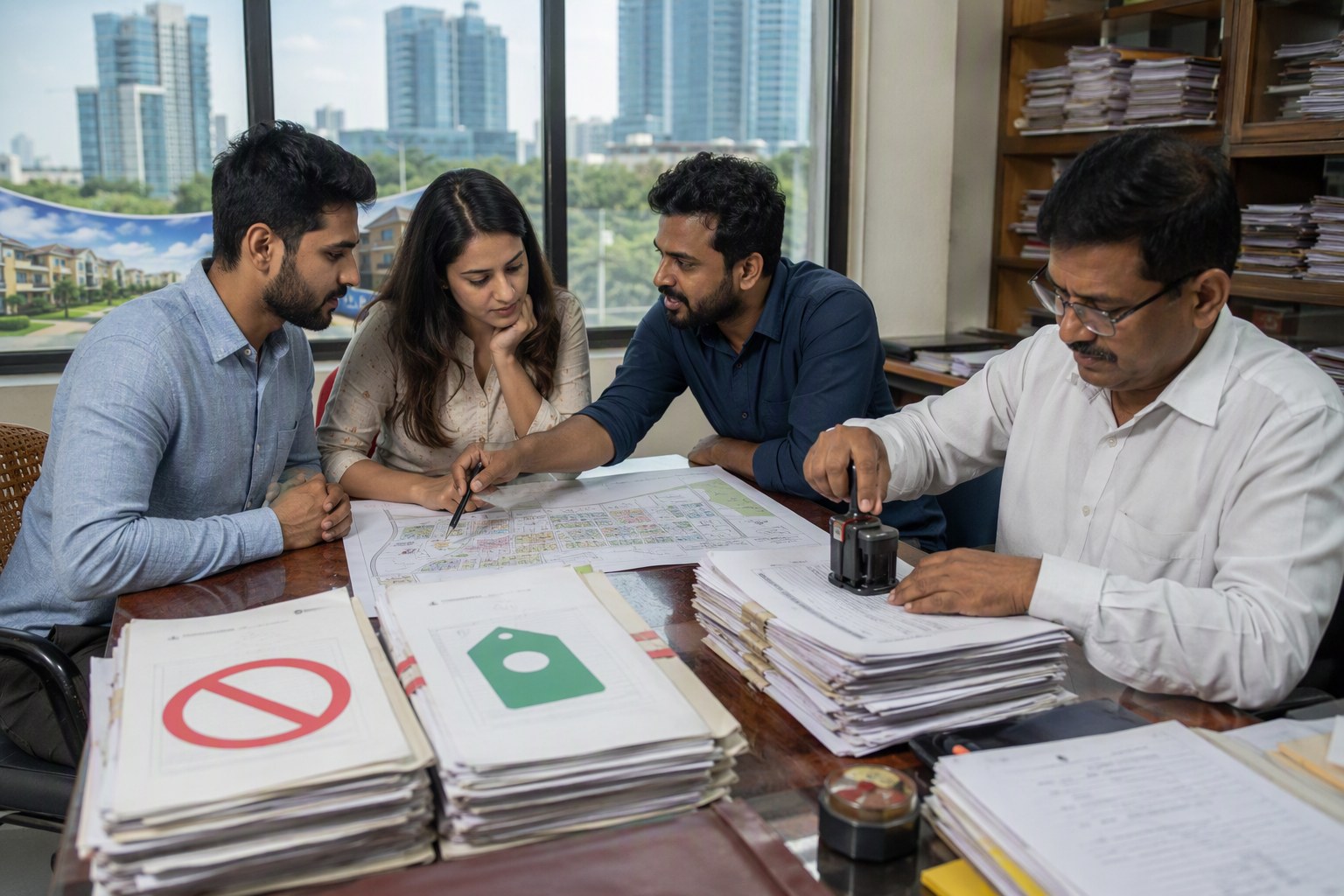
How 30.76 Lakh 22-A Entries Are Shifting Telangana Demand
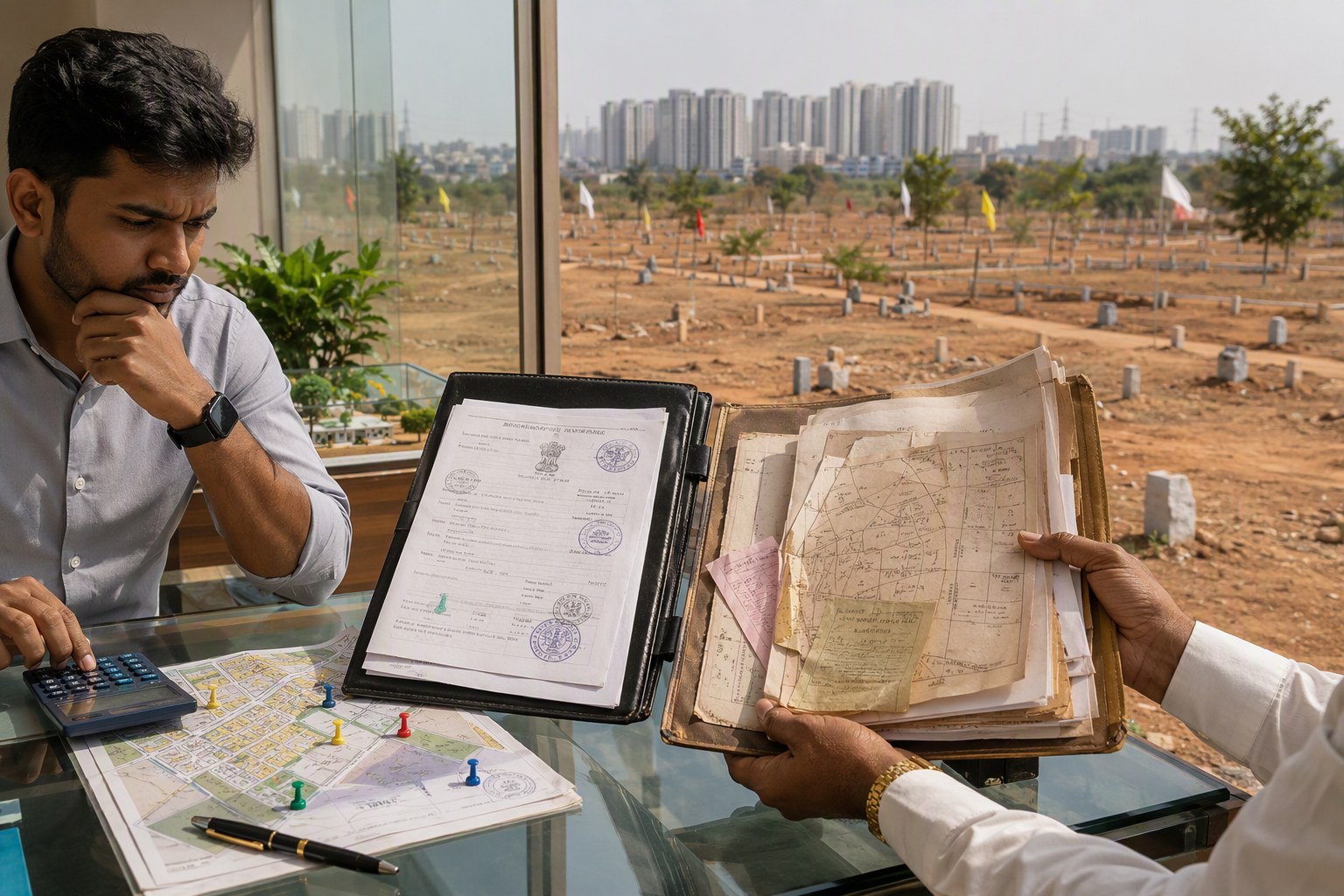
30.76 lakh 22-A entries are no longer just a legal-data point in Telangana property transactions. They are actively changing what buyers prefer, what bankers are willing to fund, and how Hyderabad families judge risk before paying token advance. As per latest IGRS data available with us, Telangana has 3,076,153 prohibited property records under Section 22-A. That one number is enough to explain why many buyers are becoming cautious about open plots with unclear history and are moving towards cleaner-title flats, approved layouts and resale homes where documents can be checked properly.
We have seen this shift clearly in Hyderabad’s active corridors: Serilingampally, Gandipet, Shankarpally, Patancheru, Medchal, Uppal, Hayathnagar, Abdullapurmet, Maheshwaram, Shamshabad and Rajendranagar. Buyers are still interested in land, no doubt. But the old habit of buying a plot because “area developing fast” is weakening. Today, a serious buyer asks: Is this survey number clean? Is it in 22-A? Is the layout approved? Is there an EC gap? Which SRO handles this village? Can a bank fund it?
Our view is simple: the Telangana buyer has not become less ambitious. The buyer has become less tolerant of title risk.
Why 30.76 Lakh 22-A Entries Matter to Telangana Buyers
Section 22-A is not a small footnote in the registration process. If a property falls under prohibited category, the Sub-Registrar Office may refuse registration or the transaction may get stuck at the most painful stage: after buyer has mentally committed, negotiated, arranged funds and sometimes even paid advance.
The figure of 3,076,153 prohibited property records tells us that legal-risk awareness is not a niche issue meant only for lawyers and document writers. It affects ordinary homebuyers in Gachibowli, Miyapur, Tellapur, Narsingi, Kokapet, Bachupally, Kompally, Pocharam, Adibatla and many fast-growing mandals around the Outer Ring Road.
In Telangana, land records are deeply connected to survey numbers, village records, pahanis, Dharani entries, old pattadar passbooks, assignment conditions, court disputes, endowment claims, government land classifications and SRO-level registration restrictions. A plot may look perfectly normal on site. There may be a compound wall, approach road and neighbouring houses. Still, if the underlying survey number has a restriction, the buyer’s plan can collapse.
That is why our first recommendation to buyers is not a site visit. It is a document check. Start with the Section 22-A Prohibited Property Check, then verify the survey number using the Survey Number Finder, and then check registration history through the Encumbrance Certificate Search.
30.76 Lakh 22-A Entries Are Pushing Demand Towards Cleaner Assets
The demand shift is visible in three buckets: completed flats with clear builder documentation, HMDA-approved or DTCP-approved layouts where records are easier to verify, and resale homes with a traceable chain of title. This does not mean every flat is safe or every plot is risky. That would be a lazy reading. The real difference is document visibility.
In apartment purchases, buyers usually get a larger document set: sale deed chain, link documents, building permission, occupancy status where applicable, RERA registration for eligible projects, sanctioned plan, UDS details, association records and bank loan approval trail. In plotted land, especially in revenue layouts or older village extensions, the buyer may have to individually verify the survey number, pahani trail, mutation, land classification, layout permission, road access, conversion status and registration eligibility.
That extra work is not impossible. But many end-users do not have the patience or legal support for it. They prefer a property where the verification path is clearer.
What we are seeing in Hyderabad micro-markets
- Serilingampally and Kondapur: End-users prefer apartments and gated communities where title documents are already tested by banks and previous buyers.
- Gandipet, Kokapet and Narsingi: Premium buyers still like land, but they ask sharper questions on survey number, layout permission and access road.
- Shankarpally and Mokila: Plot buyers are cautious about village-wise records, especially when a seller pushes for quick token without document sharing.
- Patancheru and Kollur side: Buyers compare approved plotted developments with resale flats because loan eligibility and registration clarity matter.
- Medchal, Kompally and Dundigal belt: Families buying for long-term use now check SRO, village limits and land-use classification more actively.
- Maheshwaram, Adibatla and Shamshabad: Industrial and airport-side growth attracts investors, but serious buyers are insisting on clean title and approvals.
In our experience, the buyer who once asked only “What is the rate per square yard?” now asks “Will this register without objection?” That is a healthy change.
How Section 22-A Risk Changes Buyer Behaviour
When a large number of prohibited property records exists in the system, it changes behaviour at every stage of the property journey. The buyer becomes more cautious. The seller is forced to produce better documents. Agents who earlier relied on location hype now have to answer legal questions. Banks become stricter. Even family elders who advised buying land blindly are now asking for EC and Dharani screenshots.
The effect is not uniform across Telangana. In core Hyderabad, where apartments dominate, the shift is towards RERA-registered projects and completed resale flats. In outer growth mandals, the shift is towards approved layouts and plotted ventures with clear permissions. In semi-urban villages, buyers are pausing before purchasing agricultural land unless pahani, Dharani and registration status are clean.
For flats, buyers should use the RERA Project Lookup for eligible projects and compare guideline values through the Market Value / Guideline Value Search. For plots, the same guideline-value check helps, but it is not enough. A low or attractive price is meaningless if registration is blocked or if the survey number has a restriction.
| Asset Type | Buyer Comfort Level | Main Checks Before Advance |
|---|---|---|
| Ready flat in Hyderabad | Higher, if title chain and permissions are available | Sale deed chain, EC, building permission, association records, loan history |
| Under-construction apartment | Depends on builder, RERA status and approvals | RERA record, sanctioned plan, land title, payment schedule, agreement terms |
| Approved plotted layout | Good, if approval and survey records match | Layout approval, survey number, 22-A check, road width, SRO jurisdiction |
| Unapproved or revenue plot | Lower, unless documents are exceptionally clear | Pahani, Dharani, mutation, land conversion, 22-A status, legal opinion |
| Agricultural land | Case-specific | Title chain, pattadar details, land classification, access, restrictions, buyer eligibility |
Why Flats Are Gaining From 30.76 Lakh 22-A Entries
Flats are benefiting because they reduce the number of unknowns for many buyers. In a good apartment transaction, the land has already gone through one round of scrutiny by the developer, architect, approval authority, bankers and earlier purchasers. That does not make it risk-free. But the risk is usually easier to identify.
In places like Gachibowli, Nallagandla, Kondapur, Manikonda, Tellapur, Miyapur and Bachupally, working families often prefer a flat because the transaction is more structured. There is a sale agreement, payment schedule, bank valuation, EC, UDS share, apartment association or builder handover process. A buyer can still make mistakes, but the document route is familiar.
Compare that with a plot in a village pocket where boundaries are shown by stones, the seller says “all papers are there”, and the buyer gets only photocopies of old link documents. If the survey number later appears in prohibited records, the buyer’s bargaining power drops sharply. This is exactly why legal-risk awareness is sending many end-users towards cleaner-title housing.
Before budgeting for a flat, buyers can estimate registration cost using the Stamp Duty Calculator and evaluate combined land-building value through the Composite Value Calculator. For resale flats, I would also check mortgage or charge history through the CERSAI Charge Check where applicable.
Approved Layouts Are Also Winning, But Only When Records Match
It would be wrong to say buyers are abandoning plots. Telangana families still love land. A plot gives emotional comfort: one day we can build our own house, keep setbacks as per choice, construct floor by floor, or pass it to children. That thinking is very strong in Hyderabad and surrounding districts.
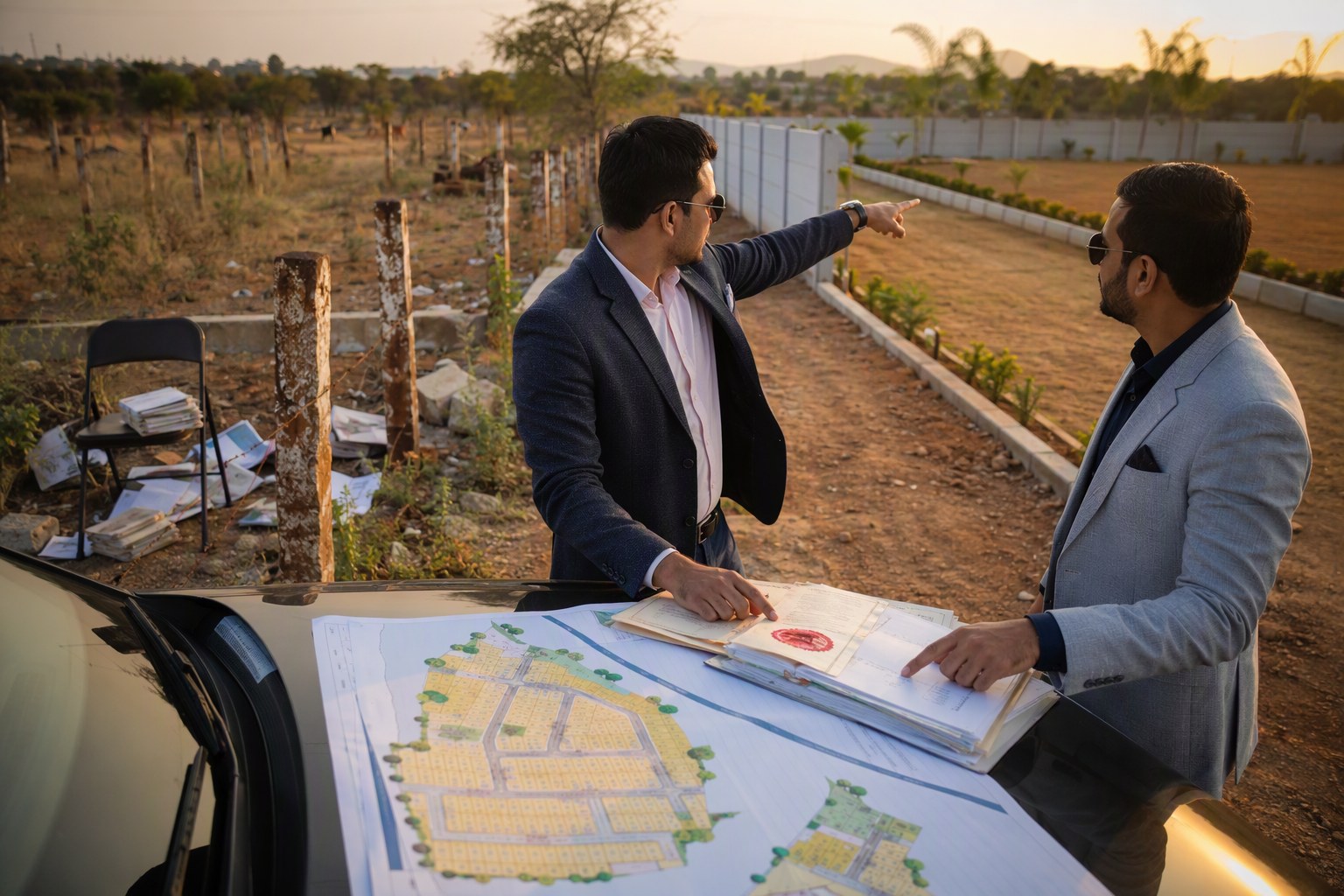
But the acceptable plot has changed. Buyers are preferring layouts where the approval can be independently checked, road widths are shown clearly, open space reservation is marked, and the survey number tallies with revenue and registration records. In HMDA and DTCP-style layout discussions, buyers are asking for LP number, approved plan, ownership documents, link deeds and current EC before paying advance.
For layout-level review, use the Road Width Check, OSR Calculator and Land Use Zone Finder. These checks do not replace a lawyer’s opinion, but they reduce blind spots. In a market affected by 30.76 lakh 22-A entries, blind trust is expensive.
The red flags we take seriously
- Seller refuses to share survey number before advance.
- Only photocopies are available, no originals for verification.
- EC is shown for a short period instead of full available chain.
- Village name in documents does not match the SRO or current administrative records.
- Plot is sold as “near HMDA area” without clear approval.
- Road access is based on oral assurance, not shown in approved plan or documents.
- Price is attractive but seller wants immediate cash token.
One practical point: do not confuse market excitement with legal safety. A booming area can still have problematic survey numbers. A quiet area can have clean title. Location and title are two separate checks.
Resale Homes With Clear Chain Are Becoming Safer Bets
Resale flats and independent houses are getting renewed attention because they offer a visible ownership chain. A buyer can inspect previous sale deeds, bank release letters, property tax records, electricity service history, water connection, EC and possession trail. In older Hyderabad localities like Kukatpally, Ameerpet, Himayatnagar, LB Nagar, Uppal and Secunderabad pockets, resale assets often attract families who want immediate occupation and lower construction uncertainty.
But resale also needs discipline. A flat may have an old loan not properly closed. A family property may have missing legal heirs. An independent house may have extra construction outside permission. A property may be in one SRO boundary while the buyer assumes another. Use the Find Your SRO Office and, if you are tracking a shortlisted property over time, the Property Change Tracker.
We also recommend using the EC Analyzer after obtaining the encumbrance certificate. Many buyers download an EC but do not read it properly. Names, document numbers, mortgage entries, release deeds and gaps matter.
What This Means for Sellers and Developers
The 30.76 lakh 22-A entries story is not only about buyers becoming careful. Sellers and developers also need to adapt. A clean-title seller can command more confidence if documents are arranged properly. A developer with transparent approvals can close faster than a competitor who says “sir, don’t worry, everything is managed”. That line does not work like before.
For landowners in mandals like Shankarpally, Moinabad, Chevella, Maheshwaram, Kandukur, Ibrahimpatnam, Medchal and Patancheru, document readiness is now part of marketability. Keep link documents, pattadar details, mutation records, EC, tax receipts, layout papers and legal opinion ready. If the property has any restriction, address it before marketing. Hiding it will only waste time and damage credibility.
For builders, clarity around land title, RERA status, permissions and handover commitments is now a selling point. Buyers are not only comparing amenities. They are comparing legal comfort.
A Practical Telangana Buyer Checklist
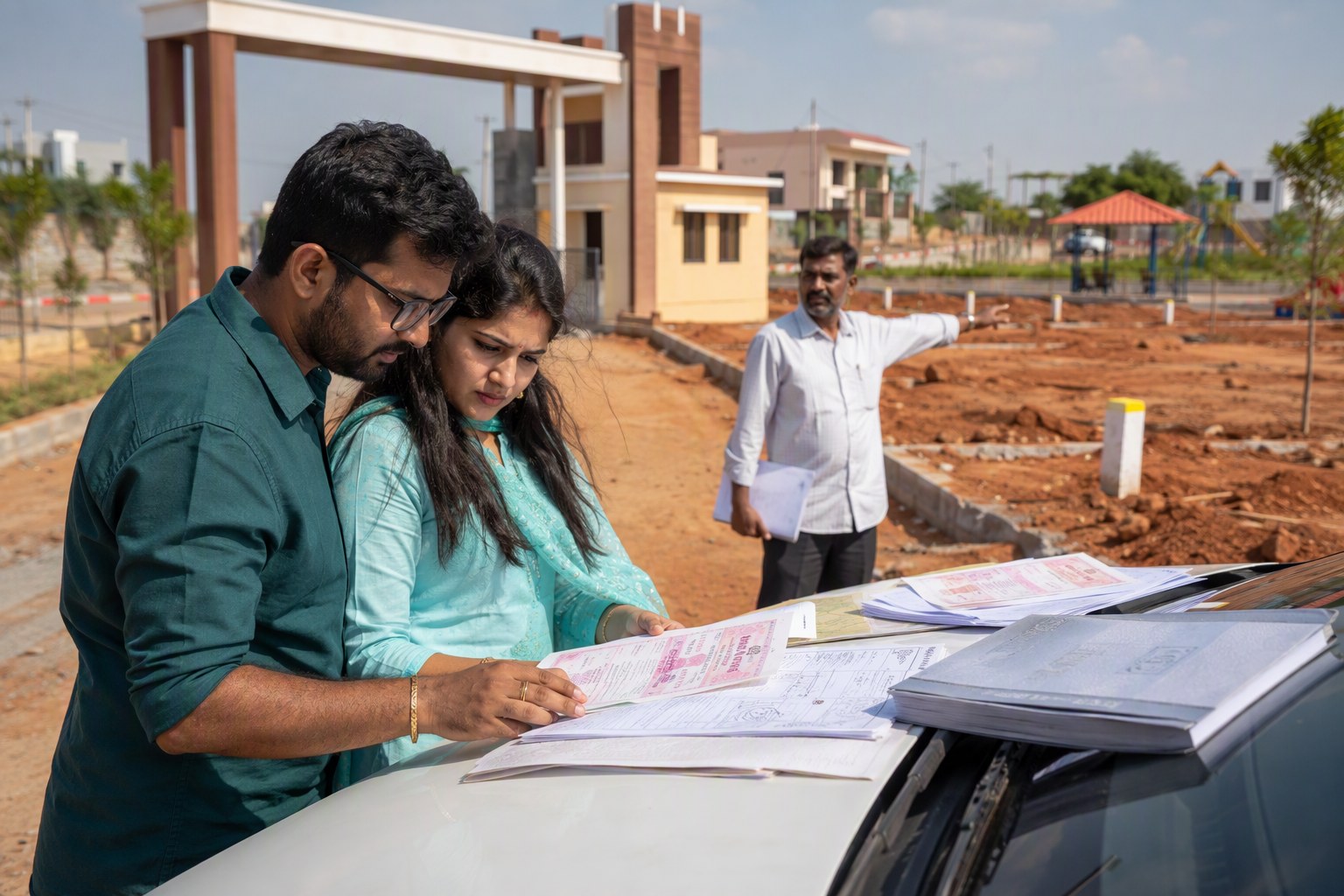
Here is the checklist I would follow before paying even a small token advance in Telangana:
- Ask for exact survey number, village, mandal and SRO jurisdiction.
- Run a Section 22-A check before discussing final price.
- Check EC for the longest available relevant period, not only recent years.
- Match seller name with link documents and current revenue or municipal records.
- For flats, verify RERA status where applicable and inspect sanctioned plan details.
- For plots, verify layout approval, road width, land use and OSR details.
- Use guideline value only as one input; do not treat it as title proof.
- Take written legal opinion from an advocate who handles Telangana property documents.
- Pay advance only through traceable banking channels after document review.
- Do not rush because another buyer is “waiting outside”. That pressure tactic is common.
If Telugu property terms confuse you, keep the Telugu-English Property Terms Dictionary open while reading documents. Words like pahani, sethwar, pattadar, khata, bainama, maktha and assigned land can change the meaning of a transaction.
The Market Direction Is Clear: Clean Title Will Get Premium Attention
The presence of 3,076,153 prohibited property records in Telangana is pushing the market towards transparency. Buyers are not rejecting land. They are rejecting uncertainty. They are not blindly choosing flats. They are choosing assets where title can be verified and finance can move smoothly.
In the next phase of Hyderabad real estate, clean documentation will be as valuable as location. A property near ORR, Metro, IT corridor or airport road still needs title clarity. A project with good amenities still needs approvals. A plot with future potential still needs a clean survey record.
My advice is blunt: fall in love with the property only after documents pass. Until then, treat every deal as provisional. Telangana’s market has enough good assets. There is no need to buy legal tension along with land.
Frequently Asked Questions
What are 30.76 lakh 22-A entries in Telangana property records?
They refer to 3,076,153 prohibited property records under Section 22-A as per latest IGRS data available with us. Such entries can restrict or block registration at the SRO level.
Does a 22-A entry mean every plot in that area is unsafe?
No. Risk depends on the exact survey number, village, mandal, land classification and document history. Always check the specific property, not just the locality name.
Are flats safer than plots in Telangana?
Not automatically. Flats often have better document visibility, especially in approved and bank-funded projects. Plots can also be safe if survey records, layout approval and title chain are clean.
Which checks should I do before paying advance for land?
Check Section 22-A status, survey number, EC, pahani or Dharani details, layout approval, land use, road access and SRO jurisdiction. Take a legal opinion before paying token advance.
Can guideline value prove that a property has clear title?
No. Guideline value helps estimate government market value for registration purposes. It does not prove ownership, approval status or absence of legal restrictions.