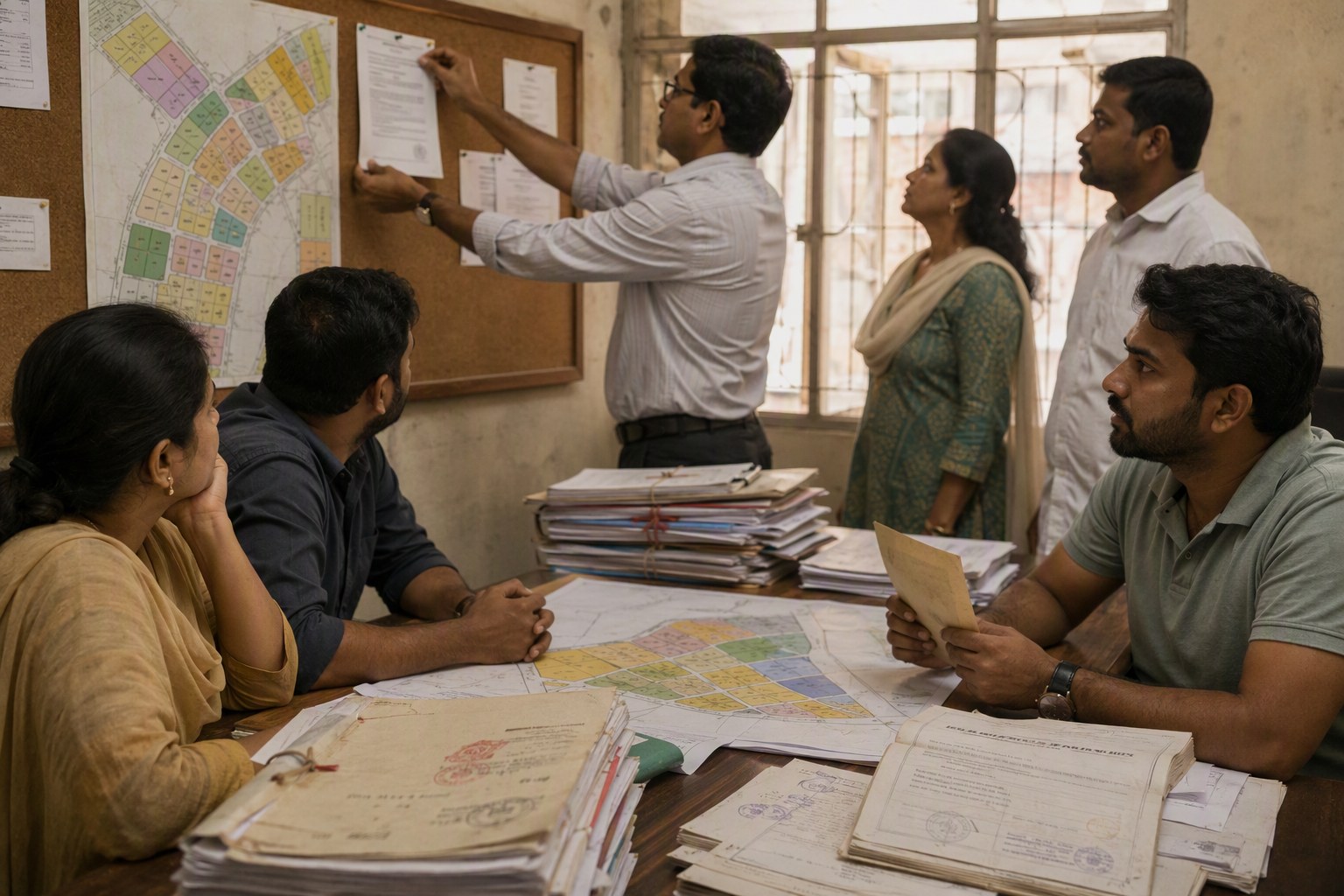
Telangana Warehousing Leases May Add 22-A Land Safeguards
Telangana Warehousing Leases are likely to become more document-heavy, especially around Hyderabad’s logistics corridors, as occupiers and landlords begin placing sharper focus on Section 22-A land checks, Encumbrance Certificate review, and deposit protection clauses before signing long-term warehouse agreements.
The trigger is simple. A warehouse lease is no longer just about shed size, approach road, power load and rent-free period. For large occupiers taking space for five, seven or nine years, the title of the underlying land has become a commercial risk. If the land falls under prohibited property records, litigation, government assignment history or unclear survey boundaries, the tenant’s operations can be disturbed even if the building itself looks fully functional.
As per latest IGRS-linked data available with Verified.RealEstate, Telangana has 3,076,153 prohibited property records under Section 22-A. That single number is enough to change the way serious warehouse leasing teams look at land due diligence.
Our view is clear: for warehousing, 22-A verification should sit next to rent, lock-in, escalation and security deposit in the term sheet itself. If it comes only at agreement drafting stage, both parties have already lost time.
Why Telangana Warehousing Leases Are Moving Beyond Basic Rent Negotiation
Hyderabad’s warehousing belt has expanded well beyond the old city edge. We’ve seen demand around Shamshabad mandal, Maheshwaram, Kandukur, Medchal, Dundigal, Patancheru, Sangareddy side, Toopran belt, Shamirpet stretch and the ORR-connected logistics pockets near Kompally, Kothur and Adibatla. These locations work because trucks can move, land parcels are larger, and occupiers can plan distribution to Hyderabad, Telangana districts and neighbouring states.
But many of these locations also have mixed land histories. Agricultural land conversion, old pattas, assigned land notings, government land claims, pahanis with name mismatches, succession gaps, family partitions, mortgage entries and road widening impacts can all sit quietly behind a clean-looking warehouse.
That is why larger occupiers are now expected to ask for a more formal land verification pack before committing to long-term occupancy. In our experience, this is already common in Grade-A industrial parks. The change now is that even mid-sized landlords and standalone shed owners may have to answer the same questions.
Telangana Warehousing Leases And Section 22-A: What May Change In Term Sheets
Section 22-A of the Registration Act framework is not a small footnote. If a property is listed as prohibited, registration and transfer-related activity can be restricted depending on the nature of the entry. For a warehouse occupier, the biggest worry is not always ownership transfer. It is business continuity.
A tenant may ask: if the land title gets questioned after fit-outs, racking, automation equipment, cold storage setup or compliance approvals, who takes responsibility? Can the deposit be adjusted? Can the tenant terminate? Will the landlord indemnify? Who handles government notices?
These questions are now likely to enter lease negotiations more directly. A typical long-term lease term sheet may start asking for:
- Survey number-wise Section 22-A verification before signing.
- Latest EC review for the land and building, wherever applicable.
- Copies of pahani, Dharani details, mutation records and link documents.
- Land conversion or non-agricultural use permissions, if relevant.
- Clarification on access road ownership and road width.
- Landlord declaration that the property is not under acquisition, litigation or government restriction, based on records available.
- Deposit refund trigger if any title defect blocks operations or statutory approvals.
Tenants can start with the Section 22-A Prohibited Property Check, then cross-check title movement through the Encumbrance Certificate Search. For survey identification, the Survey Number Finder is useful before approaching the SRO or revenue office with the wrong particulars.
Deposit Safeguards May Become A Bigger Deal In Warehouse Leasing
Security deposits in warehousing are usually negotiated hard because they affect cash flow for both sides. Landlords want comfort against default and property damage. Occupiers want protection against title shocks, delayed possession, missing approvals or promised infrastructure not being delivered.
In the next round of Telangana warehouse leasing, I expect deposit clauses to become more conditional. Instead of a plain refundable deposit line, agreements may carry milestone-based safeguards. For example, a portion of the deposit can be linked to delivery of documents, possession handover, statutory clearances, approach road access and EC satisfaction.
Landlords with clean records should not see this as an insult. Frankly, it can improve their bargaining position. If a landlord near Shamshabad or Medchal can show clean EC, clear survey alignment, no 22-A issue, proper electricity sanction and suitable access for heavy vehicles, that property deserves better tenant confidence.
At the same time, occupiers should avoid overloading small landlords with vague legal demands. Ask for specific documents. Keep timelines practical. If a title issue is curable, negotiate a cure period. If it is serious, walk away before investing in interiors and operations.
Suggested Lease Safeguards For Occupiers And Landlords
| Lease Issue | What Occupier May Ask | What Landlord Can Provide |
|---|---|---|
| Section 22-A risk | Survey number-wise prohibited property check | Revenue records, Dharani extract, clarification if any entry exists |
| Title movement | Latest EC and link document review | EC, registered deeds, mortgage release documents if any |
| Deposit safety | Refund or adjustment rights if title defect affects use | Clear refund timeline and indemnity language |
| Use of property | Confirmation that warehousing activity is permitted | Land conversion, building permissions, local body papers where applicable |
| Access | Road width and legal access verification | Access documents, layout references, local authority records |
EC Checks In Telangana Warehousing Leases Cannot Be Cosmetic
An Encumbrance Certificate is often treated as a routine document. That is risky. For warehousing, an EC should be read along with the physical survey number, boundaries, owner names, mortgage entries and release deeds. A clean-looking EC for the wrong survey number is useless.
We’ve seen cases where tenants ask only for the building owner’s GST, electricity bill and tax receipt. That may be enough for a small godown used for short storage. It is not enough for a long-term distribution centre where the tenant is putting money into flooring, docks, racks, office cabins, fire systems and operational approvals.
The better approach is layered verification. First, confirm the survey number and village. Then find the correct SRO through Find Your SRO Office. Next, review EC entries and land records. After that, check market value references through Market Value / Guideline Value Search. Where a full risk review is needed, occupiers can use the Property Verification Tool before signing.
Which Hyderabad Warehousing Locations May Feel This First?
The sharper documentation demand will likely show up first in larger and better-connected micro-markets. Shamshabad mandal is a natural example because airport-side warehousing and ORR access have drawn steady occupier interest. Maheshwaram and Kandukur matter for south and south-east industrial movement. Medchal, Dundigal and Kompally continue to serve north Hyderabad distribution. Patancheru and Sangareddy side remain relevant for industrial users and highway-linked storage.
Standalone warehouse owners in these belts should start preparing a ready document folder. Keep ownership deeds, EC, tax receipts, electricity sanction, occupancy or building papers where available, road access proof, Dharani details and pahani extracts in one place. If there is a family settlement or mutation pending, clean it up before a tenant’s legal team finds it.
For occupiers, the message is equally direct. Do not finalise a warehouse only because the rent looks attractive or the dock height is good. A lease is only as safe as the land beneath it. In Telangana, where prohibited property records run into 3,076,153, skipping 22-A verification is not smart due diligence.
Market Impact: Cleaner Landlords May Gain Faster Closures
This shift may not reduce warehousing demand. Hyderabad’s consumption base, pharma and manufacturing ecosystem, airport connectivity and highway access remain strong reasons for logistics occupiers to stay active. What may change is the pace of deal closure.
Properties with ready records may close faster. Properties with unclear title, missing survey clarity or unresolved government land notings may face longer negotiation cycles. Some tenants may insist on lower deposits or stronger exit clauses. Some landlords may offer title indemnities to protect rent expectations.
In our experience, the best deals will be the boring ones: clear land, clean EC, known SRO, proper access, written deposit terms and no surprise after possession. For Telangana warehousing leases, that boring discipline may become the new premium.
Frequently Asked Questions
Why are Telangana warehousing leases adding 22-A checks?
Because long-term warehouse occupiers need certainty that the underlying land is not restricted, disputed or listed as prohibited under Section 22-A. A title issue can disturb operations even after the tenant has invested in fit-outs and logistics infrastructure.
What should a tenant verify before signing a warehouse lease in Hyderabad?
A tenant should verify survey number, ownership documents, latest EC, Dharani and pahani records, Section 22-A status, access road, land use permissions and deposit refund clauses before signing a long-term lease.
Can a landlord still lease a warehouse if some records are pending?
Yes, but the issue should be disclosed clearly. The lease can include timelines for curing record gaps, conditional deposit release, indemnity clauses or termination rights if the pending issue affects the tenant’s use of the property.
Is an Encumbrance Certificate enough for warehouse land verification?
No. EC is only one part of verification. It should be checked along with survey number, link documents, revenue records, Section 22-A status, land conversion papers and SRO details.
Which Hyderabad warehouse belts may see stricter lease due diligence?
Locations such as Shamshabad, Maheshwaram, Kandukur, Medchal, Dundigal, Kompally, Patancheru and Sangareddy side may see stricter checks because occupiers are taking larger spaces and longer lock-ins in these logistics corridors.