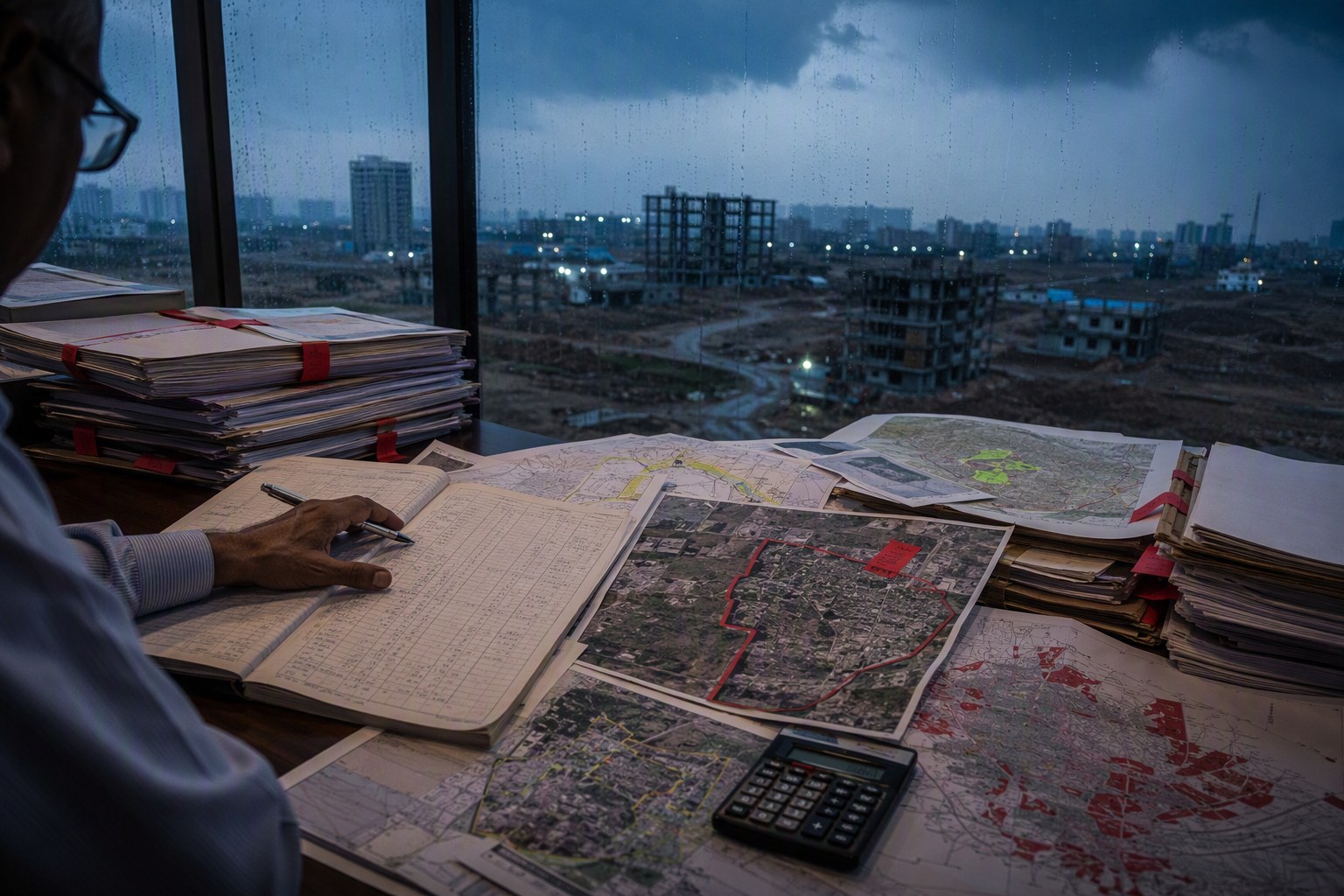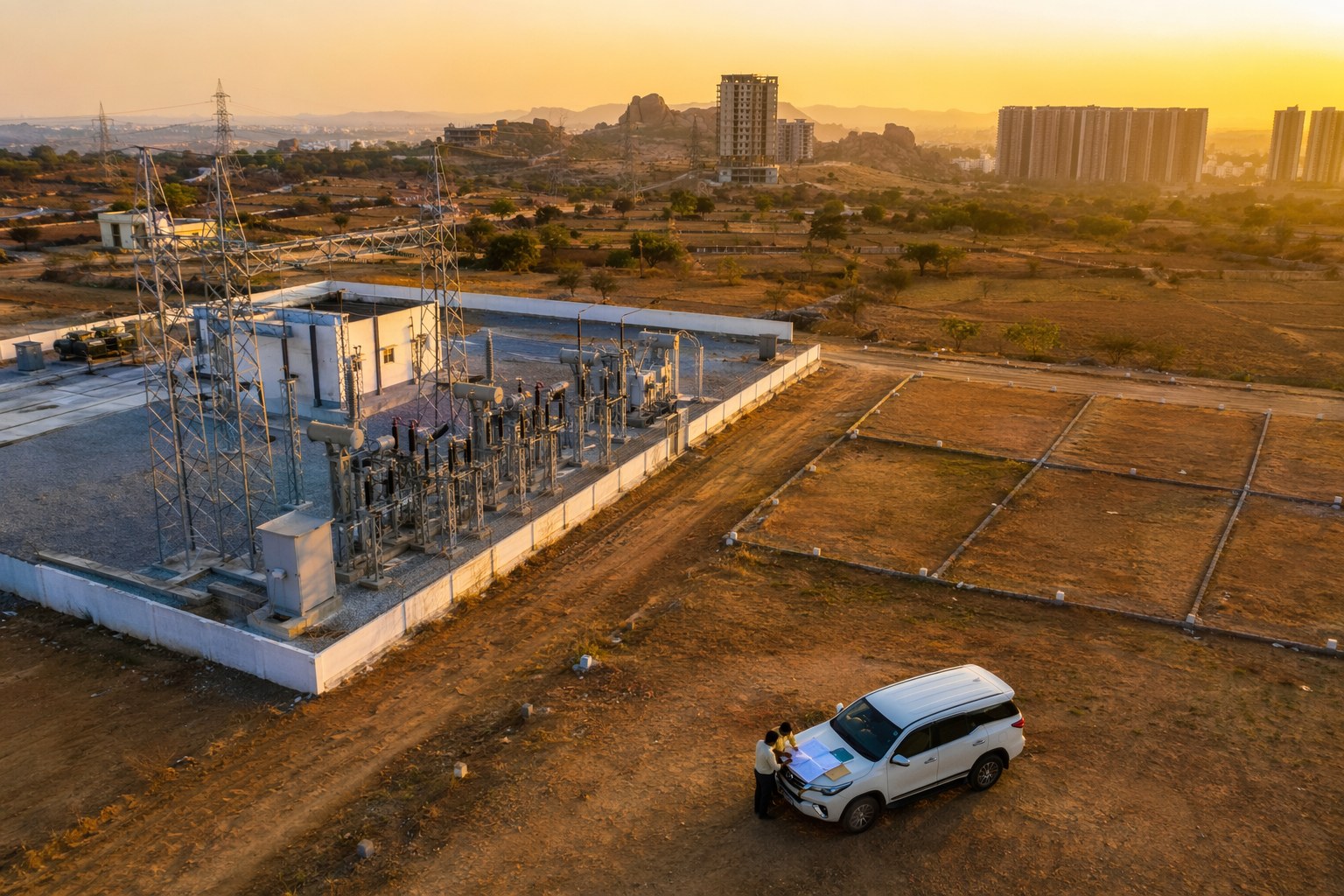



Telangana Plot Prices May Split Around 22-A Clearance Proof
Telangana Plot Prices May Split Around 22-A Clearance Proof as buyers, bankers and document writers start treating clean title evidence as a separate value factor. The trigger is not a new layout fashion or another road rumour. It is the size of the prohibited-property base itself: 3,076,153 properties are recorded under Section 22-A prohibited properties as per latest IGRS data.
For plot buyers in Hyderabad’s growth corridors, this can create a clear pricing line. A plot with clean 22-A clearance proof, matching survey number records, updated pahani and a clean registration trail may command stronger buyer confidence. A similar-looking plot in the same village, but with unresolved 22-A doubt, may face discount pressure, slower negotiations or loan hesitation.
Our view at Verified.RealEstate is simple: in the next phase of Telangana plot transactions, proof will not be a side document. It will sit inside the price discussion.
Telangana Plot Prices May Split Around 22-A Clearance Proof: What Is Changing
Section 22-A entries are not new to Telangana property practice. Every experienced buyer has heard phrases like “prohibited list lo undi”, “Dharani lo issue undi”, “SRO registration stop ayindi”, or “government land doubt undi”. What is changing now is buyer behaviour.
Earlier, many plot buyers looked mainly at location: Kokapet side, Mokila side, Tellapur belt, Adibatla, Bachupally, Shankarpally, Tukkuguda, Kompally or Maheshwaram. After that, they checked road width, HMDA or DTCP layout status, and maybe an Encumbrance Certificate. Today, more serious buyers are asking one more question before paying token advance: “Is there written proof that this survey number is not hit by 22-A?”
That question matters because 22-A issues do not always show up in the same way. In one case, the whole survey number may be under restriction. In another, only part of the land parcel may be disputed. Some files involve government land claims, assigned land, ceiling surplus questions, endowment land, wakf-related concerns, court orders or older revenue entries. The buyer standing on the plot may see a compound wall and neighbouring houses. The SRO, however, may see a prohibited-property flag.
For buyers, the first check should be basic but disciplined. Use the Section 22-A Prohibited Property Check before you emotionally commit to a plot. Then cross-check the survey number using the Survey Number Finder, and pull registration history through the Encumbrance Certificate Search. These three checks can change the entire negotiation tone.
Telangana Plot Prices May Split Around 22-A Clearance Proof in Hyderabad Growth Corridors
The likely price split will be seen most sharply in high-demand plot markets around Hyderabad, where buyers compare two plots sitting very close to each other. In areas like Mokila in Shankarpally mandal, Tellapur near Ramachandrapuram belt, Narsingi and Kokapet around Gandipet mandal, Adibatla in Ibrahimpatnam mandal, Maheshwaram, Tukkuguda, Bachupally and Kompally-side localities, location alone may not settle the price anymore.
In our experience, two plots can have the same road approach, same layout appearance and similar neighbourhood quality. But if one plot has clear SRO registration trail, no 22-A obstruction, proper link documents and matching revenue references, buyers treat it differently. They are willing to move faster. Banks are also more comfortable when the document file is clean. On the other side, if the seller says “small issue only, after sale we will clear”, the buyer usually asks for a discount or walks away.
We are not publishing locality-wise market rates here because the available verified database for this article gives the 22-A count, not plot transaction prices. Quoting random per-square-yard numbers would mislead readers. Buyers should compare the government market value through the Market Value / Guideline Value Search, then speak to the local SRO and recent registered-sale references before deciding whether a quoted plot price is fair.
Why 3,076,153 Prohibited Properties Matter For Plot Negotiations
The figure 3,076,153 is large enough to affect market psychology. It does not mean every entry is unsellable forever. It also does not mean every plot in a village is risky. But it tells us that prohibited-property checks cannot be treated as a last-minute formality.
When a buyer discovers a 22-A concern after paying advance, the transaction becomes messy. The seller may insist the issue is old. The broker may say registrations are happening in nearby survey numbers. The document writer may ask for extra time. The buyer’s family may get nervous. If a bank loan is involved, the legal team may raise objections. At that stage, the buyer has already lost bargaining power.
That is why clean clearance proof can become a price premium factor. Not a decorative premium, but a practical one. The buyer saves time, legal cost, loan uncertainty and future resale tension. When resale comes after a few years, the next buyer will ask the same questions again.
What Counts As Clearance Proof In A Plot Deal?
There is no single magic paper that solves every 22-A doubt. The proof depends on the nature of the property and the restriction. But a serious buyer should ask for a file, not a verbal assurance. At minimum, the file should help answer three questions: Can this land be registered? Does the seller have title? Is the specific survey number free from the restriction being feared?
| Document or Check | Why It Matters |
|---|---|
| 22-A status check | Shows whether the property or survey number is flagged as prohibited in registration records. |
| Encumbrance Certificate | Shows registered transactions, mortgages and document history available through registration records. |
| Pahani / revenue record | Helps compare possession and land classification details with the seller’s claim. |
| Dharani entry review | Useful for checking pattadar details, survey number references and revenue-side consistency. |
| SRO confirmation | The local Sub-Registrar office position matters because registration happens there. |
| Legal opinion | A property lawyer can connect revenue, registration and court-related records into one risk view. |
For urban buyers who are not used to revenue language, even terms like pahani, khata, sethwar, Tippan and adangal can be confusing. The Telugu-English Property Terms Dictionary is useful before you sit with a seller or broker. If you are unsure which office handles the property, use Find Your SRO Office.
Clean Plots May Sell Faster, Doubtful Plots May Need A Discount
The emerging market pattern is straightforward. Clean file, faster buyer decision. Doubtful file, longer due diligence. If the seller cannot show clarity, the buyer will try to reduce the price because the buyer is taking the risk.
This is especially relevant for open plots, gram panchayat layouts, old plotted ventures and land parcels on the edge of municipal expansion. Many buyers look at a board, a road and nearby construction and assume the title is fine. That is a costly assumption. A visible plot boundary is not equal to marketable title.
In HMDA and DTCP-approved layouts also, individual plot buyers should not skip title checks. Layout approval deals with planning permission. It does not automatically cure every old ownership or prohibited-property problem. For larger ventures, buyers can also check the project side through the RERA Project Lookup, wherever RERA registration is applicable.
How Buyers Should Price The Risk
My opinion: do not buy a 22-A doubt unless you understand the exact problem, the route for resolution and the time risk. A vague promise from a seller is not enough. If the seller says the plot is clean, ask for supporting documents before token advance. If the seller says the issue is only technical, ask the seller to resolve it first or hold money in a safer structure with legal drafting.
Use the Property Verification Tool to organise the first layer of checks. If you are comparing built property and land component, the Composite Value Calculator may help structure your thinking. For final registration cost planning, use the Stamp Duty Calculator.
Sellers also need to read the market correctly. If your plot is clean, show the file upfront. Do not wait for the buyer to discover clarity after three meetings. Clean documentation is a selling feature now. If your plot has a 22-A concern, hiding it will only damage trust. A transparent seller with a documented resolution path will still get better response than a seller who says “registration ayipothundi, no problem” without papers.
The Bottom Line For Telangana Plot Buyers
The large 22-A base in Telangana can create a sharper divide in plot pricing. The market may not announce it openly, but negotiation tables will show it. Clean plots with traceable title, matching revenue records and no prohibited-property flag can attract stronger demand. Plots carrying unresolved 22-A doubt may need a lower price, more time or a very patient buyer.
Before buying in any Hyderabad growth corridor, check the survey number, SRO position, EC, revenue records and 22-A status. If there is confusion, slow down. In Telangana land deals, the cheapest plot can become expensive if the registration file is weak.
Frequently Asked Questions
What is Section 22-A in Telangana property registration?
Section 22-A refers to properties that are prohibited from registration due to government, legal, revenue or other notified restrictions. If a plot is flagged, the SRO may refuse registration unless the issue is cleared.
Can a plot under 22-A still be sold?
It depends on the exact nature of the restriction. Some issues may be resolved through proper government process, while others may block registration. Buyers should not rely on verbal promises; they should verify the survey number and SRO position.
Will clean 22-A clearance proof increase plot value?
Clean proof can improve buyer confidence and reduce negotiation friction. It may help a seller defend the asking price, while unresolved title uncertainty can lead buyers to ask for a discount or avoid the plot.
Which checks should I do before paying advance for a Telangana plot?
Check 22-A status, EC, survey number, pahani or revenue record, Dharani details, layout approval and SRO jurisdiction. For high-value deals, take a written legal opinion before paying advance.