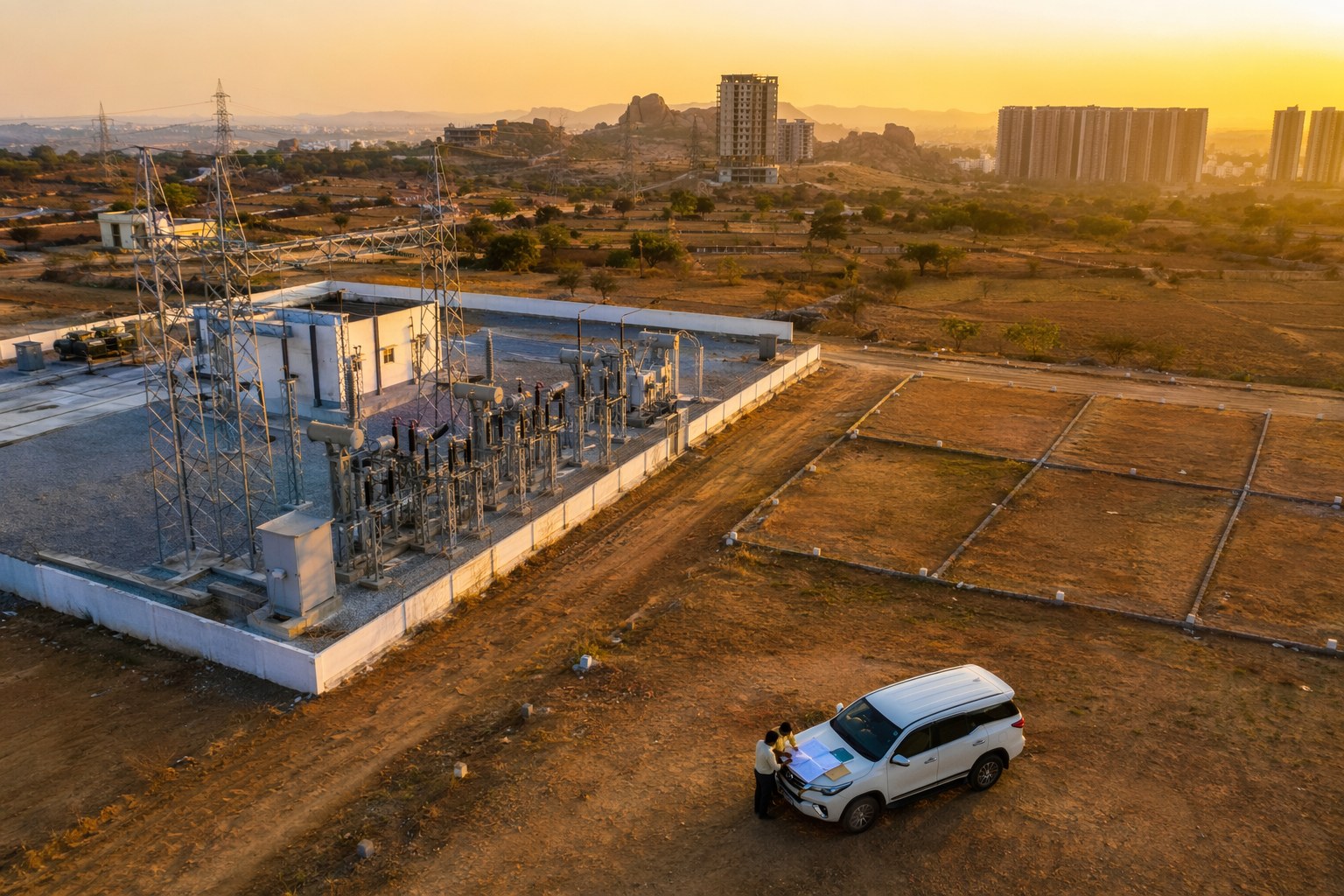



Telangana Panchayats May Host Prohibited Land Help Hours to help villagers understand Section 22-A prohibited property entries before they attempt a sale deed, mortgage, gift deed, partition, or family transfer. As per latest IGRS data, Telangana has 3,076,153 prohibited property records. That is not a small clerical issue. It directly affects farmers, heirs, buyers, banks, document writers, and NRIs trying to regularise old family lands.
The idea is simple: instead of making villagers run between the gram panchayat, mandal office, Dharani help desk, MeeSeva, and SRO, fixed help hours at the panchayat can give them a first-level explanation of what the entry means and what documents they should gather next.
Telangana Panchayats May Host Prohibited Land Help Hours: Why This Matters Now
In Hyderabad’s surrounding districts, land confusion usually starts with one line in the record. A buyer in Shankarpally sees a nice parcel near the ORR side, but the survey number shows up under a prohibited category. A family in Moinabad wants to partition ancestral land, but the pahani and Dharani entry do not match the old passbook. A farmer in Ghatkesar tries to mortgage land for a crop or business loan, and the bank asks for clarity on Section 22-A status.
These are not rare stories. We have seen similar cases from Chevella, Keesara, Medchal, Shamshabad, Hayathnagar, Patancheru, Ameenpur and Ibrahimpatnam. The common problem is not always fraud. Many times, people simply do not know whether the issue is related to government land, assigned land, endowment land, wakf land, court attachment, surplus land, or a wrong survey mapping entry.
That is where panchayat-level help hours can be useful. A gram panchayat is the first place where many villagers go when they are stuck. If the panchayat can maintain a basic checklist and guide citizens towards the correct mandal or registration office, half the panic can reduce.
Our view is clear: prohibited land confusion should be handled before the buyer pays an advance, not after the sale deed gets blocked at the SRO.
Telangana Panchayats May Host Prohibited Land Help Hours Before Sales And Mortgages
For most rural families, land is not only an asset. It is security for children’s education, marriage expenses, business loans and emergency medical needs. When a prohibited entry appears at the last minute, the impact is immediate. A buyer backs out. A bank pauses the loan. Brothers and sisters start blaming each other. The village document writer may not have the full legal picture.
A fixed help-hour system at gram panchayat level can work like a triage counter. It should not replace the tahsildar, SRO, court, or government department. But it can help people identify the next correct step.
For example, before entering into an agreement of sale, villagers can be guided to run a basic check using the Section 22-A Prohibited Property Check. If the survey number itself is unclear, they can use the Survey Number Finder. For registration office jurisdiction, the Find Your SRO Office page can reduce guesswork.
This is especially useful in fringe areas where agricultural land is slowly becoming plotted development land. Around Shamshabad, Shabad, Maheshwaram, Kandukur, Yacharam and parts of Medchal-Malkajgiri, one village may have agricultural parcels, layouts, assigned lands, old ceiling matters and new villa projects in the same broad locality. Villagers need plain-language guidance, not only portal screenshots.
What A Panchayat Help Hour Should Actually Do
If Telangana panchayats take up prohibited land help hours, the format must be practical. A long speech by officials will not solve anything. People need document-based assistance.
- Check the survey number: Many disputes begin because the applicant has the wrong survey number, sub-division number, or village name.
- Review basic land records: Pahani, title deed, old passbook, Dharani details, mutation record and family link documents should be checked together.
- Explain the type of prohibition: People must know whether the entry relates to Section 22-A, assigned land, government land, court order, endowment, wakf, or another category.
- Guide the applicant to the right office: Some cases need the tahsildar. Some need the district collectorate. Some require SRO-level clarification. Some may need legal remedy.
- Warn against advance payments: Buyers should be told not to pay token amounts until they verify EC, prohibited status, survey details and guideline value.
In our experience, villagers are not asking for miracles. They want to know which paper is missing and which office has the authority to decide. That itself can save months.
Section 22-A Prohibited Property Entries Need Local Explanation
Section 22-A entries are serious because they can stop registration. But every entry does not mean the same thing. Some lands are rightly restricted. Some records may need correction. Some parcels may have overlapping old revenue descriptions. Some families may have inherited land but failed to update names properly.
That difference is not easy for a first-time seller to understand. A person in a village near Chevella may only know that his grandfather cultivated the land. The buyer’s advocate may ask for old link documents, Dharani mutation, EC, pahani and SRO status. The seller then runs to the mandal office without knowing what to ask.
A panchayat help desk can keep a simple board: bring Aadhaar, pattadar passbook copy, Dharani printout, old registered documents if any, pahani/adangal, family member certificate where relevant, and survey sketch if available. This is not a legal decision, but it prepares the file properly.
Citizens should also check the Encumbrance Certificate Search before any sale discussion. An EC will not solve a prohibited entry, but it shows registered transactions, mortgages and other recorded activity. For price-related verification, the Market Value / Guideline Value Search gives the ready reckoner value used for registration calculations.
Village-Level Support Can Reduce Pressure On SROs
Sub-registrar offices are already crowded, especially in active belts like Serilingampally, Rajendranagar, Medchal, Uppal, Kukatpally, Sangareddy and Rangareddy district offices. Many people reach the SRO only after drafting documents and arranging money. If the property is blocked, everyone gets frustrated at the counter.
That is a poor way to handle land administration. The SRO should not become the first place where a villager learns that his land has a restriction. By that stage, the family may have already fixed a buyer, promised repayment to relatives, or planned a loan closure.
Panchayat help hours can act as an early warning system. Even one fixed morning in a week can help, if the panchayat secretary, village revenue assistant where available, and trained support staff maintain a simple referral register.
| Situation | Why Help Hours Can Help | Suggested First Check |
|---|---|---|
| Sale of agricultural land | Seller can identify Section 22-A issues before taking advance | Prohibited status, survey number, EC |
| Mortgage for bank loan | Borrower can understand whether the land is acceptable security | Title record, EC, prohibition entry |
| Family partition | Heirs can collect link documents before drafting partition deed | Pahani, Dharani, family records |
| Gift deed within family | Donor and donee can check if registration is possible | SRO jurisdiction, prohibited list, EC |
| Old mutation issue | Applicant can be directed to the correct revenue office | Dharani record and mandal-level file |
What Buyers Around Hyderabad Should Do Before Paying Advance
For buyers looking at land in Hyderabad’s growth corridors, my advice is direct: do not depend only on the seller’s word or a colourful layout brochure. Check the land at survey number level. This is true whether you are buying near Maheshwaram, Shadnagar, Mominpet, Shankarpally, Bibinagar, Ghatkesar or the Patancheru side.
Use the Property Verification Tool for a broader due-diligence workflow. If you are tracking a land parcel over time, the Property Change Tracker can help you watch for changes. For constructed property or apartment buying, RERA checks are also relevant through the RERA Project Lookup.
For village land, insist on seeing old registered link documents, current Dharani details, EC, pahani, mutation history and SRO jurisdiction. If the seller says, “small issue only, we will clear later,” pause the deal. Small record issues can become big registration problems.
Telangana Panchayats May Host Prohibited Land Help Hours, But Clarity Must Be Official
The success of this idea depends on training and boundaries. Panchayat staff should not give false assurances like “registration pakka” or “no problem.” They should say what the record shows, what documents are missing, and where the citizen must go next.
There should also be standard wording in Telugu and English. Terms like prohibited property, assigned land, patta land, shikam, poramboke, wakf, endowment, ceiling land and court attachment are often mixed up in village conversations. A basic terms sheet can avoid wrong advice. For citizens struggling with terms, our Telugu-English Property Terms Dictionary is a useful starting point.
The bigger social impact is trust. When land records are unclear, villagers feel the system is against them. Buyers feel every rural deal is risky. Banks become cautious. Families delay transfers for years. A help-hour model will not clear every title, but it can bring the first conversation closer to the citizen.
With 3,076,153 prohibited property records in Telangana as per latest IGRS data, this is not only a registration issue. It is a community confidence issue. If handled properly at panchayat level, many villagers can avoid bad advances, wrong agreements, incomplete loan files and family disputes that begin with one misunderstood land entry.
Frequently Asked Questions
What are Telangana prohibited property entries?
They are property records restricted from registration under categories such as Section 22-A or other government-notified restrictions. The exact reason must be checked against the survey number and village record.
Can a gram panchayat remove a prohibited land entry?
No. A panchayat can guide citizens and help them understand documents, but removal or correction has to be handled by the authorised revenue, registration, or legal authority.
Should I pay advance for land if the survey number appears in Section 22-A?
It is safer not to pay advance until you verify the reason for the entry, check EC, confirm SRO jurisdiction and take proper legal advice. Many deals get stuck because buyers check only after payment.
Which documents should villagers carry for prohibited land help hours?
Carry pattadar passbook copy, Dharani printout, pahani/adangal, old registered documents, EC, family link papers if relevant, and the correct survey number with village and mandal name.
Is EC enough to confirm clear title in Telangana?
No. EC is useful for registered transactions and charges, but title verification should also include prohibited status, revenue records, survey details, link documents and local legal checks.