


Telangana NGOs May Translate 22-A Notices for Plot Owners
Across Telangana, one small piece of government wording can change a family’s property decision: a 22-A notice or prohibited property entry. For many plot owners, especially senior citizens, NRIs’ parents, first-time buyers and families dealing with ancestral land, the notice is not the only problem. The bigger problem is understanding what it actually means.
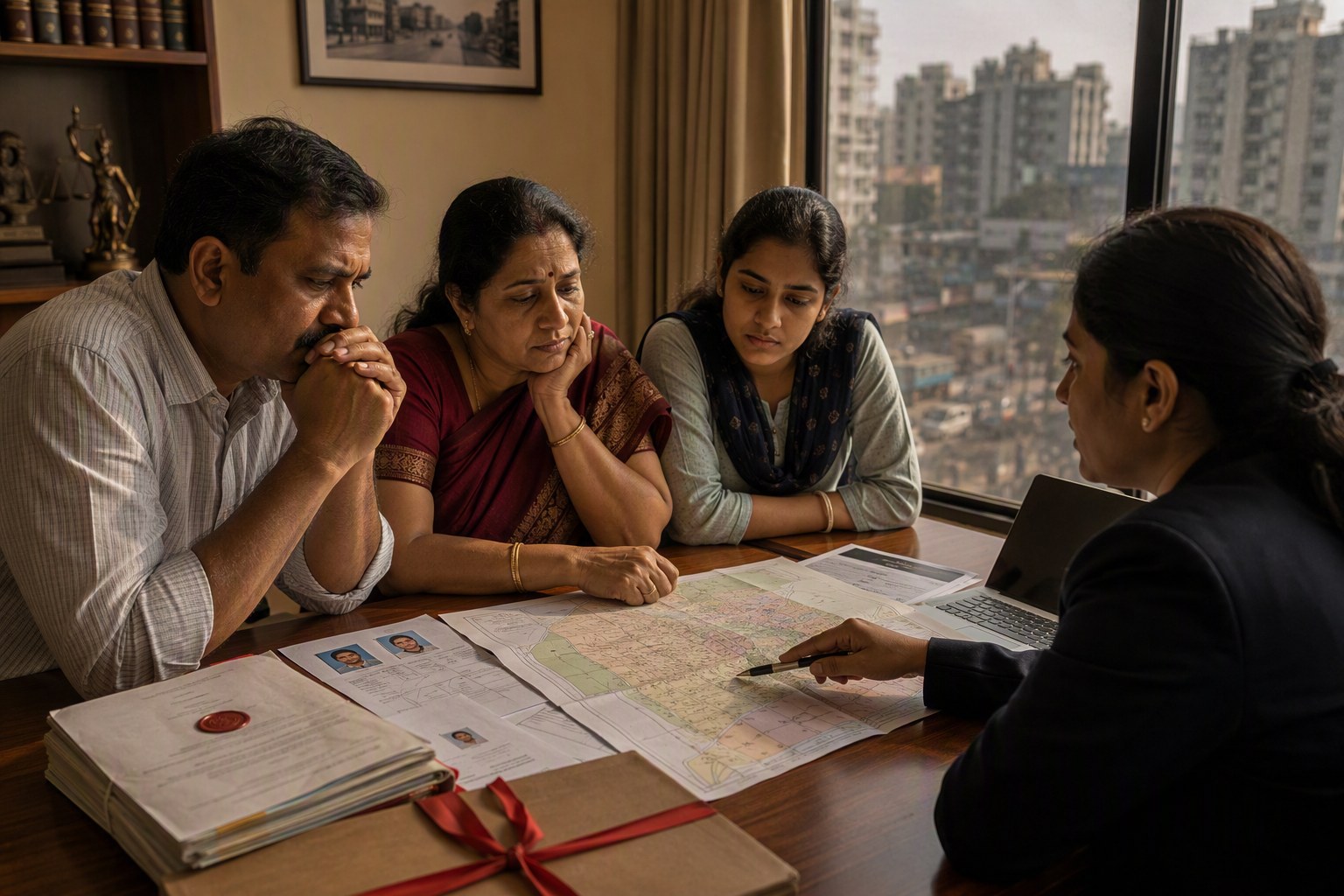
That is why the idea of NGOs, colony associations and legal-aid volunteers translating 22-A notices into simple Telugu, Urdu and local English deserves serious attention. If done carefully, this community support can save families from signing sale agreements blindly, paying token advances in a hurry, or rejecting a genuine property only because one line in the record frightened them.
At Verified.RealEstate, our internal prohibited property context currently tracks 3,076,153 records in the bb_prohibited_properties dataset. That number itself tells us one thing clearly: 22-A is not a rare corner issue. It touches urban plots, village lands, layouts, old pattas, family partitions and proposed sales across many mandals.
Why 22-A Notices Confuse Ordinary Owners
Most property owners do not read revenue language every day. Terms like survey number, sub-division, prohibited category, government land, assigned land, endowment land, wakf entry, court-related restraint, or registration refusal may appear straightforward to officials and document writers. For families, these words create tension.
In Hyderabad outskirts, I have seen buyers ask one common question: “Sir, registration aythada?” That is the practical concern. A 22-A entry can affect registration at the Sub-Registrar Office. But not every entry means the same thing. Some entries may need correction. Some may relate to a specific survey number portion. Some may have old background. Some may be serious red flags where families should not risk money without proper legal advice.
My view is simple: translation should not become legal opinion. It should help people understand the notice, identify the property correctly, and know which office or professional to approach next.
What Community Translation Can Actually Do
Good translation is not just changing English into Telugu or Urdu. It is explanation. It should tell the owner what the notice says, which land parcel it refers to, what kind of restriction is shown, and what documents are needed for the next step.
For example, a senior citizen in Karimnagar may have an old sale deed but may not know the current survey sub-division. A family in Rangareddy may have a plot number in a layout, while the notice mentions only survey numbers. A buyer in Sangareddy may have an agreement copy but no Encumbrance Certificate. In such cases, community volunteers can help families prepare before they meet an advocate, revenue official or SRO staff.
Useful translation points for NGOs and local groups
- Translate the exact wording of the 22-A entry without adding assumptions.
- Explain whether the notice refers to survey number, plot number, village, mandal or document number.
- Help the owner match the notice with sale deed, link documents, pattadar passbook, layout copy or EC.
- Clearly state that translation is not a clean chit for sale or purchase.
- Suggest professional legal verification where ownership or government claim is unclear.
Why This Matters Before Land Sales And Purchases
Many land deals in Telangana still move on trust, relatives, local brokers and “advance ichesi block cheddam” pressure. That is risky when 22-A is involved. A family may pay an advance, arrange bank funds, or plan a daughter’s wedding expense around a land sale. If registration stops later, the damage is emotional and financial.
Buyers should also be careful. A low price near Hyderabad, Warangal, Khammam or Nizamabad may look attractive, but if the land has a prohibited property issue, the discount is not a bargain. It is a warning signal. Sellers also suffer when their genuine property is wrongly suspected because they cannot explain the notice properly.
This is where NGOs can act as a first help desk. Not as brokers. Not as middlemen. As document literacy supporters.
What Owners Should Check Along With A 22-A Notice
A translated notice is only the first layer. Families should verify the property from multiple angles before committing to sale or purchase. These checks are practical and can reduce confusion.
| Check | Why it matters | Helpful tool |
|---|---|---|
| Prohibited property status | Shows whether the land appears in a restricted category | Prohibited Property Check |
| Survey number matching | Prevents mix-up between plot number and revenue survey number | Survey Number Finder |
| Encumbrance history | Helps review past registered transactions and charges | Ec Search |
| SRO identification | Shows which Sub-Registrar Office is relevant for the property | Find Your Sro |
| Basic land verification | Helps owners organise key checks before a decision | Verify My Land |
| Term meaning | Explains common property and revenue words in plain language | Dictionary |
The Risk Of Poor Translation
There is one danger. If a volunteer loosely translates “prohibited” as “case undi” or “problem ledu, small issue,” the family may get misled. A casual explanation can cause more harm than silence. Telangana needs responsible translation, not WhatsApp-style shortcuts.
NGOs should maintain a written disclaimer. They should keep copies of what was translated, who requested it, and whether the family was advised to consult an advocate or the concerned department. In property matters, words matter. Even a wrong village name or survey number digit can send a buyer in the wrong direction.
A sensible community model
- Step 1: Collect the notice, sale deed and basic identity of the property.
- Step 2: Translate the notice line by line into the preferred local language.
- Step 3: Mark unclear items such as survey sub-division, classification or department name.
- Step 4: Give the family a short checklist for next verification.
- Step 5: Avoid giving a final opinion on title unless a qualified legal professional is involved.
How Buyers Should Respond When Seller Shows A 22-A Notice
If a seller voluntarily shows a 22-A notice, do not panic immediately. That honesty is a good sign. But do not pay token money only because the seller says the issue will be cleared soon. Ask for supporting papers. Check the EC. Confirm survey number details. Ask whether any representation has been filed with the concerned authority. If the property is in a layout, compare the layout plan, plot number and survey number.
For apartments, open plots and farm land, buyers can also check value and planning-related aspects through tools such as Guideline Value, Landuse Zone Finder and Rera, depending on the property type. These are not substitutes for title due diligence, but they help families ask better questions.
Why Local Language Support Is Social Impact
Property mistakes are not limited to wealthy investors. In Telangana, one plot may represent a lifetime of savings. A wrong sale decision can affect education loans, marriages, medical bills and retirement plans. That is why translating 22-A notices is a community and social impact issue, not just a legal service.
Telugu explanations help village landowners. Urdu explanations help many old-city and minority families who are comfortable discussing property in their own language. Simple Indian English helps NRI families coordinate with children abroad. The goal is not to create fear. The goal is clarity before money changes hands.
If community groups take this up with discipline, they can reduce misinformation in the market. Brokers will find it harder to push vague lines like “registration lo small technical issue.” Buyers will ask sharper questions. Sellers with genuine papers can present their case better. That is good for Telangana’s property market.
Verified.RealEstate View
NGOs translating 22-A notices should be welcomed, but with boundaries. Translation should be accurate, neutral and documented. Families should still verify records, consult professionals where needed, and avoid hurried advances. In land, speed is useful only after clarity. Before that, patience saves money.
For plot owners, the practical message is this: if you receive or discover a 22-A-related notice, do not ignore it and do not depend only on broker talk. Get the wording explained in your language. Match the survey number. Check available records. Then decide whether to sell, buy, wait or challenge the entry through the proper route.
Frequently Asked Questions
What is a 22-A notice in Telangana property matters?
It usually refers to a prohibited property entry or restriction connected with registration. The exact meaning depends on the property, survey number, category and government record.
Can an NGO translation confirm that a property is safe to buy?
No. Translation can explain the notice in simple language, but it is not a legal title opinion. Buyers should verify records and consult a qualified professional where needed.
Should I pay an advance if the seller says the 22-A issue will be cleared?
Avoid paying in a hurry. First check the exact entry, survey number, EC, ownership papers and any official correspondence about correction or clearance.
Which tool can help me check prohibited property status?
You can start with the Prohibited Property Check and then use other verification tools based on the property type and location.