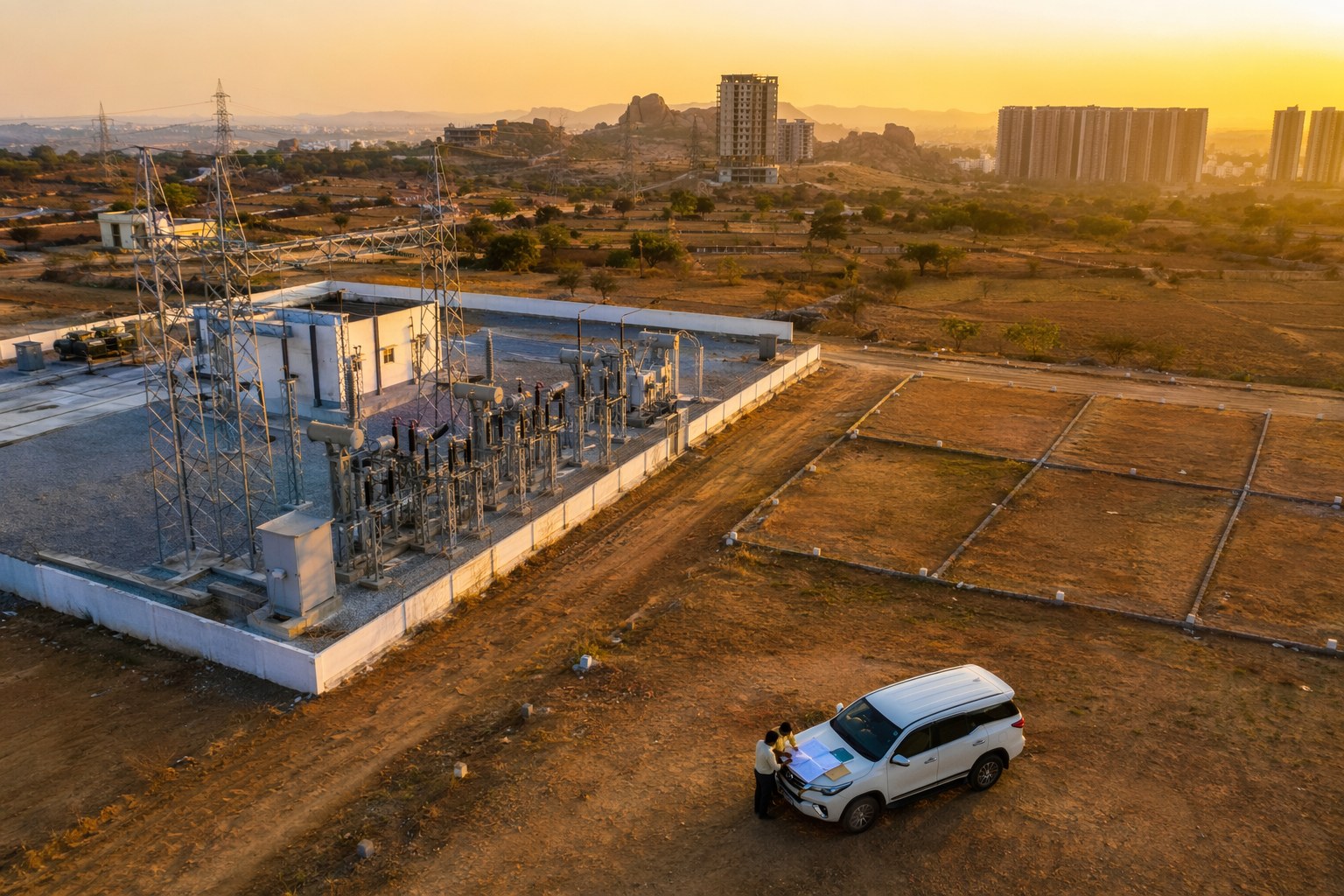



Telangana Land Assemblies Put 22-A Clean-Title Clauses Upfront
Telangana Land Assemblies Put 22-A Clean-Title Clauses Upfront is now becoming the practical mood in large land transactions across Hyderabad's growth corridors. In plain terms, buyers are asking for Section 22-A clearance before price discovery gets serious, not after the advance is paid. For land aggregators working in Kokapet-side spillovers, Mokila, Shankarpally, Kollur, Tellapur, Maheshwaram, Kandukur, Medchal and Shamirpet, this is a clear shift in negotiation style.
The reason is simple. Large parcel assembly is rarely one clean document. It may involve old pahanis, Dharani entries, pattadar passbooks, family partitions, unregistered understandings, assigned land doubts, endowment flags, ceiling history, court references and SRO-level registration checks. When even one survey number in an assembled block is hit by Section 22-A, the entire transaction can slow down or lose value.
As per latest IGRS data available with us, Section 22-A prohibited property records stand at 3,076,153. That number is not something a serious buyer can ignore, especially when assembling multiple acres through several owners.
Telangana Land Assemblies Are Rewriting the First Term Sheet
Earlier, many land assembly discussions started with extent, road access, price expectation, payment schedule and development potential. Title checks came in parallel or after a token advance. We have seen that model cause avoidable fights, mainly when one party says, “registration will happen, sir, small issue only,” and the other party discovers a 22-A entry at the SRO stage.
Now, the better-drafted term sheets are pushing 22-A clean-title clauses right to the top. A buyer may agree to evaluate a parcel only after the seller shares survey numbers, village, mandal, passbook details, link documents and prior ECs. In areas like Nandigama mandal, Shankarpally mandal, Maheshwaram mandal and Patancheru side, this is becoming standard practice among serious developers and plotted layout players.
Our view is blunt: in a multi-owner land assembly, 22-A is not a back-office legal point. It is a price, timing and exit-risk point.
This is particularly relevant where the buyer wants to combine agricultural lands, convert land use later, or prepare for plotted development. Even before RERA, HMDA or DTCP planning comes into the picture, the base question is whether the land can be validly registered and transferred.
Why Telangana Land Assemblies Now Treat 22-A as Deal Gatekeeping
Section 22-A entries generally affect registration. If a property falls under prohibited property categories in government records, the Sub-Registrar may refuse registration or keep the transaction stuck until the issue is clarified through proper channels. For a small individual plot, that is painful. For a land assembly, it can be expensive and reputation-damaging.
Take a common Hyderabad-periphery scenario. An aggregator ties up land in three or four neighbouring survey numbers in a village near Shankarpally or Kandukur. Some owners have clean Dharani records. One old family branch has a missing link. Another survey number has a historic government classification issue. A third has an EC that looks clean, but the SRO record flags a restriction. If this comes out after advances are paid, every party starts blaming the other.
That is why many developers now ask for an early check through the Section 22-A Prohibited Property Check, followed by the Encumbrance Certificate Search and, where needed, the EC Analyzer. These tools do not replace an advocate's opinion, but they help buyers ask sharper questions before money moves.
What 22-A Clean-Title Clauses Usually Cover
A proper clean-title clause is not just one line saying “seller confirms title is clear.” That is too weak for large land deals. In our experience, buyers are asking for specific confirmations tied to survey numbers, revenue village, mandal and SRO jurisdiction.
| Deal stage | What buyers are asking | Why it matters |
|---|---|---|
| Before site visit | Village, mandal, survey number, extent and owner details | Helps identify whether the parcel is even worth inspecting |
| Before term sheet | 22-A check, EC review and basic Dharani verification | Filters prohibited property risk early |
| Before advance | Seller declaration on government land, assigned land, endowment, court and acquisition issues | Reduces disputes after token payment |
| Before registration | SRO confirmation, updated EC, ready reckoner value and stamp duty estimate | Prepares the transaction for execution |
For value and registration planning, parties are also checking the Market Value / Guideline Value Search, Stamp Duty Calculator and Find Your SRO Office. This is sensible because a land assembly is not only about title. It also needs correct SRO mapping, stamp duty budgeting and document sequencing.
Mandals Where This Becomes Especially Sensitive
The clean-title conversation is sharper in high-activity mandals around Hyderabad. Gandipet, Serilingampally, Shankarpally, Moinabad, Patancheru, Kandukur, Maheshwaram, Medchal and Shamirpet all see different types of demand: villa layouts, warehouses, farm plots, plotted ventures and long-hold investment parcels.
In Kokapet, Narsingi and Financial District influence zones, the issue is often premium pricing and development permission risk. In Mokila, Kollur and Tellapur, buyers look closely at survey boundaries, road access and past sale deeds. In Maheshwaram and Kandukur, large extents can involve mixed land histories, so old revenue classifications matter. In Medchal and Shamirpet, industrial and institutional interest makes SRO and land-use clarity very valuable.
One practical problem is that sellers often quote based on market sentiment, while buyers price based on verified risk. If the ready reckoner value, EC trail, 22-A status and land-use position do not support the seller's story, the offer changes. Sometimes the deal still goes through, but with holdback clauses, staged payment or a condition that the seller must clear revenue record issues before registration.
How 22-A Checks Affect Pricing and Payment Terms
We should be honest here. A 22-A doubt does not always mean the seller is wrong or dishonest. Revenue records in Telangana can carry old entries, mismatched survey references or classification issues that need correction. But a buyer will not pay clean-title pricing for land that carries unclear registration risk.
That is why new-age assembly agreements are using conditional advances. The buyer may release a small token after document submission, a larger amount after 22-A and EC clearance, and the balance at registration. Some agreements also place responsibility on the seller to obtain clarifications, NOCs or corrections wherever required.
For survey-level checks, parties can start with the Survey Number Finder and then run broader due diligence through the Property Verification Tool. For larger development assumptions, buyers may also check the Land Use Zone Finder, Road Width Check and FSI/FAR Calculator. These checks help connect title risk with actual development potential.
Telangana Land Assemblies Need Cleaner Data Rooms
The biggest operational change is the rise of the land data room. Instead of sending random WhatsApp photos of sale deeds, serious aggregators are arranging documents village-wise and survey-number-wise. A clean data room should usually include sale deeds, link documents, latest EC, Dharani extracts, pahanis where relevant, mutation details, passbook references, tax receipts and any litigation or family settlement documents.
For an assembly across multiple owners, this discipline saves time. It also builds buyer confidence. Developers do not want surprises just before registration at the SRO. Banks and investors also ask harder questions when the deal size is large or when the land is meant for a future plotted or gated community project.
My opinion: the aggregator who can prove clean title early will command better seriousness from buyers. The aggregator who says “first give advance, then we will show papers” will find it harder in the current market.
What Sellers Should Do Before Entering a Land Assembly Deal
- Keep survey numbers, village name, mandal and SRO details ready.
- Check whether any parcel appears in Section 22-A prohibited property records.
- Download or collect updated ECs before negotiations become serious.
- Match Dharani entries with physical possession and old link documents.
- Clarify family consent, legal heirs and partition history early.
- Do not hide court, acquisition, endowment or assigned land doubts. They come out later.
- Check guideline value and stamp duty impact before finalising the structure.
For buyers, the message is equally clear. Do not treat 22-A clearance as a lawyer's last-minute checklist item. Put it in the first email, first term sheet and first board note. In Telangana land assemblies, clean title is not a decorative clause. It is the foundation of the deal.
Frequently Asked Questions
What is a 22-A clean-title clause in Telangana land assemblies?
It is a contract clause where the seller confirms that the land is not affected by Section 22-A prohibited property restrictions and agrees to clear any such issue before registration.
Why are buyers checking 22-A status before paying advances?
Because a 22-A entry can block or delay registration. In a large land assembly, even one affected survey number can disturb pricing, timelines and project planning.
Which records should be checked along with 22-A?
Buyers should check EC, Dharani entries, pahani where relevant, link documents, SRO jurisdiction, guideline value, family title history and any court or acquisition references.
Can a 22-A issue be corrected?
Some issues may be clarified or corrected through proper revenue or legal process, depending on the reason for the entry. Buyers should not assume correction is automatic.
Which tool can help with Section 22-A checks?
You can start with the Section 22-A Prohibited Property Check and then use EC, SRO and guideline value tools for deeper transaction review.