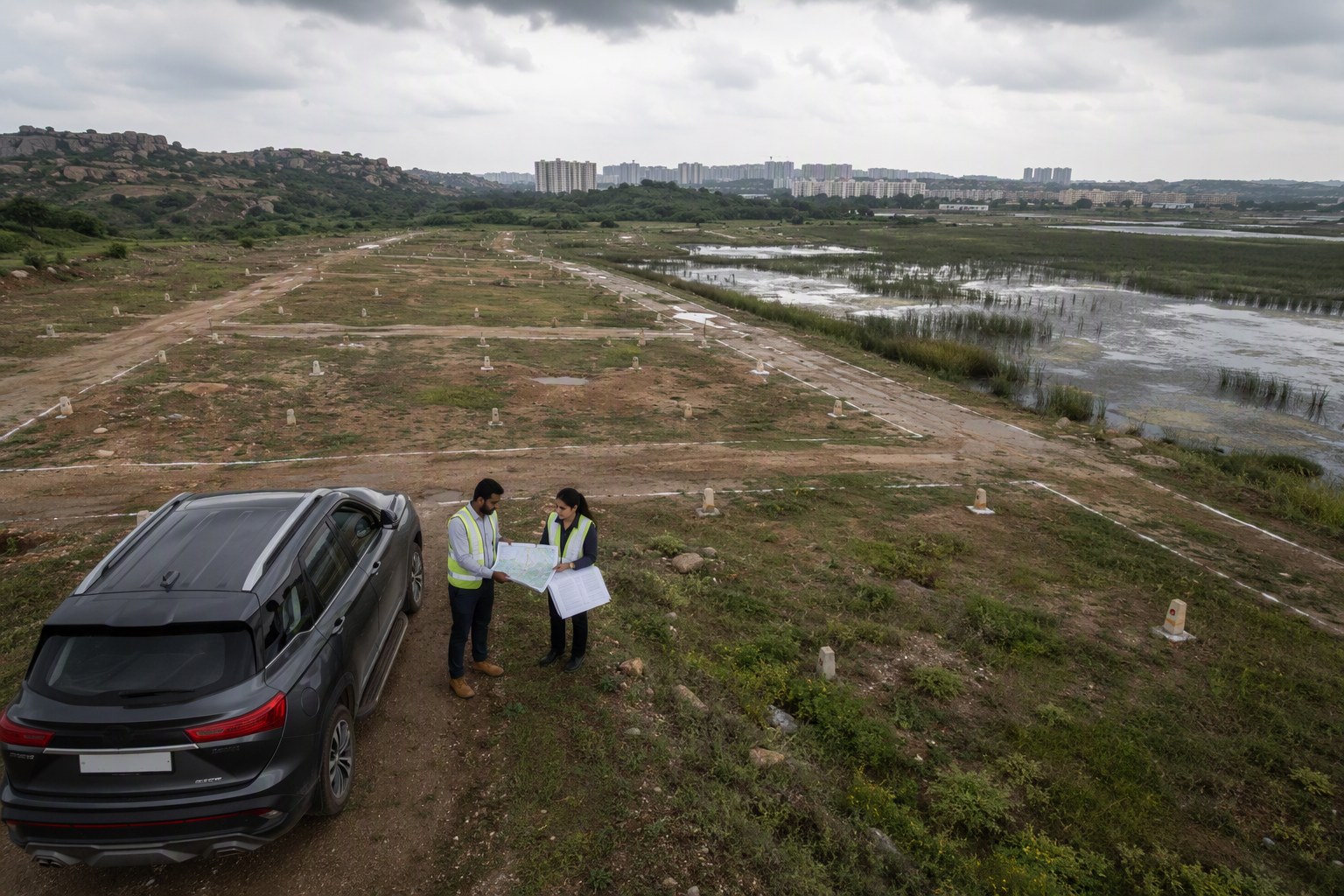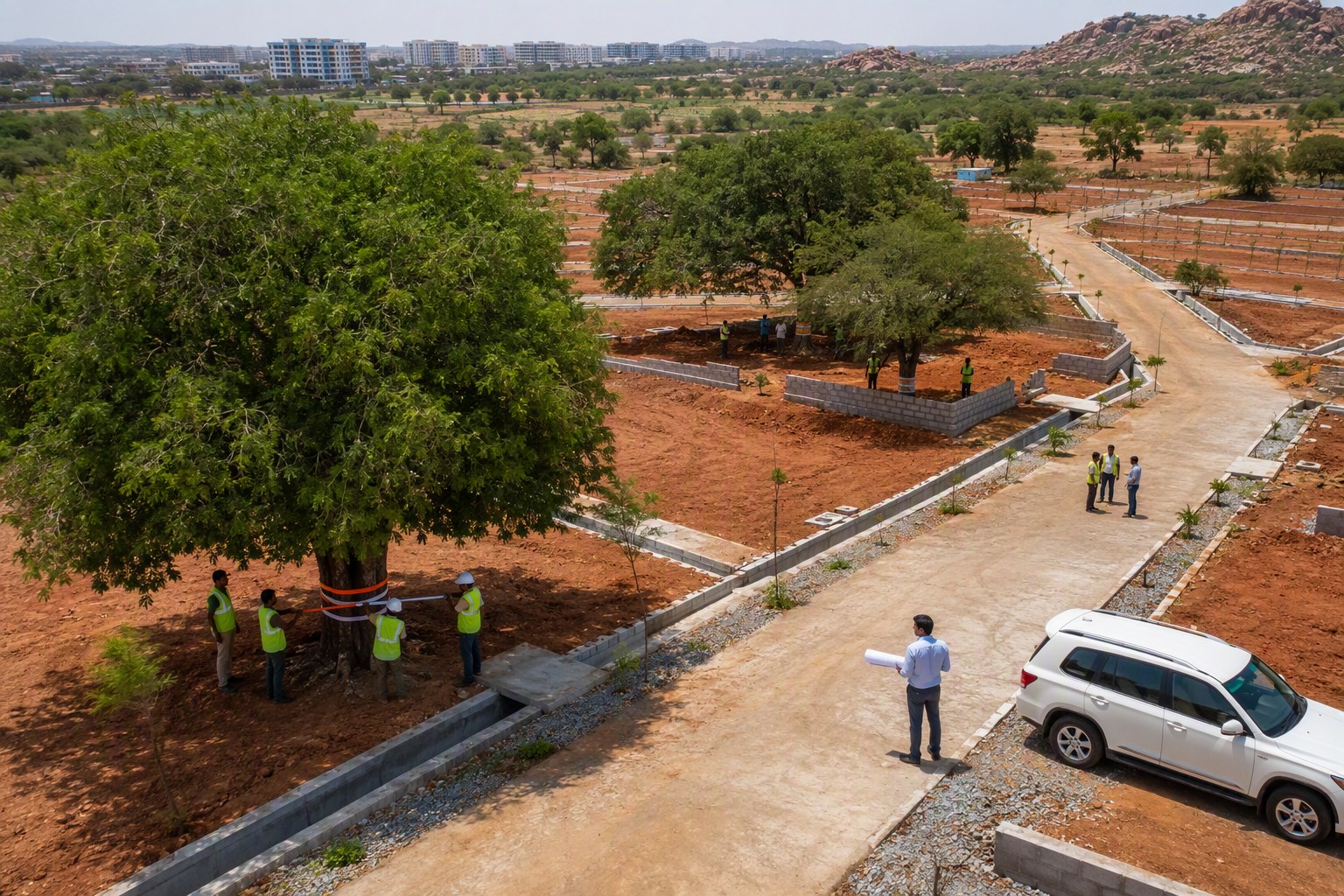



Telangana May Tighten C&D Waste Rules for New Housing as the state looks at stricter tracking of construction and demolition debris from apartment sites, villa projects and redevelopment properties. The immediate impact for buyers in Hyderabad may not be on price, but on due diligence. Along with title, EC, RERA, Dharani, SRO records and building approval, buyers may soon have to ask one more practical question: has this project handled its debris legally?
The likely direction is clear. Telangana’s urban housing market is expanding fast in Kokapet, Narsingi, Tellapur, Kollur, Bachupally, Kompally, Uppal and Shamshabad. Every basement excavation, old structure demolition and slab correction creates waste. If the state tightens C&D waste rules, developers may need better records: disposal receipts, transport challans, authorised recycling plant acknowledgements and site-level waste management plans.
In our experience, buyers spend serious time checking link documents and sale deeds, but hardly anyone asks where the construction debris went. That may become a normal buyer question, especially for larger gated communities and redevelopment projects.
Why Telangana May Tighten C&D Waste Rules for New Housing
The pressure is coming from three sides: urban flooding, illegal dumping and ESG-style scrutiny from large homebuyers. C&D waste dumped in nalas, lake buffers, open plots and road margins is not just an environmental issue. It directly affects drainage, road access, neighbourhood quality and future resale perception.
Hyderabad has already seen C&D waste processing through facilities such as Jeedimetla and Fathullaguda under the GHMC ecosystem. The next logical step is stricter traceability. Instead of saying debris was removed, a builder may have to prove when it was removed, by whom, in which vehicle, and at which authorised site it was received.
For homebuyers, this sits beside existing legal checks. Telangana already has a heavy verification burden. One database figure tells the story: 147,934 properties are listed under Section 22-A prohibited properties. That means buyers are already expected to verify whether a land parcel is blocked from registration. Environmental compliance may become the next checkpoint, not a replacement for legal due diligence.
Before paying token advance, a buyer can already run basic checks through Verified.RealEstate tools such as the Section 22-A Prohibited Property Check, Encumbrance Certificate Search, RERA Project Lookup and Property Verification Tool. If C&D tracking becomes tighter, these checks should be paired with builder-side environmental records.
Telangana May Tighten C&D Waste Rules for New Housing: what may change for buyers
The change may not come as one dramatic order. It may arrive through building permissions, municipal enforcement, RERA disclosures, occupancy certificate conditions, bank valuation notes or resident association questions at handover.
For a buyer, the practical checklist may look like this:
- Ask whether any old structure was demolished before the project started.
- Check if excavation soil and debris were sent to authorised locations.
- Ask for C&D waste transport receipts for large projects.
- See whether environmental clearance applies, especially for larger built-up areas.
- Check if the RERA filing mentions waste management or statutory approvals.
- Confirm whether the occupancy certificate has any pending environmental conditions.
We have seen this matter more in redevelopment pockets such as Jubilee Hills, Banjara Hills, Begumpet, Ameerpet, Himayatnagar and parts of Secunderabad, where old independent houses, commercial structures and small apartment blocks are being replaced by new floors. In greenfield areas like Kollur, Mokila and Tellapur, the bigger issue is usually excavation waste, road-side dumping and soil movement.
Local price context: why C&D compliance will matter in high-value Hyderabad markets
When buyers pay premium rates, they expect clean approvals and a clean site history. Below are current market quote bands we are seeing in active Hyderabad housing corridors. These are not government guideline values; they are typical apartment base price discussions before floor rise, amenities, corpus and registration costs.
| Locality | Mandal / area context | Typical new apartment quote | Why C&D tracking matters |
|---|---|---|---|
| Kokapet | Gandipet mandal | ₹8,500-₹12,500 per sq ft | Large basements and high-rise excavation create heavy debris movement. |
| Narsingi | Gandipet mandal | ₹7,000-₹10,000 per sq ft | Rapid project density near ORR needs disciplined site waste handling. |
| Tellapur | Ramachandrapuram side growth belt | ₹6,800-₹9,500 per sq ft | Multiple gated communities mean higher cumulative construction waste. |
| Kollur | Sangareddy growth corridor | ₹5,500-₹7,500 per sq ft | Open land dumping can affect future neighbourhood image and access roads. |
| Bachupally | Bachupally mandal | ₹5,800-₹8,000 per sq ft | Mixed villa and apartment construction creates scattered debris risk. |
| Uppal | Uppal mandal | ₹5,500-₹8,000 per sq ft | Redevelopment and metro-linked demand increase demolition activity. |
Buyers should not confuse these market quotes with SRO market value or ready reckoner value. For registration planning, use the Market Value / Guideline Value Search and the Stamp Duty Calculator. For jurisdiction, especially when a project sits near a mandal or district edge, the Find Your SRO Office tool is useful.
What documents should buyers ask from builders?
For under-construction flats, the first layer remains legal and approval verification. Check RERA registration, sanctioned plan, land title, EC, link documents, survey number and whether the land is affected by Section 22-A, litigation or government assignment restrictions. After that, ask for sustainability records in a simple way.
For large apartment projects
- RERA registration number and latest project status.
- Building permission copy from the local authority or TS-bPASS route.
- Environmental clearance, if applicable.
- C&D waste disposal plan or waste management declaration.
- Receipts from authorised C&D waste processing facility, if major demolition or excavation has happened.
- Vehicle movement records for debris transport, where available.
For redevelopment and small builder floors
- Demolition permission or local body acknowledgement, if an old structure was removed.
- Photographs of site clearing and debris removal.
- Written confirmation that debris was not dumped in neighbouring open plots, lake buffers or road margins.
- Neighbourhood complaints, if any, during construction.
Many small builders may say these are not standard buyer documents. Fair enough. But when a buyer is paying ₹1.2 crore, ₹2 crore or ₹4 crore for a Hyderabad home, asking basic environmental compliance is not unreasonable. It also protects residents later when associations inherit unfinished obligations.
How this connects with title, survey number and land use checks
C&D waste compliance will not save a bad title. A clean debris record does not mean the land is legally safe. Buyers still need to verify the survey number, ownership chain, zoning and road access.
For plotted development and villa projects in Mokila, Shankarpally, Kadthal, Maheshwaram, Adibatla and Tukkuguda, use the Survey Number Finder, Land Use Zone Finder, Road Width Check and FSI/FAR Calculator. In HMDA and municipal limits, land use and road width can affect approval, height, setbacks and resale confidence.
The point is not to burden buyers with another file. The point is to stop treating environmental compliance as someone else’s headache. In Hyderabad’s premium housing market, the next serious buyer will ask for title clarity, approval clarity and site behaviour clarity.
Our view: this will separate organised builders from casual operators
If Telangana tightens C&D waste tracking, organised developers will adjust quickly. Many already maintain contractor bills, debris removal logs and compliance folders for lenders, PE investors or corporate buyers. The pressure will be heavier on small projects, redevelopment operators and landowners doing joint development without professional site controls.
There may be a small cost impact. Authorised transport and processing are not free. But compared with land cost in Kokapet, Narsingi or Gachibowli, this is not the number that will break a project. The bigger impact is discipline. A builder who cannot show basic waste handling records may also be casual with other paperwork.
For buyers, the smart approach is simple: do not reject a project only because the builder has not heard this question before. Ask politely, record the response and compare it with the project size. A 5-acre high-rise project should have better answers than a four-floor standalone building. That is common sense.
Buyer checklist before booking a new home in Telangana
- Verify RERA status using RERA Project Lookup.
- Check EC and ownership trail through Encumbrance Certificate Search.
- Check Section 22-A risk using Section 22-A Prohibited Property Check.
- Confirm government market value through Market Value / Guideline Value Search.
- Estimate registration cost using Stamp Duty Calculator.
- Ask the builder for C&D waste disposal records, especially for large projects and redevelopment sites.
- Check land use, road width and FSI if buying in an expanding corridor.
Telangana’s housing market is becoming more mature. Earlier, buyers mainly asked for price, location and amenities. Then came RERA, EC, Dharani and approval checks. Now, C&D waste tracking may become part of the same buyer discipline. In our view, that is a healthy shift for Hyderabad, provided enforcement is practical and not just another paper burden.
Frequently Asked Questions
Will tighter C&D waste rules increase flat prices in Hyderabad?
There may be a small compliance cost, mainly for authorised transport and processing of debris. In premium markets like Kokapet, Narsingi and Tellapur, the impact should be limited compared with land and construction costs.
Should buyers ask for C&D waste records before booking a flat?
Yes, especially for large gated communities, high-rise projects and redevelopment sites. Ask for disposal receipts, waste management plans or builder confirmation on authorised debris handling.
Is C&D waste compliance more important than title verification?
No. Title, EC, RERA, survey number, land use and Section 22-A checks come first. C&D waste compliance is an extra sustainability and site-quality checkpoint.
Which Hyderabad areas should be watched closely for demolition waste?
Redevelopment-heavy areas like Jubilee Hills, Banjara Hills, Begumpet, Ameerpet and Secunderabad need closer attention. Growth corridors such as Kollur, Tellapur, Mokila and Bachupally should also be checked for excavation and dumping practices.
How can I verify other property risks in Telangana?
Use RERA lookup, EC search, guideline value search, SRO finder, survey number checks and the Section 22-A prohibited property check before paying a major advance.