


Telangana 22-A Overhang May Test State Borrowing Math
Telangana 22-A Overhang is no longer only a buyer-side due diligence issue. With 147,934 properties listed as prohibited under Section 22-A, the number now sits close to the State’s fiscal table also. These entries can influence how land values are read, how secure land-backed receipts appear, and how comfortable lenders and rating-watchers feel about future borrowing assumptions.
For an individual buyer in Hyderabad, a 22-A entry usually means one straight problem: the SRO may refuse registration. For the government, the issue is wider. Land is a silent balance-sheet item. It supports auction expectations, registration revenue, collateral value, municipal growth, infrastructure funding confidence and, indirectly, borrowing comfort.
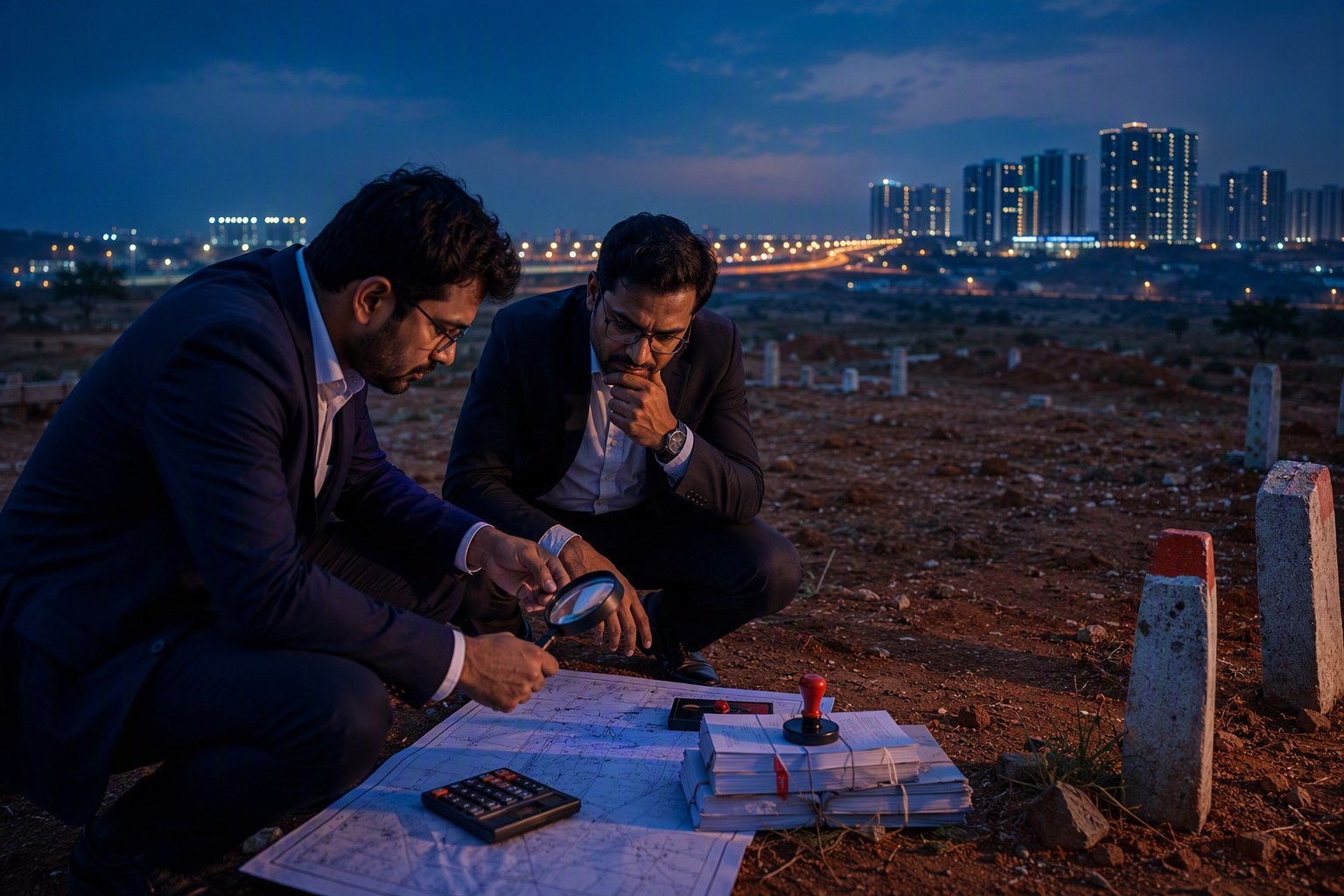
In our experience, 22-A trouble does not hit all markets equally. A small disputed survey number in a far mandal is one thing. A prohibited patch near Kokapet, Narsingi, Tellapur, Mokila, Adibatla or Tukkuguda can change the tone of an entire micro-market.
Telangana 22-A Overhang: why 147,934 properties matter for fiscal planning
Section 22-A entries are properties prohibited from registration. These may include government land, assigned land, endowment land, wakf land, ceiling surplus land, court-disputed parcels, notified assets or lands where the State has directed the registration department not to allow transfer.
The headline number — 147,934 prohibited properties — matters because Telangana’s land economy is closely linked to public finance. Hyderabad and its surrounding growth corridors have delivered strong land monetisation signals in the last few years. Public auctions in Kokapet-Neopolis crossed the ₹100 crore per acre mark in 2023, while Budwel also gave the State a strong price discovery signal. Such rates naturally shape expectations around land value, future layouts, infrastructure recovery and urban expansion.
But 22-A stock creates a discount cloud. It does not mean every prohibited entry is valuable urban land. Many entries may be agricultural, old revenue records, small extents, or litigation-heavy parcels. Still, when nearly 1.48 lakh properties carry a registration block, budget planners cannot treat every land pocket as clean, liquid and immediately monetisable.
Telangana 22-A Overhang and borrowing comfort
State borrowing is not decided only by one land list. It depends on revenue, deficit, guarantees, debt servicing, tax buoyancy and Union Government borrowing limits. Yet land-value assumptions play a quiet role in how investors read a State’s future capacity. If land banks are clean, saleable and easily documented, the State has more comfort. If records are clogged by 22-A, the comfort reduces.
There are three channels to watch:
- Registration revenue: Telangana property transactions generally attract 4% stamp duty, 1.5% transfer duty and 0.5% registration fee, taking the normal transaction cost to 6%. If high-value land parcels cannot move because of 22-A, related SRO collections may be deferred.
- Land monetisation: Government agencies may plan receipts from land sales, development rights, industrial allotments or urban layouts. Prohibited status can slow title preparation and reduce bidder confidence.
- Collateral comfort: Banks, NBFCs and institutional investors look at title quality. Land with 22-A shadow is not taken at face value, even if the market rate in the area is high.
That is where the issue moves beyond individual buyer risk. A buyer losing an advance is painful. A State carrying uncertain land-value assumptions across thousands of entries is a planning challenge.
Where Hyderabad real estate feels the 22-A effect first
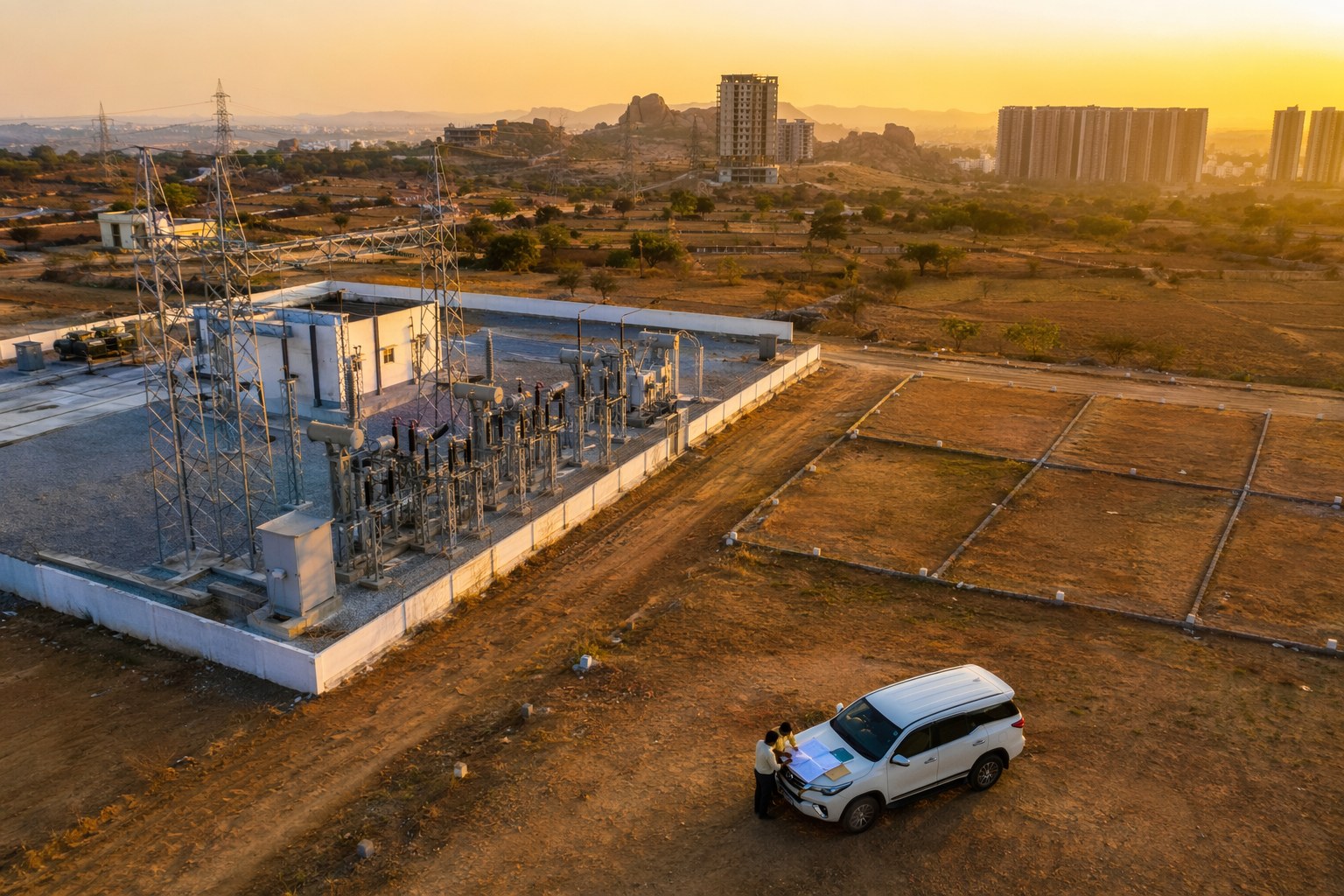
Hyderabad’s outer growth belt is sensitive to title confidence. In Serilingampally mandal, localities such as Gachibowli, Kondapur, Tellapur and Financial District already command premium apartment and land values. In Gandipet and Rajendranagar mandals, Narsingi, Kokapet, Puppalaguda, Manikonda and Appa Junction have seen heavy investor interest. On the western side, Shankarpally, Mokila and Kollur attract plotted development buyers. Towards the south and east, Shamshabad, Maheshwaram, Tukkuguda, Adibatla, Hayathnagar, Ibrahimpatnam and Ghatkesar are tied to airport, pharma, logistics and ORR-led demand.
In these belts, a clean survey number can sell quickly. A similar parcel with a 22-A remark, mismatched pahani, pending Dharani issue or unclear SRO record may sit frozen for years. We’ve seen buyers accept a lower road width, a longer commute or a delayed layout approval. But they rarely accept a registration block once their lawyer flags it.
For apartment buyers, the risk is slightly different. A RERA-registered project may still need underlying land scrutiny. Before booking in a project, buyers should check the promoter record through the RERA Project Lookup, verify the survey numbers using the Survey Number Finder, and run a land-level check through the Section 22-A Prohibited Property Check.
How 22-A can disturb land-value assumptions
Market value is not only about what the neighbour sold for. In Telangana, the ready reckoner or guideline value is one layer. The real transaction rate is another layer. Title liquidity is the third layer, and that is where 22-A bites.
| Fiscal or market item | How 22-A can affect it | Practical signal to track |
|---|---|---|
| SRO revenue | Registrations may be blocked or postponed | Lower document flow in affected survey numbers |
| Guideline value confidence | High guideline values may not convert into saleable value | Gap between market quote and bankable title value |
| Government land monetisation | Auctions may need longer title cleaning before bidding | More pre-bid title clarifications |
| Private collateral | Banks may reduce valuation or reject mortgage | Loan sanction delays and legal queries |
| Urban expansion | Layouts and infrastructure alignment may face objections | Revenue record corrections and Dharani petitions |
Anyone checking a property should not stop with the sale deed. Use the Market Value / Guideline Value Search for official value, the Encumbrance Certificate Search for transaction history, and the Find Your SRO Office tool to confirm the correct registration jurisdiction. If the numbers do not match across Dharani, pahani, EC and SRO records, pause the deal.
The borrowing math: not panic, but less room for easy assumptions
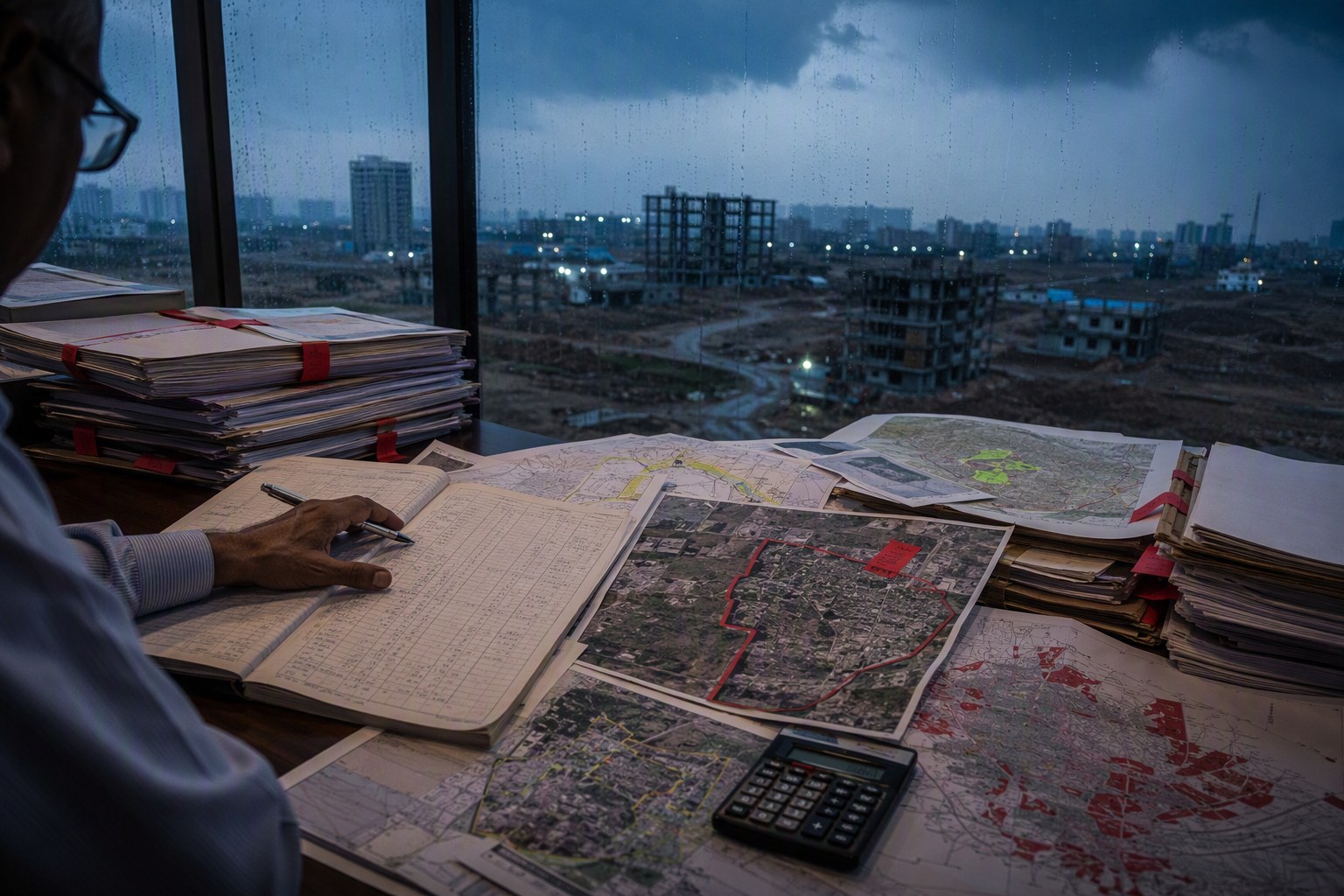
The State need not panic because of one number. The 147,934 entries are not all equal in size, value or legal seriousness. Some may get cleared after record correction. Some may be old entries where ownership is not commercially relevant. Some may be genuine government land that should remain protected.
Still, the overhang reduces the room for loose assumptions. If budget documents or agency plans assume high land receipts from areas where title is unsettled, the gap may show up later as delayed cash flow. If lenders see repeated land disputes in fast-growing corridors, they price risk more carefully. If private developers face title uncertainty, project launches slow down, which can affect GST-linked activity, stamp duty collections and employment around construction.
My reading is simple: Telangana’s land market remains strong, especially around Hyderabad. Demand has not vanished. But title quality is becoming the real premium. In Kokapet or Tellapur, buyers already compare road width, FSI, lake buffer, land use and RERA status. Now they are also asking: is the survey number free from 22-A?
For developers, the clean-title premium will increase. For government agencies, pre-clearing land records before auction will matter more than aggressive reserve pricing. For buyers, the cheapest plot in a hot mandal may turn out to be the costliest mistake if the SRO refuses registration.
What buyers, bankers and policymakers should do now
For buyers
Before paying a token advance, check the survey number, village, mandal, SRO and EC. Use a basic cost check through the Stamp Duty Calculator, then verify the title risk through the Property Verification Tool. If it is a plotted layout, also check land use through the Land Use Zone Finder and road access through the Road Width Check.
For bankers
Valuation reports should separate market rate from enforceable title value. A plot quoted at ₹80,000 per square yard near a premium corridor is not worth that much to a lender if registration or mortgage creation is blocked. Legal scrutiny should start at survey-number level, not only at deed level.
For policymakers
The State can gain by classifying the 147,934 entries into clear buckets: government land, assigned land, court-disputed land, record mismatch, endowment or wakf claim, and cases fit for correction. A public clean-up dashboard would help the market. It would also help the finance department make more realistic assumptions on land-related receipts.
The Telangana 22-A Overhang is therefore a fiscal signal, not just a legal footnote. Clean land records support stronger auctions, better borrowing confidence and healthier real estate growth. Unclear records do the opposite, even in a market as deep as Hyderabad.
Frequently Asked Questions
What is the Telangana 22-A Overhang?
It refers to the large stock of properties listed as prohibited under Section 22-A, where registration may be blocked by the SRO. Telangana currently has 147,934 such prohibited properties.
Can 22-A properties affect State borrowing?
Indirectly, yes. Borrowing depends on many fiscal factors, but land-value assumptions, registration revenue and land monetisation confidence can be affected when many properties carry title or registration restrictions.
Does a 22-A entry mean the property is always illegal?
Not always. It may be government land, assigned land, disputed land, endowment land, wakf land or a record mismatch. The reason must be checked through revenue records, Dharani, pahani and SRO data.
How can a buyer check 22-A risk before purchase?
Check the survey number, mandal, village, EC, guideline value and SRO records. Use Verified.RealEstate tools such as the Section 22-A Prohibited Property Check, EC Search and Property Verification Tool before paying an advance.
Which Hyderabad areas should be extra careful?
High-growth belts such as Kokapet, Narsingi, Tellapur, Mokila, Tukkuguda, Adibatla, Shankarpally, Maheshwaram, Gandipet and Shamshabad need careful survey-number verification because land values are high and disputes can be expensive.