


Telangana 22-A List Puts Land Collateral Values Under Lens
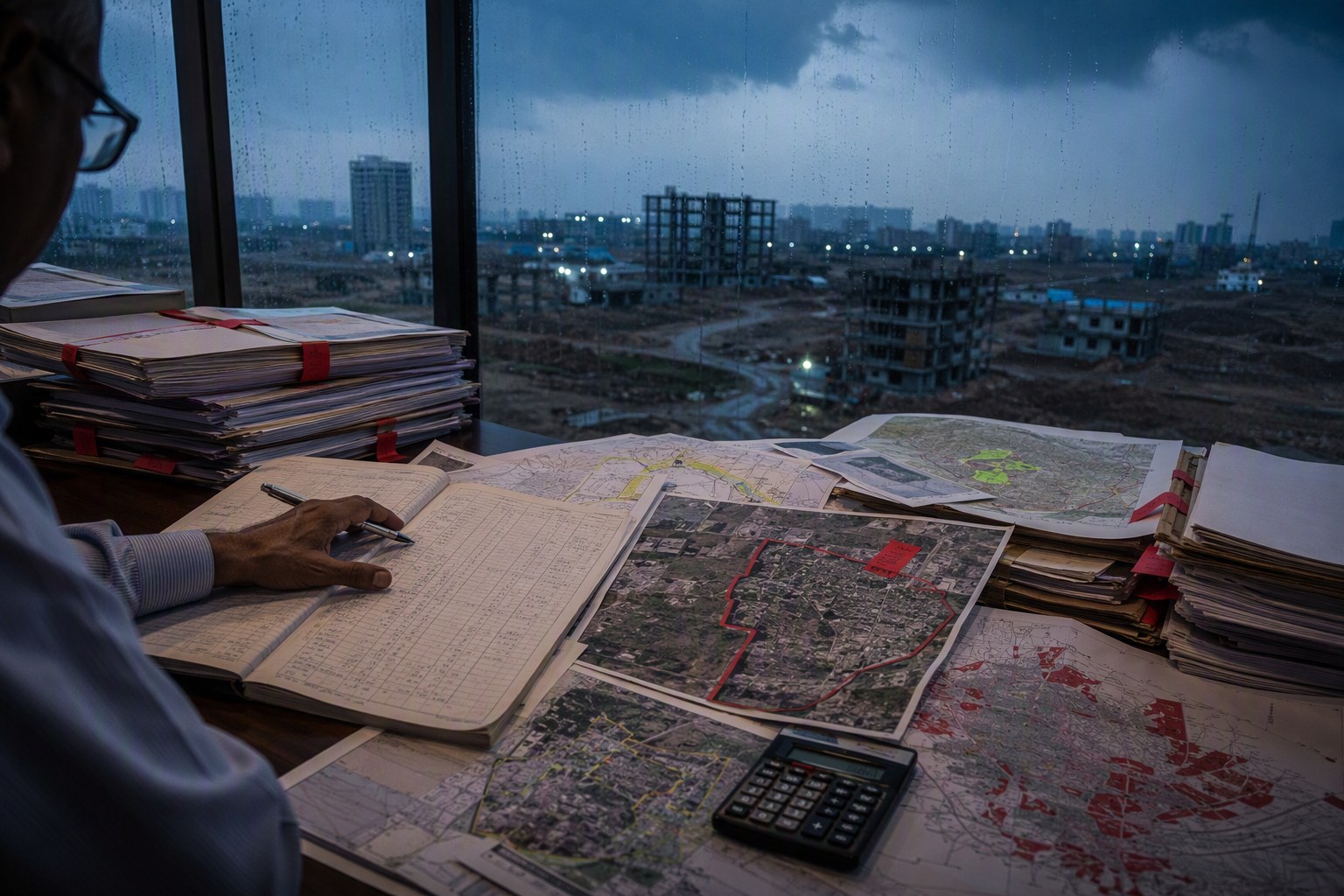
Telangana 22-A List Puts Land Collateral Values Under Lens after the prohibited property database touched 147,934 entries, raising fresh questions for land-backed borrowing, mortgage valuation and loan-against-property decisions across the state. For banks, NBFCs, MSME owners and families using land as security, this is not a small clerical matter. A 22-A hit can freeze registration, reduce collateral comfort and, in many cases, push lenders to rework or reject the file.
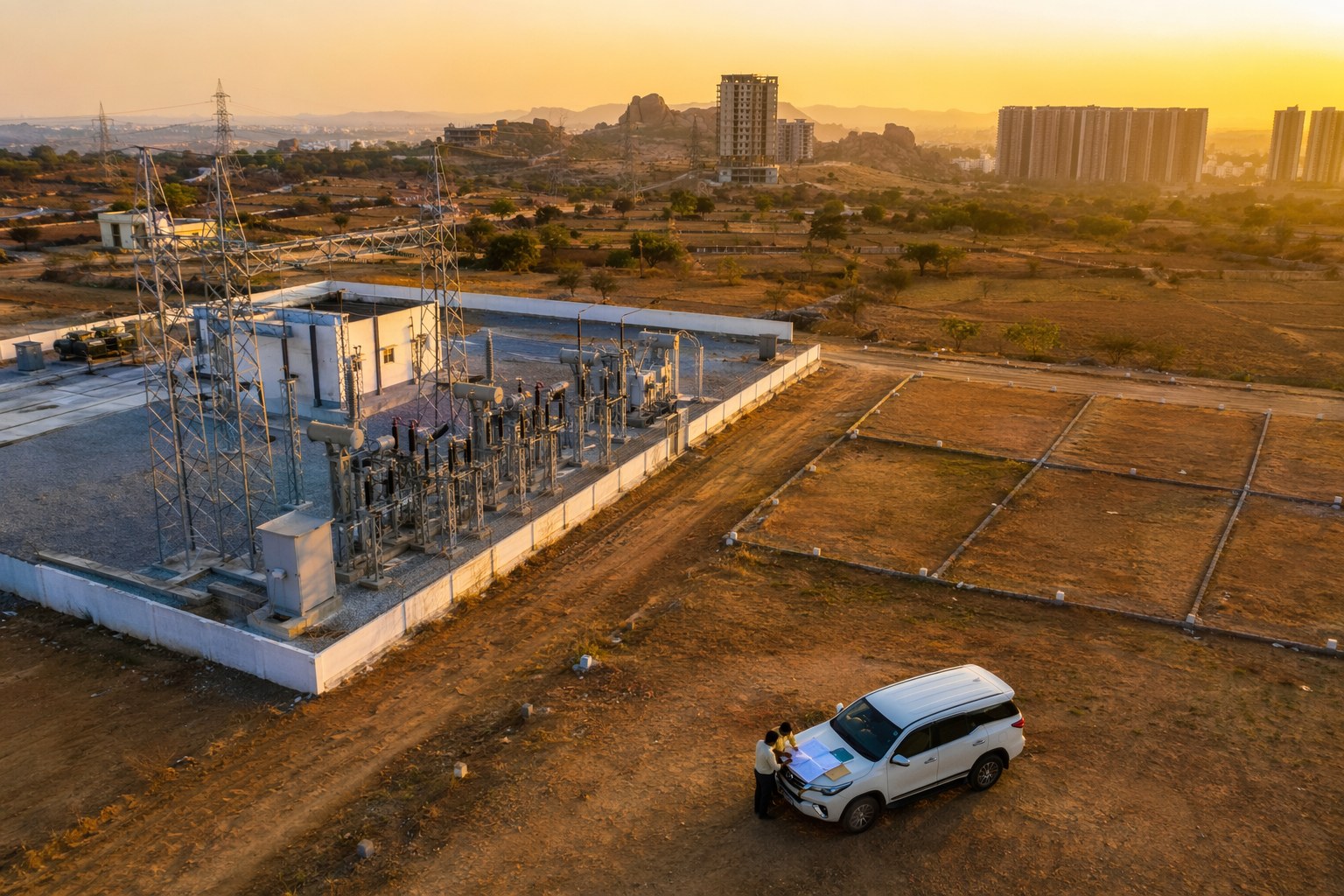
The issue is sharper in Hyderabad’s growth corridors, where agricultural land, plotted layouts and conversion cases are commonly used as loan collateral. We’ve seen this in mandals like Gandipet, Moinabad, Shankarpally, Maheshwaram, Ibrahimpatnam and Ghatkesar, where paper value and lendable value can be very different if the survey number carries a prohibited tag.
For a borrower, market value is what a buyer may pay. For a lender, collateral value is what can be legally enforced, registered and sold if the loan goes bad. Section 22-A directly touches that second number.
Telangana 22-A List and the new pressure on collateral valuation
Under Section 22-A of the Registration Act, certain properties are placed in the prohibited category, which means the Sub-Registrar Office will not register sale, gift, mortgage or other transactions until the restriction is resolved. The entries may relate to government land, assigned land, wakf/endowment claims, court orders, ceiling surplus land, disputed survey numbers or other notified categories.
For lenders, the immediate concern is enforceability. If a land parcel cannot be registered for mortgage or sold through a legally clean process, its value as security falls. Even if the owner has possession, pattadar passbook, pahani extracts and tax receipts, the lender’s legal team will usually insist on checking Dharani records, SRO records and the 22-A list before final sanction.
This is where many Telangana borrowers get caught. They assume that because neighbouring plots in Kokapet, Narsingi or Tellapur are commanding strong market prices, their land will automatically support a large loan. But banks do not lend on sentiment. They lend on clean title, guideline value, saleability and risk discount. In Hyderabad’s premium west zone, Kokapet auction benchmarks have crossed ₹100 crore per acre in government auctions, while private lands in nearby villages are valued differently depending on road access, zoning, layout approval and title history. If a 22-A entry appears, that high headline rate becomes almost useless for mortgage purposes.
How Telangana 22-A List entries affect loan-against-property decisions
Loan-against-property, or LAP, is widely used by small manufacturers, traders, school operators, medical businesses and real estate investors in Telangana. In our experience, the trouble starts when the borrower receives an attractive oral estimate from a broker, then the bank’s valuation comes much lower after legal scrutiny.
Typical LAP lending may range around 50% to 65% of the accepted collateral value, depending on borrower profile and lender policy. But if the land is affected by Section 22-A, lenders may apply a heavy haircut or refuse the security altogether. For example, a parcel near Maheshwaram may be spoken of at ₹3 crore per acre in the local market, but if the survey number appears in the prohibited list or has an unresolved assignment history, the lender may treat the effective collateral value as zero until clearance.
This is also happening around fast-moving areas like Adibatla, Tukkuguda, Shamshabad, Patancheru, Medchal, Kompally and Yadadri-Bhongir belt. These are not uniform markets. A gram panchayat plot, HMDA-approved layout plot, converted agricultural land and litigation-affected survey parcel will not get the same banking treatment.
What banks and NBFCs are checking now
- 22-A status: Whether the survey number or property is in the prohibited list. Use the Section 22-A Prohibited Property Check before applying for a loan.
- Guideline value: The government market value, often called ready reckoner value, through the Market Value / Guideline Value Search.
- Encumbrance history: Existing mortgages, sale deeds, court attachments or past transactions through the Encumbrance Certificate Search.
- SRO jurisdiction: Correct registration office using Find Your SRO Office, because wrong SRO assumptions delay files.
- Survey number mapping: Matching pahani, passbook, Dharani and physical land using the Survey Number Finder.
Telangana 22-A List can change the buyer’s funding plan too
The 147,934 prohibited entries are not just a lender issue. Buyers also face funding risk. Suppose a buyer pays advance for land in Shankarpally mandal, expecting bank funding after agreement. If the bank later finds that the survey number has a 22-A restriction, the loan may stop. The buyer may then be stuck between seller pressure, advance refund arguments and delayed registration.
This is why buyers should not treat 22-A checking as a post-agreement formality. It should come before token advance. In Telangana land deals, especially outside core municipal limits, the basic due diligence stack should include Dharani check, pahani, passbook, EC, link documents, layout approval where applicable, land use zoning and SRO confirmation. For apartment buyers, RERA status also matters; they can verify projects using the RERA Project Lookup.
Stamp duty planning also gets affected. If registration itself is blocked, calculating duty is secondary. Still, for clean properties, buyers can estimate transaction costs through the Stamp Duty Calculator. For mixed-use or development assets, the Composite Value Calculator can help compare land and built-up components.
Why owners should not rely only on market talk
Telangana landowners often know the local going rate better than any outsider. That local knowledge has value. But a lender’s valuation report has a different job. It has to answer whether the property can be legally mortgaged, whether title can survive challenge, and whether resale is possible if enforcement happens.
In places like Moinabad and Gandipet, one survey number may have clean private patta land while the next may face government land claims or old assignment entries. In Ghatkesar or Medchal, old layouts, missing link documents and boundary mismatches can weaken collateral comfort. In Maheshwaram and Kandukur, land conversion and access road issues can alter valuation. These are practical ground realities, not academic legal points.
Owners planning to borrow should first run a basic property health check through the Property Verification Tool. If there is a 22-A flag, the next step is not panic. The owner should collect copies of pattadar passbook, Dharani extract, pahani, old sale deeds, mutation records, court orders if any, and approach the relevant authority for clarification or deletion process where legally valid.
Borrowers should prepare this file before approaching lenders
| Document or check | Why it matters for collateral |
|---|---|
| 22-A prohibited property check | Confirms whether registration or mortgage may be blocked |
| Latest EC | Shows mortgages, sales, releases and registered claims |
| Dharani and pahani records | Establishes revenue record, possession and survey details |
| Guideline value | Helps compare official value with market expectation |
| Layout or conversion papers | Improves comfort for plotted and non-agricultural use |
| SRO confirmation | Prevents wrong-jurisdiction registration delays |
The financial message from Telangana 22-A List data
The biggest message is simple: title risk is now a financial risk. With 147,934 entries in the prohibited property database, owners cannot assume that land will automatically work as bankable collateral. For MSMEs, this can affect working capital plans. For families, it can delay education loans, business expansion loans or emergency funding. For developers and investors, it can change acquisition pricing.
My view is that Telangana borrowers should check legal bankability before negotiating loan terms. Interest rate discussion, tenure and processing fee are meaningful only after the property passes the legal filter. A half-percent cheaper loan is no use if the collateral itself fails.
For buyers, the smart approach is to price risk openly. A clean HMDA-approved plot in Tellapur or Nallagandla cannot be compared with a disputed survey parcel in a peripheral village just because both are near the Outer Ring Road. The same logic applies to lands near Regional Ring Road influence zones, where speculation is high and document quality is uneven.
For lenders, the 22-A list is likely to remain a central screen in valuation and credit decisions. For owners, it is a reminder to clean up records before the need for money becomes urgent.
Frequently Asked Questions
How many properties are in the Telangana 22-A prohibited list?
The current database fact used here is 147,934 prohibited property entries under Section 22-A. These entries may affect registration, mortgage creation and lender comfort.
Can I get a loan against land if it is in the 22-A list?
In most cases, banks and NBFCs will either reject the property as collateral or ask for legal clearance before sanction. Some lenders may consider other security, but the 22-A-affected land will usually not be accepted as clean collateral.
Does a high market rate override a 22-A restriction?
No. Even if the land is in a high-value area like Kokapet, Narsingi, Tellapur or Shamshabad, a 22-A entry can reduce its lendable value sharply because enforceability is doubtful.
What should buyers check before paying advance for land in Telangana?
Buyers should check 22-A status, EC, Dharani records, pahani, survey number, guideline value, SRO jurisdiction, access road and land use. These checks should be done before token advance, not after agreement.
Which Verified.RealEstate tools help in land collateral checks?
Start with the Section 22-A Prohibited Property Check, Guideline Value Search, Encumbrance Certificate Search, Find Your SRO Office and Property Verification Tool. Together, they give a better view of title and collateral risk.