


Hyderabad Projects May Add Heat-Resilience Notes to Files as buyer questions around summer comfort, water planning and usable open spaces become sharper across the city’s growth corridors. Developers in Kokapet, Narsingi, Tellapur, Gachibowli, Miyapur, Bachupally, Uppal and Shamshabad are likely to face more detailed enquiries on cool roofs, shaded walkways, cross-ventilation, tree cover, basement ventilation and summer water backup before bookings are finalised.
This is not yet a new standalone approval category. But in the Hyderabad market, project information files are slowly becoming more than brochure folders. Buyers now want proof. They ask for RERA details, sanctioned plans, land title papers, amenities schedule, water source notes and maintenance assumptions. Heat-resilience may soon sit inside that same buyer due-diligence pack.
Hyderabad Projects May Add Heat-Resilience Notes to Files: what is changing
The immediate change is in buyer behaviour. In our experience, Hyderabad homebuyers are no longer satisfied with only elevation renders, clubhouse images and possession timelines. Families inspecting flats in Financial District, Tellapur, Nallagandla, Kondapur and Manikonda are asking very practical questions: will the top-floor flats heat up too much, where is the shaded seating, how much of the podium is exposed, will corridors get airflow, and how is water storage planned for peak summer?
For developers, this means project information files may need a new layer of clarity. A sensible heat-resilience note can explain whether the project has cool roof treatment, reflective terrace finish, shaded open areas, native tree plantation, ventilation shafts, STP reuse for landscaping, rainwater harvesting, water metering and backup arrangements. These are not fancy add-ons. In Hyderabad’s climate, they directly affect day-to-day living.
Buyers should also see this as part of normal verification, not as a green marketing claim. Before paying token advance, check the project registration through RERA Project Lookup, verify land and ownership trails with the Encumbrance Certificate Search, and check the survey number context through Survey Number Finder. Heat comfort matters, but title safety still comes first.
Hyderabad Projects May Add Heat-Resilience Notes to Files in western and northern corridors
The pressure will be most visible in areas where high-rise apartment activity is strong and summer exposure is felt sharply. In Gandipet mandal, buyers looking at Kokapet, Narsingi and Nanakramguda already compare tower spacing, podium design and road dust conditions. In Serilingampally side, Gachibowli, Kondapur, Nallagandla and Tellapur buyers usually ask about commute and rental demand, but heat and water planning are now entering site visit discussions.
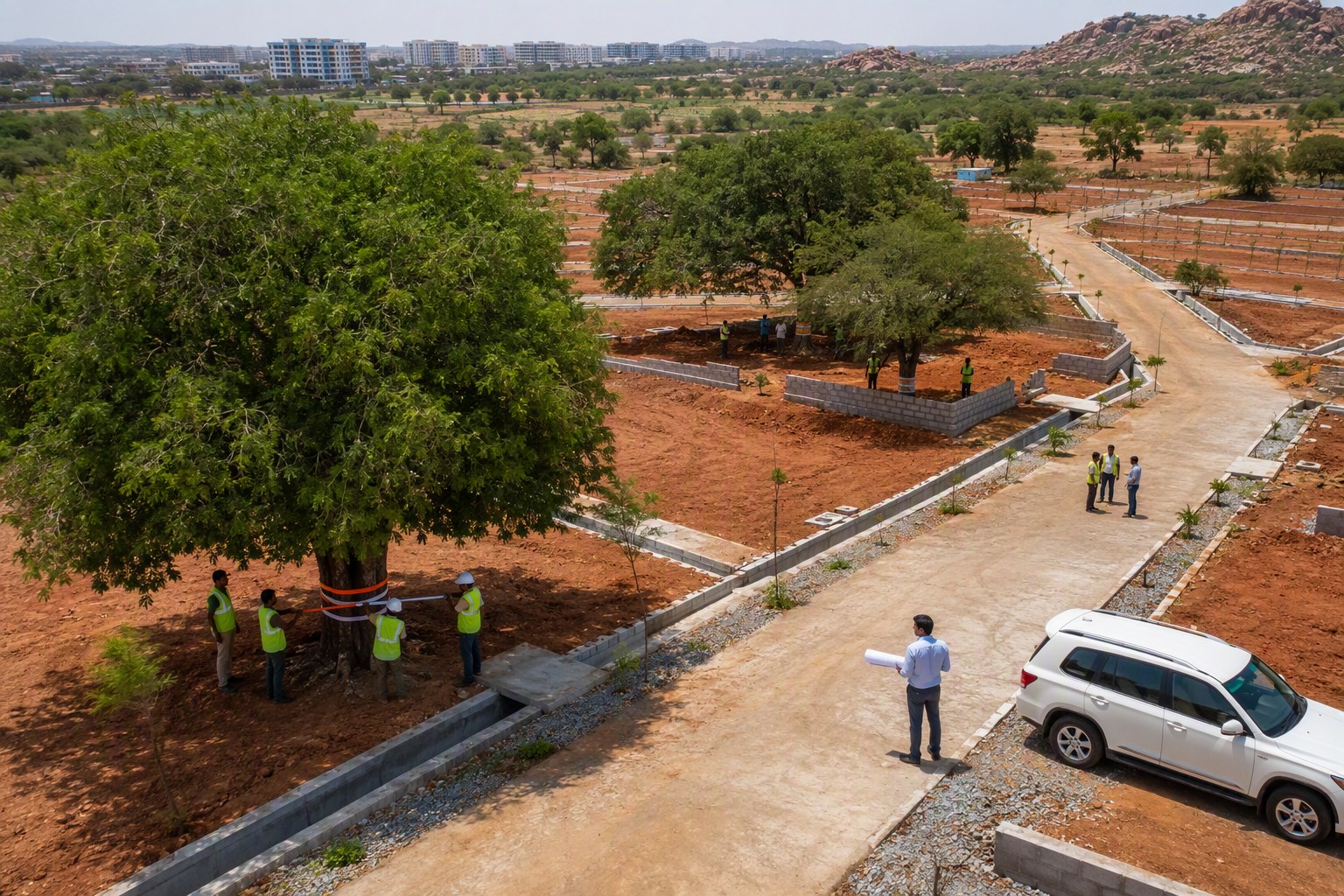
In Bachupally, Miyapur, Kompally, Gundlapochampally and Pocharam, the conversation is slightly different. Many projects are larger gated communities, and buyers look at open space usability. A large central lawn may look attractive in a brochure, but if there is no shade, no seating comfort and no walking path protection, it becomes a morning-and-evening-only space for much of the year. That is where a heat-resilience note can separate a well-planned project from a purely visual one.
In Shamshabad, Tukkuguda, Adibatla and along ORR-linked belts, villa and plotted developments may also come under buyer scrutiny. Here, the questions include road width, water source, soil behaviour, tree cover, borewell dependence, and whether common areas are designed for real use. Buyers can use Road Width Check, Land Use Zone Finder and Soil Type Detector before going deeper into a site.
What should a heat-resilience note contain?
A good project file should not use vague words like eco-friendly without support. It should give plain information that a buyer can understand. I would expect serious Hyderabad developers to include at least these items:
- Roof treatment: cool roof paint, reflective tiles, roof garden zones or insulation approach for top floors.
- Shaded movement: shaded walkways from tower lobbies to amenities, visitor parking, pickup points and play areas.
- Ventilation: cross-ventilation possibility in unit plans, corridor ventilation, basement exhaust and fire-safety-compatible air movement.
- Landscape planning: tree species, shaded seating, children’s play area protection and maintenance plan.
- Water planning: rainwater harvesting, STP reuse, sump capacity narrative, metering approach and summer operating assumptions.
- Material choices: façade treatment, glass exposure, balcony depth and paving material for heat control.
- Maintenance impact: whether these features increase monthly maintenance, and how the association will manage them after handover.
These details should ideally sit beside the sanctioned plan copy, RERA certificate, draft agreement, amenities schedule and handover specifications. Buyers must ask the sales team to mark which promises are part of the agreement and which are only brochure statements. This one step avoids many later disputes.
Why this matters in Telangana property verification
Heat-resilience is a building-quality issue, but it cannot be separated from land and approval checks. Telangana’s property records already show the scale of due diligence needed. As per latest IGRS data available in the database context, 3,076,153 properties are listed under prohibited properties, commonly referred to in market talk as Section 22-A. That number is a reminder: buyers should not get carried away by amenities without first checking whether the property is legally clean.
For any apartment, villa or plot, run a basic document sequence. First check project registration, then land title, then EC, then market value, then SRO jurisdiction. Use Section 22-A Prohibited Property Check to screen prohibited property risk, Market Value / Guideline Value Search to understand government value references, and Find Your SRO Office to know the correct registration office. If you are calculating purchase cost, Stamp Duty Calculator is useful before final negotiation.
We’ve seen many buyers spend more time comparing swimming pool size than reading the draft sale agreement. That mindset has to change. A cool roof claim is good, but a missing land link document is dangerous. A shaded garden is useful, but an unclear access road can become a bigger headache. Proper buying means checking comfort, legality and long-term maintenance together.
How buyers can read project files without getting misled
When a developer gives a heat-resilience note, do not treat it as a certificate unless it is backed by drawings, specifications or agreement clauses. Ask where the cool roof is shown. Ask whether the terrace treatment applies to all towers or only clubhouse blocks. Ask if tree planting is in the sanctioned landscape plan or only in 3D views. Ask whether STP water will be used for landscaping and whether residents will pay higher maintenance for that system.
For high-rise projects in Kokapet, Narsingi, Puppalaguda and Gachibowli, pay attention to tower orientation and spacing. For Tellapur, Kollur, Osman Nagar and Mokila projects, check internal roads, open space treatment and water source explanations. For Miyapur, Bachupally and Kompally, ask about basement heat, parking ventilation and shaded pedestrian movement. For Shamshabad and Tukkuguda villas, inspect approach road, soil, drainage and water arrangements carefully.
Also check whether the promised open space is actually usable. A project may have open area on paper, but if most of it is hard paving without shade, summer use will be limited. Families with children and elderly parents should physically visit the site during a warm part of the day if possible. Evening-only site visits hide many comfort issues.
Likely impact on developers and pricing discussions
Will heat-resilience notes increase project costs? Possibly, depending on the features chosen. But buyers should not accept vague premium pricing unless the specification is clearly documented. A reflective terrace coating, shaded seating, better ventilation planning and water reuse system should be explained in the cost sheet or amenity note. If the builder is charging for premium sustainability, the buyer has every right to ask what exactly is being delivered.
For reputed builders, this could become a trust-building opportunity. Instead of using broad marketing lines, they can publish a simple heat-resilience sheet with project documents. Smaller builders can also do this without overcomplicating matters. Even a two-page note with roof, shade, water and ventilation details is better than silence.
Our view is simple: Hyderabad buyers will reward builders who explain summer comfort honestly. Not every project can be perfect, but the file should say what is being done, what is not being done, and what residents must maintain after handover.
What should be in your buyer checklist?
| Checklist item | What to ask | Why it matters |
|---|---|---|
| Cool roof or terrace treatment | Is it part of construction specification? | Top floors and common terraces feel the impact first. |
| Shaded open areas | Are walkways, play zones and seating shaded? | Open space must be usable, not only visible. |
| Ventilation | How are corridors, basements and units ventilated? | Air movement affects comfort and maintenance. |
| Water planning | What are the stated sources, storage and reuse systems? | Summer living depends heavily on water management. |
| Legal verification | Are RERA, EC, land records and SRO details clear? | Comfort features cannot fix title or approval risk. |
For buyers, the practical route is not complicated. Shortlist the locality, compare the ready reckoner reference through government value tools, verify the project, read the agreement, inspect the site, and then evaluate heat-resilience claims. In Hyderabad, a good home is not only about carpet area and clubhouse. It is about how the building behaves in May, how the association manages water, and whether the promised common areas remain usable after handover.
That is why Hyderabad projects may add heat-resilience notes to files sooner than many expect. It is a buyer-driven shift, and frankly, it is a healthy one for the market.
Frequently Asked Questions
Will Hyderabad builders be legally required to add heat-resilience notes?
There is no separate universal buyer-file requirement stated here. The trend is buyer-led: families are asking developers to explain cool roofs, shade, ventilation and water planning as part of project information.
What should I ask a builder about cool roof claims?
Ask whether cool roof treatment is included in the construction specification, which towers it covers, who maintains it after handover, and whether it is mentioned in the agreement or only in marketing material.
Are heat-resilience features more relevant for high-rise apartments?
They are highly relevant for high-rises, especially top floors, podiums, basements and exposed open areas. Villa and plotted projects also need water, shade, drainage and soil checks.
Which legal checks should I complete before trusting project amenities?
Check RERA registration, EC, land ownership chain, SRO jurisdiction, guideline value and Section 22-A prohibited property status. Amenities are secondary if land or approval records are unclear.