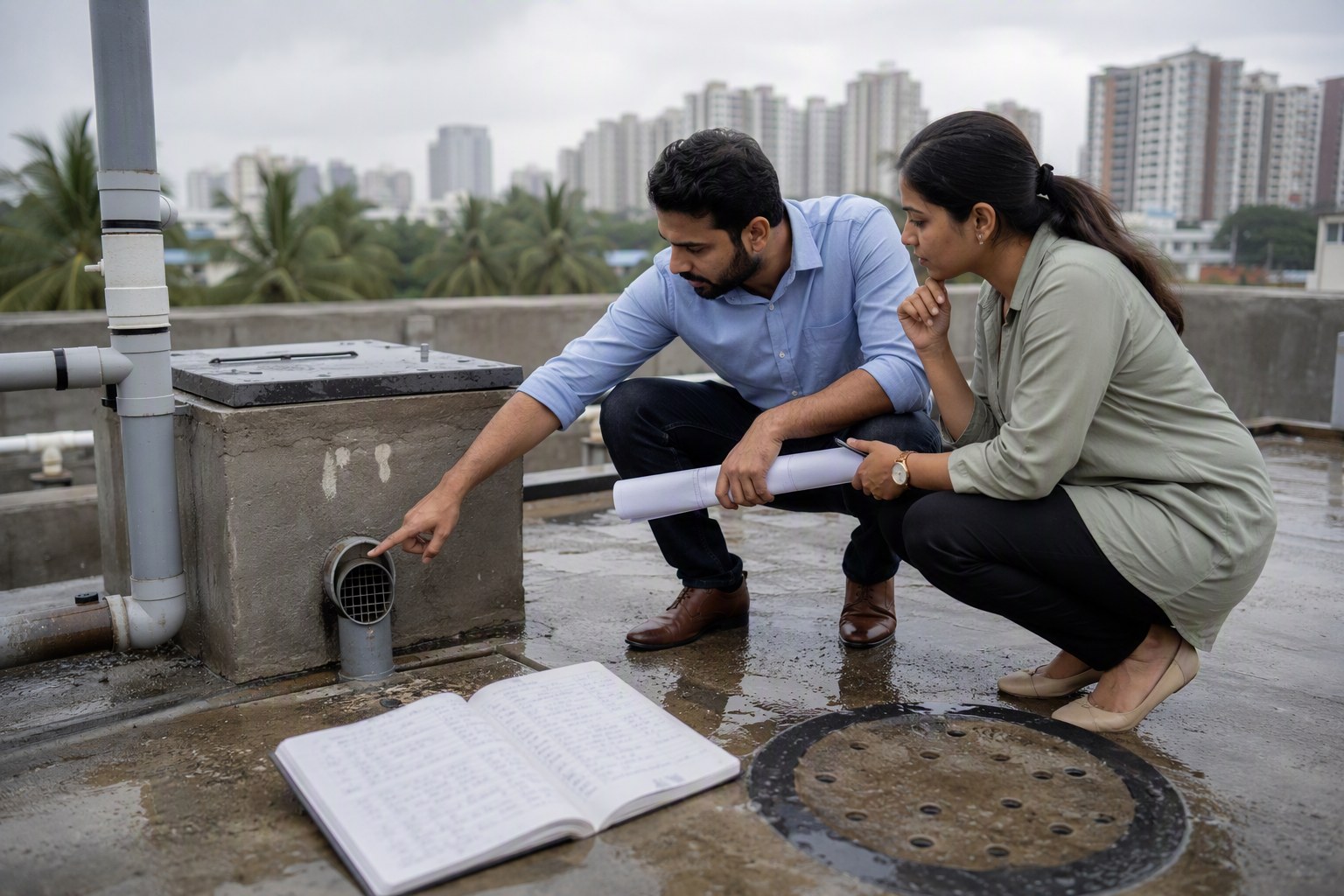



Telangana Green Home Plans sound exciting when you are buying a plot in Mokila, Tellapur, Tukkuguda, Shadnagar or Kompally. Solar panels, rainwater harvesting pits, greywater reuse and native landscaping all look sensible on paper. But the first green decision is not on the roof. It is in the land records. Telangana has 1,47,934 prohibited properties under Section 22-A. That single number should make every buyer pause before spending on sustainable upgrades.
In our experience, buyers often verify the elevation, vastu, road width and borewell possibility before checking the survey number properly. That is risky. If the land is under a prohibited category, has an old charge, sits in a disputed survey boundary, or falls in the wrong land-use zone, your solar quote and rainwater plan will not protect your investment.
My straight advice: before you budget for solar, first verify the plot, title, EC, SRO records, land use and Section 22-A status. A clean roof starts with a clean title.
Telangana Green Home Plans Start With Land Verification
Green homes in Telangana are no longer a niche idea. We are seeing buyers in Narsingi, Gandipet, Kollur, Bachupally, Adibatla and Maheshwaram ask for rooftop solar, EV charging points, rainwater recharge pits, heat-reflective terrace treatment and better ventilation. Good trend. Hyderabad summers are not becoming kinder, and power bills can pinch in large villas.
But the land beneath the home decides how safely you can build, register, finance, resell and improve the property. If the plot has a land-record problem, the most efficient solar system in the world will not save you from a registration refusal or future legal headache.
Section 22-A is one such red flag. Under this category, certain properties are prohibited from registration. These may include government lands, assigned lands, endowment lands, wakf lands, ceiling surplus lands and other notified parcels. Telangana’s figure of 1,47,934 prohibited properties is not a small footnote. It is a live warning for buyers, especially in fast-expanding corridors where agricultural land, layouts and villa plots sit close to each other.
Before you pay token advance for a plot marketed as ‘eco-friendly’ or ‘solar-ready’, run a Section 22-A Prohibited Property Check. Then confirm the survey number through a Survey Number Finder and match it with the sale deed, pahani, Dharani entries and layout documents.
Why Telangana Green Home Plans Can Fail on a Bad Plot
A sustainable upgrade is still an investment. A 3 kW to 5 kW rooftop solar system can easily run into a few lakhs depending on panel quality, inverter, structure, approvals and battery choice. Rainwater harvesting, sump work, recharge pits, terrace insulation, native trees and STP-linked reuse can add more. If you are buying a villa plot in Shankarpally mandal, Gandipet mandal or Maheshwaram mandal, you may be planning these improvements even before construction starts.
Here is the catch. Many green features are fixed to the property. You cannot easily lift a recharge pit, compound drainage system or roof-mounted structure and walk away if the title later turns messy. Even solar can become a resale problem if the building itself lacks proper permissions or if the land is not mortgageable.
We have seen buyers spend heavily on finishing works in plotted developments near Moinabad, Kandukur and Ibrahimpatnam, only to discover later that the layout approval, access road or survey boundary was not as clean as the brochure suggested. Green branding does not replace due diligence.
The common mistake
The buyer asks: ‘How many units will my solar system generate?’ That is a valid question, but not the first one. The first question is: ‘Can this land be legally bought, registered, built upon and resold without a cloud over title?’
The 1,47,934 Prohibited Properties Signal for Hyderabad Buyers
The number 1,47,934 matters because Telangana real estate is expanding beyond the old GHMC comfort zones. Buyers are moving from apartments in Gachibowli and Kondapur to villa plots in Mokila, Kollur, Velimela, Patancheru, Tukkuguda, Mansanpally, Maheshwaram and Shadnagar. In these areas, land conversion history and survey-number accuracy become very serious.
In mature apartment markets like Madhapur, Kukatpally, Begumpet or Himayatnagar, the buyer usually deals with a registered project, existing building permissions and bank-approved documentation. In plot markets, especially at the edge of Hyderabad, the buyer has to read the land record story more carefully. One wrong survey number can change everything.
For example, a plot may be shown as part of a private layout, but the adjoining survey number may have government land, nala land, assigned land or a road-widening issue. A sale deed alone is not enough. You need to check the chain of title, EC, pahani, Dharani status, layout approval, land-use zone and SRO jurisdiction.
Use the Encumbrance Certificate Search to review registered transactions. Use Find Your SRO Office to identify the correct Sub-Registrar Office because records are location-linked. For market value, use the Market Value / Guideline Value Search before you compare the seller’s quoted rate with the ready reckoner value.
Telangana Green Home Plans: Due Diligence Before Solar Panels
If you are serious about sustainable living, do this checklist before booking solar, drilling pits or finalising architectural plans.
| Check | Why it matters | Useful tool |
|---|---|---|
| Section 22-A status | Confirms whether registration is prohibited for that property category | Prohibited Property Check |
| Survey number match | Ensures the plot shown on ground matches the land records | Survey Number Finder |
| Encumbrance Certificate | Shows registered sales, mortgages, gifts, releases and charges | EC Search |
| SRO jurisdiction | Helps verify registration office and local document history | Find Your SRO Office |
| Guideline value | Gives official market value reference for stamp duty and pricing | Guideline Value Search |
| Land-use zone | Checks whether residential construction is permitted | Land Use Zone Finder |
| Road width | Affects building permission, access, resale and fire safety norms | Road Width Check |
For many buyers, this sounds less glamorous than selecting solar panels. But this is where money is protected. Telangana stamp duty and registration costs are also not tiny. For a standard sale deed, buyers generally budget around 6% in government charges, made up of stamp duty, transfer duty and registration fee. On a ₹1 crore property, that is around ₹6 lakh in charges before interiors or green upgrades. Use the Stamp Duty Calculator to estimate it properly.
What to Check in Pahani, Dharani and EC
A green home buyer should read land papers like an investor, not like a brochure reader. The pahani and Dharani records can show classification, extent, pattadar details and nature of land. The EC shows registered transactions. The sale deed shows how the seller claims title. These documents must talk to each other.
1. Name and extent consistency
Check whether the seller’s name, survey number, sub-division number and extent match across sale deed, pahani, Dharani and EC. If a seller is offering 300 square yards from a larger agricultural survey number, see whether there is a proper layout, conversion and partition trail.
2. Land classification
Assigned land, government land, endowment land and certain protected categories can create major problems. If the land was once agricultural, check whether conversion and layout approvals are proper. Do not assume that compound walls and streetlights prove legality.
3. EC period
Do not look only at a short EC. In plot transactions, older transactions matter. Ask for a longer chain, preferably going back several decades where possible, and compare with available link documents. A missing link is not always fraud, but it needs explanation.
4. Mortgage and release entries
If the plot or parent land was mortgaged, confirm a proper release deed. Bank NOCs alone are not enough for comfort. The release must reflect in registered records.
5. Layout and authority
Check whether the plot falls under HMDA, DTCP, GHMC or the relevant municipality or gram panchayat framework. For areas like Kollur and Velimela, the planning authority story is different from older GHMC zones like Jubilee Hills or Banjara Hills. Your architect’s green design depends on legally permissible construction.
Local Examples: Where Buyers Must Be Extra Alert
Every Hyderabad corridor has its own land-record personality. I would not treat all locations the same.
- Mokila and Shankarpally mandal: Popular for villa plots and weekend-home style living. Check parent survey numbers, approach roads, conversion and layout approvals carefully.
- Tellapur, Osman Nagar and Kollur: Strong demand from IT employees working around Financial District and Gachibowli. Prices can move fast, so buyers rush. Do not skip EC and SRO checks.
- Gandipet, Narsingi and Manikonda: Premium belt with high land values. Verify road width, lake buffer issues where relevant, and building permissions before solar roof planning.
- Tukkuguda, Maheshwaram and Mansanpally: Growth linked to ORR, airport access and pharma/electronics activity. Land conversion and zoning checks are very important.
- Shadnagar and Kothur: Many plotted layout offers. Confirm whether the layout is approved, whether the plot is part of the approved plan, and whether the access road is legally available.
- Bachupally, Kompally and Medchal belt: Apartment and villa demand is strong. Drainage, road width, permissions and EC checks should happen before investing in rainwater and EV infrastructure.
Green homes perform best when the basics are correct: legal access, clean title, permitted land use, good drainage, safe power connection and practical roof orientation. A west-facing plot in a dense lane may need a different solar and cooling strategy than an open villa plot near Moinabad. But both need clean land records first.
How Title Issues Affect Solar, Loans and Resale
Many buyers think title verification is only for registration day. Not true. It affects future loans, resale and even your ability to monetise a green home premium.
Suppose you build a house with a 5 kW solar system, rainwater harvesting, low-flow fixtures and shaded courtyards. Nice product. But if a buyer’s bank refuses loan because the parent title is unclear, your resale pool shrinks immediately. If the land-use classification is wrong, regularisation or permission issues may arise. If the road width is less than what was promised, approvals and valuation can suffer.
Banks and serious buyers will ask for the same documents you ignored: EC, link deeds, mutation, tax receipts, approved plan, occupancy-related documents where applicable, and SRO registration history. Sustainable features may improve desirability, but they do not cure title defects.
For apartment buyers, use a RERA Project Lookup when the project is covered under RERA. For independent house or plot buyers, run a broader check through the Property Verification Tool. If you are planning a larger home, also check buildability using the FSI/FAR Calculator. A solar-ready terrace is useful only when the sanctioned built-up area itself is in order.
Green Features That Depend on Legal and Physical Plot Quality
Not every sustainability feature fits every plot. Telangana buyers should connect green planning with legal and site checks.
Solar rooftop
Solar needs shade-free roof space, structural strength, safe wiring, net-metering feasibility and proper ownership rights. In apartments, terrace rights are usually common area rights, not individual rights. In villas, check sanctioned plan and roof access.
Rainwater harvesting
Recharge pits need soil understanding, stormwater flow and enough setback space. In low-lying layouts around lake catchments or poor drainage areas, rainwater planning must be done carefully. A pit cannot fix an illegal layout with bad drainage.
EV charging
EV charging needs sanctioned electrical load, safe parking and wiring routes. In gated communities, association rules matter. In independent houses, the building permission and meter category should be clean.
Native landscaping
Planting neem, pongamia, jamun or other native trees is sensible in Hyderabad’s climate. But check setbacks, underground lines, septic tanks and compound wall legality before large tree planning.
Passive cooling
Orientation, road width and neighbouring construction height affect ventilation. A narrow internal road in a plotted layout may reduce airflow and sunlight. So sustainability starts with plot selection, not just materials.
A Practical Buyer Workflow for Telangana Green Home Plans
Here is the workflow we recommend for buyers planning sustainable upgrades in Telangana.
- Identify the exact property: Get survey number, plot number, village, mandal, district and SRO.
- Check Section 22-A: Confirm the property is not in the prohibited list.
- Pull EC: Review ownership movement, mortgages, releases and pending charges.
- Match Dharani and pahani: Check pattadar name, land extent and classification.
- Check layout approval: Verify HMDA, DTCP or relevant authority approval and whether your plot is included.
- Verify guideline value: Compare seller quote with official market value. This helps with stamp duty planning and negotiation.
- Confirm land use and road width: Residential use and legal access are non-negotiable.
- Speak to a local document writer or lawyer: Especially for open plots, inherited properties and GPA-based histories.
- Then plan green upgrades: Solar, rainwater harvesting, EV charging, insulation and landscaping can be designed with confidence.
If the seller pressures you to pay advance before sharing documents, treat that as a warning. Good properties can handle scrutiny. A genuine seller may be busy, but he will not be allergic to verification.
My View: The Greenest Home Is the One You Can Legally Hold
Hyderabad buyers are becoming smarter. They compare locations, rental yields, ORR access, metro talk, school distance and community amenities. Now the same seriousness must come into sustainable living. A green home is not only about panels and pits. It is also about buying land that will not create wasteful disputes later.
When Telangana has 1,47,934 prohibited properties, blind trust is expensive. Before spending ₹2 lakh to ₹5 lakh on energy and water upgrades, spend time checking title. Before choosing imported panels, check the SRO. Before finalising a rainwater harvesting contractor, check land use. Before planning a beautiful eco-villa near Shankarpally or Maheshwaram, confirm the survey number.
That may sound old-school, but it is the most practical green advice I can give. Clean title, clean permissions and clean planning. After that, solar makes sense.
Frequently Asked Questions
Should I check Section 22-A before buying a plot for a green home in Telangana?
Yes. Telangana has 1,47,934 prohibited properties under Section 22-A. If your plot falls under a prohibited category, registration and resale can become difficult. Check this before paying advance or planning solar.
Is an Encumbrance Certificate enough for buying land in Hyderabad outskirts?
No. EC is necessary, but not enough. Also check pahani, Dharani records, link deeds, layout approval, land-use zone, road access, SRO records and survey number matching.
Can I install solar panels on any residential plot or villa?
Physically, many homes can support solar, but legally and practically you need clear ownership, proper building permission, safe structure, roof access and electricity connection feasibility.
Which Hyderabad areas need extra land verification for plotted purchases?
Fast-growing belts like Mokila, Shankarpally, Kollur, Tukkuguda, Maheshwaram, Shadnagar, Moinabad, Bachupally and Kompally need careful survey number, land-use and layout approval checks.
When should I budget for solar and rainwater harvesting?
Budget after basic land verification is complete. First confirm title, Section 22-A status, EC, layout approval, land use and road width. Then plan solar, recharge pits and EV charging.