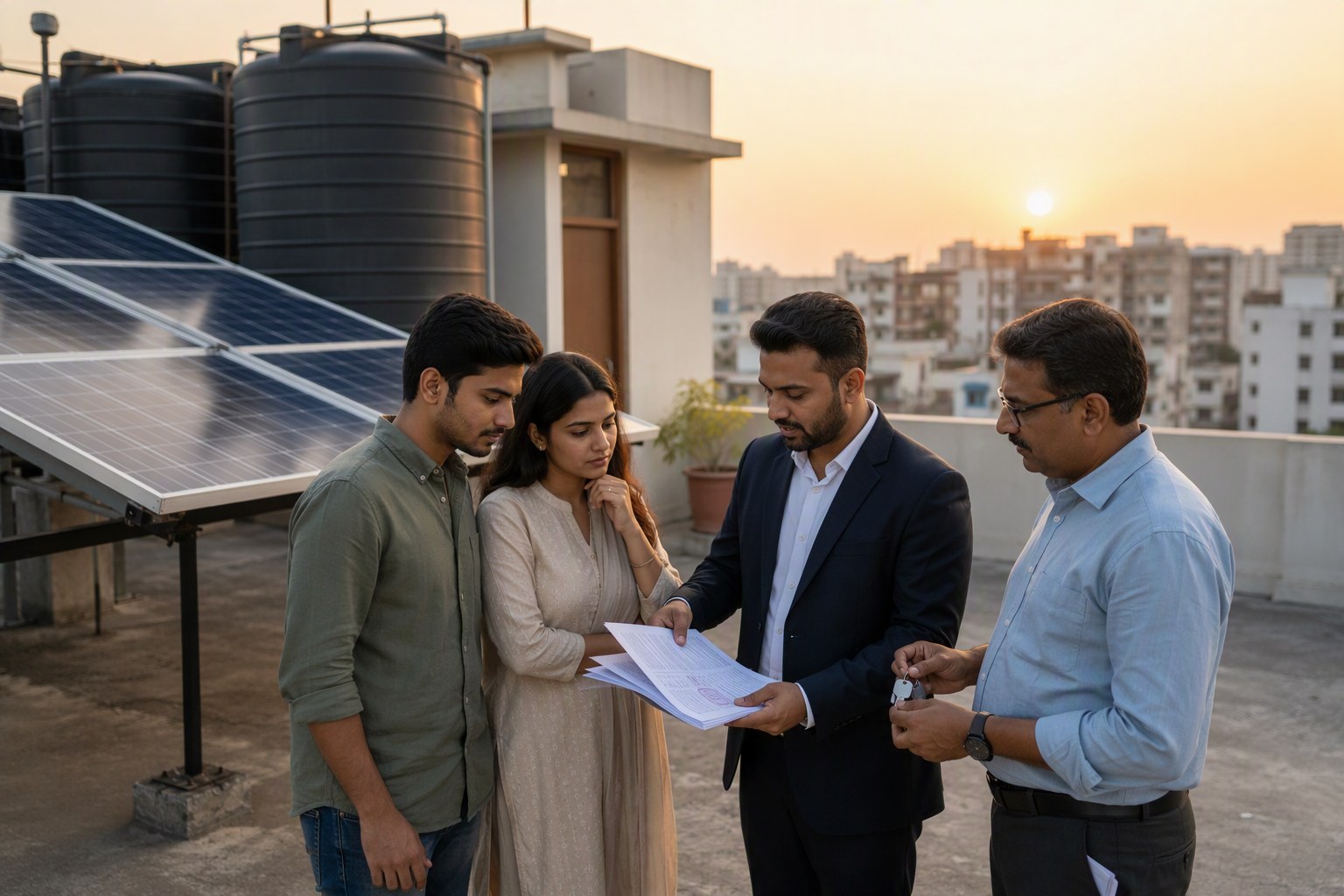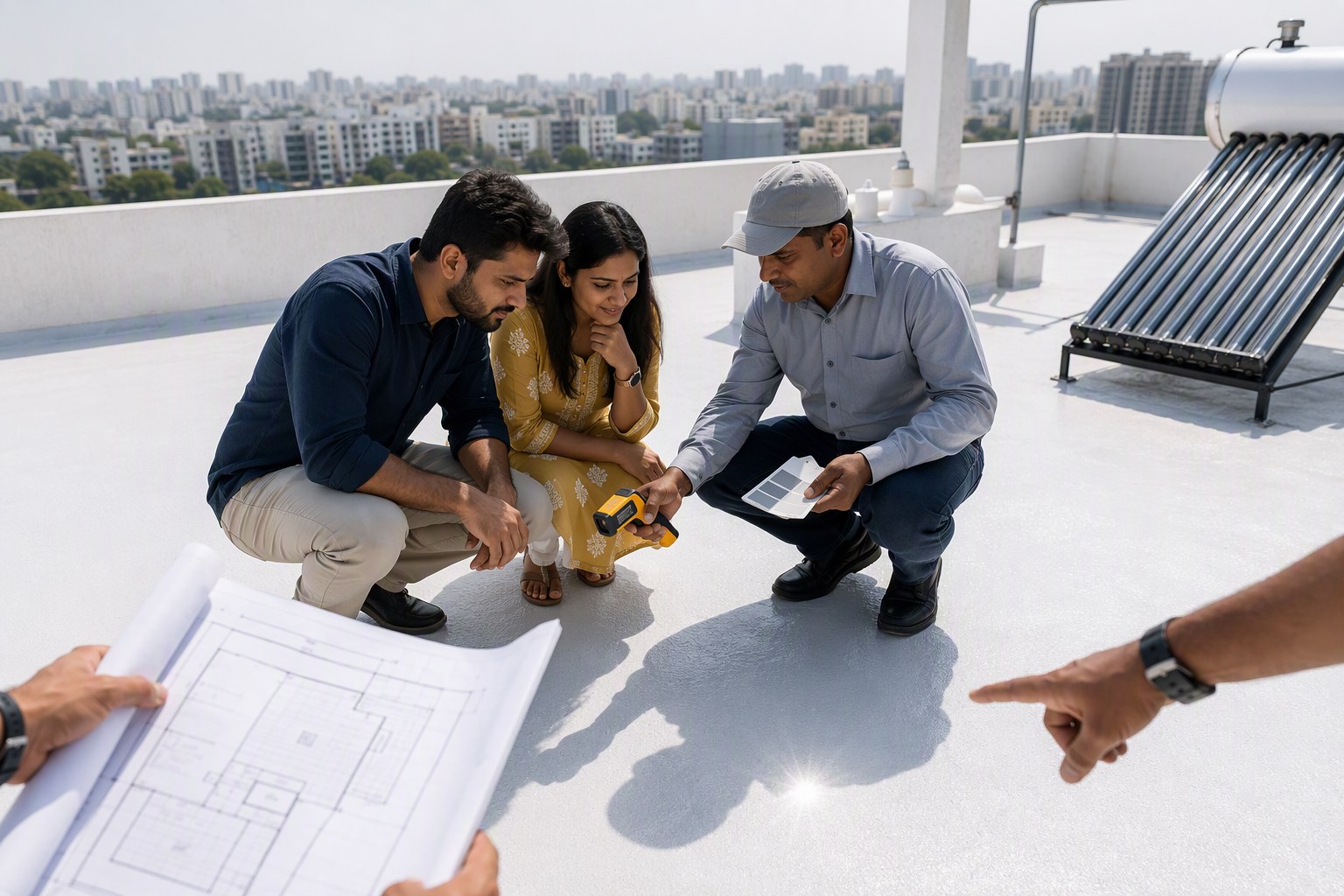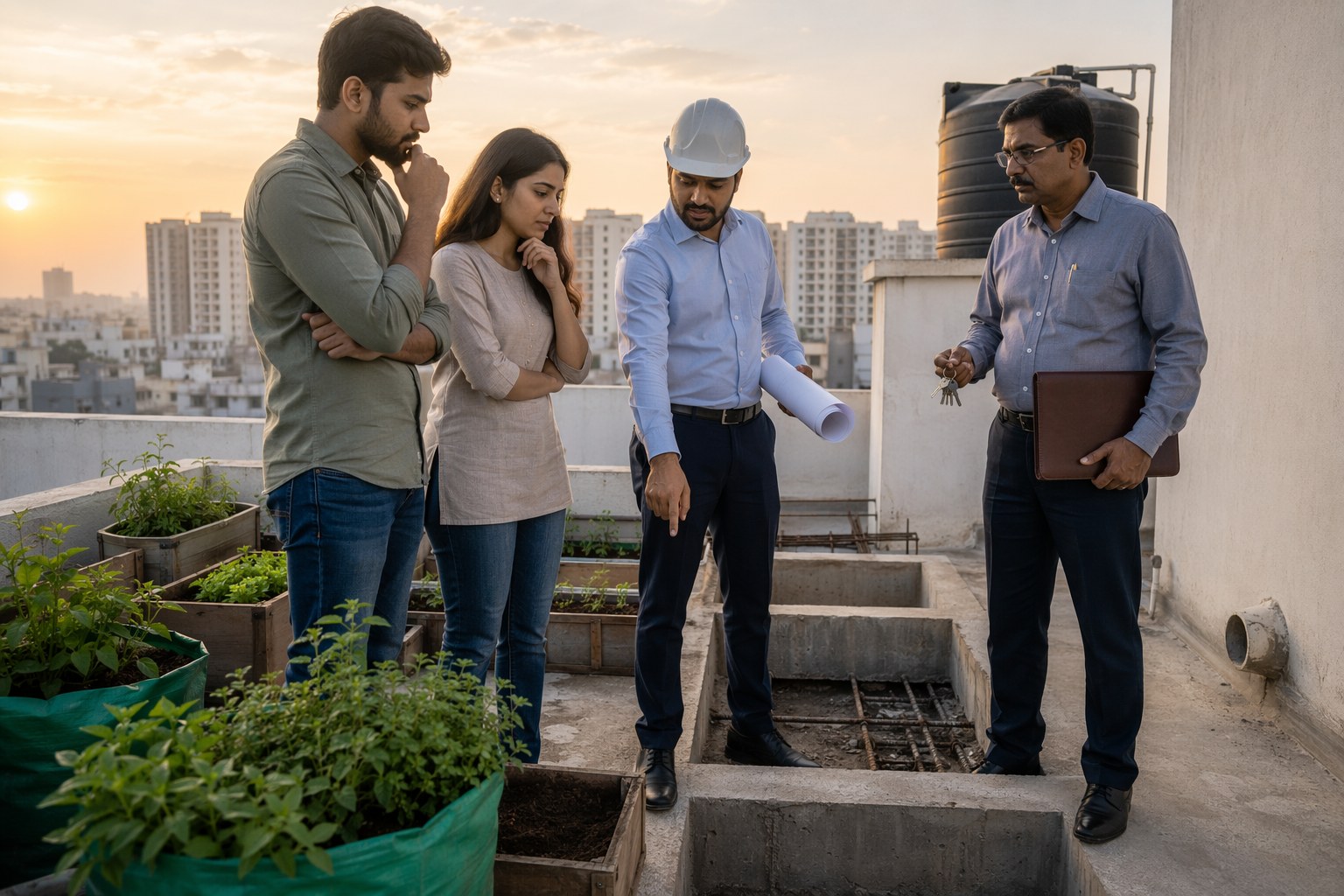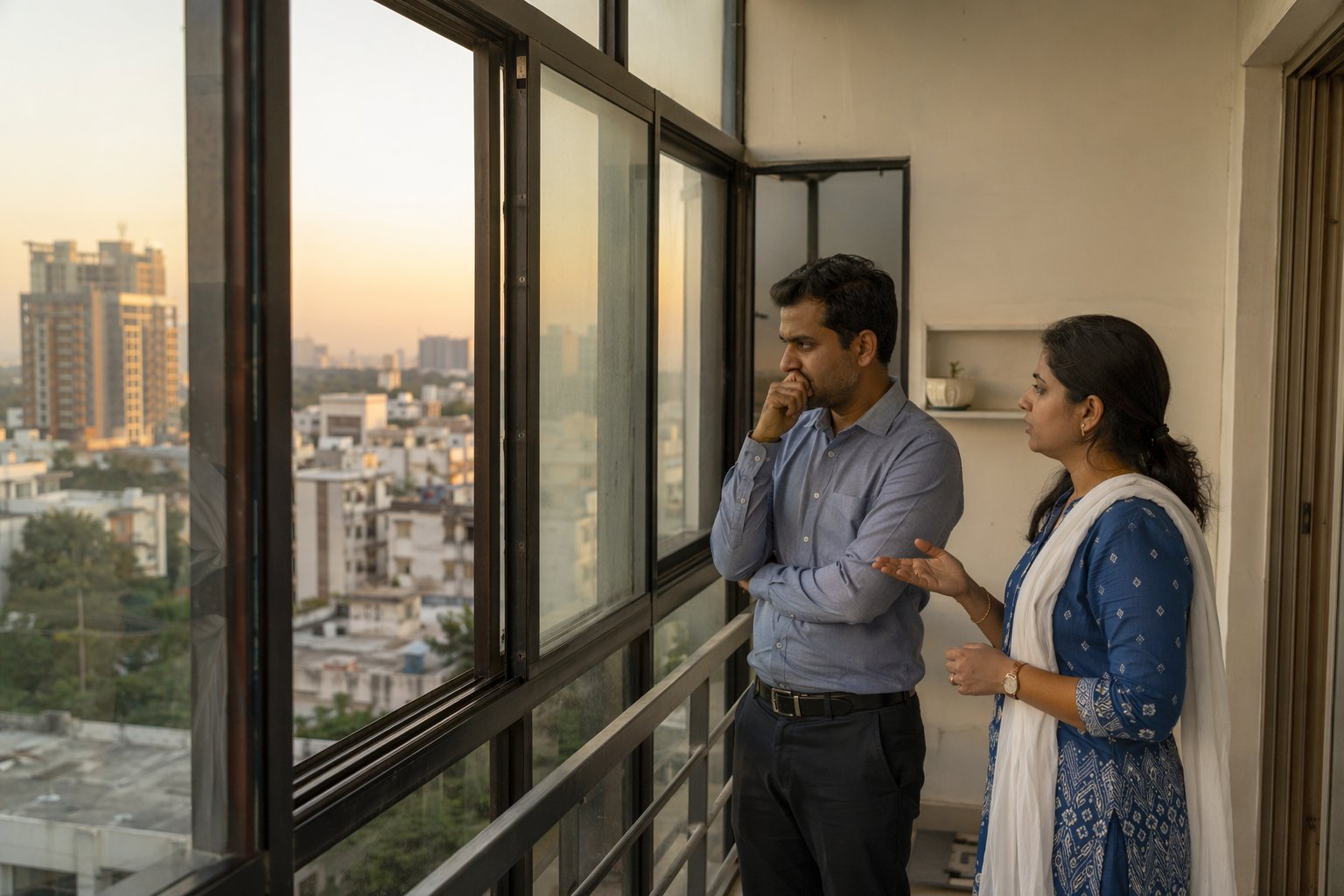
When Priya, a software professional from Kondapur, visited a new gated community near Narsingi, the brochure sold her the dream in two minutes. Solar lights, green podium, native trees, and a big line saying rainwater harvesting for sustainable living. She liked the clubhouse, her parents liked the vastu, and the sales team said tanker dependency would be very low. This is the exact point where buyers of Hyderabad Green Apartments need to slow down. Rainwater harvesting is real, but in many apartment projects, the claim is stronger than the system on the ground.
My straight answer: a rainwater harvesting line in a brochure is not enough. You must verify whether the pits exist, whether roof and driveway water actually reaches them, whether they are maintained, and whether the builder has shown the system in sanctioned plans and RERA disclosures. In Hyderabad, where summer tanker bills can sting badly, this is not a small amenity. It affects monthly maintenance, borewell reliability, resale comfort, and your daily life.
Hyderabad Green Apartments: the brochure promise versus the site reality
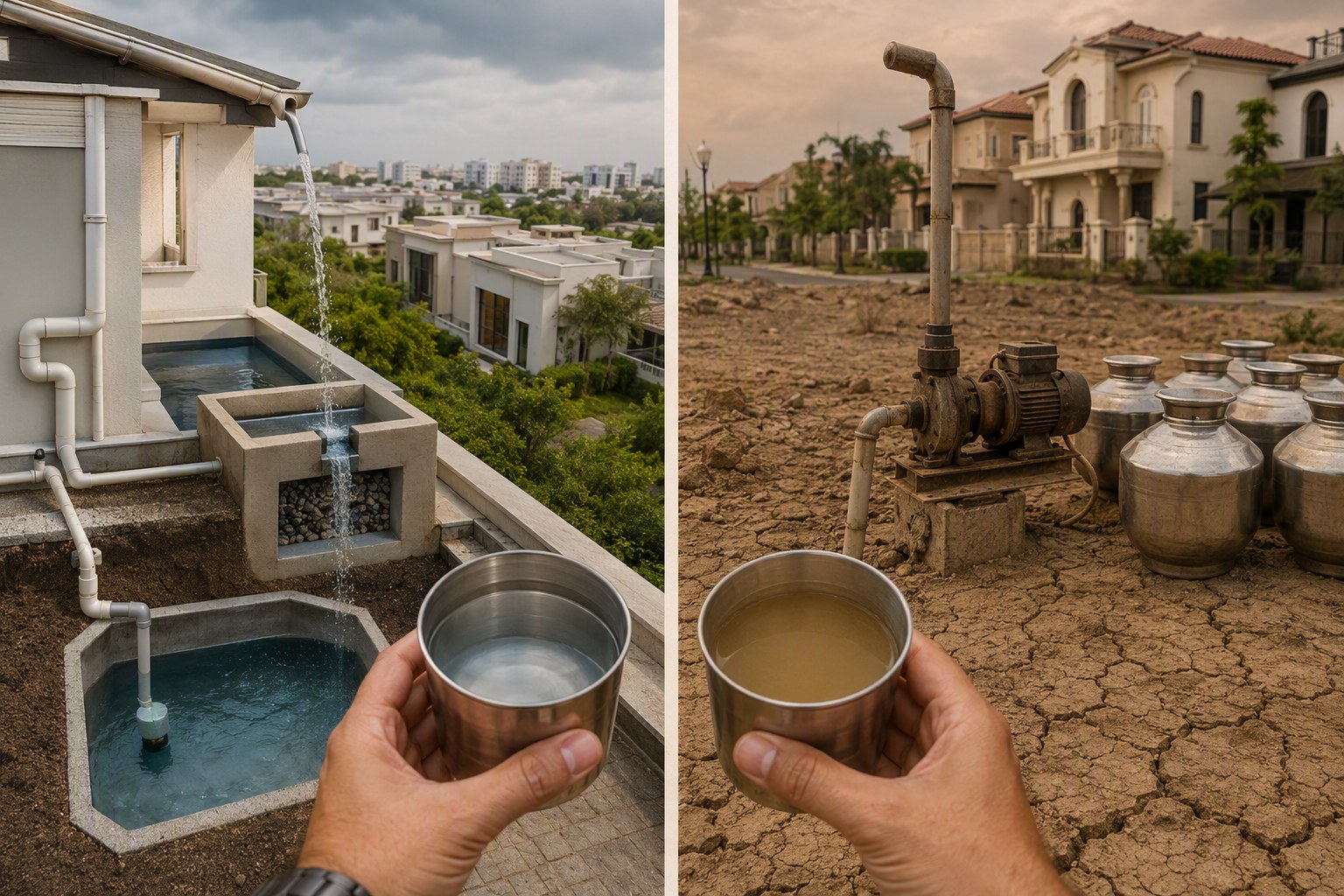
We have seen two very different types of projects in Hyderabad. In some serious communities in Gachibowli, Kokapet, Tellapur, and Kompally, rainwater harvesting is designed as part of the civil plan. Roof drains, podium slopes, silt traps, recharge pits, and stormwater lines are mapped properly. The association gets the pits cleaned before monsoon. Borewell levels are monitored. Tanker usage reduces after good rains.
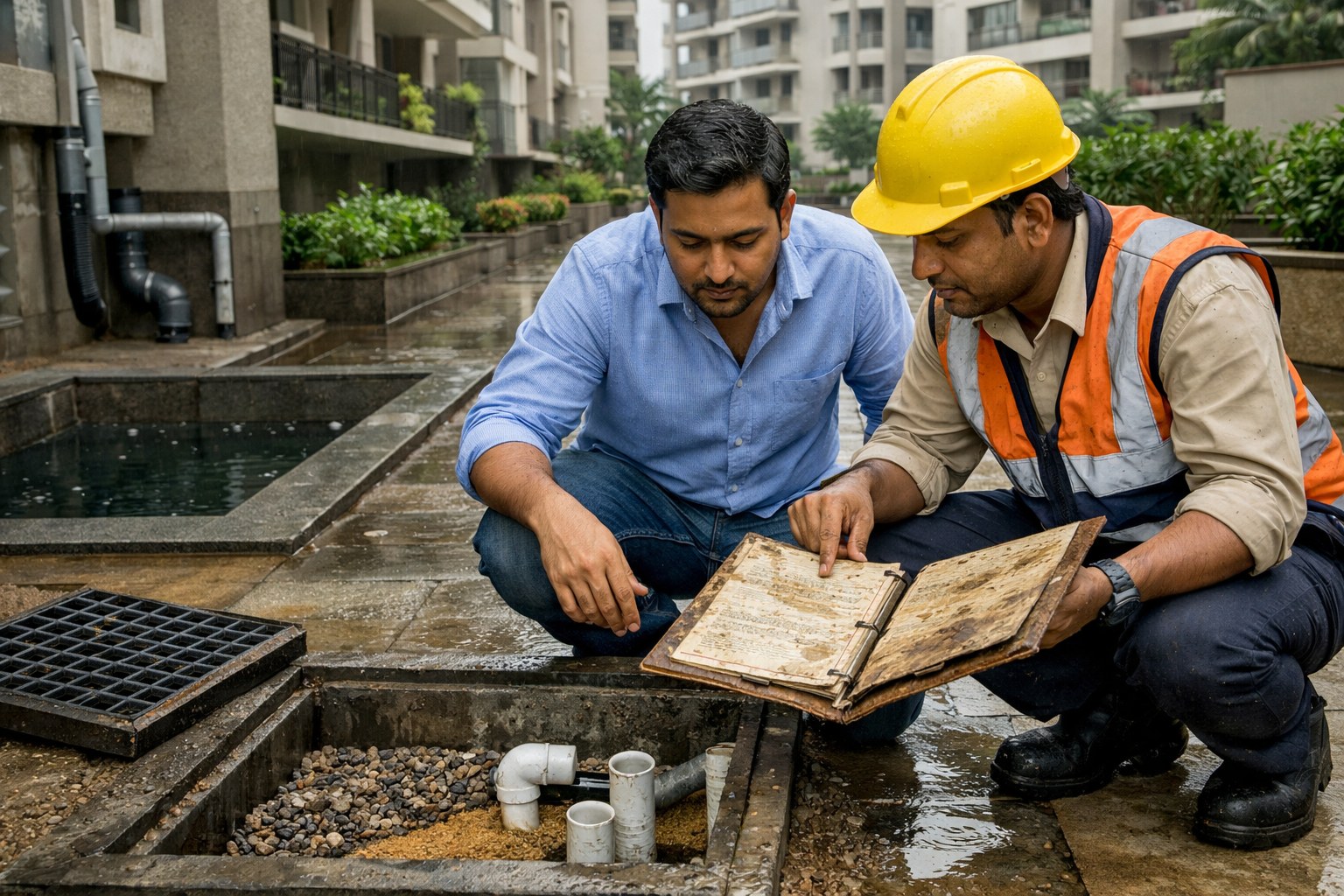
In other projects, especially where the green label is used mainly for marketing, there may be one or two token pits near the compound wall. Sometimes the stormwater line bypasses the pit and runs into the municipal drain. Sometimes the pit is buried under landscaping. Sometimes the filter chamber is full of silt, plastic cups, cement slurry, and construction debris. The buyer sees a green board, but rainwater never reaches the ground.
That is why the right question is not whether the apartment has rainwater harvesting. The right question is: does the system capture usable rainwater from real catchment areas and recharge it without contamination?
Why Hyderabad Green Apartments must take rainwater seriously
Hyderabad’s water story is local, not theoretical. Apartments in Serilingampally mandal, Gandipet mandal, Bachupally, Rajendranagar, Uppal, and Medchal may all fall under the same broad city market, but their groundwater behaviour is not the same. Rocky zones around Gachibowli and Financial District behave differently from low-lying stretches around Nallagandla, Tellapur, Osman Nagar, and parts of Bachupally. Some communities get decent municipal supply. Some depend heavily on borewells and tankers from March to June.
Here is a simple number that helps buyers understand the scale. Hyderabad’s annual rainfall is roughly in the 750 mm to 800 mm range in a normal year. If an apartment tower has about 20,000 sq ft of clean roof area, that is around 1,858 sq m. At 780 mm rainfall, the theoretical annual harvest from that roof is about 14.5 lakh litres. After losses, first flush, evaporation, and system inefficiency, even 65% to 70% capture can mean around 9.5 lakh to 10 lakh litres going into recharge or storage.
Sounds large? For a 300-flat community with four members per flat, daily water demand can easily cross 1.5 lakh litres depending on usage. So rainwater harvesting may not replace all water supply. But it can support borewell recharge, reduce surface flooding, lower tanker dependency after rains, and keep the site’s water balance healthier. That is real value.
In many western corridor communities, a private 5,000-litre tanker can cost around ₹1,200 to ₹2,500 in peak summer depending on location, access, and shortage. If a community needs 10 to 20 tankers a day during a bad patch, the monthly maintenance pain is very visible. Buyers usually bargain hard on floor rise and car parking, but ignore water infrastructure. In our experience, that is a mistake.
How to verify rainwater harvesting before buying a flat
Do not ask only the sales executive. Ask for documents, then walk the site. A proper verification has three layers: approval papers, physical system, and maintenance evidence.
1. Check RERA details first
Start with the project registration. Use our RERA Project Lookup and check whether the project is registered, whether the promoter details match the brochure, and whether promised amenities are aligned with filings. RERA may not give you a technical certificate for every recharge pit, but it helps you catch mismatches between marketing and declared project details.
If the project is under construction, ask the sales team to show where rainwater harvesting is mentioned in specifications, environmental commitments, or amenity notes. If they say it is standard, ask for the drawing reference. Good builders usually have no issue showing the stormwater and recharge layout.
2. Ask for sanctioned drawings and stormwater layout
Rainwater harvesting should appear in the sanctioned plan set or related engineering drawings. Look for recharge pits, percolation pits, collection chambers, stormwater drains, roof water downpipes, filtration chambers, and overflow arrangements. If the project is in GHMC, HMDA, or a municipality like Tellapur or Bachupally, the approval file will usually show site drainage planning.
Do not get impressed by one pit drawn in a corner. Check whether the number and placement of pits match the size of the site. A 5-acre gated community and a 900 sq yard standalone apartment cannot have the same token arrangement. The paved driveway, podium, cellar ramps, tower roofs, and landscape slopes all matter.
3. Physically inspect the system
Walk around the project after asking the facility manager or site engineer. You are looking for simple visible signs:
- Roof downpipes should connect to rainwater lines, not sewage lines.
- There should be silt traps or filter chambers before recharge pits.
- Recharge pits should have accessible covers for cleaning.
- Stormwater drains should not be blocked by construction debris.
- Cellar ramp water should be safely diverted, not allowed to flood basements.
- Overflow should lead to a safe stormwater drain after the pit fills.
- The system should be away from septic or sewage contamination points.
If you visit during monsoon, even better. See where the water actually flows. Many fake green systems fail this one test. Water runs along the driveway, jumps the silt trap, and goes straight to the street drain. On paper it is sustainable. On site it is just drainage.
Hyderabad Green Apartments and the legal checks buyers should not skip
A green building claim does not cure a title defect. Before paying a booking amount, buyers should verify the land as seriously as they verify the amenity list. Telangana has 147,934 prohibited properties under Section 22-A in the database. That number should make every buyer cautious, especially in growth corridors where agricultural land, assigned land, old layouts, court disputes, and conversion issues can overlap.
For apartments, you may be buying a flat, but the project stands on survey numbers. Ask for survey numbers, village, mandal, and SRO. Check whether the land has clean title, whether conversion is proper where required, and whether the builder’s link documents are traceable. In some peripheral locations, old pahani entries, Dharani records, and sale deed history can reveal issues that a brochure will never mention.
Use these checks before you get emotionally locked into the flat:
- Encumbrance Certificate Search to review registered transactions and mortgage entries.
- Section 22-A Prohibited Property Check to see if the land is flagged.
- Survey Number Finder when you need to connect the project location with land records.
- Find Your SRO Office to identify the correct registration office for document verification.
- Market Value / Guideline Value Search to compare registration value with local ready reckoner values.
On the cost side, remember Telangana sale deed charges for a flat are usually calculated around 6% of the document value: 4% stamp duty, 1.5% transfer duty, and 0.5% registration fee. For a ₹1 crore flat, that is about ₹6 lakh before other incidental expenses. You can estimate your outgo using our Stamp Duty Calculator. If a builder is pushing a strange split between flat cost, amenity cost, and other charges, slow down and check the numbers.
What a working rainwater harvesting system should look like
A functional system is not fancy. It is boring engineering done properly. In a typical Hyderabad apartment, water can be harvested from three broad areas: tower roofs, podium or terrace surfaces, and paved open areas. Each catchment has a different quality of water. Roof water is usually cleaner. Driveway water carries mud, oil, leaves, and dust, so it needs better filtration before recharge.
The system normally has these parts:
| Part | What it does | Buyer check |
|---|---|---|
| Roof drain pipes | Bring rainwater from terraces and roofs | Check if pipes connect to stormwater line, not sewage |
| First flush arrangement | Diverts dirty initial rainwater | Ask if it is manually or automatically operated |
| Silt trap | Stops mud, leaves, and debris | Open cover and see if it is cleanable |
| Filter chamber | Filters water through media like sand, gravel, charcoal | Ask when media was last replaced |
| Recharge pit or bore recharge | Sends filtered water into ground | Check location, depth indication, and access cover |
| Overflow line | Handles excess rain during heavy showers | Ensure it does not flood cellar or neighbour land |
If the project has only storage tanks and no recharge, ask how the stored water is used. Is it for gardening? Flushing? Car wash? Is there a separate plumbing line? If there is no treatment or separate pipeline, storage may remain unused. Many buildings proudly say they store rainwater, but the tank is either too small or not connected to any practical use.
Locality-wise red flags in Hyderabad Green Apartments
Every locality has its own warning signs. Here is how I would read some of the common markets.
Kokapet, Narsingi, Gandipet mandal
Premium towers here sell at high ticket sizes, and buyers expect better infrastructure. But rocky subsoil can make recharge design more technical. Ask for details of recharge pits and stormwater disposal. In high-rise projects, cellar flooding control is as important as borewell recharge.
Kondapur, Gachibowli, Nanakramguda, Serilingampally mandal
Many projects are dense and land parcels are tightly used. Check whether open areas are enough for proper recharge and whether paved surfaces are sloped towards collection points. Also ask the association for tanker bills from April, May, and June.
Tellapur, Osman Nagar, Kollur belt
This belt has seen fast apartment growth. Some projects are good, some are selling future infrastructure. Verify land records, approach road status, lake buffer sensitivity where applicable, and stormwater outflow. Use the Land Use Zone Finder if the project sits near mixed-use or developing zones.
Bachupally, Miyapur, Nizampet
Waterlogging complaints are common in pockets during heavy rain. Rainwater harvesting should not be confused with dumping all stormwater into a few pits. Ask how the project handles peak rainfall and overflow to public drains.
Uppal, LB Nagar, Nagole
Older apartment stock may have pits, but maintenance is the real issue. If you are buying resale, ask the association for desilting bills and borewell repair records, not just the original builder brochure.
Documents to ask from the builder or association
For a new project, ask the builder for these papers before agreement:
- RERA registration details and project specifications.
- Sanctioned building plan showing stormwater and recharge provisions.
- Environmental clearance or consent documents, if applicable to project size.
- Occupancy certificate status for completed blocks.
- As-built drainage and rainwater harvesting layout.
- AMC or maintenance plan for recharge pits, pumps, and filters.
- Water source declaration: municipal supply, borewells, tankers, treated STP reuse.
For a resale flat, ask the apartment association for:
- Last two years of tanker bills.
- Borewell depth and yield history, if recorded.
- Desilting and filter media replacement bills.
- Monsoon flooding complaints, if any.
- STP functioning reports and treated water usage pattern.
A serious association will usually answer these questions. If they get irritated, that itself tells you something.
A green apartment is not the one with more plants in the brochure. It is the one where water, waste, power, open space, and maintenance accounts make sense after possession.
How rainwater harvesting affects resale and monthly maintenance
Buyers in Hyderabad are becoming sharper. Five years ago, many people asked only about clubhouse size, UDS, carpet area, and metro distance. Now, in premium and mid-segment communities, they ask about water source, tanker usage, STP smell, basement flooding, and power backup cost. This is a healthy change.
A working rainwater harvesting system can support resale because it shows the community is not careless. It may not add a separate line item of ₹500 per sq ft to your resale price, but it reduces buyer objections. In summer, when two neighbouring communities have similar flats, the one with lower tanker dependency and better water management gets more confidence.
For under-construction buyers, also check density through planning numbers. If a project has very high built-up area on limited land, water demand becomes intense. You can understand development intensity using our FSI/FAR Calculator. For plotted or villa layouts, open space provision is another major clue; our OSR Calculator can help you read the open space requirement better.
My buyer checklist for Hyderabad Green Apartments
If you are shortlisting a so-called green apartment in Hyderabad, carry this checklist. It will save you from marketing pressure.
- Is rainwater harvesting mentioned in RERA or only in the sales brochure?
- Can the builder show the sanctioned stormwater and recharge drawing?
- How many recharge pits are provided, and where are they located?
- Does roof water actually connect to the harvesting system?
- Are driveway and podium waters filtered before recharge?
- Is there a first flush or silt trap arrangement?
- Who will maintain the pits after handover?
- What were tanker expenses in the last summer, if the project is occupied?
- Is STP treated water reused for flushing or gardening?
- Are land title, survey number, EC, SRO, and Section 22-A checks clean?
My opinion is simple. Pay a premium for green features only when the builder can show design, execution, and maintenance logic. If the answer is only sir, this is eco-friendly project, treat it as decoration, not due diligence.
Final word on Hyderabad Green Apartments
Hyderabad Green Apartments can genuinely reduce water stress when rainwater harvesting is designed and maintained properly. But buyers must verify it like they verify title, carpet area, UDS, and registration cost. A recharge pit hidden behind landscaping is not enough. A working system needs catchment, filtration, access, cleaning, overflow planning, and association discipline.
Before you book, check RERA, inspect the site, read the sanctioned drawings, speak to residents if possible, and run the basic land and registration checks. Hyderabad’s property market rewards careful buyers. The greenest flat is the one that still performs after the first summer and the first heavy monsoon.
Frequently Asked Questions
Is rainwater harvesting mandatory for Hyderabad apartments?
In most urban approvals, rainwater harvesting is expected for qualifying buildings and larger plots, especially under GHMC, HMDA, and municipal rules. Buyers should not rely on a verbal claim. Ask for the sanctioned plan and stormwater layout showing recharge pits or harvesting provisions.
How can I check if a builder has actually provided rainwater harvesting?
Check the RERA project details, sanctioned drawings, and site execution. On site, look for roof water connections, silt traps, filter chambers, recharge pits, and overflow lines. If the project is already occupied, ask the association for desilting bills and summer tanker records.
Does rainwater harvesting remove the need for water tankers?
Not always. In a large Hyderabad apartment, rainwater harvesting usually supports groundwater recharge and reduces dependency, but it may not replace municipal supply or tankers fully. The result depends on roof area, rainfall, soil, borewell condition, storage, and maintenance.
Which Hyderabad areas need extra water due diligence?
Buyers should be extra careful in fast-growing belts like Kokapet, Narsingi, Tellapur, Kollur, Bachupally, Kondapur, and Osman Nagar. These areas have strong real estate demand, but water source, drainage, land records, and stormwater planning must be checked project by project.
Should I verify land records even if the apartment is marketed as green?
Yes. A green feature does not guarantee clean title. Check EC, survey number, SRO, guideline value, and Section 22-A status before paying a major amount. Telangana has 147,934 prohibited properties under Section 22-A, so legal verification is not optional.