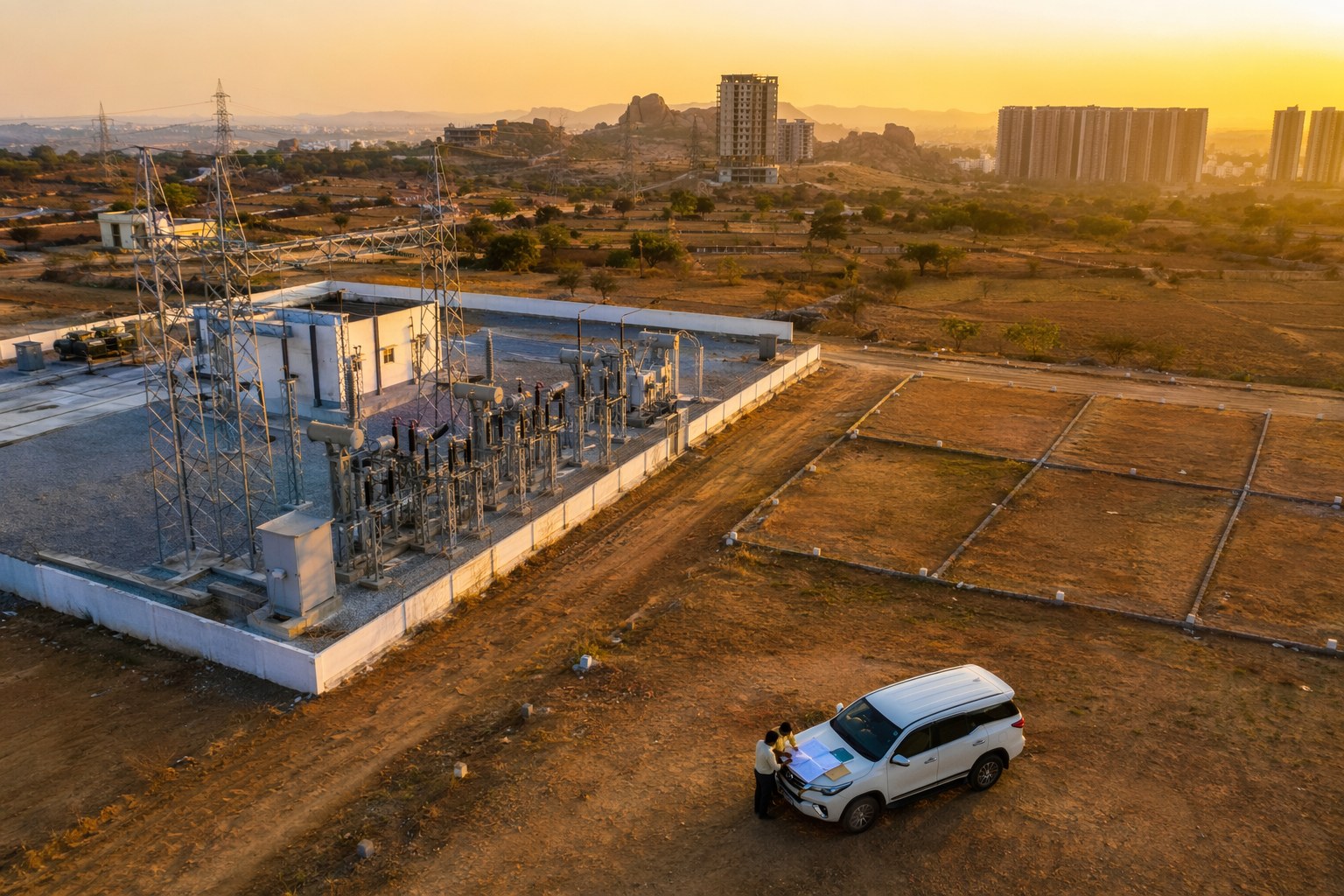



Telangana Stamp Duty Revenue Watch Turns to 22-A Backlog
Telangana Stamp Duty Revenue is now closely tied to a very practical issue at the registration counter: the Section 22-A prohibited-property backlog. As per latest IGRS data available in the Verified.RealEstate database, Telangana has 3,076,153 prohibited-property entries. That is not a small file sitting in the corner. It can affect how quickly sale deeds move, how many documents get paused at SRO level, and how careful buyers become before paying advances.
The financial angle is simple. If a property is flagged under Section 22-A, registration may not proceed in the normal manner. Every delayed or rejected transaction can push stamp duty collection to a later date, reduce near-term registration volumes, and make banks more cautious while processing loans. For a market like Hyderabad, where active buying stretches from Serilingampally and Gandipet to Bachupally, Tellapur, Adibatla, Kompally and Shadnagar, that caution matters.
Telangana Stamp Duty Revenue Watch: Why the 22-A Backlog Matters Now
Section 22-A entries generally cover properties that are restricted from registration under government records. These may include government lands, assigned lands, endowment lands, wakf-related entries, court-affected parcels, or other categories recorded as prohibited. The exact reason has to be checked case by case through official records, the local SRO, pahani, Dharani history and supporting documents.
In our experience, the issue is not only about whether a buyer can register today. It is also about confidence. When buyers hear that a survey number is appearing in a prohibited list, they either pause the deal, renegotiate, demand extra documents, or walk away. Builders and land aggregators also face slower closure when a village or mandal has multiple disputed survey numbers.
For the registration department, a clean transaction means stamp duty can be collected at execution. A doubtful property means scrutiny. That scrutiny may be correct and necessary, but it changes the cash-flow timing of registration revenue.
Our view is straightforward: the 22-A list is not just a legal database. It is a revenue-sensitive database because every flagged property can influence buyer behaviour, SRO workload and registration timing.
Telangana Stamp Duty Revenue and Registration Volumes: The Direct Link
Stamp duty revenue depends on successful registrations. If more buyers start checking land status before execution, some risky deals will naturally get filtered out. That is good for long-term market health. But in the short term, it can reduce rushed registrations and increase document-level objections.
This is especially visible in land-heavy belts around Hyderabad’s growth corridors. Take Kokapet in Gandipet mandal, Tellapur near Ramachandrapuram, Bachupally, Mokila, Adibatla in Ibrahimpatnam side, and villages around Shadnagar and Maheshwaram. Many buyers here are not just buying apartments; they are buying plots, farm land conversions, villa land shares, and development-linked parcels. In such deals, the survey number becomes as important as the sale deed.
Before paying token advance, buyers should run a basic sequence: survey number check, 22-A check, EC check, market value check, SRO jurisdiction check and lender-level title review. Verified.RealEstate tools can help start this process: Section 22-A Prohibited Property Check, Property Verification Tool, Encumbrance Certificate Search, and Survey Number Finder.
What the Current Database Shows
| Item tracked | Latest database figure | Why it matters for buyers and revenue |
|---|---|---|
| Section 22-A prohibited-property entries in Telangana | 3,076,153 | Large pending scrutiny base that can affect registrations, buyer due diligence and stamp duty collection timing |
This number should not be read as one single type of dispute. Section 22-A is a broad registration restriction bucket. A buyer must identify the exact entry, village, mandal, survey number, sub-division and reason. A flat buyer should not assume immunity either. If the project land has a title issue or prohibited-property history, the apartment buyer may face resale, loan or registration complications later.
How Buyers in Hyderabad Should Read a 22-A Flag
A 22-A hit is not a casual warning. It needs document-level follow-up. In local practice, the first questions are simple: Is the survey number matching exactly? Is the sub-division correct? Has the land been regularised, converted or released by a competent authority? Is the old pahani consistent with current Dharani records? Does the EC show transfers that align with the claimed title?
In Serilingampally, one digit mismatch in survey details can create confusion. In peri-urban mandals like Shankarpally, Yacharam, Kandukur or Farooqnagar, old agricultural records and present plotting layouts may not speak the same language. That is where buyers need both digital checks and local record verification at mandal and SRO level.
Use Market Value / Guideline Value Search to understand the government value basis before registration. Use Stamp Duty Calculator to estimate charges based on the value you are entering. Use Find Your SRO Office to confirm where the document should be presented. These checks do not replace legal opinion, but they reduce blind spots.
Why Lenders and Developers Will Watch This Closely
Banks and housing finance companies are usually conservative when land title is unclear. If the parent land is flagged, loan processing may slow down. If a plotted layout has mixed survey numbers, lenders may ask for extra clarifications. If a project is registered with RERA, buyers should still match the RERA land details with survey records and EC entries through RERA Project Lookup.
Developers also have a revenue-side concern. A delayed customer registration affects cash collection, handover schedules and resale confidence. For plotted developments, the impact can be sharper because each plot document needs clean land lineage. For apartment projects, the main burden falls during land acquisition, mortgage release, project finance and final buyer documentation.
We have seen buyers in Gachibowli, Narsingi, Kollur and Kompally become more document-aware over the last few years. They ask for link documents, EC, building permission, RERA details, land conversion, layout approval and mutation records. That is healthy. The old style of buying only on broker assurance is risky, particularly when government datasets are now easier to cross-check.
Due Diligence Checklist Before Paying Advance
- Check Section 22-A status: Run the survey number or property details through the prohibited-property check and verify with official records.
- Match survey number and extent: Compare sale deed, pahani, Dharani entry, layout plan and municipal approval.
- Pull EC: Review past transactions and mortgages. For deeper reading, use EC Analyzer.
- Confirm SRO jurisdiction: Wrong SRO assumptions can delay execution and document presentation.
- Check government market value: Ready reckoner value affects stamp duty calculation and under-valuation risk.
- Look for loan charges: For financed properties, run a CERSAI Charge Check.
- Track changes: If you are waiting for clearance, use Property Change Tracker to monitor updates.
What This Means for the Market
The 22-A backlog may make the market slower in certain pockets, but not weaker by default. Clean-title properties may command better buyer trust. Risky parcels may face discounting, delayed payments or failed registrations. That is how a mature property market should behave.
For Telangana stamp duty revenue, the near-term concern is timing. If buyers pause more deals for verification, registrations may shift. If the government clears genuine errors and updates records faster, stuck transactions can return to the registration pipeline. Either way, the 3,076,153-entry base deserves attention from revenue officials, SROs, developers, banks and ordinary buyers.
My advice is practical: do not treat 22-A as a last-minute registration counter surprise. Check it before token advance, before agreement of sale, before bank processing and certainly before sale deed drafting. For Telugu property terms like pahani, sethwar, khasra, mutation and Dharani entries, buyers can also refer to Telugu-English Property Terms Dictionary.
Frequently Asked Questions
What is Section 22-A in Telangana property registration?
Section 22-A refers to prohibited-property entries where registration may be restricted based on government records. The reason can differ by property, so buyers must verify the exact survey number, village, mandal and supporting documents.
How many prohibited-property entries are in the latest Telangana database?
As per the latest IGRS data available in the Verified.RealEstate database, Telangana has 3,076,153 Section 22-A prohibited-property entries.
Can a 22-A entry affect stamp duty revenue?
Yes. If a property is flagged and registration is delayed or refused, stamp duty collection for that transaction can also be delayed. Large-scale verification can influence registration volumes and revenue timing.
Should flat buyers also check 22-A status?
Yes. Even if you are buying a flat, the project land should be checked. Match RERA details, EC, parent documents and survey numbers before committing funds.
Which checks should I do before paying advance for land in Hyderabad outskirts?
Check Section 22-A status, EC, pahani or Dharani records, survey number, market value, SRO jurisdiction, layout approval and lender title clearance. Do this before paying token advance.