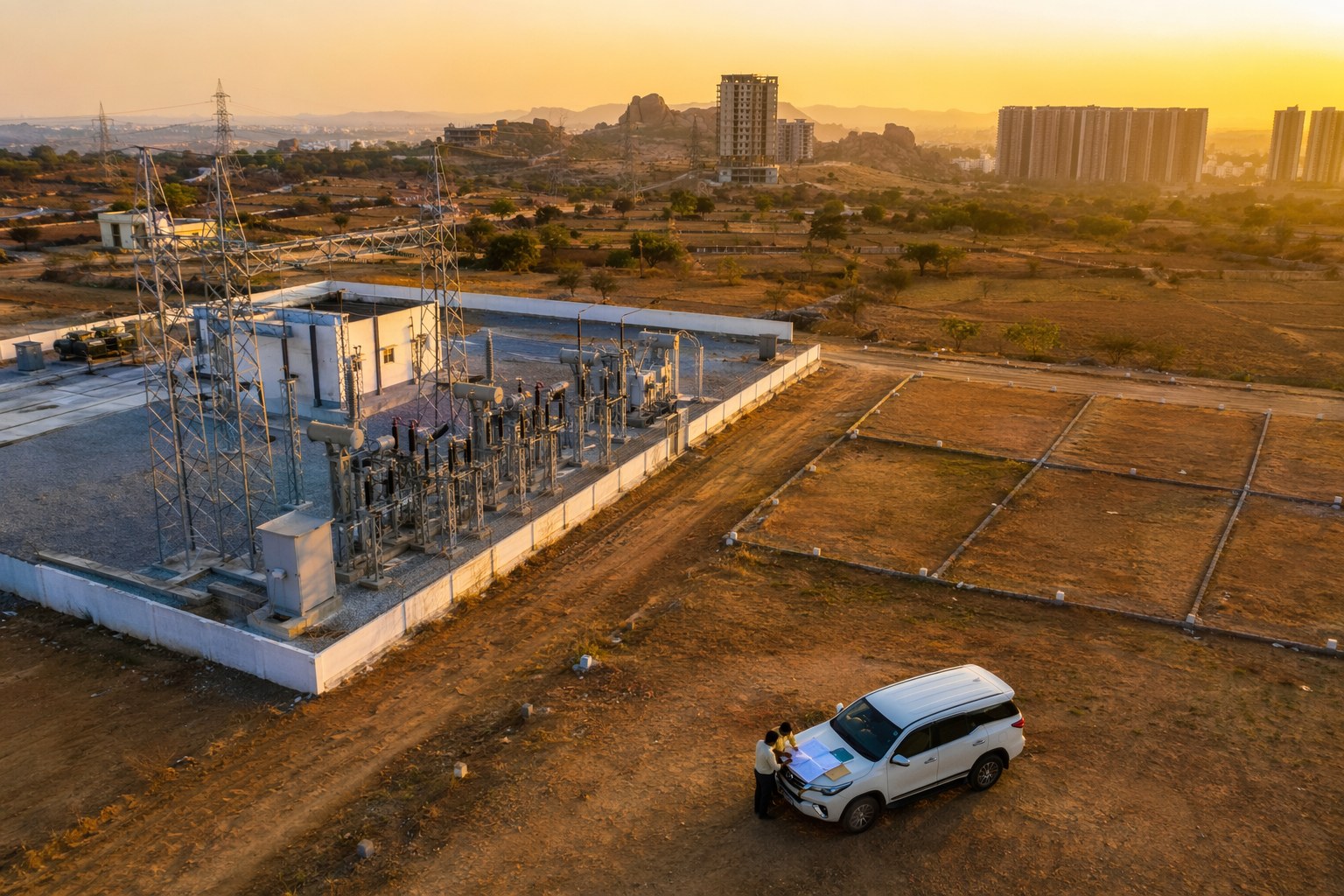



Telangana Project Brochures May Add 22-A Clearance Notes
Telangana Project Brochures May Add 22-A Clearance Notes as developers prepare for sharper buyer scrutiny on land title, Section 22-A entries and registration risk. The trigger is clear: government records show 3,076,153 prohibited properties under Section 22-A in Telangana. For Hyderabad buyers looking at new launches in Kokapet, Tellapur, Kollur, Mokila, Shankarpally, Bachupally or Maheshwaram, the brochure may no longer be only about amenities, elevations and clubhouse images. It may have to answer a more basic question upfront: is the project land clean for registration?
Market sources and legal teams we speak to are already seeing this shift in buyer behaviour. People are asking for survey number checks, pahani references, Dharani status, SRO jurisdiction and title flow before paying booking amounts. In our experience, this is a healthy correction. A glossy brochure without title clarity is no longer enough in Telangana’s project market.
With 3,076,153 prohibited properties recorded under Section 22-A, project brochures that clearly mention title clearance, 22-A status and registration readiness will have a stronger chance of building buyer confidence.
Telangana Project Brochures May Add 22-A Clearance Notes: What is changing?
The likely change is simple but meaningful. Upcoming project brochures may start carrying a dedicated note on whether the project land has been checked against Section 22-A prohibited property records. This note may sit along with RERA registration details, layout approval, land extent, survey numbers, mandal name and SRO jurisdiction.
At present, many brochures focus on towers, unit sizes, floor plans, open spaces, road access and lifestyle features. Title information is usually pushed to the agreement stage or shared only when a serious buyer asks for it. That approach is becoming weak, especially in high-demand corridors where agricultural land has moved into layouts, plotted ventures and apartment projects.
Take the western belt as an example. In Gandipet, Shankarpally, Ramachandrapuram, Patancheru and surrounding mandals, buyers often see projects advertised with strong location claims. But the real comfort comes only after checking the survey number, old pahani history, Dharani record, EC, and whether any part of the land is hit by 22-A restrictions. The same applies to growth corridors around Maheshwaram, Kandukur, Medchal, Shamirpet and Ghatkesar.
Before booking, buyers can use the Section 22-A Prohibited Property Check, Encumbrance Certificate Search and RERA Project Lookup to cross-check the basic risk points. These checks do not replace a lawyer’s opinion, but they can stop many early mistakes.
Why 3,076,153 prohibited properties matter for Telangana project launches
Section 22-A is not a small side issue in Telangana real estate. According to government records available through registration and land administration systems, 3,076,153 properties are listed as prohibited properties. These may include government lands, assigned lands, endowment lands, Wakf-related lands, ceiling surplus lands, disputed categories and other entries where registration can be blocked or questioned.
For a flat buyer, the danger is indirect but serious. The apartment itself may be newly built, but the land beneath the project carries the title risk. If the parent land has a prohibited entry, the buyer may face problems during registration, bank loan processing, resale or mutation. In a plotted venture, the risk is even more visible because each plot usually traces directly to the underlying survey number.
We have seen buyers get excited by a launch price, pay an advance, and only later ask for the survey number. That sequence is risky. The better sequence is: project name, land survey numbers, village, mandal, SRO, 22-A check, EC check, RERA check, then commercial negotiation.
For ready reckoner or government market value references, buyers should also check the Market Value / Guideline Value Search. Registration cost planning can be done using the Stamp Duty Calculator, and SRO mapping can be checked through the Find Your SRO Office.
What 22-A and title-clearance notes may include in brochures
A practical project brochure need not publish bulky legal papers. But it can carry a clear title snapshot. In my opinion, serious developers should voluntarily provide this, especially in pre-launch and soft-launch discussions where buyers are taking early risk.
| Brochure item | Why buyers should read it |
|---|---|
| Survey numbers and village name | Helps buyers verify the exact land parcel, not just the marketing location. |
| Mandal and SRO jurisdiction | Useful for registration checks, EC search and local title verification. |
| 22-A status note | Shows whether the developer has checked prohibited property risk. |
| Dharani or revenue reference | Helps connect the project land with revenue records such as pahani and ownership trail. |
| RERA registration reference | Allows buyers to compare brochure claims with declared project details. |
| Approval and layout information | Helps buyers understand planning permission, road access and development conditions. |
These are not decorative details. They are the backbone of due diligence. If a brochure says “clear title” but does not mention the survey number or SRO, buyers should ask for more. If the developer hesitates to share land identifiers, that itself is a signal to slow down.
Telangana Project Brochures May Add 22-A Clearance Notes, but buyers must still verify
A brochure note is helpful, but it is not a legal guarantee by itself. Buyers should treat it as a starting point. The stronger documents are the title deed chain, EC, revenue records, mutation history, layout approval, RERA filing and legal opinion.
For example, a project in Mokila may be marketed as being near the financial district side of growth, while the land records may fall under a different village or mandal. A Kollur project may be promoted with ORR access, but the buyer still has to verify the exact survey number and land use. A Bachupally apartment may have strong demand, but SRO and EC checks remain necessary. Locality branding and legal identity are not always the same.
Use the Survey Number Finder when the developer shares land details. The Property Verification Tool can help organise checks, while the EC Analyzer is useful when buyers receive a long encumbrance certificate and do not know what to look for.
For bigger land parcels and plotted ventures, I would also suggest checking land use through the Land Use Zone Finder and road access through the Road Width Check. In Hyderabad’s expanding edges, road width and land use can affect both approval and resale comfort.
Impact on Hyderabad developers and launch marketing
Developers who already maintain clean documentation may benefit from this shift. If the land has a clear chain, no 22-A issue, proper approvals and RERA registration, saying so upfront can reduce buyer anxiety. It may also reduce repeated document requests at the sales office.
For weaker projects, the pressure will increase. Sales teams can no longer rely only on location talk, model flats and early-bird pricing. Buyers in Hyderabad have become more alert after seeing disputes around assigned lands, government land claims, old family partitions and unclear revenue entries. Banks also ask sharper questions before loan approval, especially where land history is complex.
Brochure transparency may become a soft market standard even without a fresh rule. We have seen this earlier with RERA numbers. A few years ago, some projects treated RERA disclosure like a formality. Now, many buyers directly ask for it before even visiting the site. 22-A status can move in the same direction.
What buyers should ask before paying a booking amount
- What are the exact survey numbers of the project land?
- Which village, mandal and SRO does the land fall under?
- Has the land been checked against Section 22-A prohibited property records?
- Is the project registered under RERA, and do brochure details match the RERA filing?
- Can the developer share EC, title flow, approval copy and land conversion details where applicable?
- Does the agreement mention the same land details shown in the brochure?
My practical advice is blunt: do not pay only because the launch is “selling fast”. First get the land identifiers. Then verify. A clean project will not be afraid of basic questions.
For buyers comparing apartment and plot options, the cost side should also be checked properly. Government guideline value, stamp duty, registration charges, composite value and building value can change the real purchase outflow. Tools such as the Composite Value Calculator and Building Value Calculator help bring some discipline into that calculation.
Verified.RealEstate view
Telangana’s project market is maturing. The next good brochure should not just sell a lifestyle. It should show confidence in land title. With 3,076,153 prohibited properties in the state’s records, putting 22-A and title-clearance notes upfront is not a cosmetic change. It is basic buyer protection.
Developers who publish clearer title information will likely earn better trust, especially in Hyderabad’s fast-growing suburban mandals. Buyers, on their side, should still do independent checks through SRO records, Dharani references, EC, RERA and legal review. A brochure can inform. Verification protects.
Frequently Asked Questions
Will Telangana project brochures legally need 22-A clearance notes?
There is no public blanket rule in hand that every brochure must carry a 22-A note. But market practice may move that way because buyers are asking for prohibited property and title checks before booking.
What is Section 22-A in Telangana property registration?
Section 22-A refers to prohibited property categories where registration may be restricted. Telangana government records show 3,076,153 prohibited properties, so buyers should check the project survey numbers before paying an advance.
Is RERA registration enough to prove clear land title?
No. RERA registration is useful and should be checked, but buyers should also verify EC, SRO records, survey numbers, Dharani details, approval papers and 22-A status.
Which details should I ask from a Hyderabad developer before booking?
Ask for survey numbers, village, mandal, SRO, 22-A status, EC, title flow, RERA registration and approval copies. If these are not shared, slow down and verify before paying.