

Telangana Mixed-Use Launches May Face Land-Use Filters earlier in the sales cycle, especially for projects where apartments, retail frontage and office blocks sit on one land parcel. The shift is being pushed by buyer caution, lender due diligence and the practical difficulty of explaining one survey number with three different commercial stories. In Hyderabad’s western and southern growth corridors, we are already seeing more serious customers ask for land-use zoning, Section 22-A status, EC history and RERA registration before discussing floor plans.
The immediate trigger is not one single circular. It is market behaviour. When a mixed-use launch comes up in Kokapet, Narsingi, Nanakramguda, Tellapur, Gachibowli, Financial District or Shamshabad side, the first question from informed buyers is no longer only “What is the price?” It is “What is the land use, and is the land clean for this combination of uses?”
Telangana Mixed-Use Launches May Face Land-Use Filters Before Marketing
Mixed-use projects have become attractive because they sell a lifestyle story: residential towers above or beside retail, food outlets, co-working, clinics and office space. For developers, this format can improve project positioning. For buyers, it can reduce daily travel. But in Telangana, the legal reading of the land parcel matters before the brochure becomes too ambitious.
In our experience, three checks are moving to the front of the launch checklist:
- Land-use zoning: Whether the parcel permits the proposed residential, commercial or mixed activity under the applicable master plan or local authority framework.
- Section 22-A status: Whether the survey number is listed as prohibited for registration or affected by government, assigned, wakf, endowment, ceiling or other restrictions.
- Title and encumbrance trail: Whether the link documents, EC, mutation and pattadar details support the developer’s right to convey units.
As per latest IGRS data available in our database, Telangana has 3,076,153 prohibited properties under Section 22-A. That number alone explains why serious builders and land aggregators cannot treat 22-A verification as a last-minute registration desk issue. Even when the project is in a prime locality, one affected survey sub-division can slow down approvals, lending, resale and customer confidence.
Telangana Mixed-Use Launches May Face Land-Use Filters In Key Hyderabad Corridors
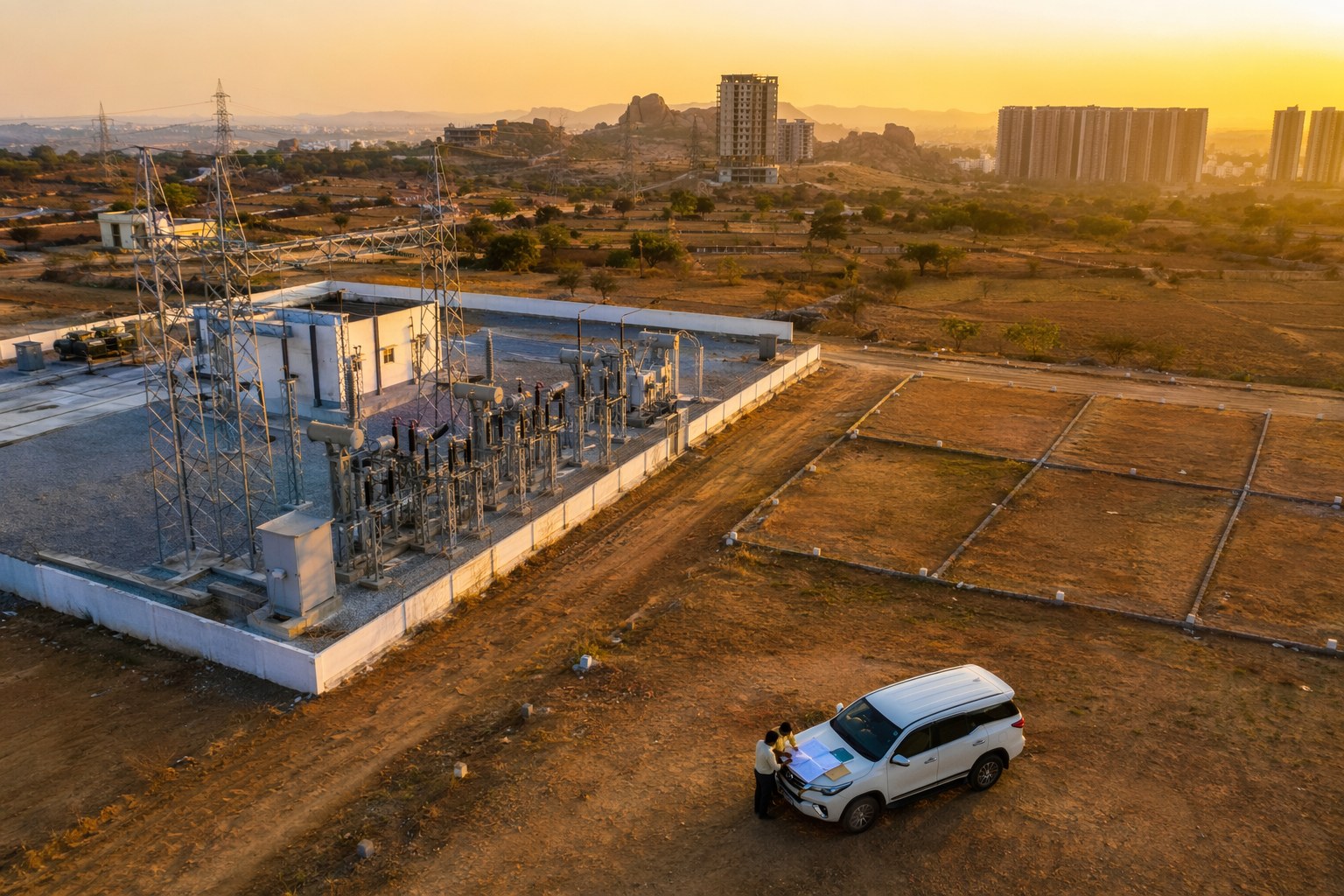
The pressure is sharper in Hyderabad’s mixed-use belts. Take Kokapet and Narsingi in Gandipet mandal. These locations attract premium residential launches, office-led demand and high-street retail interest. A parcel marketed as a luxury gated community with commercial frontage needs zoning clarity, road-width comfort and clean survey boundaries.
In Nanakramguda, Gachibowli and Kondapur under Serilingampally side, buyers are more documentation-aware because many are salaried tech professionals using bank finance. They ask for RERA details, EC, SRO jurisdiction and approval copies. A glossy launch without land-use explanation can look weak, even if the brand is strong.
In Tellapur and Kollur belt near Ramachandrapuram and Shankarpally influence zones, the issue is slightly different. Many projects sit on parcels that were historically agricultural or plotted in stages. When a developer proposes residential towers plus retail or office blocks, the customer wants to know whether conversion, zoning and approvals match the promised use.
On the Shamshabad, Mamidipally and Adibatla side, mixed-use is often linked to airport access, logistics, warehousing, hospitality and plotted residential demand. Here, land-use filters become even more relevant because one side of the road may support a certain use while another parcel may fall under a different planning restriction.
What Buyers Should Check Before Booking A Mixed-Use Unit
A flat buyer may feel land-use is a developer-level matter. That is only partly true. If the project has residential, retail and office components on the same land, the buyer must understand whether the land is approved for that exact mix. Otherwise, future issues can come at the time of home loan, resale, occupancy, shop leasing or registration.
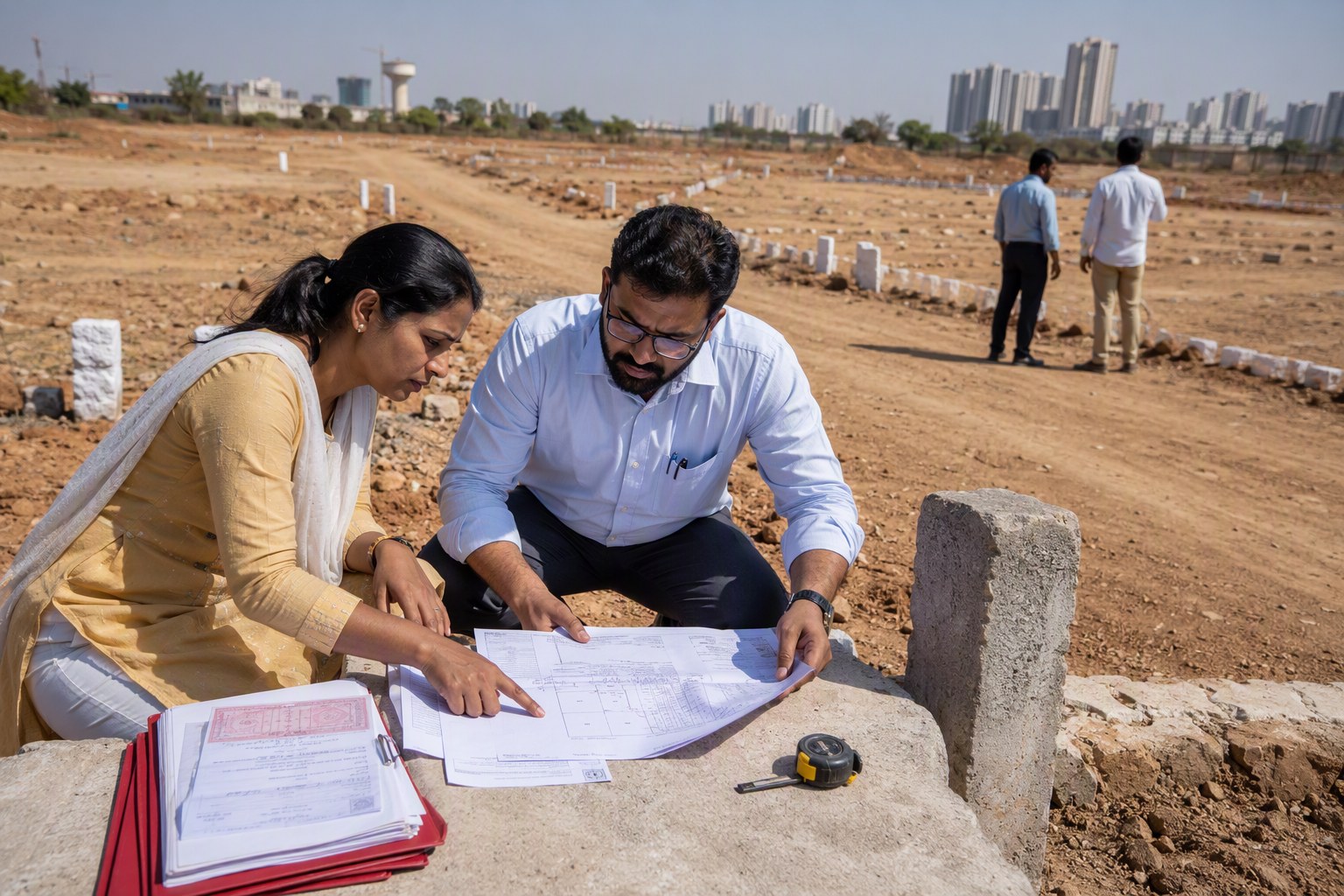
Start with the survey number. Cross-check the village, mandal and SRO. Use the Survey Number Finder if the brochure only mentions a project name and not the underlying land identity. After that, check whether the survey number falls in any prohibited category through the Section 22-A Prohibited Property Check.
Next, verify zoning. For a mixed-use promise, the buyer should not rely only on phrases like “commercial permitted” or “future retail hub”. Use the Land Use Zone Finder to understand the planning context. If the land-use status is unclear, ask the developer for approval copies from the relevant planning authority and compare them with the sale material.
The EC is another non-negotiable document. A clean marketing board does not mean clean title. Pull the encumbrance history with the Encumbrance Certificate Search and check whether there are mortgages, development agreements, sale deeds, release deeds or court-related entries. For larger parcels, an EC can be long and technical; the EC Analyzer can help buyers read the document more sensibly.
Why Developers May Start Disclosing These Checks Earlier
Earlier, many project teams would discuss land title only when a buyer reached the agreement stage. That practice is becoming risky. In a mixed-use launch, the buyer may be purchasing a residential unit, but the value proposition depends on the retail and office components also being legally workable.
We have seen customer walk-ins where the first meeting itself includes questions such as:
- Which village and mandal does the land fall under?
- Which SRO will register the document?
- Is the land free from Section 22-A restrictions?
- Is the commercial block part of the same RERA registration or separate?
- Does the road width support the proposed built-up intensity?
- Is the guideline value aligned with the consideration shown in documents?
Developers who answer these questions early appear more credible. Developers who avoid them invite suspicion, even when there may be no actual defect. In Hyderabad, word travels quickly through apartment buyer groups, NRI WhatsApp circles and broker networks.
My view is simple: mixed-use is a strong product for Telangana, but only when the land story is clean. If the land-use, 22-A and EC checks are not ready, the launch team should not push hard bookings.
The Role Of RERA, SRO And Ready Reckoner Checks
RERA registration remains a key layer, but it should not be treated as a substitute for land verification. Buyers should use the RERA Project Lookup to check the project details, promoter name, approved plans and declared timelines. Then they should separately verify land and registration-related records.
The SRO angle also matters. A project may be marketed under a popular Hyderabad locality name, but registration depends on the actual village and SRO jurisdiction. For example, a project branded as “near Financial District” may fall under a different village record than what the buyer assumes. The Find Your SRO Office tool is useful here.
Ready reckoner or guideline value is another practical check. It helps buyers understand the minimum value basis used for stamp duty and registration. Before signing an agreement, compare the declared value using the Market Value / Guideline Value Search and estimate outgo using the Stamp Duty Calculator.
What This Means For Upcoming Telangana Launches
For upcoming mixed-use projects, the sales pitch may change. Expect more launch decks to include a “land and approval snapshot” along with clubhouse photos. A sensible snapshot should mention village, mandal, survey numbers, land-use status, RERA registration, SRO, EC availability and whether the land is clear from Section 22-A restrictions.
For developers, this is not a burden if the paperwork is clean. It is a trust-building move. For buyers, it reduces guesswork. For channel partners, it avoids embarrassment after collecting token amounts. For banks and NBFCs, it improves comfort while funding buyers or project receivables.
Hyderabad’s mixed-use story is not slowing down. The city’s work-live-retail model is practical, especially in locations where office demand and residential demand overlap. But land is still the foundation. If the parcel has a planning mismatch or a prohibited-property flag, the best elevation design cannot fix the risk.
Our advice to buyers is direct: before paying a booking amount in any Telangana mixed-use launch, ask for the survey number and run the basic checks. If the developer hesitates, pause. A good project will not fear verification.
Frequently Asked Questions
What does land-use mean in a Telangana mixed-use project?
Land-use refers to the permitted activity on a land parcel under the applicable planning rules. In a mixed-use project, buyers should check whether residential, retail and office uses are legally supported on that parcel.
Why is Section 22-A checking important before booking?
Section 22-A covers properties restricted from registration for various reasons. As per latest IGRS data in our database, Telangana has 3,076,153 prohibited properties, so checking the survey number early is a practical safety step.
Is RERA approval enough for buying in a mixed-use launch?
No. RERA is important, but buyers should also verify land-use, EC, SRO jurisdiction, guideline value and 22-A status. These checks cover different risks.
Which Hyderabad localities need extra care for mixed-use checks?
Kokapet, Narsingi, Nanakramguda, Gachibowli, Tellapur, Kollur, Shamshabad and Adibatla are active growth areas where mixed-use claims should be checked against survey number, mandal records and planning permissions.