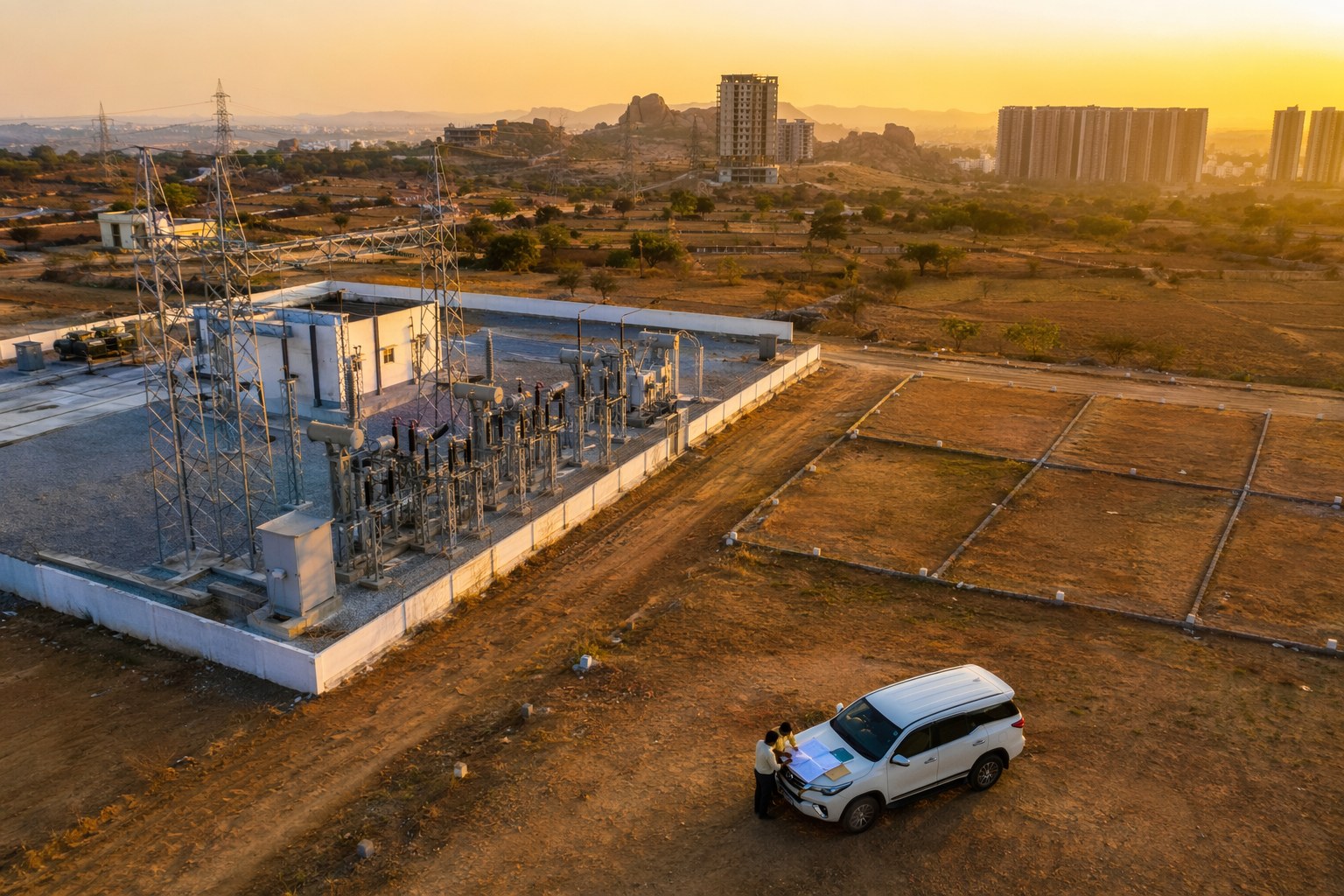



Telangana prohibited properties are now becoming an early filter in property deals, not a last-minute legal check. Verified.RealEstate’s latest count shows 3,076,153 properties listed under prohibited properties, commonly linked to Section 22-A restrictions. For buyers, brokers and sellers across Hyderabad’s active corridors, this means one simple thing: title screening has moved to the first stage of negotiation.
In our experience, serious buyers are no longer waiting until agreement drafting to ask for EC, pahani, survey number history, SRO jurisdiction and Dharani status. They want these answers before token advance. In areas like Kokapet, Narsingi, Tellapur, Gachibowli, Miyapur, Bachupally and Shamshabad, this early checking is quietly changing deal speed.
When a property shows a prohibited flag, the deal does not just slow down. In many cases, the buyer, bank, broker and document writer all pause until the title position is clarified.
Telangana prohibited properties: why the 30.76 lakh count matters now
The number 3,076,153 is not just a database entry. It reflects how large the title-risk universe has become in Telangana’s property market. Prohibited property entries can affect agricultural land, assigned land, government land, endowment land, court-disputed land, surplus land and other categories depending on the record.
For a Hyderabad buyer, the issue is practical. A flat in a RERA-registered project, a villa plot near Mokila, or a land parcel in Shankarpally mandal may look clean on brochure, location and pricing. But the underlying land survey number, village record and registration status still matter. If the mother land carries a restriction, the resale or loan process can become difficult.
This is why many brokers have started asking for basic title inputs before arranging site visits. They check survey numbers, village names, mandal, SRO office and EC availability. Some sellers feel this is too much questioning at the enquiry stage. But frankly, it saves everyone’s time.
Buyers can start with our Section 22-A Prohibited Property Check, then cross-check ownership trail through the Encumbrance Certificate Search. For land parcels, the Survey Number Finder is useful before visiting the SRO or speaking to a document writer.
How Telangana prohibited properties are changing buyer behaviour
Earlier, many buyers followed this order: shortlist locality, negotiate price, pay token, then verify documents. That approach is becoming risky. The new order is different: identify the land or flat, verify the title signals, then negotiate.
We’ve seen this especially in Hyderabad’s western and southern growth belts. In Gandipet mandal, areas like Kokapet and Narsingi attract premium apartment and villa demand. In Serilingampally mandal, Gachibowli and surrounding pockets remain strong for IT-linked buyers. In Ramachandrapuram and nearby corridors, Tellapur and Osman Nagar have become regular discussion points for plotted layouts and gated communities. Towards the airport side, Shamshabad and Maheshwaram continue to draw land enquiries.
Across these locations, buyers ask sharper questions now:
- Is the survey number free from Section 22-A restrictions?
- Does the EC show a clean transaction chain?
- Is the property under the correct SRO jurisdiction?
- Does the guideline value match the registration approach?
- Is the project RERA-registered, where RERA applies?
None of these checks guarantee a perfect title by themselves. But they reduce blind spots. A buyer who checks early has better bargaining power and fewer surprises before registration.
What brokers are doing differently
Good brokers in Hyderabad have adapted quickly. The old style of saying “documents are clear, sir” is not enough anymore. Buyers want proof. Banks want proof. Family members sitting abroad want proof on WhatsApp before they release funds.
A practical broker now keeps a basic document set ready: link documents, latest EC, property tax where applicable, building permission details, RERA details for eligible projects, pahani or Dharani extract for land, and SRO information. In plotted layouts, they also check whether the land conversion, layout approval and survey number references are consistent.
The Find Your SRO Office tool helps identify the right registration office. For pricing alignment, buyers and sellers can use the Market Value / Guideline Value Search. Where construction value or composite value is being discussed, our Composite Value Calculator can help structure the conversation better.
My view is simple: brokers who do title screening early will close cleaner deals. Brokers who hide issues until agreement stage will lose trust, especially in NRI and salaried buyer segments.
Impact on sellers: clean papers are becoming a selling point
Sellers also need to read the market correctly. If your property is clean, say it with documents. Do not depend only on locality demand. In hot areas, buyers may still walk away if they sense title ambiguity.
A seller in Miyapur, for example, may get many enquiries because of connectivity and apartment demand. A landowner near Shankarpally may get calls because plotted development is active. But if the buyer asks for survey number checks and the seller delays, suspicion starts. Sometimes the issue is not fraud. It may simply be old paperwork, mismatched names, missing link documents or unclear mutation. Still, delay creates doubt.
Before listing a property, sellers should check:
- Latest EC for the property period available in records
- Correct owner name and document references
- Any prohibited property flag linked to the survey number or land parcel
- Whether old pahanis and Dharani entries match the sale story
- SRO and village details used in previous documents
For sellers planning to exit, the Capital Gains Tax Calculator can also help estimate tax impact. Tax is a separate subject from title, but both come into play before final negotiation.
Title screening is now part of price discovery
Property price is not only about square feet, road width, brand name or distance from ORR. Title comfort has become part of the rate conversation. A buyer may pay a stronger price for a property where the title trail is easy to verify. A property with unclear records may face discount pressure, delayed payment terms or outright rejection.
This is visible in resale flats also. Buyers ask for the land document chain of the apartment project, not just the sale deed of the current owner. In standalone buildings, they ask about building permission, road access and land use. For open plots, they ask for layout approval, survey number status, EC and conversion record.
For projects, the RERA Project Lookup should be used where applicable. For broader due diligence, buyers can run a first-level check through the Property Verification Tool. If an EC is difficult to read, our EC Analyzer can help identify transaction patterns and possible concerns.
What buyers should do before paying token advance
Token advance is where many mistakes begin. Once money is paid, the buyer becomes emotionally and financially tied to the deal. If the property later shows a Section 22-A issue, a bank objection or an EC mismatch, recovery of token can become stressful.
Before paying even a small amount, buyers should ask for the property’s exact identifiers. For flats, get the project name, flat number, block, survey number references and RERA number if applicable. For plots and land, get village, mandal, survey number, extent, layout details and SRO.
Then follow this basic sequence:
- Check whether the property or survey number appears under prohibited property records.
- Review EC for ownership flow and existing registered transactions.
- Confirm SRO jurisdiction and guideline value.
- Match seller identity with the title documents.
- For land, compare pahani, Dharani and survey references.
- For apartments, review project-level approvals and RERA status where applicable.
This process may look slow, but it usually saves time. A clean property moves faster once these checks are done. A risky property reveals itself before money is blocked.
Telangana prohibited properties and bank loan timelines
Banks and housing finance companies are cautious when title records are unclear. Even if a buyer is financially eligible, the legal and technical teams can hold the file. If a prohibited property entry appears, the lender may ask for clarification, legal opinion, additional documents or may refuse funding depending on the case.
This is why loan-dependent buyers should not treat legal verification as a formality. The bank’s lawyer is not working for the seller. Their job is to protect the lender. If they raise a title objection, the buyer should take it seriously.
In Hyderabad’s competitive market, sellers sometimes prefer buyers who can move fast. But speed without title screening is not smart. A buyer with pre-approved finance and early document checks is stronger than a buyer who gives token first and asks questions later.
The market takeaway
The 30.76 lakh prohibited properties count has made one market reality clear: title screening is no longer a back-office task. It is now part of site visits, price talks, bank processing and final registration planning.
For buyers, the message is straightforward. Do not fall only for location, amenities or urgency. For brokers, document readiness is now a business advantage. For sellers, clean and organised papers can improve buyer confidence.
Telangana’s property market is active, especially around Hyderabad’s growth corridors. But active markets need sharper checks. A property may look attractive on ground, yet the record can tell a different story. Start with the record.
Frequently Asked Questions
What are Telangana prohibited properties?
Telangana prohibited properties are properties restricted from registration under government records, often linked to Section 22-A categories. Buyers should check this before paying token advance.
How many prohibited properties are recorded in Telangana?
Verified.RealEstate’s latest database count shows 3,076,153 prohibited properties in Telangana.
Can I buy a property if it appears in prohibited property records?
Do not proceed blindly. Get the exact reason checked through the SRO, legal advisor and relevant land records. Some cases need correction or clarification before any sale can move forward.
Which checks should I do before buying land in Hyderabad outskirts?
Check Section 22-A status, EC, survey number, village and mandal records, Dharani or pahani entries, SRO jurisdiction, land use and approvals. These checks are especially useful in fast-growing corridors.
Is RERA enough to prove clear title?
RERA is useful where applicable, but buyers should still review land title, EC, approvals and prohibited property status. RERA lookup should be one part of the verification process, not the only check.