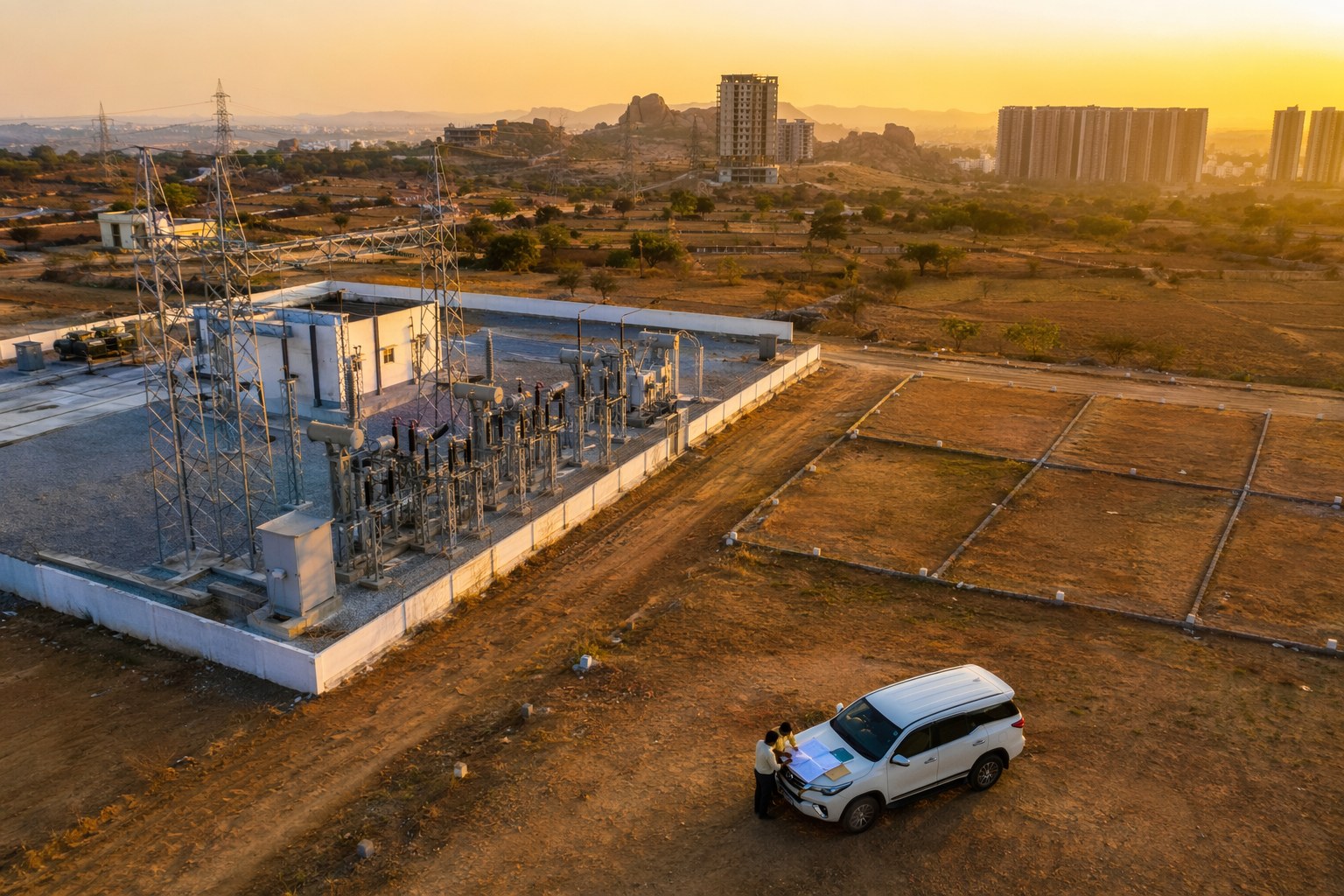



Auction Buyers May Demand 22-A Filters in Telangana Land Sales
Auction Buyers May Demand 22-A Filters in Telangana Land Sales as bidders become more cautious about prohibited property risk before paying earnest money or locking themselves into auction terms. As per latest IGRS data available with Verified.RealEstate, Telangana has 3,076,153 prohibited property entries under Section 22-A. That is over 30.76 lakh entries sitting in government records, and serious auction buyers are now asking a simple question: why should this check happen after the bid, and not before?
The market signal is clear. In land auctions, especially those involving banks, financial institutions, government agencies, distressed sellers and large land parcels, bidders may start demanding an upfront 22-A screening certificate or at least a survey-number-wise disclosure before they participate. In our experience, this is no longer a small due diligence point. It can decide whether a buyer bids aggressively, bids cautiously, or walks away.
Why 22-A Filters in Telangana Land Sales May Become a Bid Condition
Section 22-A prohibited property entries are not just clerical lines in a database. They can directly affect registration at the SRO level. If a survey number is tagged as prohibited, the Sub-Registrar may refuse registration unless the issue is legally cleared or the entry is corrected by the competent authority.
That is why auction buyers in Hyderabad and surrounding districts are getting more practical. A plot in Kokapet under Gandipet mandal, a land parcel near Tellapur in Ramachandrapuram mandal, a site around Mokila in Shankarpally mandal, or agricultural land near Maheshwaram and Shamshabad may look attractive on paper. But the real question is whether the survey number is clean in the prohibited property list, Dharani, pahani records and SRO registration history.
Earlier, many buyers checked the Encumbrance Certificate first and treated it as the main safety document. That habit is changing. EC is still necessary, but it does not automatically solve 22-A risk. A land parcel can have old transactions in the EC and still face registration restrictions if it appears in the prohibited property list.
Our view is simple: in Telangana auctions, 22-A status should be checked before the auction, not after the buyer wins the bid and starts running between the SRO, revenue office and legal advisor.
How 22-A Filters in Telangana Land Sales Change Auction Due Diligence
The practical impact is on bidding behaviour. If the auction notice gives only broad boundaries or an incomplete survey number, bidders will ask for more documents. If the notice does not clarify 22-A status, bidders may reduce their bid or insist on a conditional offer. This is especially likely in high-interest corridors around Narsingi, Manikonda, Kokapet, Tellapur, Bachupally, Miyapur, Adibatla, Shamshabad and areas along the Hyderabad growth belt.
For auctioneers, this creates pressure to clean up the document pack. A serious bidder will expect the basic land file to include village, mandal, survey number, extent, title chain, pahani or ROR extract, EC, mutation status, SRO details and any pending litigation disclosure. The seller may also be asked to share whether the land is government land, assigned land, endowment land, wakf land, ceiling surplus land, forest-related land or any other category that can trigger registration restrictions.
Buyers can run their own first-level checks using the Section 22-A Prohibited Property Check, then match the survey details with the Survey Number Finder. For registration history, the Encumbrance Certificate Search and EC Analyzer are useful starting points. If the SRO jurisdiction is unclear, use Find Your SRO Office before taking the file to a document writer or advocate.
What Auction Bidders Should Ask Before Paying EMD
EMD payment is where many buyers become emotionally committed. Once the money is paid, people tend to focus on winning the auction, not questioning the land file. That is risky. Before paying earnest money, bidders should ask the auctioneer or seller for written clarity on 22-A status.
- Full survey number, sub-division number, village and mandal.
- Whether the property appears in Section 22-A prohibited property records.
- Latest pahani or ROR extract, wherever applicable.
- Latest EC from the relevant SRO.
- Clear boundary schedule matching the survey record.
- Any court case, revenue appeal, land acquisition note or government claim.
- Whether the seller will refund EMD if registration is refused due to 22-A restriction.
This last point is very important in auction terms. Many auction notices say the buyer must satisfy himself or herself about title. That type of clause pushes the risk on to the bidder. So if a 22-A issue comes out after winning, the buyer may have a hard argument on refund unless the auction terms provide protection.
22-A Filters in Telangana Land Sales: What Sellers and Auctioneers Should Prepare
Sellers who want better participation in auctions should not treat 22-A disclosure as a burden. A clean file can attract more confident bidding. If the land is not prohibited, say it clearly with supporting records. If there is an old entry that has already been cleared, attach the clearance proceedings. If the entry is wrong, start correction before the auction instead of expecting bidders to accept vague assurances.
For plots and layouts, buyers may also check market value, RERA status and land use. The Market Value / Guideline Value Search helps bidders understand the ready reckoner angle. For apartment or villa projects, the RERA Project Lookup is useful. For development potential, especially in HMDA and municipal areas, buyers can use the Land Use Zone Finder, Road Width Check and FSI/FAR Calculator.
Stamp duty and registration cost should also be checked before bidding, because the winning bid is not the only cost. The Stamp Duty Calculator gives a quick estimate based on applicable inputs. For mixed land and building assets, the Composite Value Calculator can help structure the first round of evaluation.
Hyderabad Market Impact: More Questions, Slower Blind Bidding
In Hyderabad real estate circles, we have seen buyers become sharper after hearing stories of registration delays, survey mismatches and revenue record surprises. The mood is not negative; it is cautious. Good land will still find buyers. But blind bidding on unclear land is becoming harder to justify.
Areas like Kokapet, Narsingi, Tellapur and Mokila attract strong interest because of connectivity, IT corridor access and long-term development expectations. On the other side, locations like Adibatla, Maheshwaram, Shamshabad and Ibrahimpatnam attract buyers looking at future growth and larger extents. In all these areas, one wrong survey number can change the deal. That is why mandal-level and village-level checking matters.
For agricultural lands, the pahani and Dharani record must match the seller claim. For plots, the layout approval, link documents and SRO records must align. For auction properties, the bank or institution may have possession rights through loan enforcement, but that does not automatically remove revenue restrictions. Buyers should not confuse possession with registerable title.
Quick Due Diligence Table for Telangana Auction Buyers
| Check | Why it matters | Where to start |
|---|---|---|
| 22-A status | Registration can be blocked if the property is prohibited | Section 22-A Prohibited Property Check |
| Survey number match | Wrong survey details can mislead the buyer | Survey Number Finder |
| EC history | Shows registered transactions and charges | Encumbrance Certificate Search |
| SRO jurisdiction | Registration and EC search depend on the correct office | Find Your SRO Office |
| Guideline value | Helps estimate registration value and stamp duty base | Market Value / Guideline Value Search |
What This Means for the Next Round of Land Auctions
The presence of 3,076,153 prohibited property entries in Telangana government records is enough reason for auction buyers to demand better screening. We are not saying every auction land has a 22-A problem. Many do not. But the size of the prohibited property database means bidders will no longer accept casual answers like clean land, no issue, registration will happen.
The likely market shift is this: bidders will ask for survey-number-wise 22-A confirmation before auction day. Legal teams will compare EC, Dharani, pahani and SRO data earlier in the process. Auctioneers who provide clearer files may receive stronger participation. Those who leave due diligence entirely to bidders may see more hesitation.
For Telangana land buyers, the safest approach is not fear. It is verification. Check the survey number, village, mandal, SRO, EC, pahani and prohibited property status before the bid. If anything does not match, pause and get written clarification. In land, one day of checking is cheaper than months of running behind corrections.
Frequently Asked Questions
What is a 22-A prohibited property in Telangana?
A 22-A prohibited property is a property listed under Section 22-A where registration may be restricted by the Sub-Registrar. It can include categories such as government, assigned, endowment, wakf or other restricted lands, depending on the record.
Why should auction buyers check 22-A status before bidding?
Because winning the auction does not guarantee registration. If the survey number appears in prohibited property records, the buyer may face refusal or delay at the SRO stage.
Is an Encumbrance Certificate enough for land auction due diligence?
No. EC is necessary, but it mainly shows registered transactions and charges. Buyers should also check 22-A status, Dharani or revenue records, pahani, survey details and SRO jurisdiction.
How many prohibited property entries are there in Telangana?
As per latest IGRS data available with Verified.RealEstate, Telangana has 3,076,153 prohibited property entries under Section 22-A.
Which tool can buyers use for a first-level 22-A check?
Buyers can start with the Section 22-A Prohibited Property Check on Verified.RealEstate and then cross-check survey number, EC and SRO details before taking legal advice.