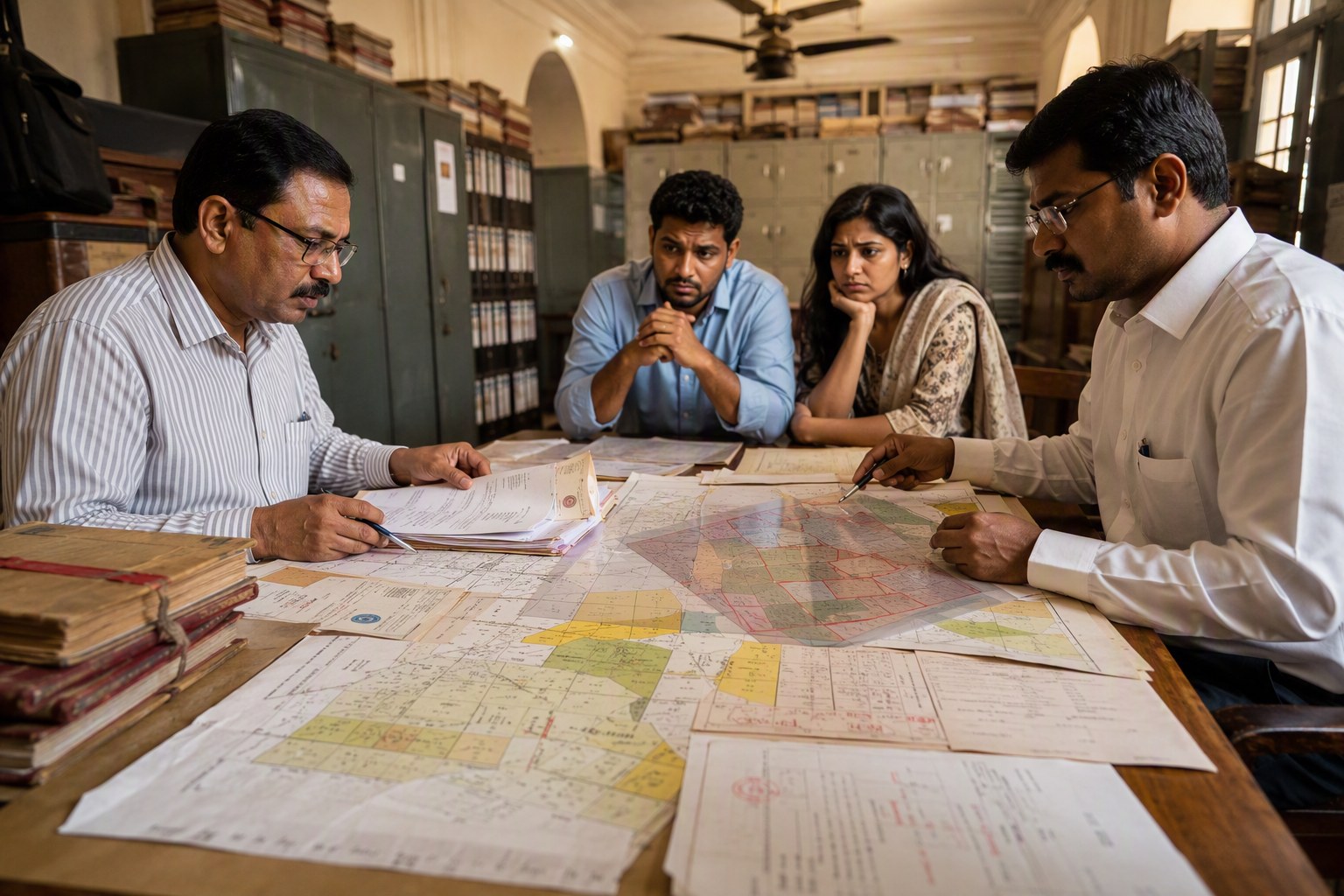



Telangana May Link Mutation History to Registration Screens is the kind of reform that can quietly change how buyers, document writers and SRO staff catch title problems before a sale deed reaches the final registration stage. With 30,3,076,153 prohibited properties under Section 22-A in the State database as per latest IGRS data, the risk backdrop is not small. If mutation history becomes visible inside the registration workflow, many gaps in ownership transfer, pahani entries, Dharani records and past transactions can be flagged much earlier.
For Hyderabad and its surrounding growth corridors, this matters. We have seen buyers in Kokapet, Narsingi, Tellapur, Patancheru, Shamirpet, Maheshwaram and Ibrahimpatnam focus heavily on price, road width and location, but miss the boring part: whether the seller’s name entered the revenue record properly after the previous sale, inheritance, partition or court order. That gap can become painful at the SRO counter.
In our experience, a clean sale deed alone is not enough. The revenue trail, mutation trail and registration trail must speak to each other.
Telangana May Link Mutation History to Registration Screens: What could change?
At present, a registration workflow largely checks the document presented, stamp duty, party details, property description, market value, prohibited property status and other available validations. Mutation, however, belongs to the revenue side. That means the buyer may check Dharani or revenue records separately, while the SRO deals with the registration document.
If mutation history is added to registration screens, the SRO can see whether the seller’s name came into the revenue record through a valid earlier transaction, inheritance, gift, partition, succession or correction. The buyer’s advocate can also ask sharper questions before the parties sit for execution.
This is especially useful in peri-urban mandals where agricultural land, converted land, plotted layouts and gram panchayat permissions often overlap. Take Gandipet mandal, Serilingampally mandal, Rajendranagar mandal, Medchal mandal, Patancheru mandal, Shamirpet mandal and Maheshwaram mandal. These are not sleepy land pockets anymore. They are active real estate zones where one survey number can have multiple historical entries, family claims, layout changes and revenue corrections.
Why Telangana May Link Mutation History to Registration Screens now
The reason is simple: title risk is moving faster than paperwork. Hyderabad’s expansion towards the ORR, RRR influence zones and industrial corridors has made land values sensitive to small documentation errors. A missed mutation entry may not look serious on day one. But when the buyer applies for building permission, bank loan, layout regularisation, resale or partition, the problem comes back.
Section 22-A prohibited property data shows the size of the screening challenge. Telangana has 30,76,153 prohibited properties in the database. This does not mean every property in the market is risky. It means buyers and SROs are operating in a system where government land, assigned land, wakf/endowment land, ceiling land, court-disputed land and other restricted categories need early checking.
For a buyer, the correct order should be: survey number check, prohibited property check, EC review, market value check, mutation trail review, site visit and then registration. Many people do the reverse because the seller pushes urgency.
Before paying a token advance, use the Section 22-A Prohibited Property Check, verify the survey details through the Survey Number Finder, and pull transaction history with the Encumbrance Certificate Search. These are not formal legal opinions, but they help you avoid walking blind into a bad deal.
How mutation history helps buyers and SROs catch title gaps
Mutation is not title by itself. Let us be clear on that. A mutation entry records change in revenue records for land revenue and administrative purposes. But it is a strong supporting trail. When mutation history is missing, delayed or contradictory, the buyer should slow down.
For example, suppose a land parcel in Tellapur was sold from A to B, then B’s legal heirs sold it to C. If the revenue record still shows A or only one heir of B, the next buyer from C has a question to answer. Was mutation pending? Was there a family dispute? Was the sale deed executed but not reflected in Dharani? Was there a court stay? This is where SRO visibility can make a practical difference.
In apartment transactions, mutation history may feel less visible because the buyer is usually dealing with a flat, UDS, sanctioned plan and RERA registration. Still, the underlying land title matters. In places like Gachibowli, Puppalaguda, Manikonda, Miyapur and Kompally, apartment land parcels often carry older agricultural-to-urban title histories. Buyers should check the project through the RERA Project Lookup and compare land details with the EC and parent documents.
What SRO screens may need to show
A useful registration screen should not dump raw data without context. SRO staff already handle heavy footfall and document pressure. The mutation history layer must be readable, searchable and tied to survey number, sub-division number, village and mandal.
| Screen item | Why it matters | Buyer’s takeaway |
|---|---|---|
| Latest pattadar / possessor name | Shows who is reflected in revenue records | Match it with seller name and parent documents |
| Mutation date and mode | Explains whether change came by sale, inheritance, gift, partition or correction | Ask for supporting documents if the mode is unclear |
| Old survey and new survey mapping | Useful where sub-division or reclassification happened | Check boundaries and extent carefully |
| Prohibited property flag | Connects title review with Section 22-A screening | Do not proceed casually if any restriction appears |
| Pending dispute or court reference, if available | Signals litigation or administrative hold | Take legal advice before paying balance amount |
For stamp duty and market value, buyers should separately use the Market Value / Guideline Value Search and Stamp Duty Calculator. I am not quoting per-square-yard ready reckoner rates here because the available dataset for this article gives only the prohibited property count. For any live transaction, pull the current SRO market value before drafting the sale deed.
Telangana May Link Mutation History to Registration Screens: impact on Hyderabad corridors
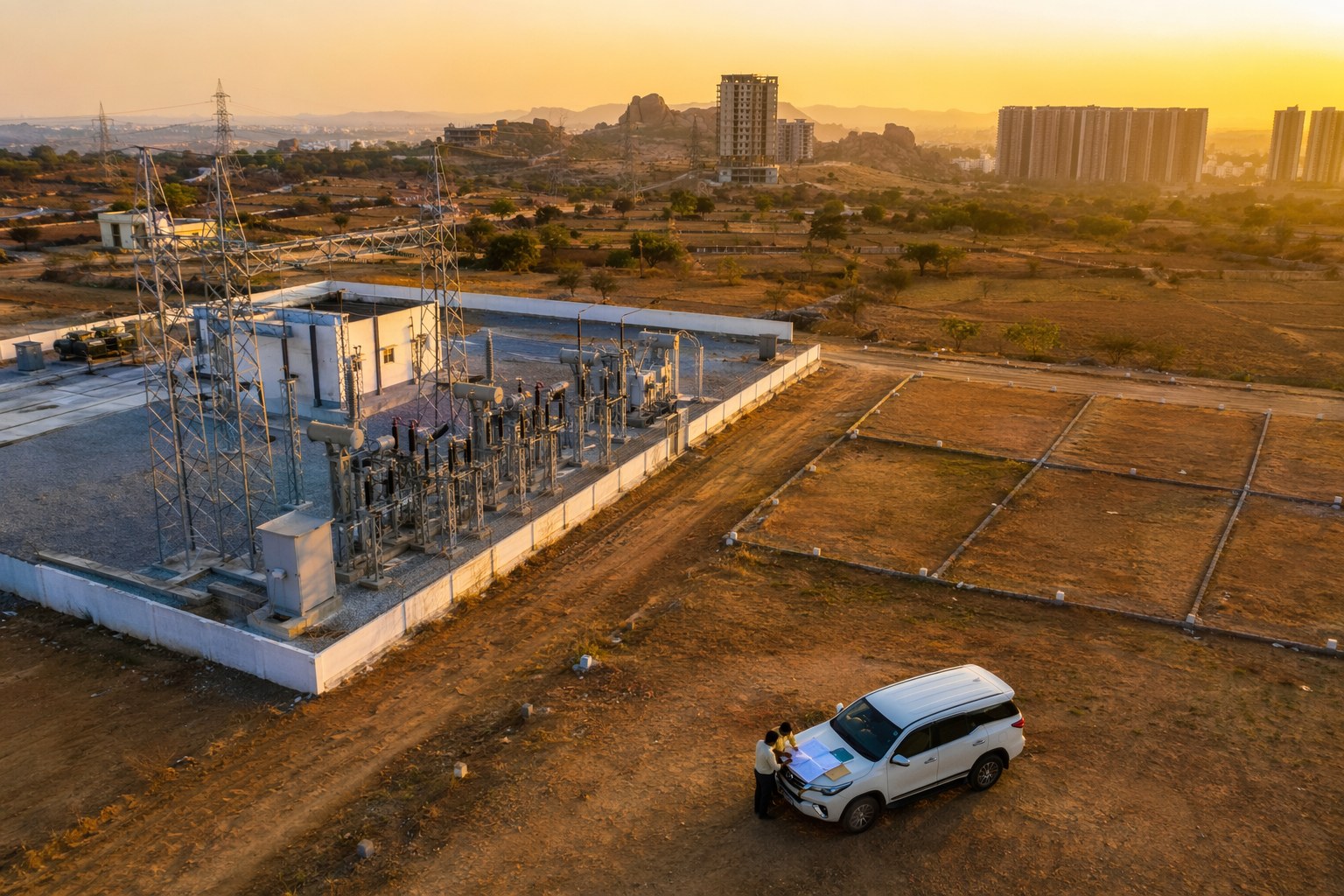
The biggest impact will be in land-led markets, not just flat sales. Think of plots around Mokila, Shankarpally, Kollur, Adibatla, Tukkuguda, Keesara, Medchal, Ghatkesar and Shamshabad. Many buyers in these locations are first-time land investors. They may understand HMDA layout approvals, but not old pahanis, ROR-1B entries, succession records or assigned land risk.
A mutation-history view at registration can reduce three common problems:
- Seller mismatch: The person executing the sale deed is not properly reflected in the revenue chain.
- Extent mismatch: The deed mentions one extent, while revenue records show another extent after sub-division or correction.
- Restricted land confusion: Buyers discover a Section 22-A issue only after spending on legal drafting, DDs and travel to SRO.
For SROs, the benefit is also administrative. Instead of discovering title gaps only when the document is presented, the system can show a warning during data entry or pre-registration scrutiny. That does not replace legal due diligence, but it improves the first filter.
What buyers should do before registration
Do not wait for the SRO to save you. The registration department records the transaction; it is not your personal title insurance office. A smart buyer should build a small verification file before paying major money.
- Check whether the property falls under Section 22-A prohibited list.
- Verify survey number, village, mandal and SRO jurisdiction.
- Take EC for the relevant period and read it with parent documents.
- Compare Dharani mutation entries with sale deeds, gift deeds, partition deeds or succession papers.
- Check whether the land is agricultural, converted, layout-approved or part of a larger development.
- For flats, verify RERA details, land ownership, UDS and sanctioned plan references.
For jurisdiction clarity, use Find Your SRO Office. For a wider document-risk scan, try the Property Verification Tool and track future changes with the Property Change Tracker.
My view: this reform is overdue, but execution matters
Linking mutation history to registration screens is a sensible move. But it should not become another confusing data layer where clerks and buyers see codes without explanation. Telangana needs a clean display: present owner, previous owner, mutation basis, date, document reference, restriction flag and remarks. If the field is blank, the system should show that clearly instead of leaving people to guess.
There is also a legal line to respect. Mutation entries cannot be treated as final proof of ownership. Courts have repeatedly treated revenue records as supporting evidence, not conclusive title. Still, when registration and revenue systems talk to each other, the average buyer gets better protection.
For Hyderabad real estate, this is not a small back-office change. It can influence how land deals are negotiated in fast-growing mandals, how document writers prepare drafts, and how buyers approach due diligence. The safest buyer is the one who checks before emotion takes over.
Frequently Asked Questions
Will mutation history prove ownership in Telangana?
No. Mutation history supports the title trail, but it is not conclusive proof of ownership. Buyers must still verify sale deeds, parent documents, EC, court cases, revenue records and prohibited property status.
Why is Section 22-A checking necessary before registration?
Section 22-A covers prohibited properties where registration may be restricted. Telangana has 30,3,076,153 prohibited properties in the database as per latest IGRS data, so buyers should check this before paying a large advance.
Which Hyderabad areas need extra mutation verification?
Land-heavy and fast-growing areas such as Tellapur, Kokapet, Narsingi, Mokila, Patancheru, Shamirpet, Maheshwaram, Ibrahimpatnam, Medchal and Ghatkesar need careful checking of survey number, mutation trail and EC.
Should flat buyers also check mutation history?
Yes, mainly for the underlying land. Flat buyers should check RERA registration, land ownership, EC, sanctioned plan and UDS details. Mutation history can reveal whether the developer’s land title trail is clean.