


Telangana C&D Waste Rules May Enter Handover Checks
For many Hyderabad homebuyers, handover paperwork still means the familiar bundle: sale deed copy, possession letter, maintenance forms, parking allotment, society details, and maybe the final snag list. Environmental compliance rarely gets the same attention. That may change, especially in larger Telangana projects where construction and demolition waste disposal is becoming harder to treat as a back-end contractor issue.
The conversation in the market is shifting from only asking whether a project has title, RERA registration and building permission, to asking what happened to the construction debris generated during the work. This is not a small point. Every project produces broken concrete, tiles, plaster, excavated debris, packaging waste and rejected material. If it is dumped on a nala edge, lake buffer, open plot or village road, the buyer may not face the first penalty, but the apartment community can inherit the smell, dust, complaints and local body follow-up.
My view is simple: C&D waste proof should become part of the practical handover file. Not because buyers want one more paper for the cupboard. Because a clean environmental handover tells us whether the builder treated the site responsibly till the last stage.
Why C&D waste proof matters at handover
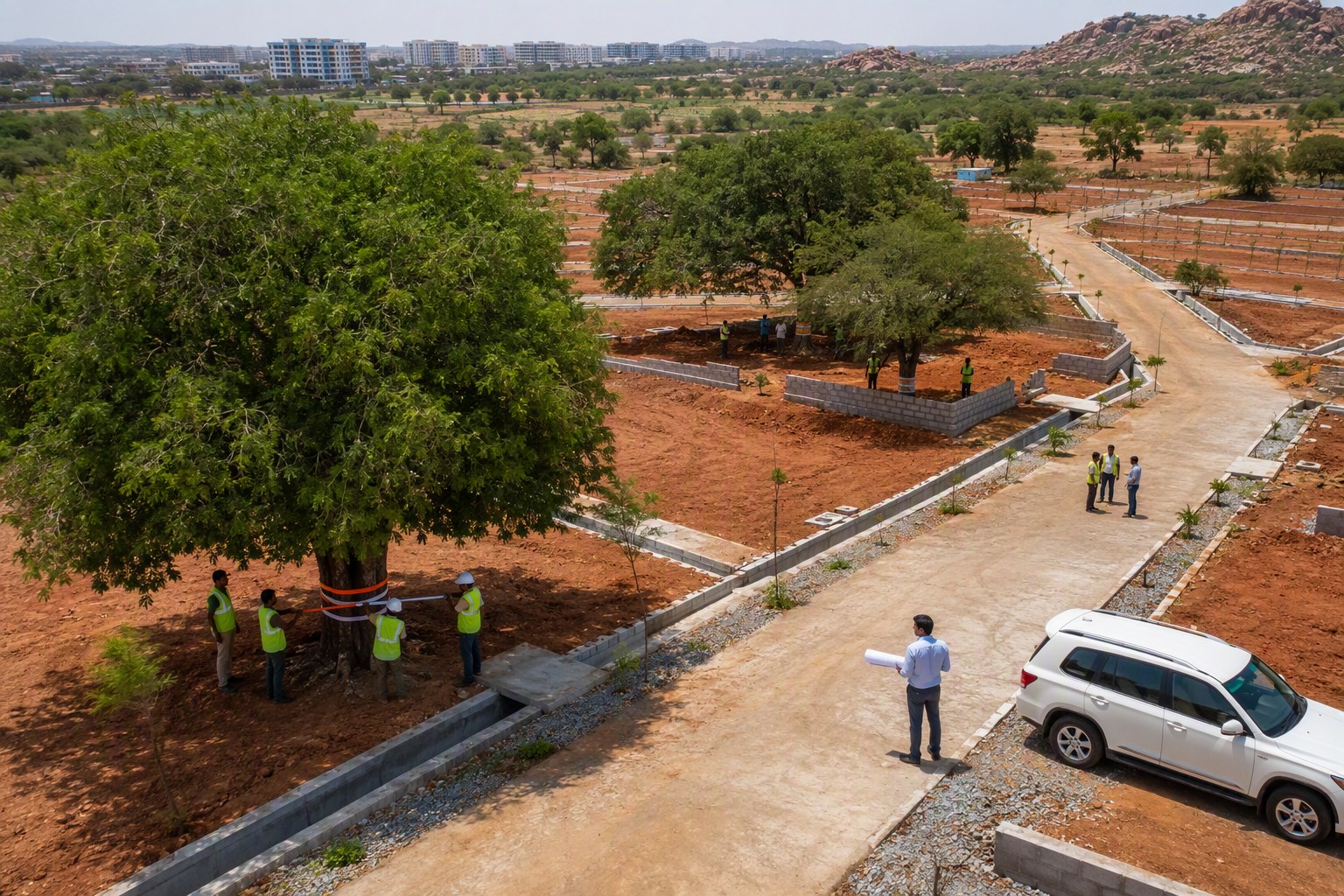
Construction and demolition waste is usually invisible to the flat buyer by the time possession starts. The entrance is painted, the cellar is washed, the model flat is ready, and the project team is pushing for final payment. But waste disposal happens throughout the project life cycle. The crucial question is whether the developer has documentary proof that debris was sent to an authorised facility, reused properly on site where permitted, or removed through approved vendors.
In Telangana, especially around Hyderabad, Rangareddy, Medchal-Malkajgiri, Sangareddy and Yadadri growth corridors, construction intensity is high. Buyers are already checking title risk through land records, court disputes, mortgage searches and prohibited property lists. Verified.RealEstate’s database context itself refers to 3,076,153 prohibited property entries, which shows how seriously buyers now take land-side risk. The next layer is project conduct risk. C&D waste proof belongs there.
This is not the same as checking ownership. A clean title does not automatically mean clean construction practices. A sanctioned plan does not prove debris reached the right place. RERA registration also does not by itself give the buyer a waste disposal trail. These are separate checks, and handover is the best time to ask for them because the builder still wants a smooth exit from the project.
What buyers can ask from the builder
Flat owners and resident welfare associations need not become environmental inspectors. They can ask for a short, sensible set of documents. If the builder has done the work properly, these papers should not be difficult to share.
Copies of C&D waste disposal receipts, weighment slips or challans from authorised collection or processing points.
Vendor details for debris lifting, including work orders or invoices where available.
Site-level waste management plan or a note showing how debris, excavated earth and rejected material were handled.
Photographs of waste storage areas during construction and final clearing before handover.
Confirmation that no project debris has been left in open areas, neighbouring plots, lake buffer zones, nalas, roads or common open spaces.
A declaration from the developer that C&D waste has been disposed of as per applicable municipal and environmental requirements.
For villas and plotted layouts with construction packages, buyers can ask similar proof at an individual unit level. In apartment projects, the association can ask for consolidated project-level proof before taking over common areas.
The paperwork gap in many handovers
Most handover checklists are still heavily engineering-focused. They cover door alignment, seepage, electrical points, lift status, STP trial run, fire NOC copy, generator backup, water meters and clubhouse access. These are necessary. But the environmental portion is often reduced to landscaping and housekeeping.
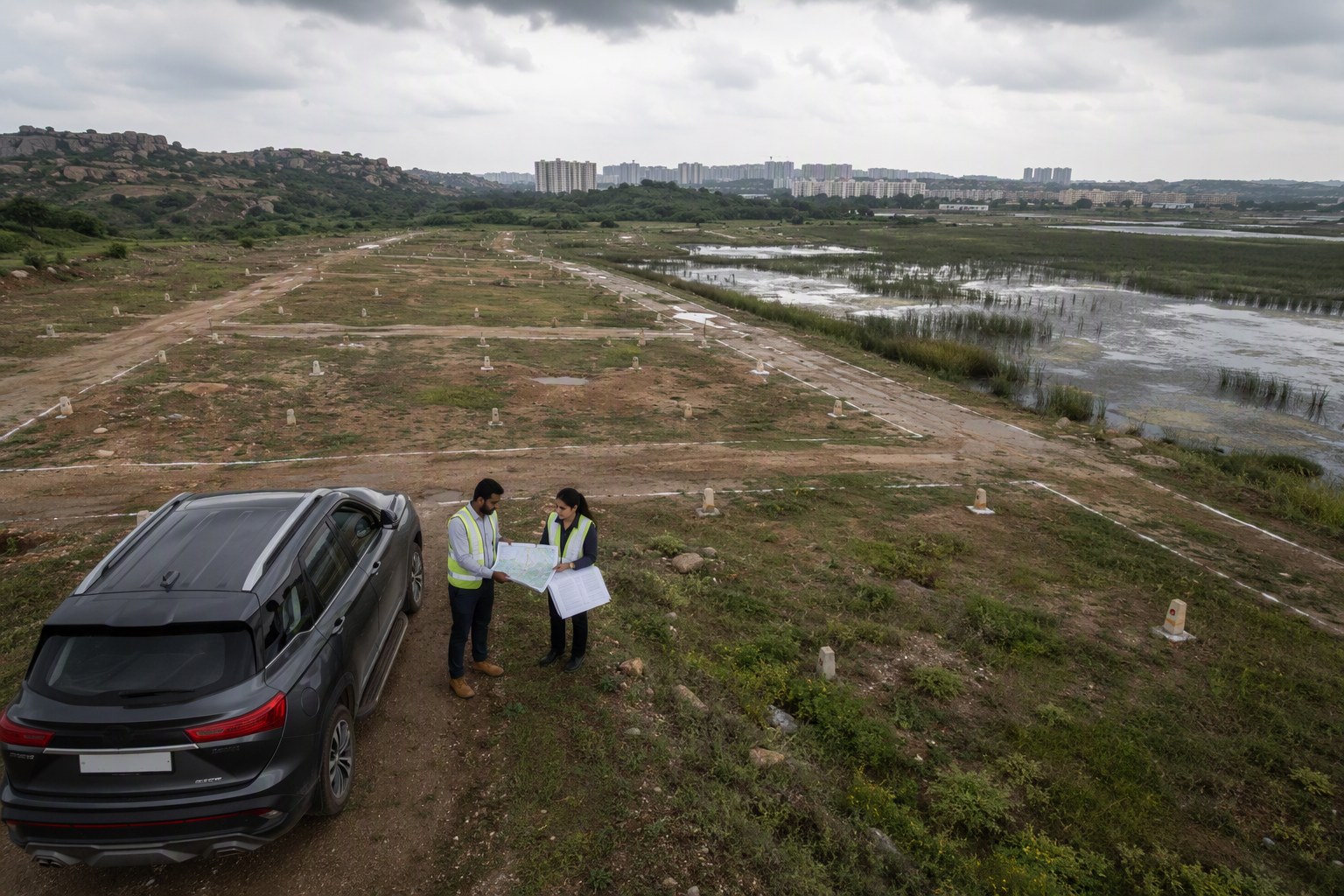
That is where C&D waste gets missed. A project can look clean inside the compound and still have sent truckloads of waste outside in an irregular manner. Sometimes debris is pushed into low-lying land with the excuse that it is filling material. Sometimes it is dumped in peri-urban stretches where monitoring is weaker. Buyers may hear about it only when local residents complain after possession.
Handover should not be only about receiving keys. It should also record that the builder has exited the site without leaving an environmental liability behind.
How this differs from title and approval checks
Hyderabad buyers are getting sharper with legal due diligence. Many already use tools like Ec Search, Rera, Prohibited Property Check and Verify My Land before paying big advances. These checks protect the buyer from ownership disputes, registration blocks, project registration gaps and land classification concerns.
C&D waste proof is different. It sits in the sustainability and compliance bucket. It answers a conduct question: did the builder manage the physical waste created by construction in a lawful and responsible way?
| Buyer check | Main question | When to do it |
|---|---|---|
| Title and EC | Is ownership clean and are past transactions visible? | Before agreement or registration |
| RERA details | Is the project registered and are project claims traceable? | Before booking and during construction |
| Building permission | Is the construction approved as per sanctioned plan? | Before purchase and at possession |
| C&D waste proof | Was construction debris handled through proper channels? | Before common area takeover and final handover |
This distinction matters because many buyers wrongly assume that one approval covers everything. It does not. Real estate compliance is layered. A builder can clear one layer and still be weak on another.
What associations should include in the handover minutes
Resident welfare associations should record C&D waste status in the handover minutes, not as a casual WhatsApp request. The minutes can say that the association has received disposal proof, or that the builder has agreed to submit it within a fixed time. If proof is not available, the association should record that gap clearly.
A practical handover note can include three lines: whether debris has been removed from all common areas, whether documentary disposal proof has been shared, and whether any complaints or notices relating to debris dumping are pending. This keeps the issue factual and avoids drama.
For under-construction buyers, the request can be raised before the final demand notice. Once the last payment is made and possession is taken, bargaining power reduces. Builders who care about brand value should welcome this. It gives them one more way to show that the project was not built by cutting corners outside the compound wall.
Impact on builders and project marketing
Developers may initially see this as extra paperwork. But the better ones can turn it into a trust signal. Hyderabad buyers are no longer impressed only by elevation, Italian marble claims and clubhouse renders. They ask sharper questions now. Waste disposal proof is a low-cost way to show discipline.
There is also a practical benefit for builders. If a local body, neighbour or environmental authority later questions dumping, the developer can point to receipts, vendor records and site photos. Without documentation, even genuine disposal becomes difficult to defend.
For premium projects, this may soon sit alongside ESG-style claims. But even in mid-market apartments, it has value. A clean site exit protects the future association from unnecessary follow-up and bad local reputation.
What buyers should not do
Buyers should not confuse C&D waste proof with an excuse to delay every possession. If the flat is otherwise ready and the builder has given reasonable documentation, the issue can be closed. The point is not to harass project teams. The point is to make the final handover file honest.
Buyers should also avoid accepting vague statements like “debris cleared” without any supporting record. At minimum, ask for a declaration and some proof of disposal. Where large volumes were generated, receipts or vendor documents are more convincing than a one-line letter.
The likely direction in Telangana
Telangana’s real estate market is maturing. The next phase of buyer diligence will not stop at land ownership. It will look at how projects affect neighbourhoods, drainage lines, air quality, waste systems and long-term livability. C&D waste proof fits naturally into that direction.
Will every small builder immediately give perfect documentation? No. But once associations start asking, the practice will spread. Banks, legal advisors and property consultants may also begin adding C&D waste status to possession checklists. That is how paperwork culture changes in real estate: first a few buyers ask, then associations insist, then it becomes normal.
For now, the advice is clear. When you collect the keys, collect the environmental handover trail too. It may not look as exciting as a new flat key, but it protects the community’s future and pushes the market toward cleaner construction behaviour.
Frequently Asked Questions
Should Telangana homebuyers ask for C&D waste proof during handover?
Yes. Buyers and associations can ask for disposal receipts, vendor records, site clearing confirmation and a builder declaration before taking over common areas.
Is C&D waste proof the same as title verification?
No. Title verification checks ownership and transaction history. C&D waste proof checks whether construction debris was handled responsibly and through proper channels.
Can a RERA-registered project still be asked for waste disposal documents?
Yes. RERA registration is a project transparency check, but buyers can still request separate environmental and handover documents from the developer.
What if the builder refuses to share C&D waste records?
The association should record the refusal or pending status in handover minutes and ask for a written declaration on debris removal and disposal.