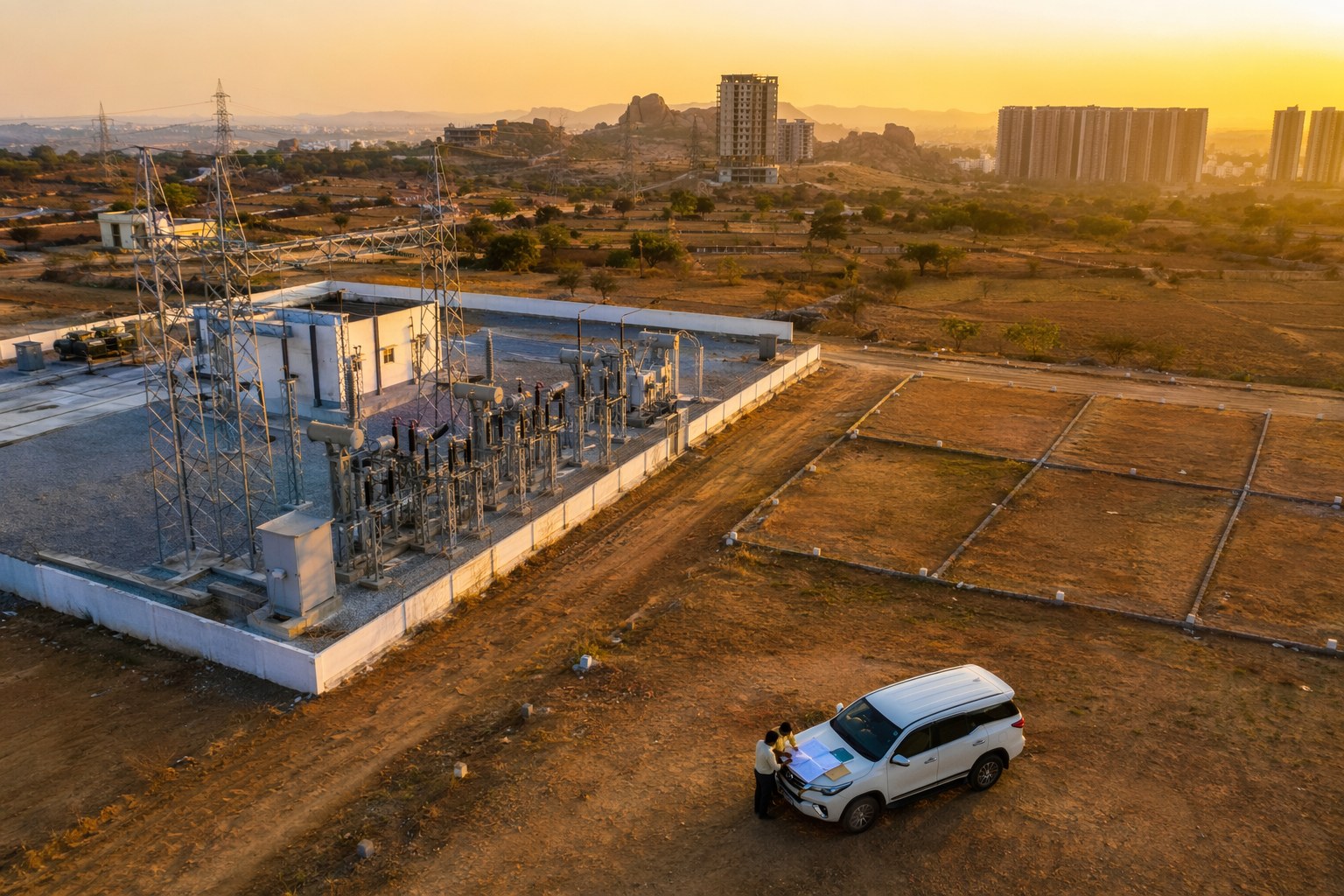



Telangana Builders May Phase Launches Around Prohibited Lists
Telangana’s residential project market is seeing a quiet change in launch behaviour. Builders who earlier announced a project first and cleaned up documents later are now becoming more careful. Many are expected to phase launch announcements, tower-wise inventory releases and even pre-launch conversations until prohibited-property and registration-risk checks are cleared.
This is not a small backend issue. For a buyer, a plot or flat may look fine on brochure, location map and sales pitch. But if the underlying land parcel has a problem in prohibited-property records, assigned land history, government claim, court issue, endowment or wakf tag, registration can become messy. That risk sits directly between buyer confidence and developer cash flow.
Verified.RealEstate’s current prohibited-property database context carries 3,076,153 records in bb_prohibited_properties. That number itself explains why serious builders are becoming cautious. Nobody wants a launch campaign, channel partner push and token collection to be followed by an SRO-level objection.
Why launches may become more staggered
In Hyderabad and fast-growing Telangana corridors, launches are not just one-day events now. A developer may first open expression of interest, then release a few floors, then open a tower, then push premium units after approvals and sales traction. The next layer of phasing may be legal-risk based.
My reading is simple: developers will increasingly avoid opening inventory on land parcels where the village, survey number, sub-division, old document chain or registration history has not been cross-checked properly. This is especially relevant in HMDA outskirts, ORR growth pockets, plotted layouts near mandal boundaries and older agricultural-to-residential conversion belts.
Good builders are realising that a clean launch is better than a loud launch. In Telangana, one wrong survey number in the land chain can damage months of marketing.
For listed and large regional developers, this is also about brand protection. For mid-sized builders, it is about avoiding refund pressure. For small layout promoters, it is survival. Buyers have become sharper after seeing stalled ventures, disputed lands and registration delays in different parts of the state.
What builders are likely checking before opening inventory
The checks are moving beyond basic title deeds. A proper launch-risk review now touches several records and local-office confirmations. The words may vary from builder to builder, but the work usually sits around these areas:
- Prohibited-property status: Whether the survey number, extent or part of the land falls under a restricted list or registration caution.
- Encumbrance history: Whether past transactions, mortgages, court attachments or releases are visible in the EC.
- SRO mapping: Whether the property is being checked under the correct Sub-Registrar Office and village jurisdiction.
- RERA readiness: Whether the launch communication is aligned with project registration requirements where applicable.
- Land use and layout permissions: Whether the land use, master plan status, road access and approval route support the proposed sale.
- Survey number consistency: Whether village records, sale deeds, link documents, mutation records and layout drawings speak the same language.
For buyers, these sound technical. For developers, these are launch gates. If even one gate is unclear, a prudent promoter may delay the next tower release or hold back a batch of plotted inventory.
Where the impact may be felt first
This trend will be most visible in land-heavy products. Plotted developments, villa projects, farm plot style offerings and large township parcels may face longer internal checks before public sales. Apartment projects on already aggregated land also need caution, but the risk is sharper where multiple survey numbers and old ownership chains are involved.
Areas around the city’s expansion belts may feel this first. Not because every parcel is risky, but because land histories are more layered. Agricultural land conversions, family partitions, GPA-based older transactions, assigned land doubts and boundary mismatches are not unusual in Telangana’s peri-urban market.
Inside core Hyderabad, the issue may appear in another form: redevelopment sites, old layouts, society lands and properties with pending litigation or unclear sharing arrangements. In both cases, the sales office may be ready before the legal file is fully ready. That gap is now becoming harder to hide.
How the launch playbook may change
Earlier, some builders used scarcity as the main launch tactic: limited units, price revision tonight, last few east-facing flats, corner plots moving fast. That style will not vanish. But risk clearance will sit quietly behind the pricing sheet.
| Old launch style | Likely new behaviour |
|---|---|
| Announce full project inventory early | Release towers, blocks or plot batches after document clearance |
| Rely heavily on brochure and location promise | Keep title, EC, RERA and SRO checks ready for serious buyers |
| Push pre-launch bookings before final clarity | Use softer interest collection until registration risk is reduced |
| Handle objections after buyer questions | Run prohibited-property and survey checks before sales push |
This shift is healthy. I would rather see a builder delay a launch by three weeks than sell 200 units with a land-record doubt hanging in the background. Hyderabad buyers are willing to pay for good location, but they are no longer patient with vague answers like ‘sir, all documents are clear’ without showing the basis.
What buyers should ask before paying a token
A phased launch can be genuine, or it can be a sales tactic. Buyers should not panic just because a builder releases inventory in batches. But they should ask why certain blocks or plots are being held back. If the answer is linked to approvals, title verification or RERA sequencing, ask for written clarity.
Before paying token amount, buyers can use basic checks from Verified.RealEstate tools. Start with a Prohibited Property Check for the survey number or property details. Use Ec Search or Ec Analyzer to understand past transactions. If you are not sure about jurisdiction, use Find Your Sro and Sro Village Directory. For survey-number confidence, the Survey Number Finder and Verify My Land tools can help structure your due diligence.
For apartment buyers, do not stop at the model flat. Check the project on Rera, verify guideline value using Guideline Value, and estimate registration impact with the Stamp Duty Calculator. If the project involves land pooling, layout development or larger planning questions, tools like Landuse Zone Finder, Road Width Check and Fsi Calculator can give useful context.
What this means for developers
For developers, the message is clear: legal readiness is now part of launch strategy. It is no longer just a file for the advocate and land team. Sales heads, CRM teams and channel partners must know what can be safely communicated.
If a project has ten survey numbers and two need extra confirmation, do not open those portions casually. If a tower sits on a portion where internal mapping is pending, hold that tower. If a plotted venture has old link-document gaps, fix them before road shows. Short-term delay is cheaper than long-term distrust.
Builders should also be careful with wording. ‘Pre-launch’ is already sensitive when approvals are pending. If prohibited-property checks are not complete, aggressive booking language can create avoidable liability. Better to collect interest, share risk status honestly, and open booking only when documents support the promise.
Market impact: slower announcements, better confidence
Will this reduce launches? Not necessarily. It may reduce careless launches. Telangana still has strong end-user and investor interest across Hyderabad, Warangal, Karimnagar, Nizamabad and expanding district headquarters. But the buyer mood has changed. People want clarity on land, approvals, registration and delivery.
In my view, phased launches around prohibited-property checks are a sign of a maturing market. Good developers will use this as a trust signal. Weak promoters may complain that buyers are asking too many questions. That complaint itself is a red flag.
The practical result could be cleaner launch calendars. A builder may announce the project concept, then open only cleared inventory, then release the next block after SRO and legal verification. Buyers may see fewer ‘everything sold out in one day’ dramas and more document-led sales conversations. That is good for Hyderabad real estate.
Verified.RealEstate view
Telangana’s property market has enough demand. What it needs is better confidence at the registration stage. Prohibited-property checks, EC reading, RERA status, land-use confirmation and SRO mapping should happen before the sales engine starts shouting.
For buyers, the advice is direct: do not treat phased inventory as automatically safe. Ask what has been cleared and what is still pending. For builders, the smarter route is equally direct: clean the land file first, then launch. The market will respect that.
Frequently Asked Questions
Why are Telangana builders expected to phase project launches?
Builders may release inventory in batches so that prohibited-property, EC, RERA, SRO and survey-number checks are cleared before bookings are opened for specific towers, blocks or plots.
What is a prohibited-property check in Telangana real estate?
It is a check to see whether a land parcel or survey number appears in records that can restrict or complicate registration, such as government land, assigned land, endowment, wakf, court-related or other flagged categories.
Should buyers worry if a builder releases only limited inventory?
Not always. Phased release can be normal. Buyers should ask whether the held-back inventory is pending approval, title verification, RERA sequencing or registration-risk clearance, and seek written clarity before paying money.
Which checks should a buyer do before paying a token amount?
At minimum, check prohibited-property status, encumbrance history, RERA registration where applicable, SRO jurisdiction, survey-number consistency, guideline value and land-use context. These checks reduce surprises at registration time.