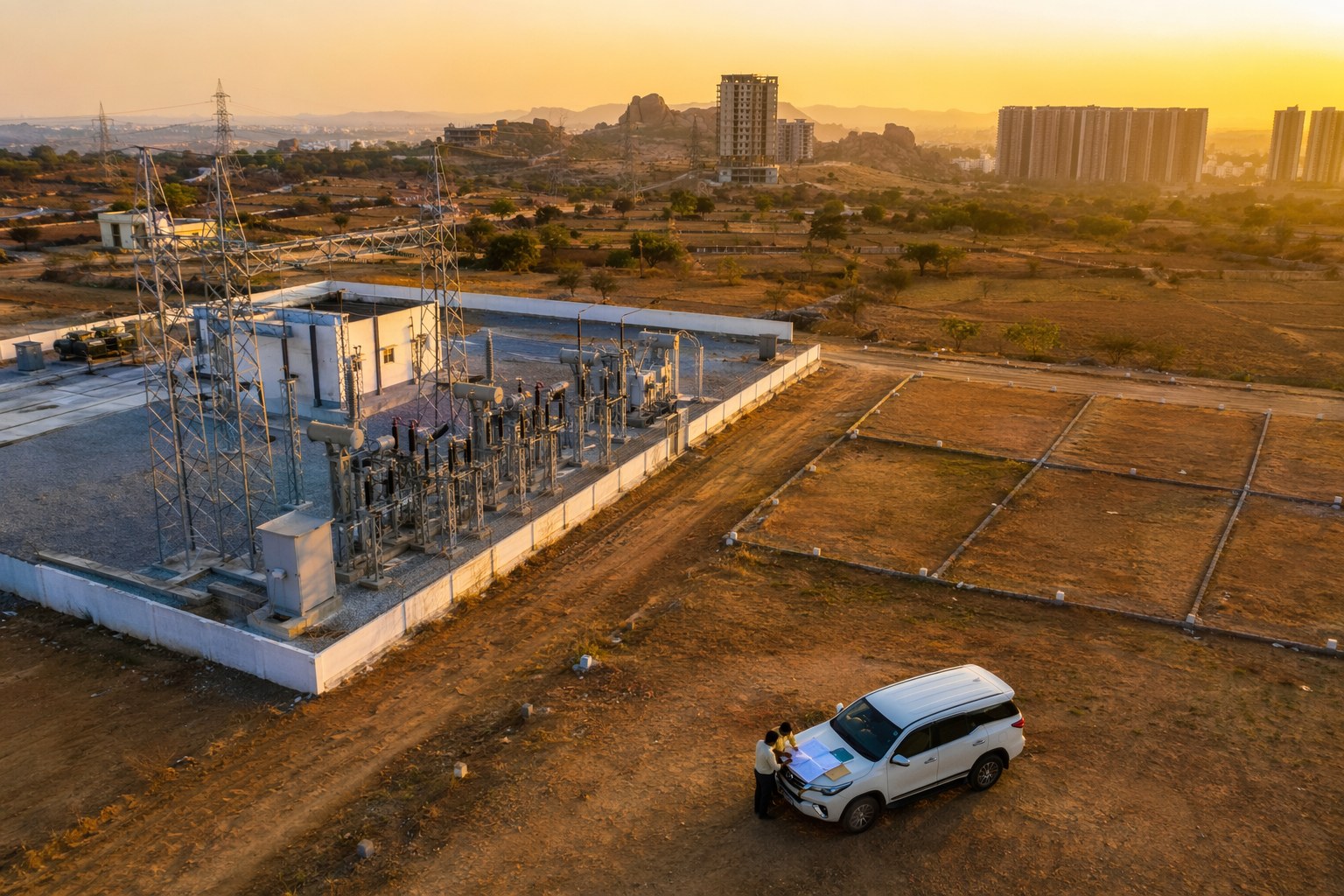



Telangana Auction Notices May Start Highlighting 22-A Status upfront, a move that can make bank auctions and distress sales safer for bidders across Hyderabad, Rangareddy, Medchal-Malkajgiri, Sangareddy and other active property markets. The basic idea is simple: if a property is blocked under Section 22-A, the bidder should know before paying earnest money, not after winning the auction and reaching the SRO for registration.
As per latest IGRS-linked government records available in our database, Telangana has 3,076,153 prohibited property entries under Section 22-A. That number alone explains why this issue matters. A bank sale notice may look attractive. The reserve price may look tempting. But if the survey number, plot, flat-linked land share or underlying title falls in a 22-A category, registration can be refused or delayed.
Telangana Auction Notices May Start Highlighting 22-A Status: What Is Changing?
In auction language, bidders usually focus on reserve price, earnest money deposit, inspection date, possession type and last date for bid submission. In Telangana, one more field may now become non-negotiable: 22-A status.
Section 22-A relates to properties where registration is prohibited or restricted. These can include government lands, assigned lands, endowment lands, wakf-linked properties, ceiling surplus lands, notified lands and other categories recorded by the registration department. In practical Hyderabad market terms, it means this: even if a bank has issued an auction notice, the SRO may not register the sale certificate or subsequent conveyance if the property is marked as prohibited.
We have seen this confusion often in places where urban growth has moved faster than title cleaning. Think of land parcels around Gandipet mandal, Kokapet, Narsingi, Mokila, Tellapur, Miyapur, Bachupally, Dundigal, Shamshabad and Maheshwaram. Some properties are perfectly clean. Some are not. Two plots in the same locality can have very different title histories depending on the survey number, old pahani entries, assignment conditions and revenue classification.
If auction listings begin displaying 22-A status clearly, bidders get a basic risk signal before arranging funds. That is good for buyers, banks and the registration system.
Why 22-A Status Matters In Telangana Auction Notices
Bank auctions are sold mostly on an “as is where is” and “whatever there is” basis. This wording puts a heavy verification burden on the bidder. Many retail buyers assume that because a bank is selling the asset, title must be clean. That is not always correct.
A bank mortgage tells us that the property was accepted as security at some stage. It does not automatically prove that every revenue, registration, municipal and land-use issue is settled today. A property may have an old EC, a loan charge, physical possession dispute, missing link document, court case, layout irregularity or 22-A block.
For a bidder, 22-A is especially serious because it affects registration. If registration is blocked, the buyer’s exit route also gets blocked. You may not be able to sell, mortgage or develop the property smoothly. In our experience, this is where many auction buyers feel stuck: they win the bid first and start title checking later.
That order should be reversed. Before paying EMD, every bidder should check the survey number, village, mandal, SRO jurisdiction, EC trail, market value and prohibited status. For a quick starting point, use the Section 22-A Prohibited Property Check, then cross-check the revenue and registration details with documents.
Telangana Auction Notices May Start Highlighting 22-A Status, But Buyers Still Need Due Diligence
Even if auction notices start carrying a 22-A field, buyers should not treat it as a full legal opinion. It is a useful flag, not a replacement for verification. The notice may mention the status available on a particular date. Revenue records can be corrected, challenged or updated. Survey boundaries can also be misunderstood in layouts where old village maps and present site conditions do not match neatly.
For example, in a plotted layout near Shankarpally or Adibatla, the marketing name may be popular, but the actual revenue village and mandal decide the verification path. In a flat auction at Gachibowli or Kondapur, the apartment may be in a completed building, but the underlying land history still matters. In industrial or warehouse assets near Patancheru, Kothur or Medchal, land-use and old conversion records also need attention.
Start with the basics. Find the SRO using Find Your SRO Office. Pull the EC through Encumbrance Certificate Search and read it fully, not just the last transaction. If the land survey details are unclear, use Survey Number Finder and compare them with the auction notice, sale deed, link documents and pahani extracts.
What Banks Should Disclose In Telangana Auction Notices
If the market is moving towards better disclosure, the format should be practical. A simple sentence saying “buyer to verify all records” is not enough anymore. Telangana has a large prohibited-property database, and auction buyers need clearer information before they participate.
In my view, every auction listing for Telangana property should carry these fields:
- Village, mandal and district as per revenue records, not only the marketing locality name.
- Survey number or sub-division number, wherever applicable.
- SRO jurisdiction for the property.
- Section 22-A status as checked from available government records.
- Nature of possession, such as symbolic or physical, in plain wording.
- Known encumbrances, including loan charges, attachments or pending disputes disclosed to the bank.
- Document inspection access, including sale deed, link documents, approved plan, EC and tax records.
This will not remove every risk, but it will reduce avoidable shocks. Serious bidders will also bid with better confidence, which can improve auction participation for clean properties.
How A Bidder Should Verify Before Paying EMD
Here is the practical order I would follow for a Telangana bank auction property:
| Step | What To Check | Why It Matters |
|---|---|---|
| First | Property identity: village, mandal, survey number, flat number or plot number | Wrong identity leads to wrong verification |
| Second | 22-A prohibited status | Registration may be blocked if the property is prohibited |
| Third | EC and link documents | Shows title flow, mortgages and past transactions |
| Fourth | SRO and ready reckoner value | Helps estimate registration cost and government value |
| Fifth | Physical possession and site inspection | Auction paper value and ground reality can differ |
| Sixth | Legal opinion from an independent advocate | Bank documents are not the same as buyer-side title clearance |
For value checks, the Market Value / Guideline Value Search is useful because Telangana registration costs are linked to government values. To estimate stamp duty impact before bidding, use the Stamp Duty Calculator. For a wider title-risk screen, the Property Verification Tool can help you organise checks instead of depending only on the auction notice.
Hyderabad Market Impact: Better Notices Can Change Bidder Behaviour
Hyderabad’s auction market is no longer limited to distressed independent houses in older areas. We now see flats, open plots, villas, commercial units and land parcels coming up in and around Serilingampally, Rajendranagar, Gandipet, Hayathnagar, Uppal, Medchal, Ameenpur, Patancheru and Shamshabad belts. NRIs, salaried buyers and small investors are also tracking these listings because auction prices may appear attractive compared to regular resale asking prices.
But auction discount is meaningful only when title is workable. A cheap property with a registration block is not a bargain. It is a file sitting on your table.
Our view is clear: showing 22-A status in auction notices should become standard practice in Telangana. It will not make every auction safe, but it will push the market towards cleaner disclosure.
There is also a behavioural change. When bidders see “22-A status: clear as per available records” or “22-A status: verification pending” or “22-A status: appears in prohibited list”, they will price risk properly. Banks may also become more careful before bringing questionable properties to auction. That is healthy for the market.
What If The Auction Property Is Marked Under 22-A?
Do not rush. Ask the bank for written clarification and supporting records. Check whether the entire survey number is prohibited or only a portion. In many Telangana villages, survey-level entries can create confusion for plotted layouts and apartment projects. Still, a bidder should not assume that the SRO will ignore the entry.
If the property is in a RERA-registered project, verify the project details through RERA Project Lookup. For apartments, also check building permissions, occupancy status, undivided share details and association records. If a charge is suspected, use CERSAI Charge Check along with EC review.
Most importantly, get a written legal opinion before bidding. A bank’s auction team may be focused on recovery. Your advocate should be focused on your future ownership.
The Bottom Line For Telangana Auction Buyers
Telangana auction notices highlighting 22-A status upfront would be a sensible buyer-protection step. With 3,076,153 prohibited property entries under Section 22-A in the available database, this is not a small clerical issue. It affects real families, real savings and real registrations at SRO counters.
My advice is simple: never bid only because the reserve price looks low. Check the 22-A status, EC, SRO, ready reckoner value, possession position and court risk before EMD. In Hyderabad real estate, the best deal is not the cheapest one. It is the one you can register, hold and sell without sleepless nights.
Frequently Asked Questions
What is 22-A status in Telangana property records?
22-A status refers to whether a property is listed under Section 22-A as prohibited or restricted for registration. If it appears in the prohibited list, the SRO may refuse registration.
Why should auction notices mention 22-A status?
It helps bidders identify registration risk before paying EMD or winning the auction. This is especially useful in Telangana, where government records show 3,076,153 prohibited property entries under Section 22-A.
Can I buy a bank auction property if it is under 22-A?
You should be very careful. Ask the bank for written clarification, verify the exact survey number and take an independent legal opinion. A low auction price does not solve a registration block.
Which checks should I do before bidding in a Telangana auction?
Check 22-A status, EC, link documents, SRO jurisdiction, ready reckoner value, possession type, tax records and any court or CERSAI charges before paying EMD.