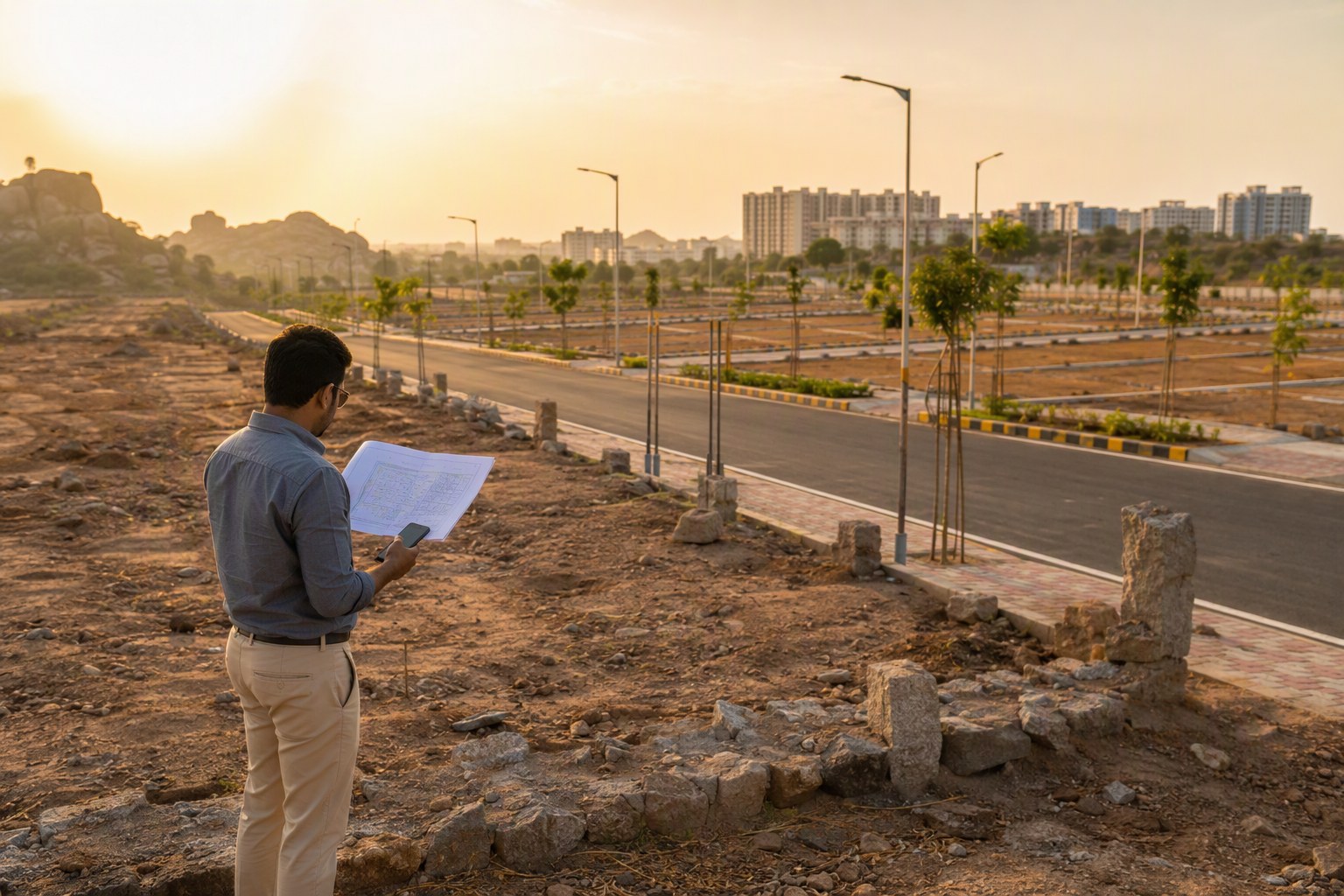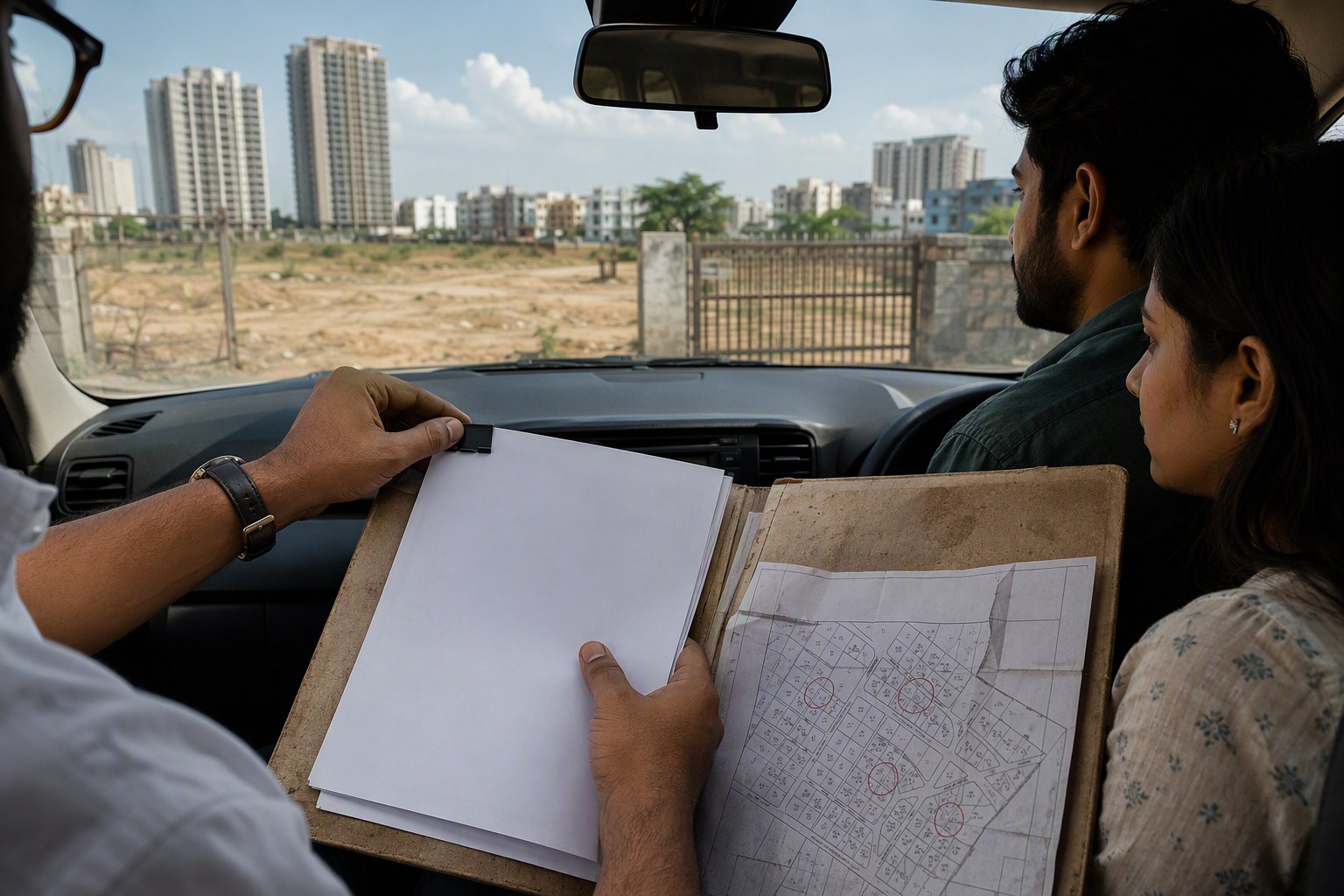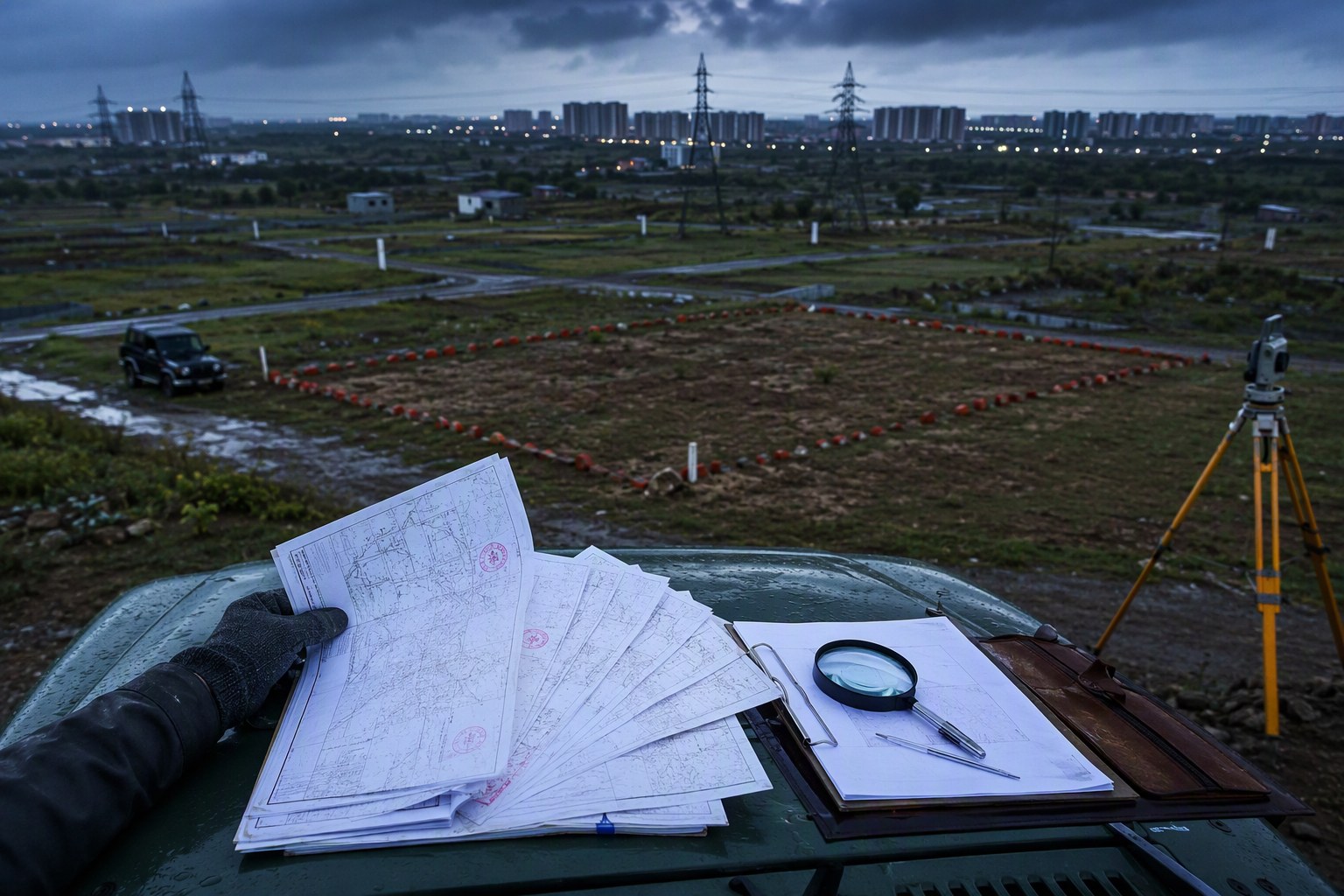
Telangana 22-A Count May Shape District Land Price Signals is now a live market issue, not just a registration office topic. As per latest IGRS data, Telangana has 3,076,153 prohibited properties recorded under Section 22-A. That large base can influence how buyers read district-wise land prices, how banks assess collateral, and how brokers explain rate differences between clean-title parcels and entries that need deeper checking.
The immediate takeaway is simple: Section 22-A is not a price index, but it can affect price confidence. In high-interest corridors around Hyderabad such as Kokapet, Narsingi, Tellapur, Kollur, Mokila, Shamshabad, Patancheru and Ghatkesar, buyers are already asking sharper questions on survey numbers, pahanis, Dharani status, SRO records and past transactions. We have seen this repeatedly: the rate discussion changes the moment a buyer hears that a survey number needs a prohibited-property check.
Telangana 22-A Count: why the number matters for land pricing
Section 22-A entries are properties where registration may be prohibited or restricted under government records. These can include different categories of land depending on the record, including government land, assigned land, endowment-related land, waqf-related land, court-affected entries, and other notified categories. The legal details vary by case, so the category and record trail matter more than loose market talk.
The count of 3,076,153 does not mean every property in a district is unsafe. It also does not mean every buyer should panic. But in real estate, perception affects negotiation. If a locality has active discussion around 22-A entries, buyers tend to slow down. Sellers with clean title often become more confident. Lenders may ask for more documents before sanctioning a loan. That is how a government record starts influencing market behaviour without directly changing the ready reckoner value.
In our experience, Hyderabad-facing mandals show this effect more visibly because ticket sizes are higher and loan dependency is common. Serilingampally, Gandipet, Rajendranagar, Shankarpally, Moinabad, Maheshwaram, Hayathnagar, Ghatkesar, Medchal, Patancheru and Ameenpur all see buyers comparing location, access road, zoning, SRO value, title documents and loan eligibility in one sitting. A clean parcel and a doubtful parcel may sit near the same road, but the buyer response will not be the same.
Telangana 22-A Count and district-wise price signals
District-wise pricing discussions in Telangana usually move around road access, urban growth, HMDA or municipal limits, proposed infrastructure, employment hubs and water availability. The 22-A base adds another layer: title confidence. When a district has many land conversations linked to prohibited entries, the market may start separating plots into two buckets — clean and immediately registrable, or unclear and document-heavy.
Take the Hyderabad growth belt. In Kokapet and Narsingi, buyers often focus on apartment project approvals, RERA records, access and premium location. In Mokila, Shankarpally and Kollur, open plot buyers usually ask about survey number history, layout permission, road width and land-use status. Around Shamshabad and Maheshwaram, airport-side growth attracts interest, but buyers also check whether the land has any government, assigned or litigation angle. In Patancheru and Ameenpur, industrial and residential demand sits together, so lender comfort becomes a serious factor.
For a seller, this means the first price quote is only one part of the deal. If the buyer’s advocate, bank panel lawyer or SRO-side verification raises a 22-A concern, negotiation can quickly shift from rate to risk. A seller with clear Dharani status, matching pahani, proper link documents and clean EC can defend pricing better than a seller who says “everything is fine” but cannot produce papers.
How buyers should read 22-A before discussing rate
A good buyer does not start with the final offer. First, check whether the property can be registered without restriction. Use the exact survey number, village, mandal and district. Many problems start because buyers rely only on a layout brochure or a WhatsApp location pin. That is not enough for land.
Before agreeing to a token advance, buyers should run a basic document stack:
- Check the survey number and village details through Survey Number Finder.
- Run a direct Section 22-A Prohibited Property Check before rate negotiation becomes emotional.
- Verify market value using Market Value / Guideline Value Search so the SRO value and quoted price are understood separately.
- Review past transactions through Encumbrance Certificate Search and, where needed, the EC Analyzer.
- Confirm the registration office using Find Your SRO Office.
For flats and villas, title risk still matters, but buyers should also verify the project through RERA Project Lookup. In peri-urban plots, I would also check land use and access road. A plot can look excellent on site, but if land use, road width or survey history is unclear, the pricing comfort drops.
Why lenders may become cautious
Banks and housing finance companies do not price land like brokers do. They look at collateral enforceability. If a property is under a prohibited category or has a serious record mismatch, the lender may delay, reduce comfort, or reject the file after legal scrutiny. This is not personal to the buyer. It is how secured lending works.
That lender caution can influence market pricing in two ways. First, properties that qualify for bank loans attract more end-users, especially salaried buyers. Second, properties that need cash-heavy settlement because banks are uncomfortable may face a smaller buyer pool. The second category may still trade in the market, but the discount discussion becomes stronger.
Our view is that 22-A will not decide land value by itself. But it will decide how much confidence a buyer, advocate and lender attach to that value.
What sellers and brokers should do now
Sellers should prepare documents before quoting aggressively. Keep the latest pahani, Dharani details, link documents, EC, tax receipts where applicable, layout approval papers, mutation trail and family consent papers ready. If there was any old 22-A entry that has been clarified or removed, keep the order copy and supporting record. Do not leave this to the week of registration.
Brokers also need to upgrade their pitch. In Hyderabad’s land market, saying “clear title” without showing the record is no longer enough. A buyer in Tellapur or Mokila will ask more questions than before. A buyer in Ghatkesar or Hayathnagar will want the mandal and village name matched properly. A buyer in Patancheru may check both residential potential and lender acceptability. Better documentation can shorten the deal cycle.
| Market participant | Likely reaction to 22-A concern | Practical impact |
|---|---|---|
| End-user buyer | Asks for survey-level verification | Rate discussion slows until documents are checked |
| Investor | Demands higher risk clarity | May negotiate harder or avoid unclear parcels |
| Seller | Must prove clean title early | Clean records can support stronger pricing |
| Lender | Reviews collateral enforceability | Loan sanction may depend on legal comfort |
| Broker | Needs better document briefing | Casual claims may not convince serious buyers |
Telangana 22-A Count: the market signal for Hyderabad buyers
The Telangana 22-A count is a reminder that land price is not only about location. In Hyderabad and its surrounding districts, the strongest deals are usually those where location, access, approvals, SRO value and title record all support each other. If one of these is weak, the buyer will price that weakness.
For district-wise market updates, we should read 22-A as a confidence filter. It may not reduce every rate. It may not stop every transaction. But it can separate serious buyers from casual buyers and clean-title sellers from sellers who are hoping the buyer will not ask too much. That difference will matter more as Telangana’s land market becomes more document-driven.
My advice is direct: before you debate the rate per square yard or compare nearby sales, check the survey number, prohibited-property status, EC and SRO value. Then talk price. That order saves time, protects money and keeps the deal grounded in government records rather than market gossip.
Frequently Asked Questions
What is the Telangana 22-A count as per latest IGRS data?
As per latest IGRS data, Telangana has 3,076,153 prohibited properties recorded under Section 22-A. Buyers should verify the exact survey number, village and mandal before making any payment.
Does a 22-A entry always mean the land cannot be bought?
Not always. The category, record history and legal status must be checked. Some entries may need clarification, correction or official orders, while others may face registration restrictions.
Can 22-A status affect land price in Hyderabad growth areas?
Yes. It can affect buyer confidence, lender comfort and negotiation strength, especially in land-heavy locations such as Mokila, Kollur, Shankarpally, Shamshabad, Ghatkesar and Patancheru.
Which records should I check before buying Telangana land?
Check the survey number, pahani, Dharani status, EC, link documents, SRO market value, layout approval where applicable, and the Section 22-A prohibited property status.