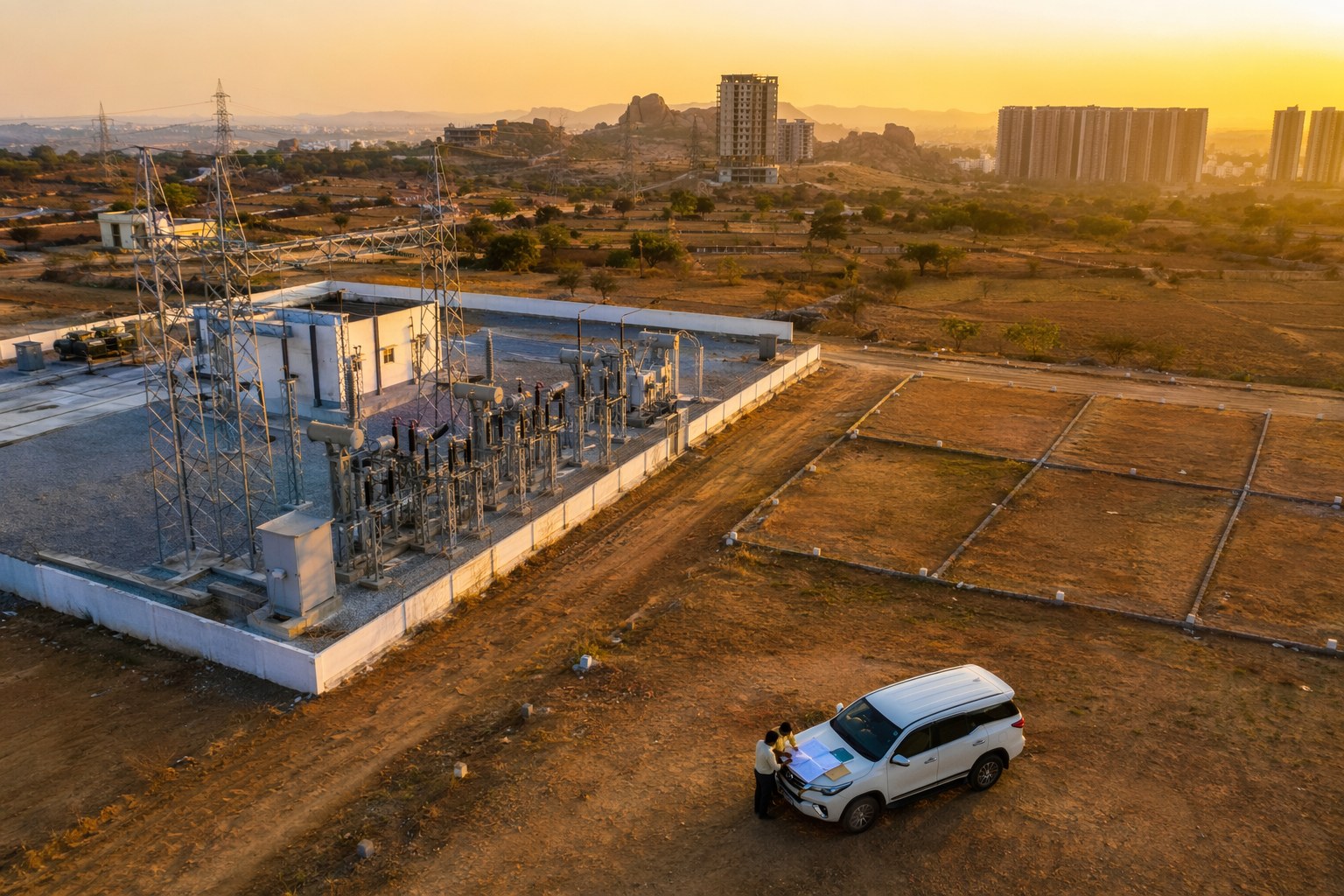



Mutation Proof May Become Key Filter in Telangana Land Registrations
Mutation Proof May Become Key Filter in Telangana Land Registrations as buyers, document writers and SRO-facing parties start treating revenue record consistency as a deal-level checkpoint, not just a post-registration formality. The pressure point is clear: as per latest IGRS data available with Verified.RealEstate, 3,076,153 properties are still listed under Section 22-A prohibited properties in Telangana. That number is too large for buyers to ignore, especially in fast-moving markets around Hyderabad, Rangareddy, Medchal-Malkajgiri and Sangareddy.
For a buyer in Serilingampally, Gandipet, Rajendranagar, Hayathnagar, Shamirpet, Ghatkesar or Moinabad mandal, the sale deed is only one part of the story. The bigger practical question is this: does the land record support the seller’s claim? If the mutation trail, pahani entries, Dharani status, survey number and SRO record do not align, the registration counter may not be the first place where the problem appears. It may show up much earlier, during bank scrutiny, buyer due diligence, layout approval review or family partition verification.
Mutation Proof May Become Key Filter in Telangana Land Registrations: What Is Changing On The Ground?
There is no single dramatic switch here. What we are seeing is a practical market shift. Buyers are asking for mutation proof before token advance. Banks are asking whether the seller’s name is reflected in revenue records. Advocates are comparing pahani, Dharani details, EC, old link documents and prohibited property status before clearing a transaction.
In our experience, this behaviour is strongest in land and plotted property transactions. Flats in RERA-registered projects usually move on a different documentation stack, but even there, land ownership and title flow matter. For open plots, agricultural lands, converted lands, gram panchayat layouts and older HMDA-area holdings, mutation proof can decide whether a buyer proceeds, renegotiates or walks away.
Section 22-A is the main anxiety point. When a property is listed as prohibited, the SRO may not allow registration depending on the nature of prohibition and the entry. With 3,076,153 properties still appearing under this category in government records, parties are increasingly checking this before drafting the sale deed. A simple pre-check through Section 22-A Prohibited Property Check can save weeks of argument later.
Our view is simple: mutation is not the same as title, but absence of clean mutation proof is a serious warning sign in Telangana land deals.
Why Mutation Proof Matters Before Going To The SRO
At the SRO, the parties present the document for registration. But the SRO is not your private title consultant. Registration does not automatically cure defects in ownership, succession, partition, survey classification or government restriction. That is why buyers should treat mutation proof as a pre-registration filter.
Mutation normally indicates that revenue records have been updated after a sale, inheritance, gift, partition or other transfer. In Telangana, buyers usually look at the Dharani record, pahani/adangal, pattadar passbook details where applicable, survey number mapping and village-level revenue entries. If the seller’s name is missing in these records, the reason must be explained with documents.
Common reasons for mismatch include pending inheritance updates, unregistered family arrangements, old GPA-based transactions, court cases, assigned land issues, wrong survey number references, land pooling or acquisition entries, and Section 22-A restrictions. Some are curable. Some are not. That difference is where buyers need patience.
Before fixing registration dates, parties should also check the SRO jurisdiction through Find Your SRO Office, verify market value using Market Value / Guideline Value Search, and review prior transactions using Encumbrance Certificate Search. These are not fancy extras. They are basic hygiene in Telangana property purchase.
Mutation Proof May Become Key Filter in Telangana Land Registrations In Hyderabad Growth Corridors
The issue is sharper in Hyderabad’s expansion belt. Take Gandipet and Moinabad on the western side. Many parcels have family ownership histories, old agricultural entries and conversion-related questions. In Shamirpet and Medchal belt, buyers often see a mix of plotted layouts, agricultural lands and institutional land pockets. Around Ghatkesar, Hayathnagar and Ibrahimpatnam side, survey number clarity becomes central because village boundaries and layout claims can confuse first-time buyers.
Serilingampally and Rajendranagar are different. Here, land values and development intensity are high, so the buyer’s risk is also high. Even when the project is a built asset, the parent land title, mutation trail and prohibition status can affect confidence. For villas and plotted communities near ORR exits, buyers should not rely only on glossy brochures or agent assurances.
We’ve seen buyers use three simple questions:
- Is the seller’s name reflected in the relevant revenue record?
- Does the survey number match across sale deed, pahani, Dharani and layout documents?
- Is the land free from Section 22-A prohibition, litigation references and visible encumbrances?
If the answer is unclear, the deal needs deeper verification. The Property Verification Tool and Survey Number Finder can help buyers organise this first layer of checks before they spend money on registration expenses.
How Section 22-A Changes Buyer Behaviour
Section 22-A entries are not a small backend issue. They directly affect registrability. When a property appears under the prohibited list, buyers worry about whether the land is government land, assigned land, endowment land, wakf-related property, court-restricted land or affected by another notified restriction. The exact reason must be verified from government records and supporting documents.
Because the prohibited properties count stands at 3,076,153, serious buyers are now treating 22-A verification as a starting point. Earlier, many people checked it only after paying advance. That is risky. Once advance is paid, the buyer is emotionally and financially tied to the deal. Then every clarification becomes a negotiation.
For sellers also, mutation proof is becoming a selling advantage. A seller who can show clean link documents, updated revenue record, current EC, tax receipts where applicable and no 22-A hit will face fewer objections. In a competitive locality like Kokapet side, Tellapur belt, Narsingi, Tukkuguda or Bachupally, clean paperwork can speed up decision-making even when buyers negotiate hard.
Practical Pre-Registration Checklist For Telangana Buyers
Before going to the SRO, buyers should keep a written checklist. Not WhatsApp notes. A proper document checklist helps when an advocate, banker or family elder reviews the file.
| Check | Why It Matters | Buyer Action |
|---|---|---|
| Mutation proof | Shows whether revenue records reflect the seller or transfer chain | Compare Dharani, pahani and seller documents |
| Section 22-A status | Can block or affect registration | Check prohibited property status before advance |
| EC | Shows registered transactions and encumbrances | Review through EC search and lawyer scrutiny |
| SRO jurisdiction | Wrong SRO planning creates delays | Confirm village and SRO mapping |
| Guideline value | Helps estimate stamp duty and registration cost | Check ready reckoner value before drafting |
Cost planning also matters. Use the Stamp Duty Calculator after checking the guideline value. For flats or constructed property, buyers may also use Composite Value Calculator to understand how land and building value may be viewed. For project purchases, RERA Project Lookup should be part of the same verification folder.
What Buyers Should Ask Sellers Before Paying Advance
Do not start with price alone. Start with documents. Ask for the latest pahani or revenue extract, Dharani status where applicable, link documents, EC, layout approval papers, tax receipts if relevant, and identity proof matching the title documents. If the property came through inheritance, ask for legal heir documents and mutation entries. If it came through partition, ask for the registered partition deed or proper supporting record.
For agricultural land, check whether the land classification, extent and survey number match. For plotted layouts, check whether the mother survey number and plot number have a traceable link. For villa projects and gated communities, check land title along with approvals. Buyers should also use Property Change Tracker where ongoing monitoring is needed.
My professional opinion: if a seller refuses to share basic mutation and revenue documents before advance, pause the transaction. A genuine seller may need time to collect papers, but complete refusal is not a good sign.
The Bottom Line For Telangana Land Registrations
Mutation proof may not become a formal magic stamp for every transaction, but it is already becoming a practical filter in Telangana land registrations. With 3,076,153 properties still listed under Section 22-A, buyers cannot afford casual verification. The safest approach is to check mutation, EC, prohibited status, survey number, SRO jurisdiction and guideline value before entering the sale deed stage.
Hyderabad’s land market rewards speed, but it punishes careless paperwork. A clean mutation trail will not replace legal due diligence. It will, however, help buyers identify whether a deal deserves serious consideration in the first place.
Frequently Asked Questions
Is mutation proof mandatory for Telangana land registration?
Mutation proof is not the same as a sale deed, but it is a strong practical checkpoint. Buyers should verify whether the seller’s name and land details are reflected in revenue records before registration.
Why is Section 22-A verification needed before buying land?
Section 22-A covers prohibited properties. If a property appears in this list, registration may be blocked or questioned. As per latest IGRS data, 3,076,153 properties are listed under Section 22-A.
Which documents should I check along with mutation proof?
Check EC, link documents, Dharani status, pahani, survey number details, layout approval, SRO jurisdiction and guideline value. For projects, also check RERA registration where applicable.
Can a property have clear EC but still have mutation issues?
Yes. EC reflects registered transactions, while mutation relates to revenue record updates. Both must be checked because one clean record does not automatically clear the other.
Should I pay advance before checking mutation and 22-A status?
Preferably no. Check mutation records and Section 22-A status before paying advance. If advance is unavoidable, keep written refund conditions linked to document verification.