Hyderabad IGBC-Rated Flat vs Green Claim is a very practical question for buyers now, especially in Kokapet, Narsingi, Tellapur, Gachibowli, Miyapur, Kompally and Uppal where almost every brochure uses words like eco-friendly, sustainable and nature-led. My short answer: an IGBC-rated flat has a verifiable green building rating process behind it; a green claim may only be marketing unless the builder can show documents, design commitments and operating proof.
In our experience, buyers often pay extra for green features before checking the basics: land title, RERA status, encumbrance, SRO records, survey number, land use and Section 22-A status. That is risky. A solar panel on the clubhouse does not cure a title defect. A rainwater harvesting pit does not make a disputed survey number safe. So compare the green promise, yes, but first verify the property itself.
Hyderabad IGBC-Rated Flat vs Green Claim: The core difference
An IGBC-rated flat generally means the residential project has gone through Indian Green Building Council assessment under a relevant rating system. Depending on the stage, it may be pre-certified, provisionally rated or finally certified. The rating is usually for the project or building, not one individual flat in isolation.
A green claim is broader and looser. A project may say it has open spaces, landscaped gardens, low-VOC paint, LED lights, EV charging, STP water reuse or energy-efficient design. Some of these may be genuine. Some may be partial. Some may only be sales language. Unless the claim is backed by approvals, drawings, specifications, certificates and maintenance commitments, the buyer should treat it as unverified.
| Point to check | IGBC-rated project | Project with only green claim |
|---|---|---|
| Proof | Rating certificate, pre-certification letter or final certification with project name | Mostly brochure statements, sales pitch or sample flat display |
| Assessment | Third-party green building framework | May be internal builder claim |
| Scope | Energy, water, materials, indoor comfort, site planning and operations, depending on rating system | May cover only landscaping, solar lighting or STP |
| Buyer risk | Still needs title, RERA and legal verification | Higher risk of overpaying for non-measured benefits |
| Resale value | Can help if certificate is valid and maintenance is good | Depends on actual performance and buyer perception |
Many Hyderabad buyers assume a green-looking project is automatically cheaper to maintain. Not always. A large clubhouse, artificial water bodies, high-speed lifts and centralised amenities can increase monthly maintenance even if the tower has solar lighting and treated water reuse. Ask for the maintenance estimate in writing.
Hyderabad IGBC-Rated Flat vs Green Claim: Documents a buyer should ask for
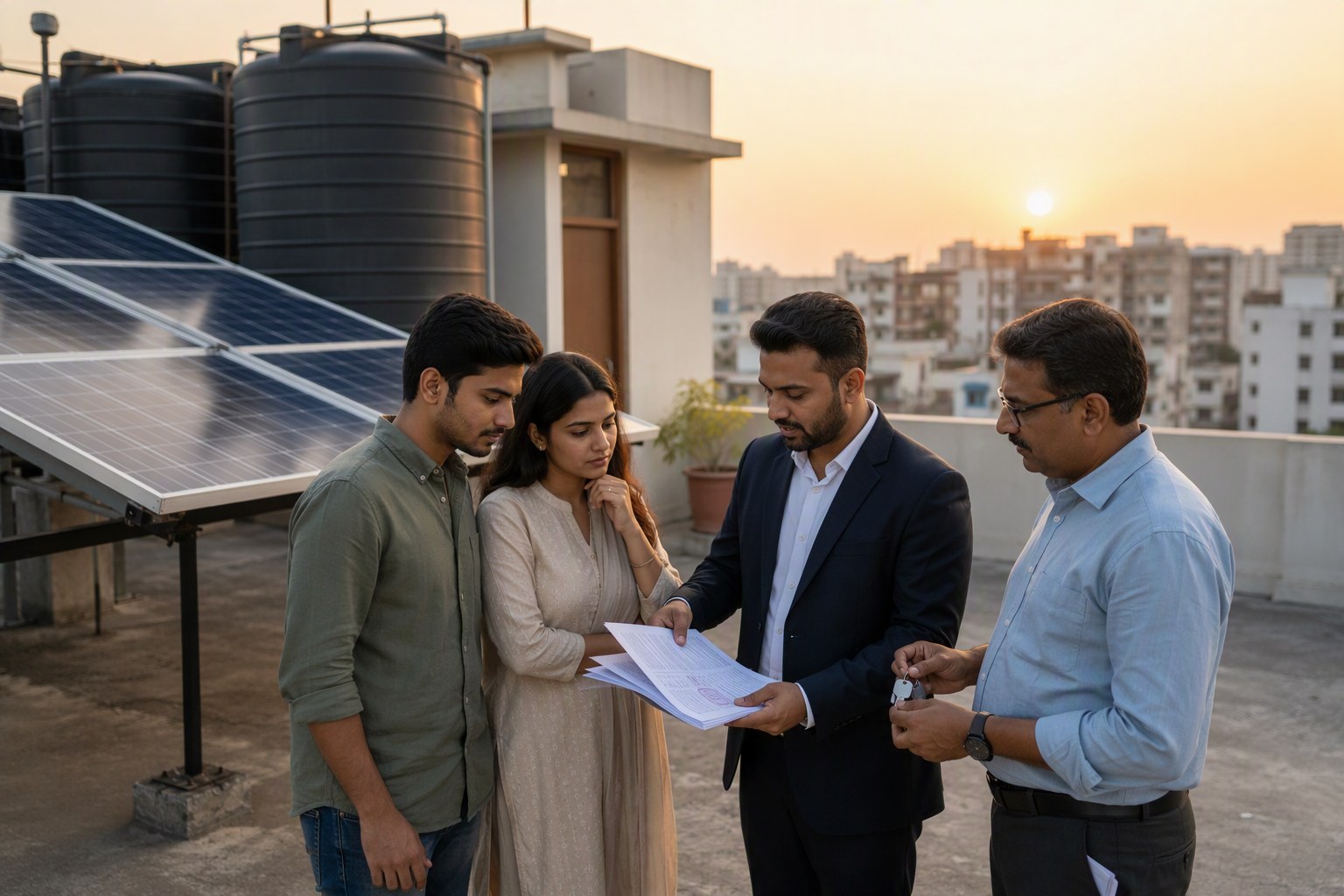
If a sales executive says the project is IGBC-rated, ask for the document then and there. Do not accept only a logo on a brochure. The project name, developer name, rating level and stage should match the tower or phase you are buying into.
1. IGBC certificate or pre-certification letter
Check whether the project is pre-certified, certified or under assessment. Pre-certification is common during construction. Final certification usually comes later, after completion and documentation. If you are buying in a large phased project in areas like Financial District, Kokapet, Kollur or Tellapur, confirm whether your specific phase is covered.
2. RERA registration and promised specifications
Green features mentioned in the sales office should match the RERA filing and sale agreement schedule. Use the RERA Project Lookup to verify the project registration, promoter details, completion timeline and uploaded documents. In Hyderabad, this is especially useful for projects in fast-moving corridors like Narsingi, Puppalaguda, Osman Nagar, Bachupally and Patancheru where launches happen quickly and multiple phases may carry similar branding.
3. Environmental and building permissions
For larger projects, ask about environmental clearance, fire NOC, GHMC or HMDA permissions, water connection plan, STP capacity and waste management system. A green building claim without working STP capacity is weak. If treated water is promised for landscaping and flushing, the plumbing design should support dual piping.
4. Occupancy certificate and handover proof
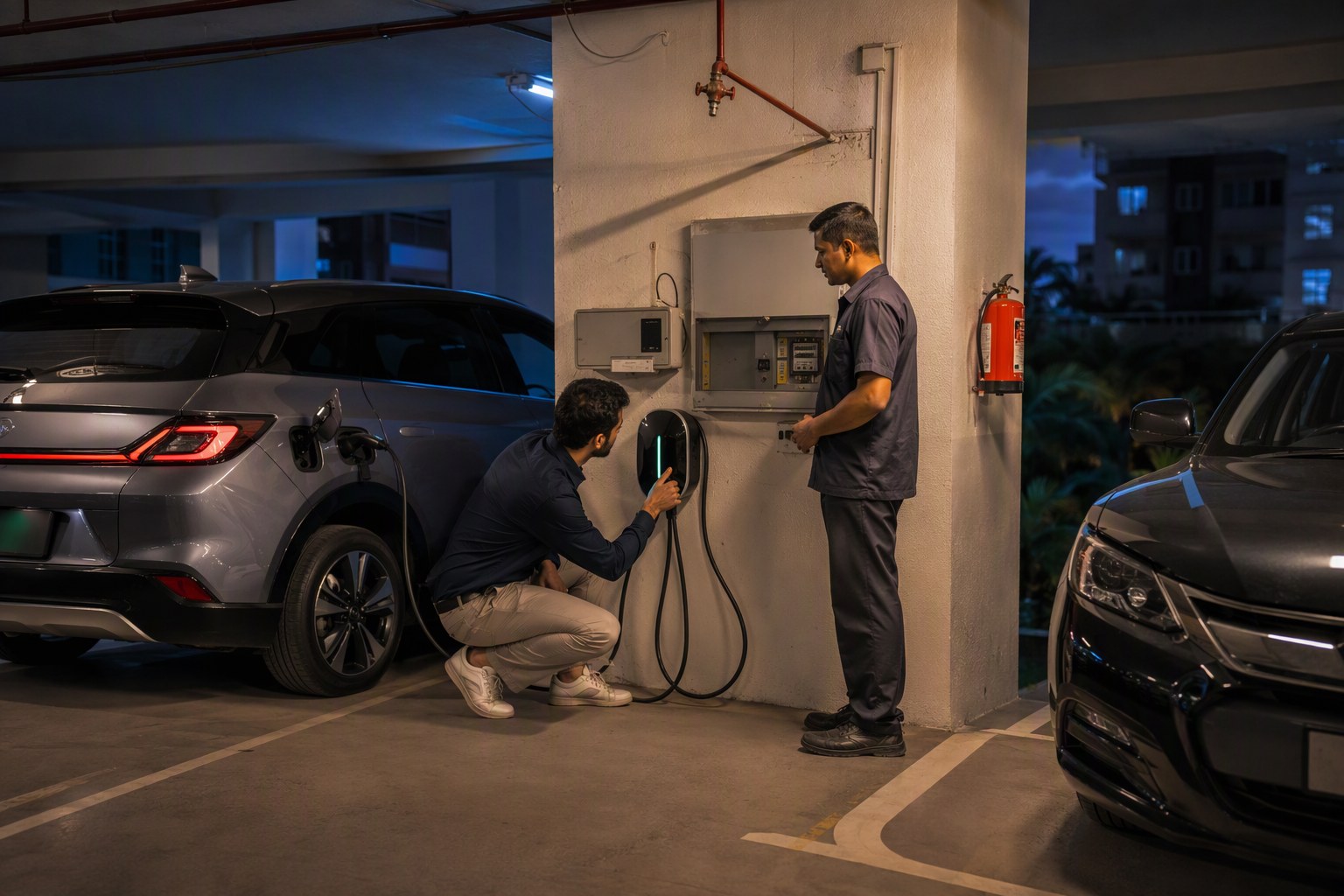
At possession stage, check whether the green systems are actually installed. Solar common-area lighting, water meters, organic waste converters, EV charging points and rainwater harvesting structures should be visible and functional. Some features look good on launch slides but get reduced during execution.
Our view is simple: pay a premium for green only when the claim survives document checking, site inspection and legal verification. A certificate is useful, but it is not a substitute for title due diligence.
Before valuing eco features, verify land and title records
This is where many buyers make a costly mistake. They spend two hours discussing air quality sensors and balcony planters, but do not check whether the underlying land has a clean trail. Telangana has 147,934 prohibited properties under Section 22-A. That number alone should make every buyer pause before paying token advance.
Section 22-A issues can affect registration. Land may be classified as government land, assigned land, endowment land, wakf-related land, ceiling surplus or otherwise restricted. In Hyderabad’s growth belt, old agricultural survey numbers have become apartment towers. That conversion journey must be clean.
Use the Section 22-A Prohibited Property Check before getting impressed by any sustainability promise. If the land falls under a restricted category, the green rating will not save your transaction.
Check the survey number and village details
For projects outside core GHMC, the original land is usually identified by survey numbers. You should know the village, mandal and district. Tellapur falls in Ramachandrapuram mandal of Sangareddy district. Kokapet and Narsingi are in Gandipet mandal of Rangareddy district. Kompally side may involve Dundigal-Gandimaisamma or Quthbullapur surroundings depending on the exact location. These details matter because SRO, land use and revenue records change by location.
If the builder gives only a marketing location like “near Financial District” or “close to ORR”, ask for the exact survey number and village. You can use the Survey Number Finder to organise the land details before legal review.
Encumbrance and SRO trail
An Encumbrance Certificate helps trace registered transactions, mortgages, releases and charges. Use the Encumbrance Certificate Search and cross-check the period properly. For apartment purchases, ask the builder for link documents, development agreement, GPA, landowner share details and mortgage release documents where applicable.
Also identify the correct registration office using the Find Your SRO Office. Hyderabad buyers sometimes assume the nearest SRO is the correct one, but jurisdiction can differ based on village and mandal. Wrong assumptions can delay document collection.
How much premium is sensible for an IGBC-rated flat?
There is no fixed Hyderabad formula. In premium micro-markets like Kokapet, Neopolis surroundings, Financial District, Gachibowli and Narsingi, the price is driven more by location, builder brand, floor rise, view, clubhouse scale and possession timeline than by green rating alone. A genuine IGBC-rated project may command a better buyer response, but the premium must be justified through lower operating cost, better comfort and stronger resale acceptance.
For example, in western Hyderabad, under-construction apartments in branded projects commonly quote far above the government guideline value. In mature zones like Kondapur, Madhapur and Gachibowli, resale pricing can vary sharply between a well-maintained society and an average one on the same road. In such a market, green certification is one value factor, not the whole valuation.
Start with the official base value using the Market Value / Guideline Value Search. Then compare actual quoted prices in that project, nearby completed societies and competing launches. If the builder is asking a noticeable premium for IGBC, ask what monthly savings you will actually see in common-area electricity, water consumption and maintenance.
Use a simple buyer test
- If the project has IGBC proof, RERA consistency, clean land records and visible green systems, a modest premium may be justified.
- If it has only landscaped marketing and no certification, treat it like a normal project.
- If title documents are unclear, do not pay extra for any eco feature.
- If maintenance is high, check whether the green features are reducing bills or only improving brand image.
For total transaction cost, calculate stamp duty and registration charges early. The Stamp Duty Calculator helps you estimate the outflow before agreement. For a flat, buyers can also estimate combined land and construction value using the Composite Value Calculator.
Green features that matter in Hyderabad’s climate
Hyderabad has hot summers, short but intense rain spells, heavy borewell dependence in some pockets and rising apartment density. So the best green features are practical, not decorative.
Energy efficiency
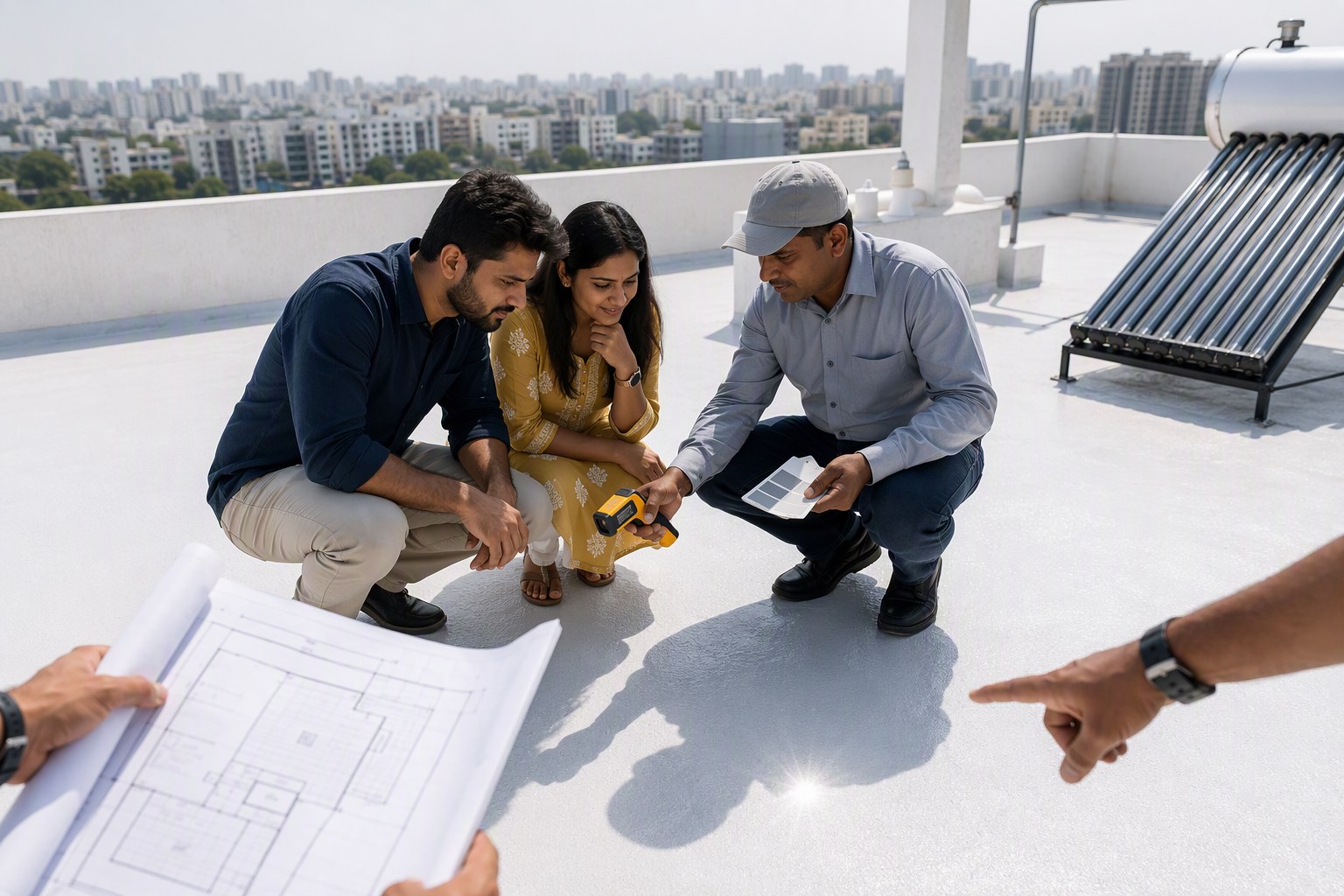
Ask about wall insulation, window glass specifications, shading, natural ventilation, efficient pumps, LED common lighting, solar generation for common areas and energy metering. West-facing flats in high-rise towers can heat up badly if design is poor. A green-rated project should have thought about heat gain, not only installed a few solar lights near the driveway.
Water management
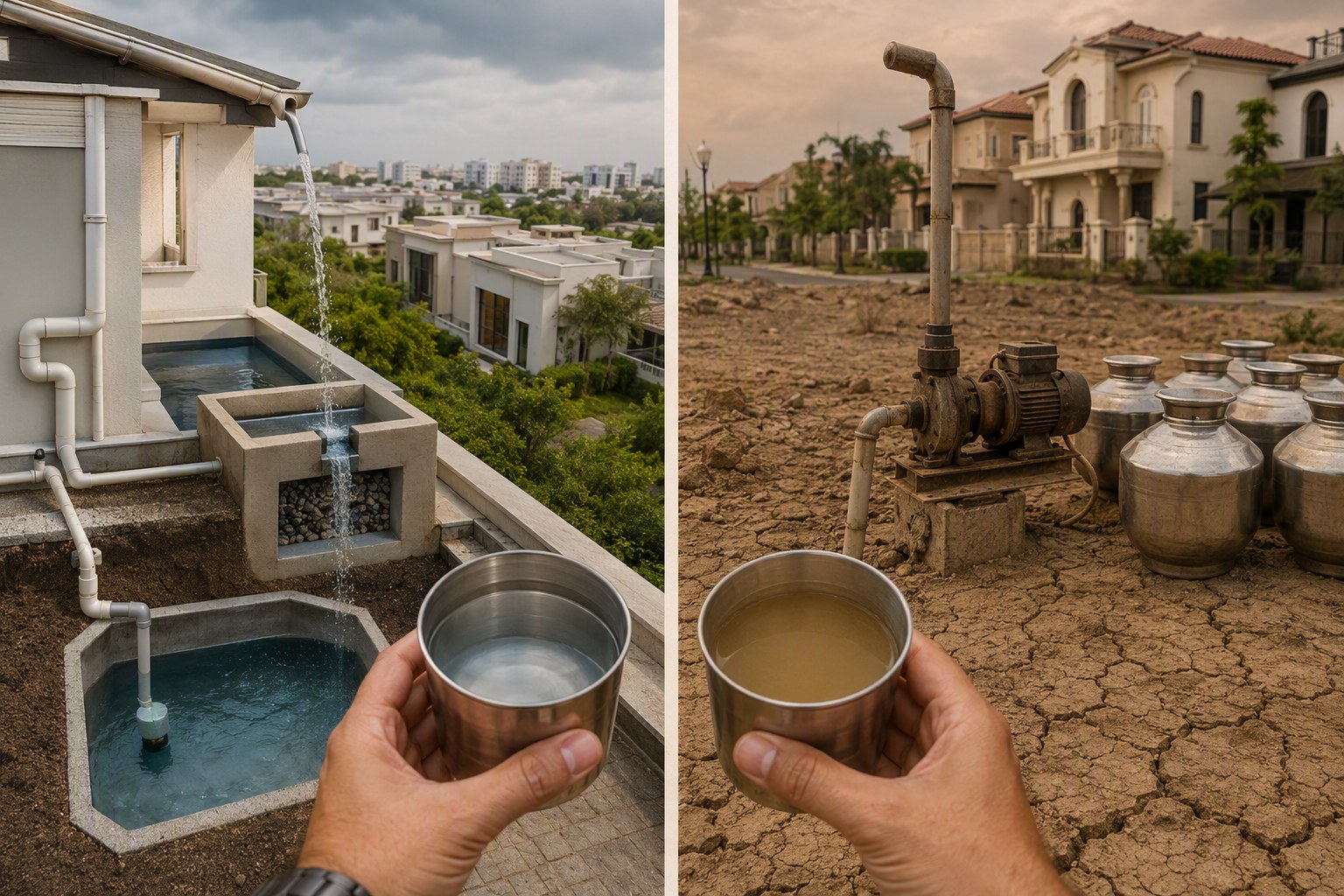
Water is a serious issue in parts of Narsingi, Manikonda, Bachupally, Kompally and Patancheru during peak summer. Check rainwater harvesting design, STP capacity, treated water reuse, low-flow fixtures and water meter plan. Ask the association or builder how tanker dependency will be reduced after full occupancy.
Indoor air and materials
Low-VOC paints, adequate ventilation, daylight and non-toxic materials improve living comfort. But buyers should not blindly accept brand names. Ask for specifications in the sale agreement. Sample flat finishes and actual handover finishes may differ.
Open space and land use
Open space should not be confused with leftover space. Check site layout, driveway width, fire tender movement, amenities block and open-to-sky areas. The Land Use Zone Finder can help you understand whether the location broadly aligns with permissible planning use. For larger layouts, open space requirement and community space matter; the OSR Calculator is useful for a first-level check.
Hyderabad IGBC-Rated Flat vs Green Claim: Red flags in sales talk
Here are the lines that make me cautious during project visits:
- “Certification is in process” but no application or pre-certification proof is shown.
- “All towers are green” but the document mentions only one phase or clubhouse.
- “No water problem ever” in a locality known for tanker supply stress.
- “Land is fully clear” but survey numbers and link documents are not shared.
- “RERA is applied” but no registration number is available for booking.
- “EV charging for all” but the electrical load plan is not explained.
- “80% open space” while podium, driveways and amenity decks are being counted loosely.
In Hyderabad, buyers are emotionally pulled by ORR access, office commute and school proximity. That is understandable. A Kollur buyer may prioritise future growth; a Gachibowli buyer may prioritise commute; a Kompally buyer may want larger flat size for the same budget. But sustainability claims should sit on top of legal clarity, not above it.
What to inspect during a site visit
Carry a small checklist when visiting an IGBC-claimed project. Sales offices are designed to impress. Your job is to verify.
- Ask for IGBC certificate or pre-certification copy.
- Match project name, phase, tower and developer entity.
- Check RERA number on official records.
- Ask for land survey numbers, village and mandal.
- Check EC, link documents and mortgage status.
- Ask whether the project land has any Section 22-A issue.
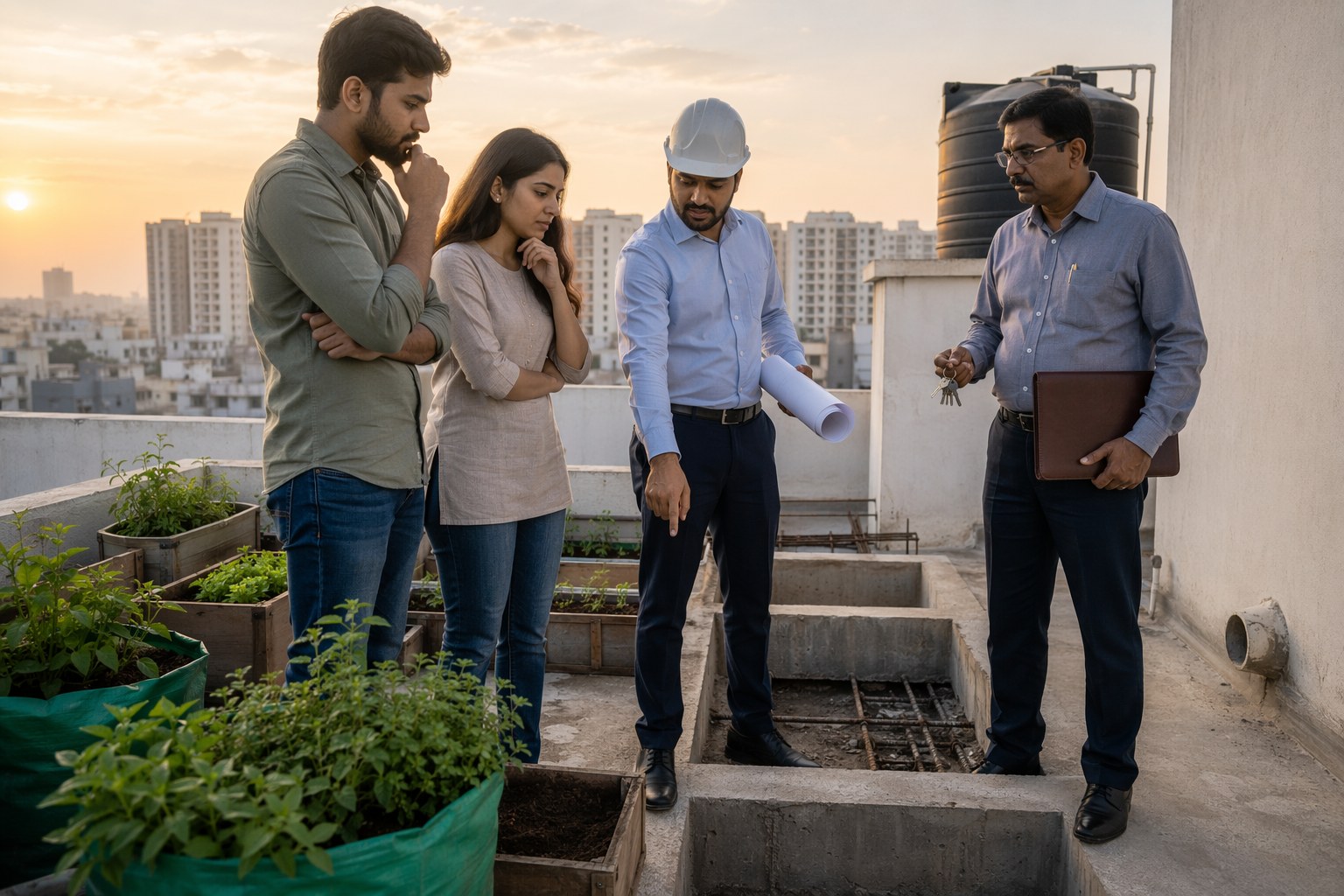
- Inspect STP location, rainwater pits, solar panels and waste management area.
- Ask for expected monthly maintenance per sft.
- Check whether EV charging is included, paid or future provision only.
- Confirm green specifications in agreement annexures.
For a first-level legal and record check, use the Property Verification Tool. It helps buyers structure the checks before engaging an advocate. For high-rise projects, built-up intensity and permissible development also matter; the FSI/FAR Calculator can help you understand planning basics.
Final buyer view: certification is valuable, but clean records come first
A genuine IGBC-rated flat in Hyderabad can be a better long-term choice if the design reduces heat, saves water, lowers common electricity cost and improves indoor comfort. I would give such projects preference when the price difference is reasonable and the association can maintain the systems properly.
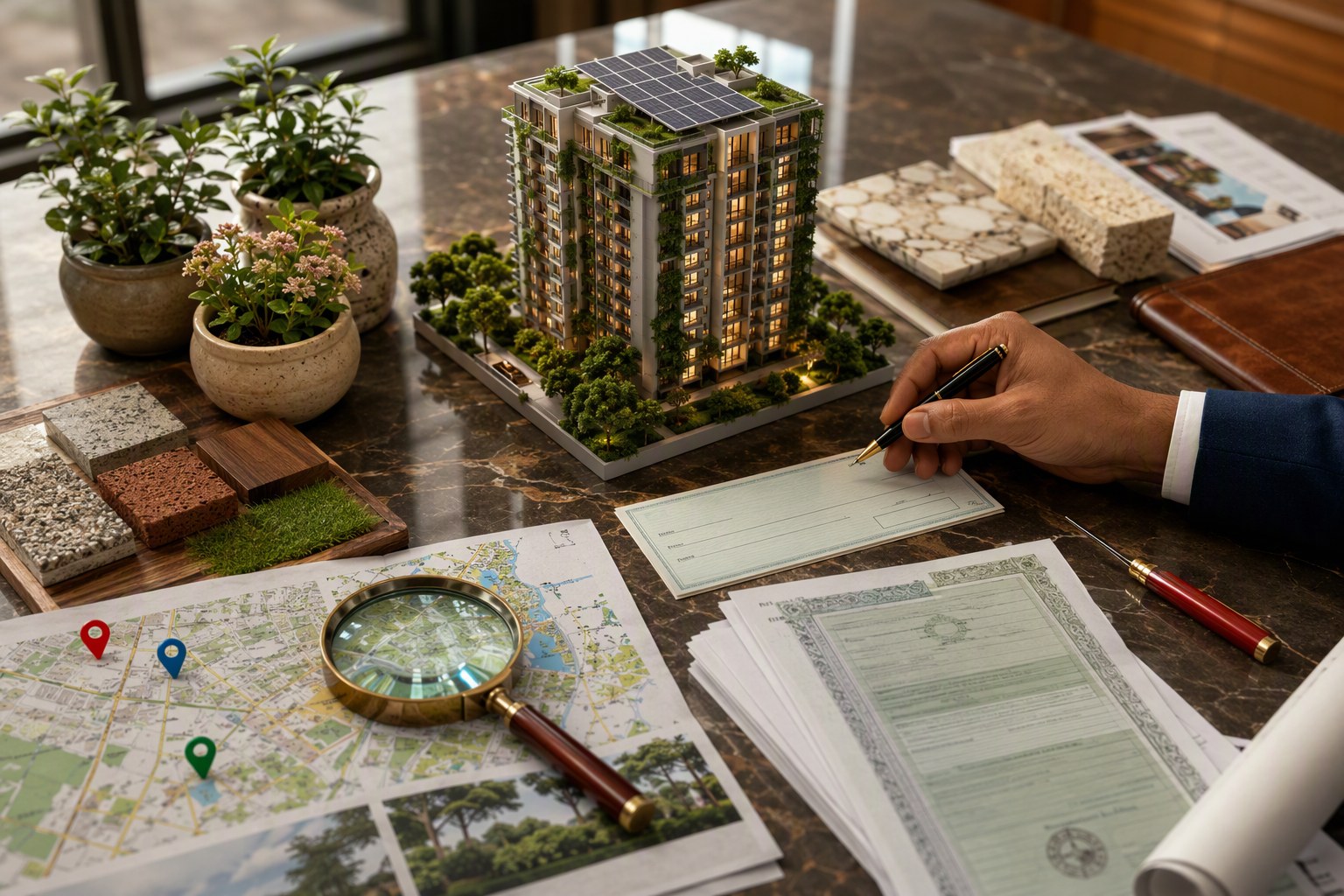
But I would not buy a legally weak property only because it has a green label. I would also not pay a big premium for a project that merely uses green language without proof. The correct order is: land and title verification, RERA and approval check, price comparison, construction quality, then green rating and sustainability features.
Hyderabad’s apartment market is becoming more sophisticated. Buyers are asking better questions now, especially in western and northern growth corridors. That is good. Just remember: the best green home is not only energy-efficient. It is legally safe, properly approved, fairly priced and liveable after five summers.
Frequently Asked Questions
Is an IGBC-rated flat in Hyderabad always better than a normal flat?
Not always. It can be better if the rating is genuine, the systems are installed and maintenance is managed well. But title, RERA status, construction quality and location still matter more for buyer safety.
How do I verify if a Hyderabad project is really IGBC-rated?
Ask the builder for the IGBC certificate or pre-certification letter and check whether the project name, phase and developer match your booking. Do not rely only on a brochure logo or sales claim.
Should I check Section 22-A before buying a green apartment?
Yes. Telangana has 147,934 prohibited properties under Section 22-A. A green feature cannot solve a registration restriction or title problem, so check the land status before paying token advance.
Can a green claim increase resale value?
It can help resale if buyers see real benefits like lower maintenance, better water management and verified certification. A vague green claim without proof usually does not justify a major resale premium.
Which records should I check before valuing eco features?
Check RERA registration, encumbrance certificate, survey number, SRO jurisdiction, guideline value, land use and Section 22-A status. After that, evaluate IGBC proof and promised green specifications.