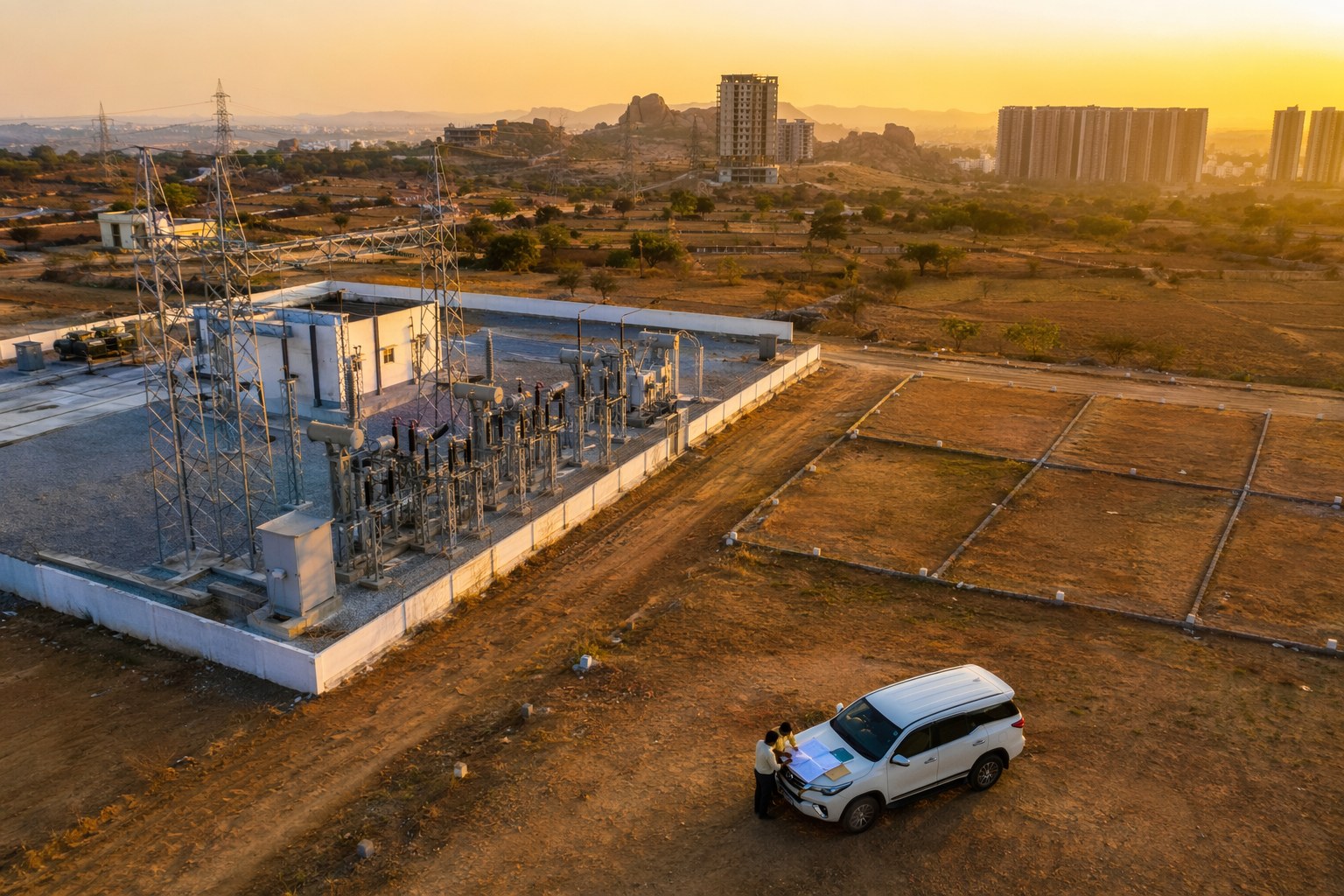



Telangana Valuers Add 22-A Risk Notes to Price Reports
Telangana Valuers Add 22-A Risk Notes to Price Reports is becoming a serious discussion point in Hyderabad property circles. The change is simple but powerful: a valuer’s price report may no longer speak only about land rate, building condition and marketability. It may also carry a clear title-risk note if the survey number, sub-division or property description shows possible Section 22-A exposure.
For buyers, sellers and banks, this can shift the conversation much earlier. Instead of discovering a 22-A issue at the SRO counter, during loan legal scrutiny, or just before resale registration, the risk can show up at the valuation stage itself. In our experience, that is where many buyers still think the deal is “almost done”. Actually, that is where a lot of hidden risk begins.
Telangana Valuers Add 22-A Risk Notes to Price Reports: what is changing
Section 22-A relates to properties that may be restricted from registration under government records. In Telangana, these entries can include government lands, assigned lands, endowment-related lands, wakf-linked properties, ceiling-surplus lands and other categories that require careful verification. The practical issue is not only whether the land is finally registrable. The bigger issue is whether the buyer, lender or reseller can see the risk early enough to make a sensible decision.
As per the Verified database context, prohibited properties under Section 22-A stand at 3,076,153 entries. That number alone tells us why valuers cannot treat 22-A as a side topic. A market value report that ignores such exposure can look technically correct on price, but weak on real-world usability.
My view is straightforward: if a valuation report comments on approach road, construction quality and market demand, it should also flag visible 22-A risk. Price without registrability is not a complete valuation.
This does not mean valuers will become title lawyers. They should not. But a valuer can record whether the property needs Section 22-A verification, whether the survey number requires SRO confirmation, and whether the buyer should cross-check Dharani, pahani and EC records before relying on the quoted value.
Why Telangana Valuers Add 22-A Risk Notes to Price Reports before loan approvals
Loan approval is where valuation, legal scrutiny and bank risk meet. In a typical Hyderabad home-loan file, the valuer checks the physical property and marketability while the legal team checks ownership documents. But on ground, these two tracks are connected. If a plot in areas like Gachibowli, Tellapur, Kollur, Mokila, Adibatla, Maheshwaram, Shamirpet or Patancheru has a survey-number-level restriction, the market price quoted by the seller may not reflect the actual risk.
We have seen buyers get excited about a “good rate” in fast-moving corridors, only to realise later that the land needs deeper checks at the mandal or SRO level. In such cases, a risk note in the valuation report can slow down a bad decision. That is not negativity. That is market discipline.
Before paying a token advance, buyers should run a basic check through the Section 22-A Prohibited Property Check, verify ownership flow using the Encumbrance Certificate Search, and confirm the relevant registration office through Find Your SRO Office. If the property is land-based, the Survey Number Finder also helps buyers align the document description with the actual survey details.
What a 22-A risk note may look like in a valuation report
A proper note need not be dramatic. It should be clear, specific and tied to the property description. For example, a valuer may mention that the market value estimate is subject to verification of Section 22-A status at the concerned SRO, or that the survey number must be checked against prohibited property records before loan disbursement.
| Report area | What the valuer may record | Why it matters |
|---|---|---|
| Survey number | Whether the number needs Section 22-A verification | Restrictions often sit at survey-number or sub-division level |
| Revenue record | Need to compare sale deed with pahani, Dharani and mutation entries | Mismatch can affect title comfort and resale confidence |
| SRO check | Registration may be subject to confirmation by the concerned SRO | SRO position matters before sale deed registration |
| Marketability | Value is subject to clear title and registrability | Bank and buyer can price risk more honestly |
This is especially useful in mandals where agricultural land, converted layouts, old pattedar records and urban expansion overlap. Around Rangareddy, Medchal-Malkajgiri, Sangareddy and Yadadri-Bhuvanagiri districts, land stories can be complicated. A clean-looking sale deed does not always settle the issue. The link between the old survey number, new plot number, village map and registration record must be checked.
Hyderabad resale talks may become sharper with 22-A risk notes
In resale negotiations, a 22-A risk note can change bargaining power. A seller quoting a premium in Kondapur, Narsingi, Bachupally, Kompally or Shamshabad may face tougher questions if the valuer flags the need for prohibited property verification. Buyers can ask for documents before price negotiation, not after paying advance.
For apartments, the risk is usually checked at project land level. For plots and independent houses, the survey-number trail becomes more central. If it is a RERA project, buyers should also verify registration details through the RERA Project Lookup. For non-RERA plotted layouts or older layouts, the checks must go deeper into land use, EC, SRO and revenue records.
Price tools still matter. Buyers can compare the government guideline value through the Market Value / Guideline Value Search and estimate registration outgo with the Stamp Duty Calculator. But price tools should sit beside title tools. One without the other gives an incomplete picture.
How buyers should read valuation reports with Section 22-A comments
Do not panic when you see a 22-A-related note. A risk note is not always a final rejection. It may simply mean that the valuer has spotted a point that needs confirmation. The right response is to ask for documents and verify them in sequence.
- Match the sale deed schedule with the survey number, plot number, village and mandal.
- Check whether the EC covers the correct property description and period relevant to the transaction.
- Verify whether the land appears in prohibited property records or needs SRO clarification.
- Compare revenue records such as pahani or Dharani entries where applicable.
- Ask the bank legal team to comment specifically on the 22-A note before loan processing moves ahead.
For a safer starting point, use the Property Verification Tool and then track any later changes through the Property Change Tracker. If an EC is already available, the EC Analyzer can help you read transaction patterns more carefully.
What this means for valuers, banks and Telangana property buyers
For valuers, this is a chance to improve report quality. A market value opinion should not pretend that title risk does not exist. The wording must be careful, because valuers are not adjudicating ownership. Still, they can say, “valuation subject to clear title and Section 22-A verification”. That one line can save buyers from expensive confusion.
For banks, this can reduce last-minute file surprises. If the valuer flags a possible issue early, the legal team can review it before sanction or disbursement. For buyers, it gives a written basis to pause, renegotiate, or walk away. For sellers with clean documents, it can actually help. A property that passes these checks gains credibility in a market where everyone has heard at least one bad land story.
The Telangana property market is mature enough for this shift. Hyderabad buyers are no longer only asking, “What is the rate?” They are asking, “Can I register it, mortgage it, sell it later, and sleep peacefully?” That is the right question.
Our opinion at Verified.RealEstate is that 22-A risk notes should become normal in valuation reports, especially for land, villas, independent houses and projects built on older land parcels. A valuation without title-risk visibility may still satisfy a format, but it may not protect the person taking the financial risk.
Frequently Asked Questions
What does a 22-A risk note in a valuation report mean?
It means the valuer is flagging possible Section 22-A exposure or asking for verification before the value is relied upon for loan approval, purchase or resale. It is not always a final rejection, but it needs checking.
Can a valuer decide whether a property is prohibited under Section 22-A?
No. A valuer gives a price opinion and may flag visible risk. The actual status must be verified through government records, the concerned SRO and legal scrutiny.
Should buyers check 22-A status before paying advance?
Yes. In Telangana land deals, checking the survey number, EC, SRO jurisdiction and prohibited property status before paying advance is a sensible step.
Does Section 22-A risk affect apartments also?
It can, mainly at the project land level. Apartment buyers should verify the project land title, RERA details where applicable, EC and approvals before booking or resale purchase.
Which tools can help with Telangana property verification?
Buyers can use Section 22-A Prohibited Property Check, EC Search, Find Your SRO Office, Survey Number Finder and Property Verification Tool on Verified.RealEstate as starting points before legal review.