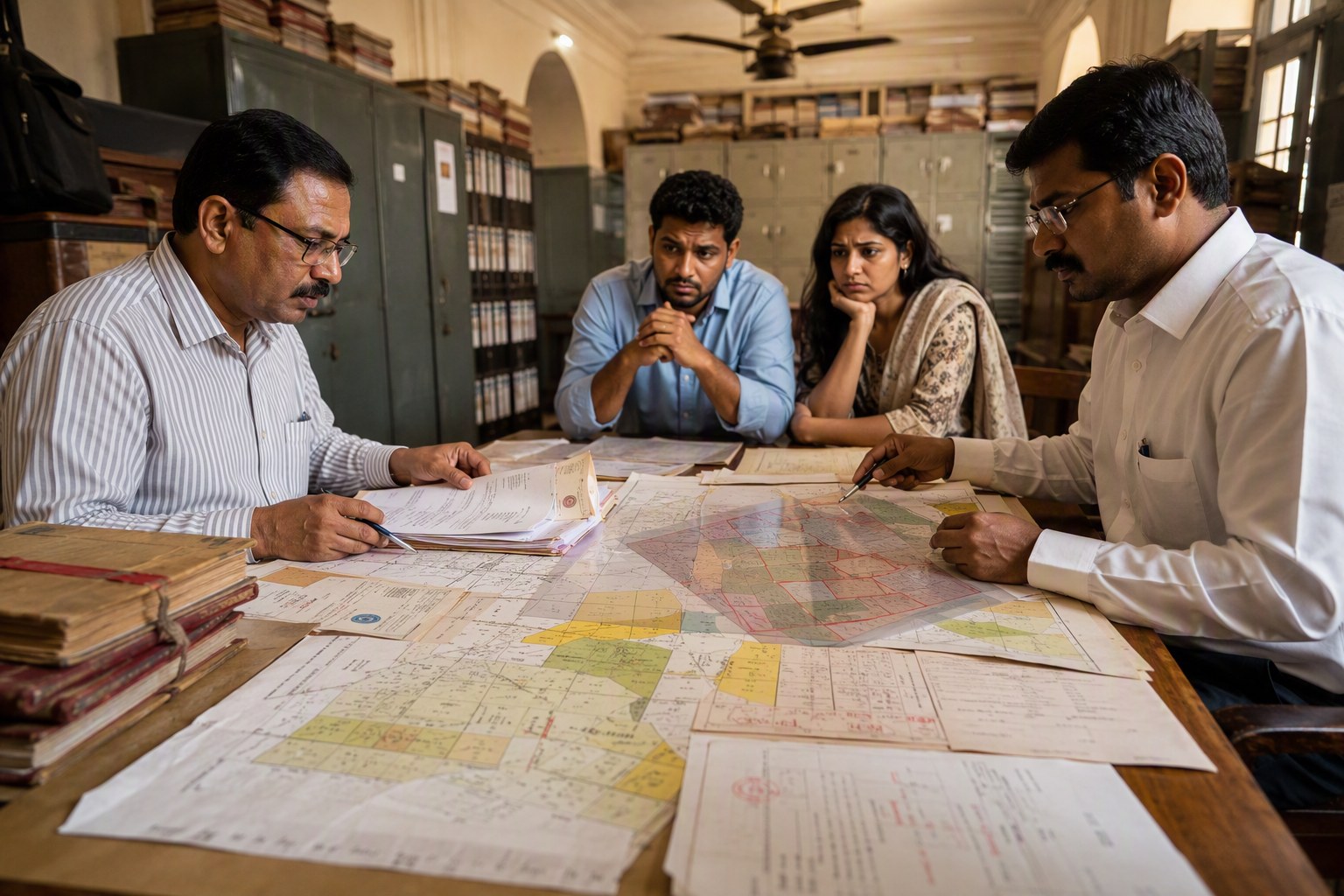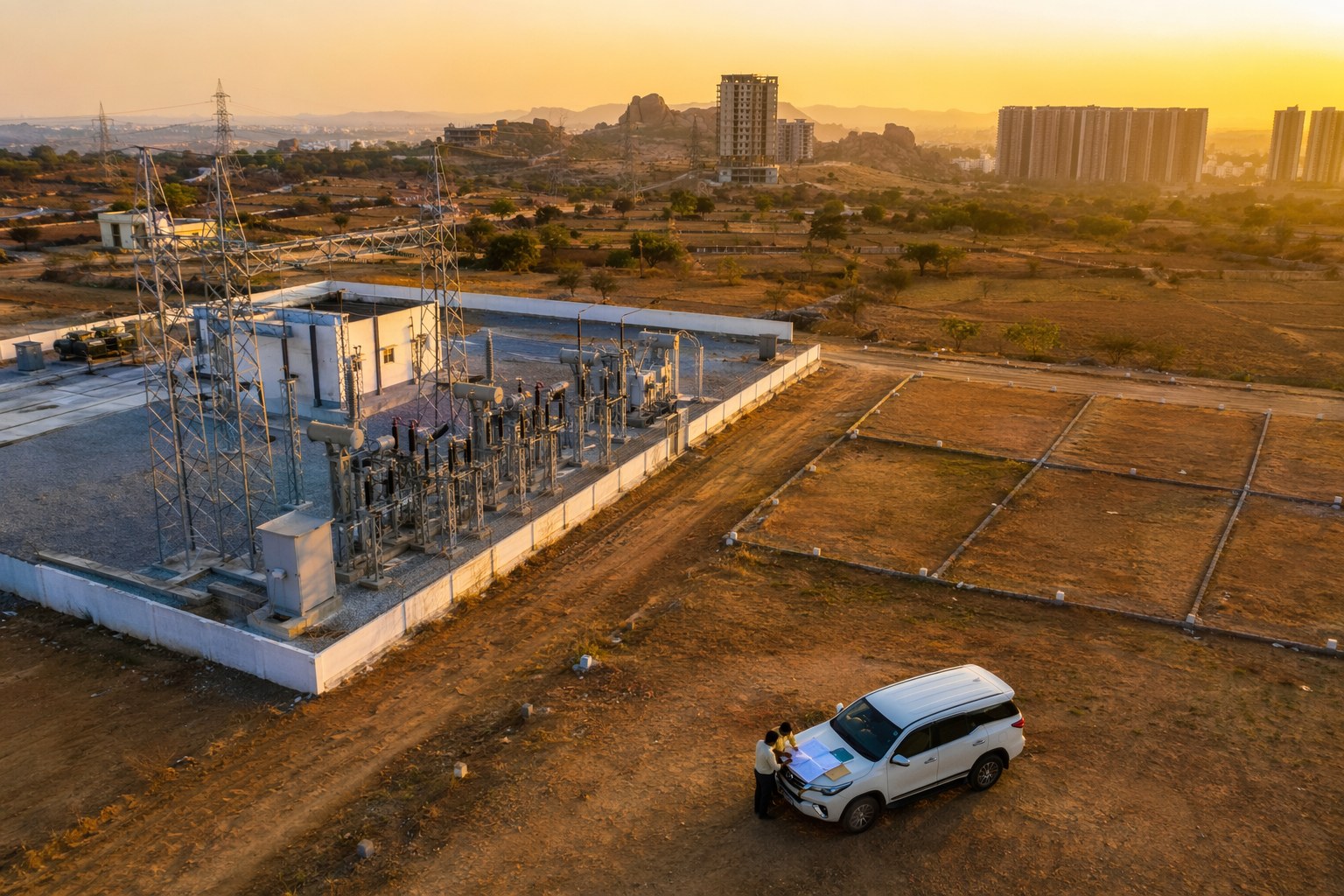



Telangana May Add 22-A Status to Certified Copy Requests, and if this change goes through, property buyers may get an earlier warning before they put money on the table. The big point is simple: certified copies are often pulled at the first stage of due diligence. If the same request also shows whether a property is hit by Section 22-A, buyers in Hyderabad, Rangareddy, Medchal-Malkajgiri, Sangareddy and other districts can catch a red flag much before sale deed drafting or SRO registration day.
As per latest IGRS data available in our database, Telangana has 30,3,076,153 prohibited properties marked under Section 22-A. That is not a small backend list. For a buyer checking land in Shankarpally mandal, a plot near Maheshwaram, a house site in Ghatkesar, or agricultural land around Shadnagar, this proposed extra line in the certified copy workflow can make a practical difference.
Telangana May Add 22-A Status to Certified Copy Requests: What the Move Means
At present, many buyers ask for a certified copy of earlier registered documents to verify ownership chain. This is common in Hyderabad transactions, especially where the seller gives old sale deeds, gift deeds, partition deeds, or GPA-linked documents. A certified copy from the registration department gives comfort that the document exists in official records.
But document existence is not the same as title safety. We have seen cases where the old document is genuine, the link document is traceable, and still the land later throws up a Section 22-A issue. That is where this possible change becomes useful.
Section 22-A generally deals with properties where registration is prohibited or restricted. These can include government lands, assigned lands, endowment lands, wakf lands, ceiling surplus lands, and other notified categories depending on the record. In local due diligence language, people simply ask: “22-A lo unda?” If the answer is yes, the transaction may not move at the SRO, or worse, the buyer may get stuck after paying an advance.
If certified copy requests start carrying 22-A status, the buyer’s first document search itself can become sharper. It will not replace legal verification, pahani checks, Dharani review, EC search, layout approval review, or physical boundary verification. But it adds one early checkpoint.
Our view: this is the kind of small process change that can prevent big buyer mistakes. The buyer does not need another lecture after paying token advance. The buyer needs warning signs before payment.
Why Telangana May Add 22-A Status to Certified Copy Requests Now
The reason this proposal matters is the scale of the prohibited property database. With 30,3,076,153 prohibited properties recorded in our database as per latest IGRS data, Section 22-A is not a rare problem sitting in some corner of the state. It appears across urban edges, village revenue records, older layouts, agricultural survey numbers, and disputed land pockets.
In Hyderabad’s growth belt, the risk becomes more visible because land values, buyer urgency, and informal promises all meet in the same transaction. We regularly hear this pattern: seller says “registration ayipothadi”, broker says “no issue”, buyer sees one old registered document, and only later the SRO-side objection or Dharani-side mismatch appears.
Localities where buyers should be extra careful include fast-moving corridors around Kokapet, Narsingi, Tellapur, Mokila, Kollur, Patancheru, Adibatla, Tukkuguda, Shamshabad, Kandukur, Ghatkesar and Medchal. I am not saying every property in these areas has a 22-A problem. Far from it. But where land conversion, old revenue entries, assignment history, family partitions and layout plotting overlap, the certified copy alone is not enough.
Before paying an advance, buyers can use the Section 22-A Prohibited Property Check, verify the survey details through the Survey Number Finder, and cross-check past transactions with the Encumbrance Certificate Search. These checks are not glamorous, but they save money and mental peace.
How the Certified Copy Process Could Change for Buyers
A certified copy request is usually made for a registered document number, book number, year and SRO details. If the department adds Section 22-A status into this flow, the buyer may see an indication that the property linked to that document or survey number is prohibited, restricted, or needs deeper verification.
The exact display format will matter. A vague note will not help much. A clear status linked to survey number, village, mandal and SRO will help far more. In our experience, confusion often starts because one sale deed mentions an extent in acres, another mentions square yards after plotting, and the revenue record still sits at survey-number level. Unless the buyer connects document details with village and mandal records, the picture remains incomplete.
| Buyer Step | Current Practical Gap | If 22-A Status Is Added |
|---|---|---|
| Certified copy request | Buyer confirms old document exists | Buyer may also see prohibited property warning |
| Token advance stage | Many buyers rely on seller assurance | Buyer can pause before payment if status is adverse |
| Legal scrutiny | Advocate must search across multiple records | Advocate gets one more official alert early |
| SRO visit | Problem may surface late | Risk can be flagged before registration attempt |
For apartment buyers, the impact may be indirect but still useful. If the underlying land of a project has any prohibited category history, buyers should not rely only on brochures or WhatsApp approvals. Check the project through the RERA Project Lookup, identify the concerned office using Find Your SRO Office, and compare values using the Market Value / Guideline Value Search.
Telangana May Add 22-A Status to Certified Copy Requests: Why SRO-Level Clarity Matters
The SRO is where the transaction finally meets the registration system. But the land story begins much earlier — at village, mandal and revenue record level. A buyer may be dealing with a plot in a HMDA layout near Mokila, but the old survey number may belong to a village record under Shankarpally mandal. A buyer may be purchasing a house site near Tukkuguda, but the parent land may still carry old classification entries from Maheshwaram or neighbouring mandal records.
This is why the 22-A status must not be treated as a casual tick mark. It should ideally tell the buyer enough to ask the right next question. Is the entire survey number affected? Is only part of the extent affected? Is the entry linked to assigned land, government land, endowment, wakf, court order, or another category? Has there been any later correction? These details decide whether the transaction is dead, delayed, or curable through proper procedure.
We have seen buyers confuse EC with clean title. An Encumbrance Certificate may show registered transactions, but it may not solve revenue classification issues. Similarly, a pahani may show cultivation or possession details, but it may not clear layout approval, land use, or registration prohibition concerns. Title due diligence in Telangana needs all layers to talk to each other.
For land and plot purchases, I would put the minimum checklist like this:
- Check Section 22-A status before advance payment.
- Match survey number, village and mandal across sale deed, pahani and Dharani records.
- Pull EC for the relevant period and read it, not just download it.
- Verify SRO jurisdiction and document registration history.
- Check land use, road access, layout approval and any court or family dispute risk.
Verified.RealEstate users can also track changes through the Property Change Tracker and run a broader check using the Property Verification Tool. If you are looking at open plots, do not skip land use review through the Land Use Zone Finder.
What Buyers Should Do Before This Becomes a Standard Feature
Until the certified copy workflow formally includes this 22-A layer, buyers should behave as if they are responsible for checking it separately. That may sound harsh, but that is how property transactions work on the ground. Once advance is paid, the buyer’s bargaining power drops sharply.
For Hyderabad homebuyers, the risk is not only in faraway agricultural land. It can appear in villa plots, resale plots, old gram panchayat layouts, family settlement properties, and lands converted long ago but poorly documented. In areas like Narsingi, Kollur, Patancheru and Adibatla, the speed of development makes buyers trust market momentum. Market momentum is not legal clearance.
My practical advice is simple: ask for the document number, survey number, village, mandal and SRO before even discussing final price. If the seller or broker refuses basic details, that itself is a warning. A genuine seller may be busy, but they will not hide the identity of the property.
Also, use the ready reckoner or guideline value only for valuation context. It does not certify title. Stamp duty calculation also comes later. You can estimate charges with the Stamp Duty Calculator, but first confirm whether the property can legally be registered at all.
The Bigger Impact on Telangana Property Due Diligence
If implemented properly, adding 22-A status to certified copy requests can improve buyer behaviour. It can push people to verify earlier, ask better questions, and avoid blind dependence on broker statements. It can also reduce last-minute shocks at SRO offices.
Still, buyers should not treat a “not prohibited” indication as a full legal opinion. Section 22-A is one risk category. A property may still have family disputes, pending litigation, unregistered agreements, mortgage charges, boundary overlaps, access problems, layout violations, or land-use restrictions. For flats, project approvals and RERA status remain separate checks. For plots, survey accuracy and road width can decide usability.
The proposed feature is best seen as an early warning layer. In Telangana’s property market, that layer is badly needed. With 30,3,076,153 prohibited properties in the database, every buyer should respect Section 22-A checks before paying serious money.
Frequently Asked Questions
What does it mean if Telangana adds 22-A status to certified copy requests?
It means buyers requesting certified copies may also get an indication on whether the property is listed as prohibited under Section 22-A. This can help buyers spot risk earlier in the transaction.
How many prohibited properties are recorded in Telangana?
As per latest IGRS data in our database, Telangana has 30,3,076,153 prohibited properties recorded under Section 22-A.
Is a certified copy enough to prove clean title?
No. A certified copy confirms the registered document record, but buyers should also check EC, Section 22-A status, pahani, Dharani records, SRO jurisdiction, land use, approvals and legal disputes.
Should I check 22-A before paying advance for a plot?
Yes. In our experience, 22-A should be checked before token advance, especially for open plots, agricultural land, old layouts and properties in fast-growing Hyderabad outskirts.
Which tools can help with Telangana property verification?
You can use the Section 22-A Prohibited Property Check, Encumbrance Certificate Search, Survey Number Finder, RERA Project Lookup and Property Verification Tool on Verified.RealEstate for early due diligence.